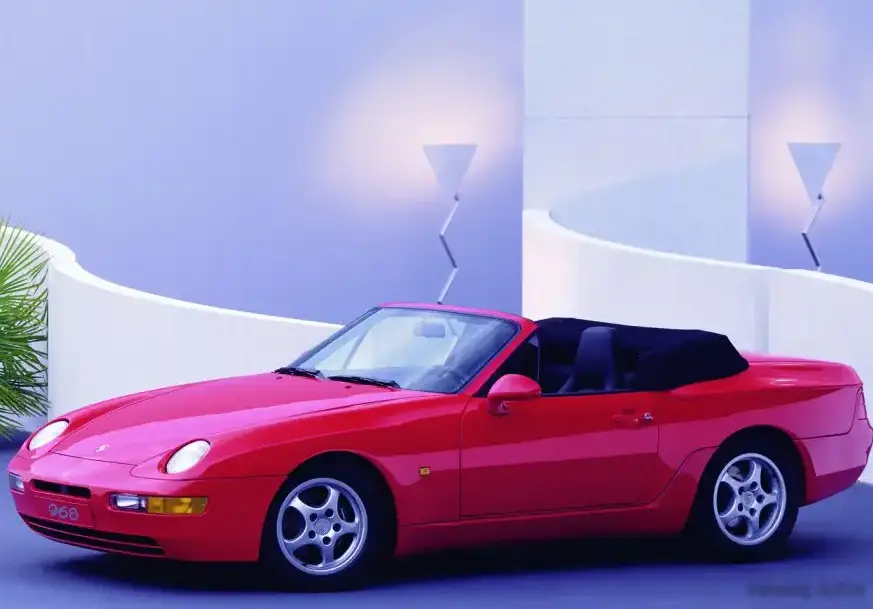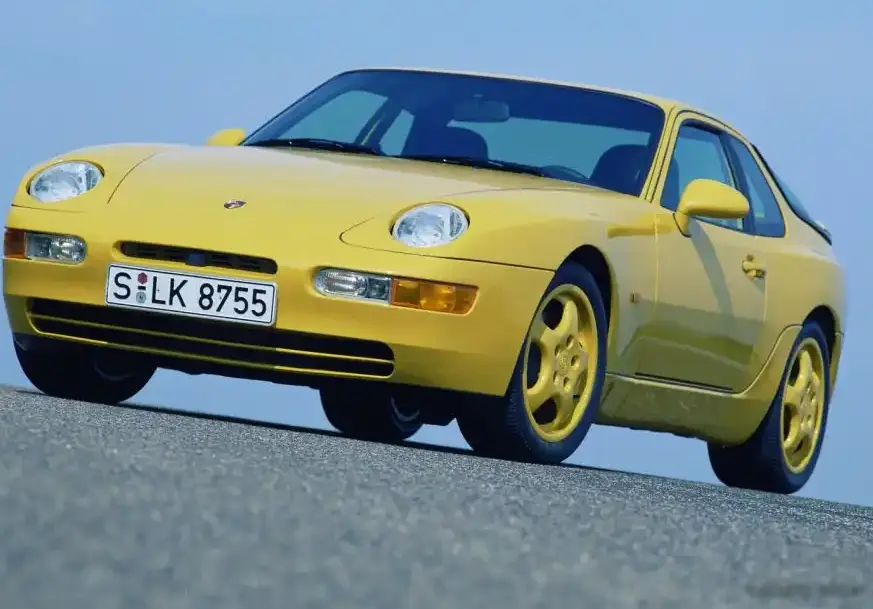
The Porsche 968 Turbo S, produced between 1993 and 1995, represented the ultimate evolution of the 968 model line. Positioned as the flagship performance variant, it was a limited-production vehicle designed to deliver exhilarating performance and a more focused driving experience. Built on the 944/968 platform, the 968 Turbo S aimed to bridge the gap between the more accessible 968 models and the significantly more expensive 911 series. It was the final iteration of Porsche’s front-engine, rear-wheel-drive sports car before the company fully concentrated on the 911 and the introduction of the Boxster.
Technical Specifications
| Brand | Porsche |
| Model | 968 |
| Generation | 968 |
| Type (Engine) | 3.0 8V Turbo S (305 Hp) |
| Start of production | 1993 |
| End of production | 1995 |
| Powertrain Architecture | Internal Combustion engine |
| Body type | Coupe |
| Seats | 2 |
| Doors | 2 |
| Fuel Type | Petrol (Gasoline) |
| Acceleration 0 – 100 km/h | 5 sec |
| Acceleration 0 – 62 mph | 5 sec |
| Acceleration 0 – 60 mph | 4.8 sec |
| Maximum speed | 280 km/h (173.98 mph) |
| Weight-to-power ratio | 4.3 kg/Hp, 234.6 Hp/tonne |
| Weight-to-torque ratio | 2.6 kg/Nm, 384.6 Nm/tonne |
| Power | 305 Hp @ 5400 rpm |
| Power per litre | 102 Hp/l |
| Torque | 500 Nm @ 3000 rpm (368.78 lb.-ft. @ 3000 rpm) |
| Engine layout | Front, Longitudinal |
| Engine Model/Code | M44.60 |
| Engine displacement | 2990 cm3 (182.46 cu. in.) |
| Number of cylinders | 4 |
| Engine configuration | Inline |
| Cylinder Bore | 104 mm (4.09 in.) |
| Piston Stroke | 88 mm (3.46 in.) |
| Compression ratio | 7.5:1 |
| Number of valves per cylinder | 2 |
| Fuel injection system | Multi-port manifold injection |
| Engine aspiration | Turbocharger, Intercooler |
| Valvetrain | SOHC |
| Engine oil capacity | 7 l (7.4 US qt | 6.16 UK qt) |
| Coolant | 8 l (8.45 US qt | 7.04 UK qt) |
| Kerb Weight | 1300 kg (2866.01 lbs.) |
| Max. weight | 1730 kg (3814 lbs.) |
| Max load | 430 kg (947.99 lbs.) |
| Trunk (boot) space – minimum | 225 l (7.95 cu. ft.) |
| Trunk (boot) space – maximum | 510 l (18.01 cu. ft.) |
| Fuel tank capacity | 74 l (19.55 US gal | 16.28 UK gal) |
| Length | 4320 mm (170.08 in.) |
| Width | 1735 mm (68.31 in.) |
| Height | 1275 mm (50.2 in.) |
| Wheelbase | 2400 mm (94.49 in.) |
| Front track | 1470 mm (57.87 in.) |
| Rear (Back) track | 1450 mm (57.09 in.) |
| Drivetrain Architecture | Rear wheel drive |
| Number of gears and type of gearbox | 6 gears, manual transmission |
| Front suspension | Independent, type McPherson with coil spring and anti-roll bar |
| Rear suspension | Transverse stabilizer, Trailing arm, Torsion |
| Front brakes | Ventilated discs, 322 mm |
| Rear brakes | Ventilated discs, 299 mm |
| Assisting systems | ABS (Anti-lock braking system) |
| Steering type | Steering rack and pinion |
| Power steering | Hydraulic Steering |
| Front wheel tires | 235/40 R18 |
| Rear wheel tires | 265/35 R18 |
| Front wheel rims | 8J x 18 |
| Rear wheel rims | 10J x 18 |
Introduction
The 968 Turbo S was a limited-run, high-performance variant of the Porsche 968, produced from 1993 to 1995. It represented the pinnacle of the front-engine, rear-wheel-drive Porsche lineage. Based on the already capable 968 coupe, the Turbo S received significant upgrades to its engine, chassis, and braking system, resulting in a substantial increase in performance. Approximately 24 examples were built for the US market, and around 90 worldwide, making it a highly sought-after collector’s item today. The 968 itself was the final evolution of the transaxle layout Porsche, a design that dated back to the 924 and 944.
Powertrain & Engine Architecture
At the heart of the 968 Turbo S lies the M44.60 engine, a 2.99-liter inline-four cylinder powerplant. This engine was derived from the standard 968’s engine but significantly enhanced with a KKK turbocharger and intercooler. The engine featured a single overhead camshaft (SOHC) valvetrain operating two valves per cylinder. Bosch Motronic fuel injection managed the air-fuel mixture, optimizing performance and efficiency. The compression ratio was lowered to 7.5:1 to accommodate the turbocharging. The engine produced 305 horsepower at 5400 rpm and 369 lb-ft of torque at 3000 rpm. Power was delivered to the rear wheels through a robust five-speed manual transmission, specifically reinforced to handle the increased output. The transmission featured revised gear ratios optimized for acceleration and high-speed cruising.
Driving Characteristics
The 968 Turbo S offered a dramatically different driving experience compared to the standard 968. The turbocharger provided a significant boost in power, resulting in exhilarating acceleration. The car could sprint from 0 to 60 mph in approximately 4.8 seconds and achieve a top speed of around 174 mph. The revised suspension, featuring stiffer springs and dampers, along with a larger diameter front anti-roll bar, minimized body roll and improved handling. The steering was precise and communicative, providing the driver with a direct connection to the road. While the turbocharger did introduce a degree of turbo lag, the substantial power delivery once it spooled up made for a thrilling driving experience. Compared to the naturally aspirated 968, the Turbo S felt significantly more potent and responsive.
Equipment & Trim Levels
The 968 Turbo S was largely devoid of luxury features, focusing instead on performance. Standard equipment included sport seats, a leather-wrapped steering wheel, and a basic audio system. Air conditioning was often an optional extra. The interior was functional and driver-focused, with minimal distractions. Exterior features included a distinctive front spoiler, wider wheel arches to accommodate the larger tires, and a rear wing to enhance aerodynamic stability. The car was typically finished in solid colors, with many examples painted black or white. Options were limited, reflecting the car’s performance-oriented nature.
Chassis & Braking
The 968 Turbo S benefited from a revised chassis and braking system to cope with the increased power. The suspension featured stiffer springs, dampers, and a larger diameter front anti-roll bar. The brakes were upgraded with larger ventilated discs at all four corners, providing improved stopping power and fade resistance. ABS (Anti-lock Braking System) was standard. The car rode on 18-inch wheels, fitted with high-performance tires – 235/40R18 at the front and 265/35R18 at the rear – providing excellent grip and handling. The suspension geometry was also tweaked to optimize handling balance.
Market Reception & Comparison
The 968 Turbo S was well-received by automotive journalists and enthusiasts alike. Critics praised its exhilarating performance, precise handling, and overall driving experience. It was often compared favorably to the 911 of the era, offering a similar level of performance at a lower price point. However, its limited production run and relatively high price meant that it remained an exclusive vehicle. Compared to the standard 968, the Turbo S offered a significant performance upgrade, but at the cost of some everyday usability. The Turbo S was also more expensive to maintain due to the complexity of the turbocharging system.
Legacy
The Porsche 968 Turbo S remains a highly collectible and sought-after Porsche model. Its limited production run and exceptional performance have ensured its place in automotive history. The M44.60 engine, while complex, is generally considered to be reliable when properly maintained. However, the turbocharger and associated components require regular inspection and servicing. Today, the 968 Turbo S represents a unique and exciting alternative to the more common 911 models, offering a thrilling driving experience and a piece of Porsche’s front-engine heritage. Values have steadily increased in recent years, reflecting its rarity and desirability among collectors.