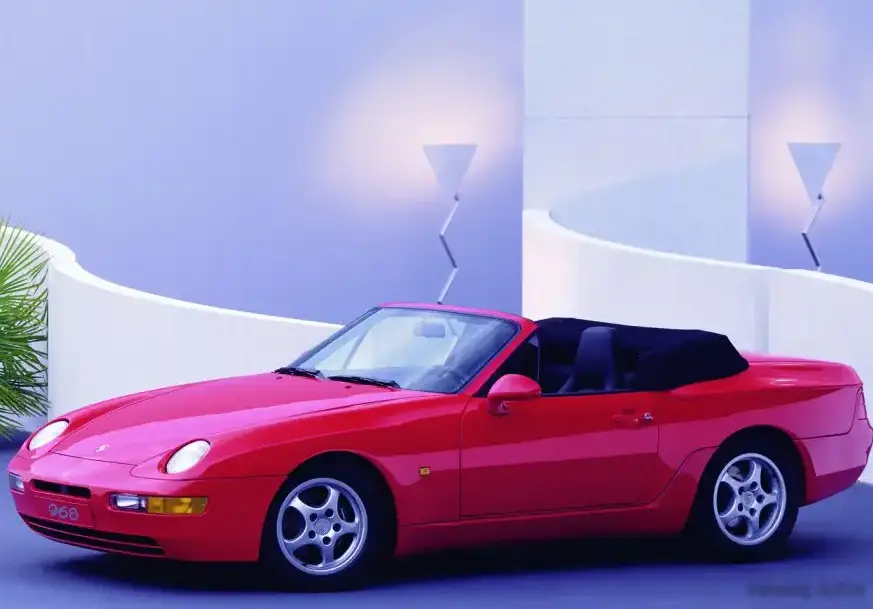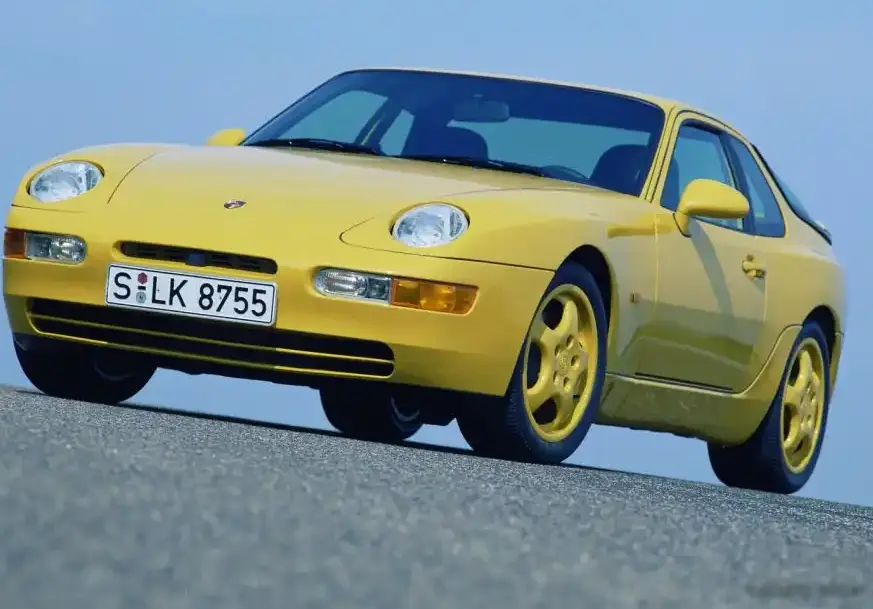
The Porsche 968 Turbo S, produced between 1993 and 1995, represented the pinnacle of the 968 model line. Positioned as the ultimate performance variant, it was a limited-production vehicle designed to deliver exhilarating driving dynamics and exclusivity. Built upon the 968 platform (derived from the earlier 944), the Turbo S featured a significantly upgraded engine and a sophisticated Tiptronic automatic transmission, setting it apart from the standard 968 and the earlier 968 Turbo. It was the final evolution of Porsche’s front-engine, rear-wheel-drive sports car lineage before the company focused more intently on the 911 and the introduction of the Boxster.
Technical Specifications
| Brand | Porsche |
| Model | 968 |
| Generation | 968 |
| Type | 3.0 8V Turbo S (305 Hp) Tiptronic |
| Start of production | 1993 |
| End of production | 1995 |
| Powertrain Architecture | Internal Combustion engine |
| Body type | Coupe |
| Seats | 2 |
| Doors | 2 |
| Fuel Type | Petrol (Gasoline) |
| Maximum speed | 280 km/h (173.98 mph) |
| Weight-to-power ratio | 4.3 kg/Hp, 234.6 Hp/tonne |
| Weight-to-torque ratio | 2.6 kg/Nm, 384.6 Nm/tonne |
| Power | 305 Hp @ 5600 rpm |
| Power per litre | 102 Hp/l |
| Torque | 500 Nm @ 3000 rpm (368.78 lb.-ft. @ 3000 rpm) |
| Engine layout | Front, Longitudinal |
| Engine Model/Code | M44.60 |
| Engine displacement | 2990 cm3 (182.46 cu. in.) |
| Number of cylinders | 4 |
| Engine configuration | Inline |
| Cylinder Bore | 104 mm (4.09 in.) |
| Piston Stroke | 88 mm (3.46 in.) |
| Compression ratio | 7.5:1 |
| Number of valves per cylinder | 2 |
| Fuel injection system | Multi-port manifold injection |
| Engine aspiration | Turbocharger, Intercooler |
| Valvetrain | SOHC |
| Engine oil capacity | 7 l (7.4 US qt | 6.16 UK qt) |
| Coolant | 8 l (8.45 US qt | 7.04 UK qt) |
| Kerb Weight | 1300 kg (2866.01 lbs.) |
| Max. weight | 1730 kg (3814 lbs.) |
| Max load | 430 kg (947.99 lbs.) |
| Trunk (boot) space – minimum | 225 l (7.95 cu. ft.) |
| Trunk (boot) space – maximum | 510 l (18.01 cu. ft.) |
| Fuel tank capacity | 74 l (19.55 US gal | 16.28 UK gal) |
| Length | 4320 mm (170.08 in.) |
| Width | 1735 mm (68.31 in.) |
| Height | 1275 mm (50.2 in.) |
| Wheelbase | 2400 mm (94.49 in.) |
| Front track | 1470 mm (57.87 in.) |
| Rear (Back) track | 1450 mm (57.09 in.) |
| Drive wheel | Rear wheel drive |
| Number of gears and type of gearbox | 4 gears, automatic transmission Tiptronic |
| Front brakes | Ventilated discs, 322 mm |
| Rear brakes | Ventilated discs, 299 mm |
| Front wheel tires | 235/40 R18 |
| Rear wheel tires | 265/35 R18 |
| Front wheel rims | 8J x 18 |
| Rear wheel rims | 10J x 18 |
Powertrain & Engine Architecture
The heart of the 968 Turbo S is the M44.60 engine, a 2.99-liter turbocharged inline-four cylinder. This engine builds upon the foundation of the 944 Turbo’s powerplant, but with significant enhancements. Key upgrades included a larger turbocharger, a more robust intercooler, strengthened connecting rods, and revised engine management software. The engine utilized a single overhead camshaft (SOHC) design with two valves per cylinder. Fuel delivery was managed by a Bosch Motronic multi-port fuel injection system, optimized for the increased airflow provided by the turbocharger. The Tiptronic transmission, a four-speed automatic with manual shift capability, was a defining feature of this variant. It allowed drivers to select gears manually via buttons on the steering wheel or leave the transmission to shift automatically.
Driving Characteristics
The 968 Turbo S delivered a markedly different driving experience compared to the naturally aspirated 968 or even the earlier 968 Turbo. The substantial increase in torque – 368.78 lb.-ft. – provided strong acceleration across the rev range. While the Tiptronic transmission wasn’t as engaging as a traditional manual gearbox, it offered a degree of control and convenience. Gear ratios were optimized for both acceleration and cruising, allowing for brisk performance in everyday driving situations. The turbocharger did exhibit some lag, typical of the era, but the power delivery was ultimately rewarding. Compared to a manual 968 Turbo, the Turbo S offered slightly reduced driver involvement but a smoother, more accessible power delivery.
Equipment & Trim Levels
The Turbo S was exceptionally well-equipped, reflecting its status as the flagship 968 model. Standard features included leather upholstery, power windows, power locks, and a sunroof. Air conditioning was also standard. The interior trim was typically executed in dark colors, with options for customized leather and trim packages. Optional extras included a premium sound system, heated seats, and limited-slip differential. The exterior was distinguished by unique Turbo S badging, wider wheels and tires, and a subtle rear spoiler.
Chassis & Braking
The 968 Turbo S utilized a fully independent suspension system. The front suspension employed McPherson struts with coil springs and an anti-roll bar, while the rear featured a torsion beam axle with a transverse stabilizer. This setup provided a good balance of handling and ride comfort. Braking duties were handled by ventilated disc brakes on all four wheels, providing ample stopping power. Anti-lock braking system (ABS) was standard, enhancing safety and control. The wider tires (235/40 R18 front, 265/35 R18 rear) contributed to improved grip and handling.
Market Reception & Comparison
The 968 Turbo S was generally well-received by automotive critics, who praised its performance, handling, and exclusivity. However, the Tiptronic transmission was a point of contention for some enthusiasts, who preferred the engagement of a manual gearbox. Compared to the standard 968, the Turbo S offered a significant performance upgrade, but at a substantial price premium. Against the 968 Turbo with a manual transmission, the Turbo S offered a more refined driving experience, albeit with a slightly higher cost. Fuel economy, while not a primary concern for buyers of this vehicle, was reasonable for a turbocharged sports car of its era.
Legacy
The Porsche 968 Turbo S remains a highly sought-after collector’s item today. Its limited production numbers and exceptional performance have contributed to its increasing value. The M44.60 engine, while requiring careful maintenance, is generally considered to be a robust and reliable powerplant when properly cared for. The Tiptronic transmission, while not as popular with purists, has proven to be relatively durable. The 968 Turbo S represents a unique chapter in Porsche’s history, marking the end of an era for the front-engine, rear-wheel-drive sports car and showcasing the company’s commitment to performance and innovation.