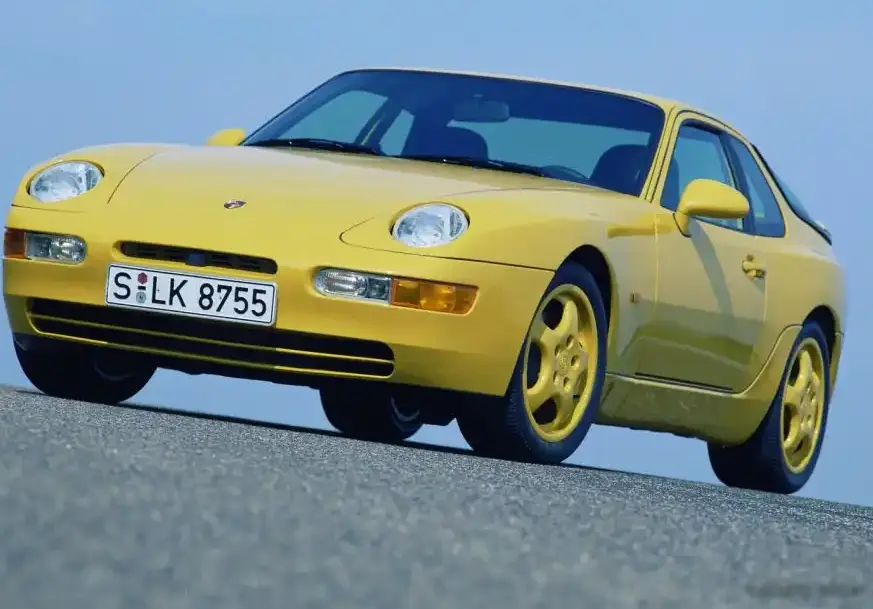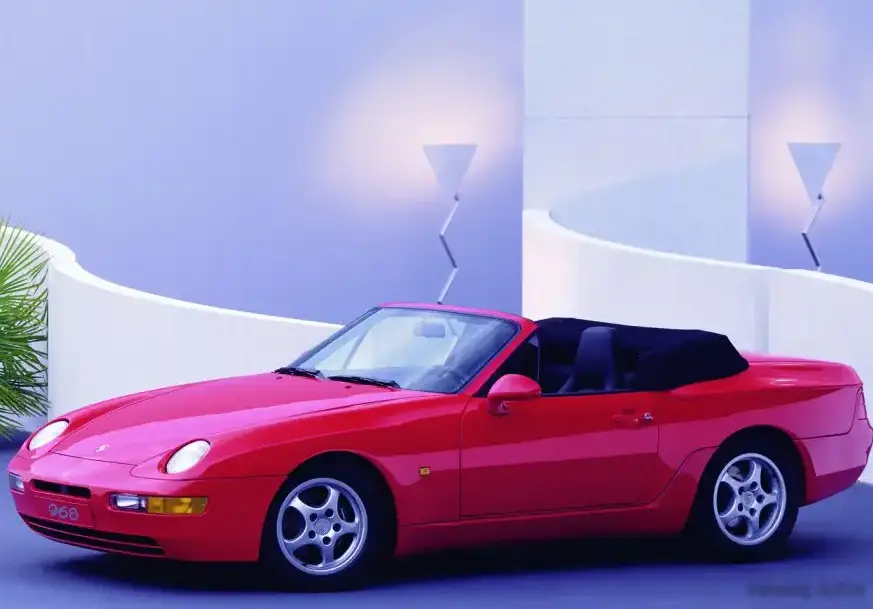
The Porsche 968 Cabrio 3.0 16V, produced from 1991 to 1995, represented the final evolution of Porsche’s front-engine, rear-wheel-drive sports car lineage before the introduction of the Boxster. It was positioned as the open-top variant of the 968, offering a blend of performance and open-air driving enjoyment. The 968 itself was a significant update to the 944, featuring a revised engine, updated styling, and improved handling. The Cabriolet specifically aimed to capture a broader market segment seeking a more accessible Porsche experience, while still retaining the brand’s core values of engineering excellence and driving dynamics. This 240 horsepower version was the top-tier offering for the 968 Cabriolet.
Technical Specifications
| Brand | Porsche |
| Model | 968 |
| Generation | 968 Cabrio |
| Type (Engine) | 3.0 16V (240 Hp) |
| Start of production | 1991 |
| End of production | 1995 |
| Powertrain Architecture | Internal Combustion engine |
| Body type | Cabriolet |
| Seats | 2 |
| Doors | 2 |
| Fuel consumption (urban) | 14.8 l/100 km (15.9 US mpg / 19.1 UK mpg) |
| Fuel consumption (extra urban) | 7.1 l/100 km (33.1 US mpg / 39.8 UK mpg) |
| Fuel consumption (combined) | 8.8 l/100 km (26.7 US mpg / 32.1 UK mpg) |
| Fuel Type | Petrol (Gasoline) |
| Acceleration 0 – 100 km/h | 6.5 sec |
| Acceleration 0 – 62 mph | 6.5 sec |
| Acceleration 0 – 60 mph | 6.2 sec |
| Maximum speed | 252 km/h (156.59 mph) |
| Weight-to-power ratio | 6 kg/Hp |
| Weight-to-torque ratio | 4.7 kg/Nm |
| Power | 240 Hp @ 6200 rpm |
| Power per litre | 80.3 Hp/l |
| Torque | 305 Nm @ 4100 rpm (224.96 lb.-ft. @ 4100 rpm) |
| Engine layout | Front, Longitudinal |
| Engine Model/Code | M44.43 |
| Engine displacement | 2990 cm3 (182.46 cu. in.) |
| Number of cylinders | 4 |
| Engine configuration | Inline |
| Cylinder Bore | 104 mm (4.09 in.) |
| Piston Stroke | 88 mm (3.46 in.) |
| Compression ratio | 11:1 |
| Number of valves per cylinder | 4 |
| Fuel injection system | Multi-port manifold injection |
| Engine aspiration | Naturally aspirated engine |
| Valvetrain | DOHC |
| Engine oil capacity | 7 l (7.4 US qt | 6.16 UK qt) |
| Coolant capacity | 8 l (8.45 US qt | 7.04 UK qt) |
| Kerb Weight | 1440 kg (3174.66 lbs.) |
| Max. weight | 1790 kg (3946.27 lbs.) |
| Max load | 350 kg (771.62 lbs.) |
| Trunk (boot) space – minimum | 225 l (7.95 cu. ft.) |
| Trunk (boot) space – maximum | 510 l (18.01 cu. ft.) |
| Fuel tank capacity | 74 l (19.55 US gal | 16.28 UK gal) |
| Length | 4320 mm (170.08 in.) |
| Width | 1735 mm (68.31 in.) |
| Height | 1275 mm (50.2 in.) |
| Wheelbase | 2400 mm (94.49 in.) |
| Front track | 1470 mm (57.87 in.) |
| Rear (Back) track | 1450 mm (57.09 in.) |
| Drivetrain Architecture | Rear wheel drive |
| Number of gears and type of gearbox | 6 gears, manual transmission |
Powertrain & Engine Architecture
The heart of the 968 Cabrio 3.0 16V is the M44.43 engine, a naturally aspirated 2.99-liter inline-four cylinder. This engine was a significant departure from the earlier 944’s powerplant, featuring a redesigned cylinder head with four valves per cylinder (hence the “16V” designation) and a more efficient intake manifold. The engine utilized Bosch Motronic fuel injection, managing fuel delivery and ignition timing for optimal performance and emissions. The engine’s 88mm stroke and 104mm bore contributed to its responsive nature. The 968’s engine was known for its durability and relatively straightforward maintenance. The six-speed manual transmission, a key component of the driving experience, provided precise gear changes and allowed the driver to fully exploit the engine’s powerband.
Driving Characteristics
The 968 Cabrio 3.0 16V offered a balanced driving experience. With 240 horsepower and 225 lb-ft of torque, it delivered brisk acceleration – 0 to 60 mph in around 6.2 seconds – and a top speed of 156.59 mph. The six-speed manual transmission allowed for close gear ratios, keeping the engine within its optimal power range. Compared to the base 968 models with lower horsepower, the 3.0 16V provided a noticeably more engaging and powerful driving experience. While not as raw or visceral as some contemporary sports cars, the 968 offered a refined and predictable handling balance, making it accessible to a wide range of drivers. The Cabriolet configuration added a slight weight penalty compared to the coupe, but the open-air experience more than compensated for it for many enthusiasts.
Equipment & Trim Levels
The 968 Cabrio 3.0 16V was relatively well-equipped as standard. Features included power windows, central locking, a basic stereo system, and leather upholstery. Optional extras were plentiful, allowing buyers to customize their cars to their preferences. Popular options included a more powerful stereo system, upgraded leather interiors, sport suspension, and limited-slip differential. The Cabriolet also featured a fully automatic, insulated soft top, designed for all-weather usability. Interior trim options were available, allowing for personalization of the cabin aesthetics.
Chassis & Braking
The 968 Cabriolet utilized a McPherson strut front suspension and a torsion beam rear suspension. This setup provided a good balance of handling and ride comfort. The chassis was reinforced compared to earlier models to improve rigidity, particularly important for a convertible. Braking duties were handled by ventilated discs on all four wheels, providing ample stopping power. Anti-lock braking system (ABS) was standard, enhancing safety and control. The steering was a hydraulic power-assisted rack and pinion system, offering precise and responsive steering feel.
Market Reception & Comparison
The 968 Cabrio 3.0 16V was generally well-received by automotive critics. It was praised for its refined handling, responsive engine, and overall build quality. Compared to the base 968 models, the 3.0 16V was seen as a significant performance upgrade. Fuel economy was reasonable for a sports car of its era, averaging around 26.7 US mpg in combined driving. Reliability was generally good, although maintenance costs could be higher than those of more mainstream vehicles. The 968 Cabriolet competed with other premium roadsters and coupes, such as the BMW Z3 and Mazda MX-5 Miata, offering a more sophisticated and powerful alternative.
Legacy
The Porsche 968 Cabrio 3.0 16V represents a high point in Porsche’s front-engine sports car development. The M44.43 engine proved to be a durable and reliable powerplant, and many examples are still on the road today. The 968, and particularly the Cabriolet, has gained a loyal following among Porsche enthusiasts. In the used car market, well-maintained examples command a premium, reflecting their rarity and desirability. The 968’s blend of performance, refinement, and classic Porsche styling ensures its continued appeal for years to come. It serves as a bridge between the classic Porsche models and the more modern, mid-engine designs that followed.