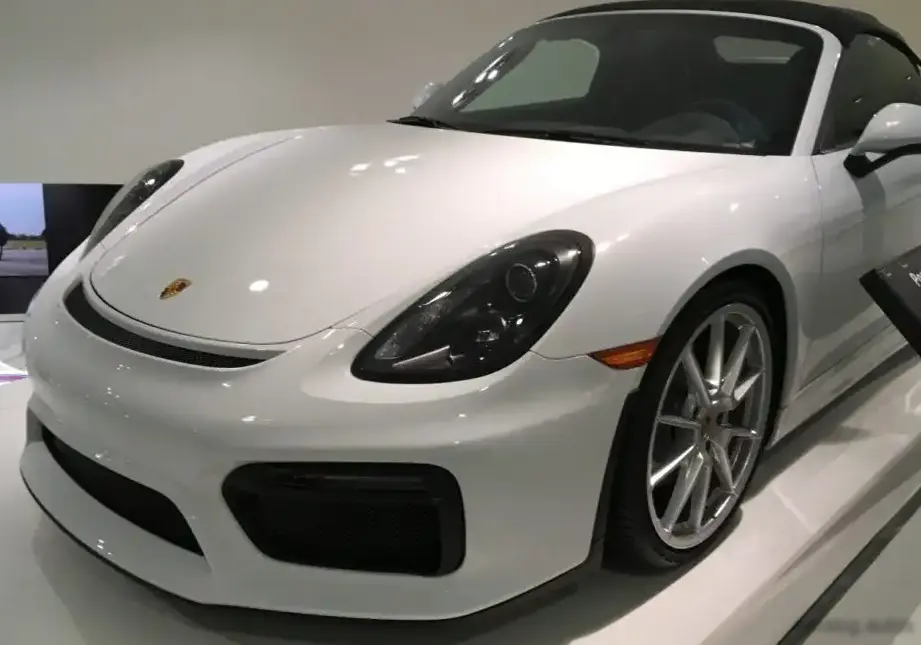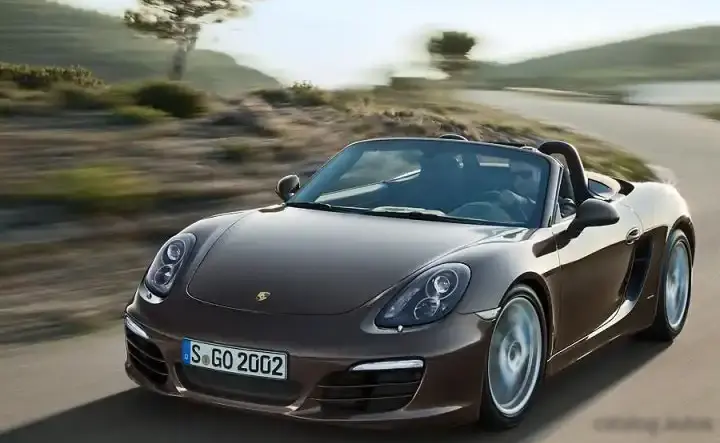
The Porsche Boxster (981) 2.7, produced from 2012 to 2016, represents the first generation of the third Boxster series. Positioned as the entry-level model within the 981 range, it offered a more accessible pathway into Porsche ownership while retaining the core mid-engine roadster experience. The 981 generation marked a significant departure from its predecessor (987), featuring a completely redesigned chassis, updated styling, and a new range of engines. This 2.7-liter variant served as the foundation for the lineup, appealing to buyers seeking a balanced blend of performance, handling, and everyday usability. It slotted below the more powerful Boxster S, offering a different driving experience tailored towards a broader audience.
Technical Specifications
| Brand | Porsche |
| Model | Boxster |
| Generation | Boxster (981) |
| Type (Engine) | 2.7 (265 Hp) |
| Start of production | 2012 |
| End of production | 2016 |
| Powertrain Architecture | Internal Combustion engine |
| Body type | Roadster |
| Seats | 2 |
| Doors | 2 |
| Fuel consumption (urban) | 11.8 l/100 km (19.9 US mpg) |
| Fuel consumption (extra urban) | 6.4 l/100 km (36.8 US mpg) |
| Fuel consumption (combined) | 8.4 l/100 km (28 US mpg) |
| CO2 emissions | 195 g/km |
| Fuel Type | Petrol (Gasoline) |
| Acceleration 0 – 100 km/h | 5.8 sec |
| Acceleration 0 – 62 mph | 5.8 sec |
| Acceleration 0 – 60 mph | 5.5 sec |
| Maximum speed | 264 km/h (164.04 mph) |
| Emission standard | Euro 5 |
| Weight-to-power ratio | 5 kg/Hp |
| Weight-to-torque ratio | 4.8 kg/Nm |
| Power | 265 Hp @ 6700 rpm |
| Torque | 280 Nm @ 4500-6500 rpm (206.52 lb.-ft.) |
| Engine layout | Middle, Longitudinal |
| Engine Model/Code | MA1.22 |
| Engine displacement | 2706 cm3 (165.13 cu. in.) |
| Number of cylinders | 6 |
| Engine configuration | Boxer |
| Compression ratio | 12.5:1 |
| Number of valves per cylinder | 4 |
| Engine oil capacity | 7.5 l (7.93 US qt | 6.6 UK qt) |
| Coolant capacity | 23 l (24.3 US qt | 20.24 UK qt) |
| Kerb Weight | 1330 kg (2932.15 lbs.) |
| Max. weight | 1645 kg (3626.6 lbs.) |
| Max load | 315 kg (694.46 lbs.) |
| Trunk (boot) space – minimum | 280 l (9.89 cu. ft.) |
| Fuel tank capacity | 64 l (16.91 US gal | 14.08 UK gal) |
| Length | 4374 mm (172.2 in.) |
| Width | 1801 mm (70.91 in.) |
| Height | 1282 mm (50.47 in.) |
| Wheelbase | 2475 mm (97.44 in.) |
| Drag coefficient (Cd) | 0.30 |
| Drivetrain Architecture | Rear wheel drive |
| Number of gears | 6 |
| Gearbox type | Manual transmission |
| Front suspension | Independent, type McPherson with coil spring and anti-roll bar |
| Rear suspension | Double wishbone |
| Front brakes | Ventilated discs |
| Rear brakes | Ventilated discs |
| Assisting systems | ABS (Anti-lock braking system) |
| Steering type | Steering rack and pinion |
Powertrain & Engine Architecture
The heart of the 981 Boxster 2.7 is the MA1.22 flat-six engine, a naturally aspirated 2.7-liter powerplant. This engine represents a significant evolution of Porsche’s boxer engine design, incorporating direct fuel injection (DFI) for improved efficiency and power delivery. The DFI system, operating at pressures up to 200 bar, precisely meters fuel directly into the combustion chamber, optimizing the air-fuel mixture. The engine utilizes an aluminum block and cylinder heads, contributing to weight reduction. It features four valves per cylinder, operated by chain-driven dual overhead camshafts. The 6-speed manual transmission was standard, offering precise shifts and a direct connection to the engine. The engine’s characteristics are defined by its relatively high-revving nature and linear power delivery, making it responsive and engaging to drive.
Driving Characteristics
The 2.7-liter Boxster delivers a distinctly different driving experience compared to the more potent Boxster S or the later turbocharged models. While not possessing the outright acceleration of its siblings, the 2.7 offers a beautifully balanced and accessible driving experience. The manual transmission’s gear ratios are well-matched to the engine’s torque curve, providing ample power for everyday driving and spirited backroad excursions. The engine feels eager to rev, and the mid-engine layout contributes to exceptional handling and cornering stability. Compared to the Boxster S, the 2.7 feels less urgent in its acceleration, but more forgiving and easier to modulate, making it a more approachable sports car for a wider range of drivers. The lighter weight compared to the S also contributes to a more nimble feel.
Equipment & Trim Levels
The base 981 Boxster 2.7 came standard with a respectable level of equipment. Interior features included partial leather upholstery, manually adjustable seats, and a basic audio system. Air conditioning was standard, as were power windows and locks. Optional extras were plentiful, allowing buyers to personalize their Boxster. Popular options included full leather interiors, heated seats, Porsche Communication Management (PCM) with navigation, and upgraded sound systems. Sport Chrono Package, which added a Sport Plus mode and launch control, was also a popular choice for enthusiasts. Exterior options included various wheel designs, paint colors, and a wind deflector to reduce cabin turbulence at higher speeds.
Chassis & Braking
The 981 Boxster benefited from a completely redesigned chassis compared to the 987 generation. The new chassis was lighter and stiffer, contributing to improved handling and responsiveness. The suspension utilizes a McPherson strut setup at the front and a double-wishbone configuration at the rear. The standard braking system consisted of ventilated discs at all four corners, providing ample stopping power. ABS (Anti-lock Braking System) was standard. The 2.7-liter model typically featured smaller diameter rear rotors compared to the Boxster S. The steering system is a rack-and-pinion setup, providing precise and communicative steering feel.
Market Reception & Comparison
The 981 Boxster 2.7 was generally well-received by automotive critics. It was praised for its balanced handling, engaging driving experience, and improved interior quality compared to the previous generation. Critics noted that the 2.7-liter engine, while not the most powerful, provided ample performance for most drivers and offered a more accessible entry point into the Boxster range. Fuel economy was also considered competitive for a sports car of its caliber. Compared to the Boxster S, the 2.7 offered a more affordable price point, making it a more attractive option for budget-conscious buyers. Reliability has proven to be generally good, with the MA1.22 engine being a robust and well-engineered unit.
Legacy
The 981 Boxster 2.7 has established itself as a desirable used sports car. Its combination of performance, handling, and relative affordability has made it a popular choice among enthusiasts. The MA1.22 engine has proven to be durable and reliable, with proper maintenance. While the later turbocharged Boxster models offer more power, many enthusiasts appreciate the purity and responsiveness of the naturally aspirated 2.7-liter engine. The 981 generation, and particularly the 2.7 variant, represents a sweet spot in the Boxster lineage, offering a compelling blend of modern technology and classic sports car driving dynamics. Well-maintained examples continue to command reasonable prices in the used car market, making it an accessible and rewarding sports car ownership experience.