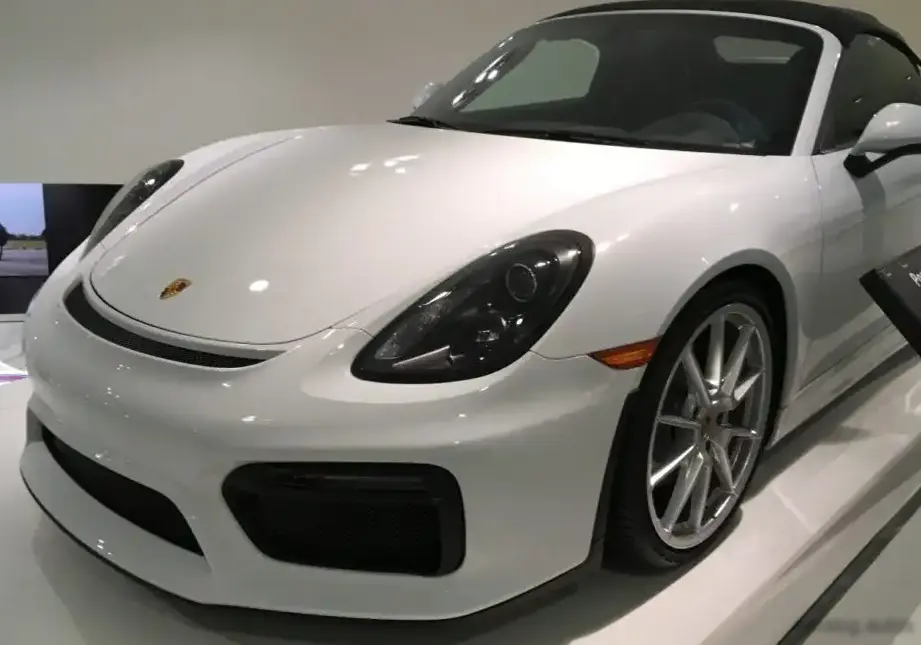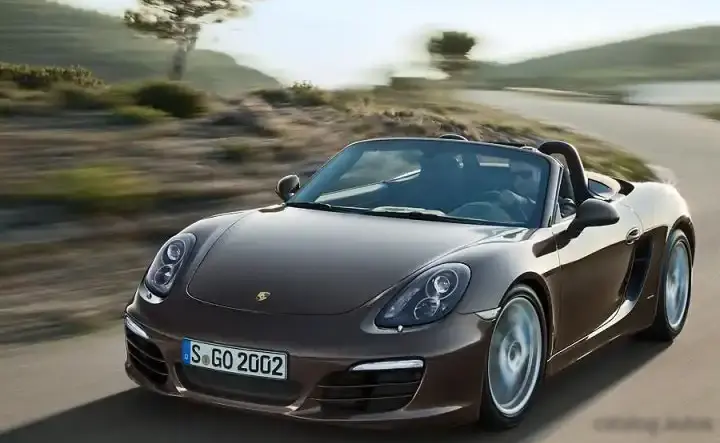
The Porsche Boxster (981) 2.7, produced from 2012 to 2016, represents the first generation of the redesigned Boxster, internally designated the 981. This mid-engine roadster aimed to deliver a more refined and focused driving experience than its predecessor (the 987). The 2.7-liter variant, generating 265 horsepower with the Porsche Doppelkupplung (PDK) dual-clutch transmission, occupied a key position in the lineup, serving as the entry point to the 981 Boxster range while still offering a compelling blend of performance and everyday usability. It bridged the gap between the base model and the more powerful 2.7 S and 3.4 variants.
Technical Specifications
| Brand | Porsche |
| Model | Boxster |
| Generation | Boxster (981) |
| Type (Engine) | 2.7 (265 Hp) PDK |
| Start of production | 2012 |
| End of production | 2016 |
| Powertrain Architecture | Internal Combustion engine |
| Body type | Roadster |
| Seats | 2 |
| Doors | 2 |
| Fuel consumption (urban) | 10.9 l/100 km (21.6 US mpg) |
| Fuel consumption (extra urban) | 6.2 l/100 km (37.9 US mpg) |
| Fuel consumption (combined) | 7.9 l/100 km (29.8 US mpg) |
| CO2 emissions | 183 g/km |
| Fuel Type | Petrol (Gasoline) |
| Acceleration 0 – 100 km/h | 5.7 sec |
| Acceleration 0 – 62 mph | 5.7 sec |
| Acceleration 0 – 60 mph | 5.4 sec |
| Maximum speed | 262 km/h (162.8 mph) |
| Emission standard | Euro 5 |
| Weight-to-power ratio | 5.1 kg/Hp |
| Weight-to-torque ratio | 4.9 kg/Nm |
| Power | 265 Hp @ 6700 rpm |
| Torque | 280 Nm @ 4500-6500 rpm (206.52 lb.-ft. @ 4500-6500 rpm) |
| Engine layout | Middle, Longitudinal |
| Engine Model/Code | MA1.22 |
| Engine displacement | 2706 cm3 (165.13 cu. in.) |
| Number of cylinders | 6 |
| Engine configuration | Boxer |
| Compression ratio | 12.5:1 |
| Number of valves per cylinder | 4 |
| Engine oil capacity | 7.5 l (7.93 US qt | 6.6 UK qt) |
| Coolant capacity | 23 l (24.3 US qt | 20.24 UK qt) |
| Kerb Weight | 1360 kg (2998.29 lbs.) |
| Max. weight | 1675 kg (3692.74 lbs.) |
| Max load | 315 kg (694.46 lbs.) |
| Trunk (boot) space – minimum | 280 l (9.89 cu. ft.) |
| Fuel tank capacity | 64 l (16.91 US gal | 14.08 UK gal) |
| Length | 4374 mm (172.2 in.) |
| Width | 1801 mm (70.91 in.) |
| Height | 1282 mm (50.47 in.) |
| Wheelbase | 2475 mm (97.44 in.) |
| Drag coefficient (Cd) | 0.30 |
| Drivetrain Architecture | Rear wheel drive |
| Number of gears and type of gearbox | 7 gears, automatic transmission PDK |
| Front suspension | Independent, type McPherson with coil spring and anti-roll bar |
| Rear suspension | Double wishbone |
| Front brakes | Ventilated discs |
| Rear brakes | Ventilated discs |
Powertrain & Engine Architecture
The heart of the 981 Boxster 2.7 is the MA1.22 flat-six engine. This 2.7-liter naturally aspirated engine utilizes direct fuel injection (DFI) to optimize combustion efficiency and power delivery. The engine features an aluminum block and cylinder heads, contributing to its relatively lightweight construction. The valvetrain employs four valves per cylinder, operated by chain-driven double overhead camshafts, ensuring precise valve control throughout the rev range. The 265 horsepower output is achieved at 6,700 rpm, while peak torque of 280 Nm (206.52 lb-ft) is available between 4,500 and 6,500 rpm. The engine’s layout, a horizontally opposed “boxer” configuration, contributes to a low center of gravity, enhancing handling characteristics. Paired with the engine is Porsche’s seven-speed PDK dual-clutch transmission. This transmission offers both fully automatic operation and manual gear selection via steering wheel-mounted paddles, providing a versatile driving experience. The PDK’s quick and precise shifts contribute significantly to the car’s acceleration and overall performance.
Driving Characteristics
The 981 Boxster 2.7 with the PDK transmission delivers a refined and engaging driving experience. While not as overtly aggressive as the ‘S’ models, the 2.7-liter engine provides ample power for both spirited driving and comfortable cruising. The PDK transmission’s quick shifts and smooth operation enhance the car’s responsiveness. The gear ratios are well-chosen, providing strong acceleration in everyday driving situations. In Sport+ mode, the PDK holds gears longer and downshifts more aggressively, providing a more dynamic driving experience. Compared to the six-speed manual transmission available on the 2.7, the PDK offers quicker acceleration and improved fuel economy. However, some purists prefer the greater driver involvement of the manual gearbox. The mid-engine layout and well-tuned suspension contribute to excellent balance and handling, making the Boxster a joy to drive on winding roads.
Equipment & Trim Levels
The 981 Boxster 2.7 came standard with a comprehensive list of features, including air conditioning, power windows and locks, a basic audio system, and partial leather upholstery. Optional extras were plentiful, allowing buyers to customize their cars to their preferences. Popular options included a full leather interior, navigation system, upgraded audio systems (such as Bose or Burmester), heated seats, and Porsche Active Suspension Management (PASM), which electronically adjusts the dampers for improved ride comfort and handling. Exterior options included various wheel designs, paint colors, and a wind deflector to reduce turbulence in the cabin with the top down. The standard interior featured a relatively minimalist design, focusing on functionality and driver ergonomics.
Chassis & Braking
The 981 Boxster utilizes a lightweight chassis construction, incorporating high-strength steel and aluminum components. The suspension features independent McPherson struts at the front and a multi-link double wishbone setup at the rear. This configuration provides excellent wheel control and a comfortable ride. The standard brakes consist of ventilated discs at all four corners, providing ample stopping power. ABS (Anti-lock Braking System) is standard, enhancing safety and stability during hard braking. The 2.7 model typically featured smaller brake rotors compared to the ‘S’ variants, reflecting its lower performance potential. The steering system is a precise and responsive rack-and-pinion setup, providing excellent feedback to the driver.
Market Reception & Comparison
The 981 Boxster 2.7 was generally well-received by automotive critics. It was praised for its balanced handling, refined ride, and engaging driving experience. The PDK transmission was lauded for its quick shifts and smooth operation. Compared to the higher-output 2.7 S and 3.4 models, the 2.7 offered a more affordable entry point into the Boxster range. While it didn’t deliver the same level of outright performance, it still provided a compelling driving experience for many enthusiasts. Fuel economy was also a strong point, with the 2.7 achieving respectable figures for a sports car. Reliability has generally been good, although some owners have reported minor issues with the cooling system and oil leaks.
Legacy
The 981 Boxster 2.7 with PDK remains a popular choice in the used car market. Its combination of performance, refinement, and relative affordability makes it an attractive option for those seeking a mid-engine sports car. The MA1.22 engine is known for its durability and relatively low maintenance costs, although regular servicing is essential. The PDK transmission has also proven to be reliable, provided it is properly maintained. As a whole, the 981 Boxster 2.7 represents a well-engineered and enjoyable sports car that continues to provide driving pleasure to its owners today. Its impact lies in solidifying the Boxster’s position as a benchmark for affordable, mid-engine roadsters.