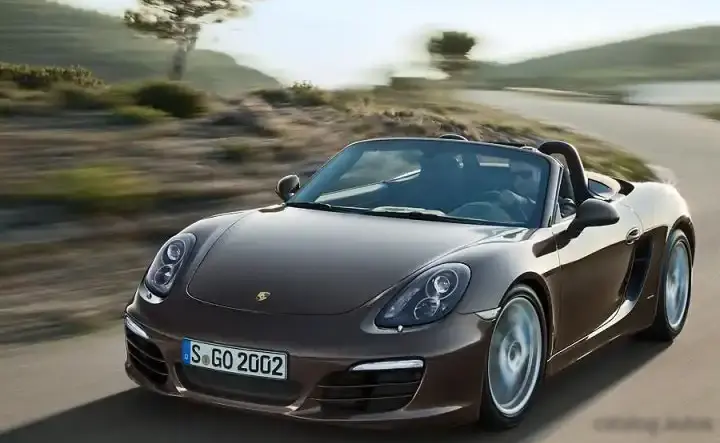
The Porsche Boxster (981) GTS 3.4, produced from 2015 to 2016, represents a significant step up in performance and driving engagement within the 981 generation Boxster lineup. Positioned as the performance-oriented variant, the GTS 3.4 bridged the gap between the standard Boxster and the more focused Spyder model. It built upon the mid-engine roadster platform (the 981) known for its balanced handling and refined driving experience, offering a more potent engine, upgraded brakes, and a sport-tuned chassis. This model catered to enthusiasts seeking a thrilling, yet still daily-drivable, sports car.
Technical Specifications
| Brand | Porsche |
| Model | Boxster |
| Generation | Boxster (981) |
| Type | GTS 3.4 (330 Hp) |
| Start of production | 2015 |
| End of production | 2016 |
| Powertrain Architecture | Internal Combustion engine |
| Body type | Roadster |
| Seats | 2 |
| Doors | 2 |
| Fuel consumption (urban) | 12.7 l/100 km (18.5 US mpg, 22.2 UK mpg, 7.9 km/l) |
| Fuel consumption (extra urban) | 7.1 l/100 km (33.1 US mpg, 39.8 UK mpg, 14.1 km/l) |
| Fuel consumption (combined) | 9 l/100 km (26.1 US mpg, 31.4 UK mpg, 11.1 km/l) |
| CO2 emissions | 211 g/km |
| Fuel Type | Petrol (Gasoline) |
| Acceleration 0 – 100 km/h | 5 sec |
| Acceleration 0 – 62 mph | 5 sec |
| Acceleration 0 – 60 mph | 4.8 sec |
| Maximum speed | 281 km/h (174.61 mph) |
| Weight-to-power ratio | 4.1 kg/Hp, 245.4 Hp/tonne |
| Weight-to-torque ratio | 3.6 kg/Nm, 275.1 Nm/tonne |
| Power | 330 Hp @ 6700 rpm |
| Power per litre | 96 Hp/l |
| Torque | 370 Nm @ 4500-5800 rpm (272.9 lb.-ft. @ 4500-5800 rpm) |
| Engine layout | Middle, Longitudinal |
| Engine Model/Code | MA1.23 |
| Engine displacement | 3436 cm3 (209.68 cu. in.) |
| Number of cylinders | 6 |
| Engine configuration | Boxer |
| Compression ratio | 12.5:1 |
| Number of valves per cylinder | 4 |
| Engine aspiration | Naturally aspirated engine |
| Engine oil capacity | 7.5 l (7.93 US qt | 6.6 UK qt) |
| Coolant capacity | 23 l (24.3 US qt | 20.24 UK qt) |
| Kerb Weight | 1345 kg (2965.22 lbs.) |
| Max. weight | 1655 kg (3648.65 lbs.) |
| Max load | 310 kg (683.43 lbs.) |
| Trunk (boot) space – minimum | 280 l (9.89 cu. ft.) |
| Fuel tank capacity | 64 l (16.91 US gal | 14.08 UK gal) |
| Length | 4404 mm (173.39 in.) |
| Width | 1801 mm (70.91 in.) |
| Height | 1273 mm (50.12 in.) |
| Wheelbase | 2475 mm (97.44 in.) |
| Drag coefficient (Cd) | 0.32 |
| Drivetrain Architecture | Rear wheel drive |
| Number of gears | 6 gears, manual transmission |
| Front suspension | Independent, type McPherson with coil spring and anti-roll bar |
| Rear suspension | Double wishbone |
| Front brakes | Ventilated discs |
| Rear brakes | Ventilated discs |
| Assisting systems | ABS (Anti-lock braking system) |
| Steering type | Steering rack and pinion |
Powertrain & Engine Architecture
At the heart of the Boxster GTS 3.4 lies the MA1.23 engine, a 3.4-liter naturally aspirated flat-six (boxer) engine. This engine is a direct descendant of the powerplants found in the 991 generation 911, albeit detuned for the Boxster application. The engine utilizes direct fuel injection (DFI) to maximize efficiency and power output. The valvetrain features four valves per cylinder, contributing to its high-revving nature and broad powerband. The 6-speed manual transmission was standard, offering precise shifts and a direct connection to the engine. Porsche also offered a 7-speed PDK dual-clutch transmission as an option, providing even faster gear changes and a more automated driving experience. The engine’s longitudinal mid-engine placement contributes significantly to the car’s balanced handling characteristics.
Driving Characteristics
The 330 horsepower and 273 lb-ft of torque delivered by the GTS 3.4 engine translate into exhilarating performance. Acceleration from 0-60 mph takes approximately 4.8 seconds, and the car can reach a top speed of 174.6 mph. Compared to the base Boxster’s 2.7-liter engine, the GTS offers a substantial power increase, resulting in noticeably quicker acceleration and improved responsiveness. While not as raw or visceral as the naturally aspirated engines found in earlier Boxster models, the GTS provides a refined yet engaging driving experience. The manual transmission’s gear ratios are well-matched to the engine’s powerband, allowing for spirited driving on both winding roads and open highways. The PDK transmission, while quicker, sacrifices some of the driver involvement offered by the manual.
Equipment & Trim Levels
The Boxster GTS 3.4 came standard with a number of performance and aesthetic enhancements. These included the Porsche Sport Chrono Package, which added a Sport Plus mode for more aggressive throttle response and stability control settings. Sport seats provided enhanced lateral support during cornering. Exterior styling cues included unique front and rear fascias, blacked-out wheels, and a sport exhaust system with black tailpipes. Inside, the cabin featured Alcantara upholstery, a sport steering wheel, and aluminum trim. Optional extras included features like Porsche Dynamic Lighting System (PDLS), a navigation system, and various customization options for interior colors and materials.
Chassis & Braking
The GTS 3.4 benefited from a revised chassis setup compared to the standard Boxster. It featured a 10mm lower ride height and stiffer springs, resulting in reduced body roll and improved handling precision. Larger diameter brakes with upgraded calipers and rotors provided enhanced stopping power. The braking system included ABS (Anti-lock Braking System) as standard. The suspension geometry was optimized for performance, and the car featured a standard mechanical limited-slip differential, further enhancing traction and cornering ability. Rear brakes were ventilated discs, providing consistent stopping power even under demanding conditions.
Market Reception & Comparison
The Porsche Boxster GTS 3.4 was widely praised by automotive critics for its exceptional handling, powerful engine, and overall driving experience. It was often lauded as one of the best-handling sports cars in its price range. Compared to the base Boxster, the GTS offered a significant performance upgrade, justifying its higher price tag for enthusiasts. Against competitors like the BMW Z4 and Audi TT, the Boxster GTS stood out for its mid-engine layout, which provided superior balance and handling. Fuel economy was respectable for a performance car, averaging around 26 mpg in combined driving. Reliability was generally good, typical of Porsche engineering, although maintenance costs could be higher than those of some competitors.
Legacy
The 981 Boxster GTS 3.4 has proven to be a durable and reliable sports car. The naturally aspirated flat-six engine is known for its longevity, provided it receives regular maintenance. On the used car market, these models hold their value well, reflecting their desirability among Porsche enthusiasts. The combination of performance, handling, and everyday usability makes the 981 Boxster GTS 3.4 a compelling choice for those seeking a thrilling and rewarding driving experience. Its balanced chassis and responsive engine continue to deliver a driving experience that remains competitive even by modern standards.