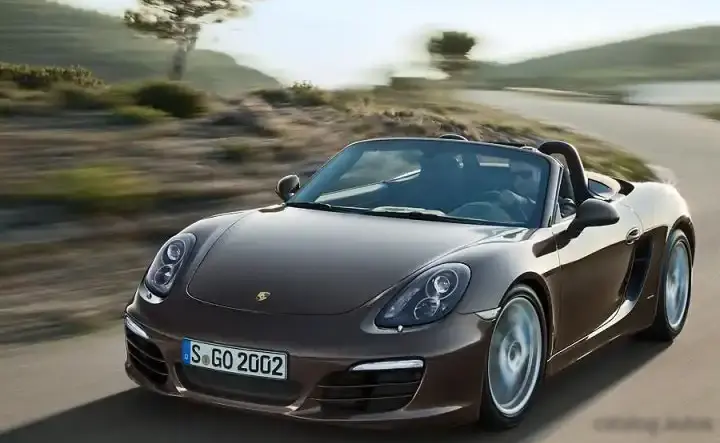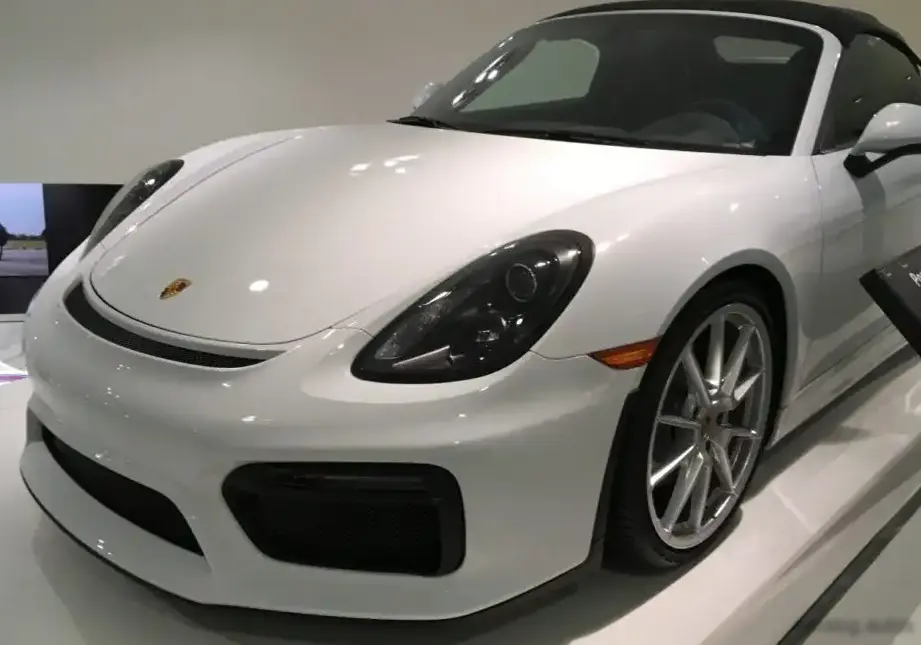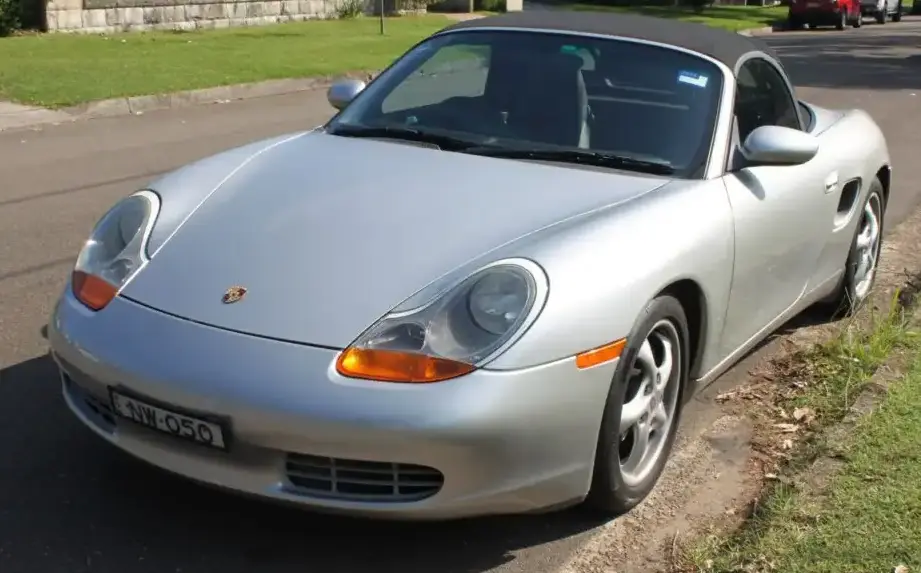
The Porsche Boxster (986) 2.5, produced from 1996 to 1999, represented Porsche’s entry into the affordable roadster market. Positioned as the base model within the 986 generation, it aimed to deliver the core Porsche driving experience – mid-engine balance and responsive handling – at a more accessible price point than the 911. This variant utilized a 2.5-liter flat-six engine paired with a five-speed Tiptronic S automatic transmission, catering to drivers seeking a blend of performance and convenience. It was a pivotal model for Porsche, broadening the brand’s appeal and proving successful in attracting a new customer base.
Technical Specifications
| Brand | Porsche |
| Model | Boxster |
| Generation | Boxster (986) |
| Type (Engine) | 2.5 (204 Hp) Tiptronic S |
| Start of production | 1996 |
| End of production | 1999 |
| Powertrain Architecture | Internal Combustion engine |
| Body type | Roadster |
| Seats | 2 |
| Doors | 2 |
| Fuel consumption (economy) – urban (NEDC) | 15.8 l/100 km (14.9 US mpg, 17.9 UK mpg, 6.3 km/l) |
| Fuel consumption (economy) – extra urban (NEDC) | 8.1 l/100 km (29 US mpg, 34.9 UK mpg, 12.3 km/l) |
| Fuel consumption (economy) – combined (NEDC) | 10.9 l/100 km (21.6 US mpg, 25.9 UK mpg, 9.2 km/l) |
| CO2 emissions (NEDC) | 264 g/km |
| Fuel Type | Petrol (Gasoline) |
| Acceleration 0 – 100 km/h | 7.6 sec |
| Acceleration 0 – 62 mph | 7.6 sec |
| Acceleration 0 – 60 mph | 7.4 sec |
| Maximum speed | 235 km/h (146.02 mph) |
| Emission standard | Euro 2 |
| Weight-to-power ratio | 6.4 kg/Hp, 155.7 Hp/tonne |
| Weight-to-torque ratio | 5.3 kg/Nm, 187 Nm/tonne |
| Power | 204 Hp @ 6000 rpm |
| Power per litre | 82.3 Hp/l |
| Torque | 245 Nm @ 4500 rpm (180.7 lb.-ft. @ 4500 rpm) |
| Engine layout | Middle, Longitudinal |
| Engine Model/Code | M96.20 |
| Engine displacement | 2480 cm3 (151.34 cu. in.) |
| Number of cylinders | 6 |
| Engine configuration | Boxer |
| Cylinder Bore | 85.5 mm (3.37 in.) |
| Piston Stroke | 72 mm (2.83 in.) |
| Compression ratio | 11:1 |
| Number of valves per cylinder | 4 |
| Fuel injection system | Multi-port manifold injection |
| Engine aspiration | Naturally aspirated engine |
| Valvetrain | DOHC |
| Engine oil capacity | 8.3 l (8.77 US qt | 7.3 UK qt) |
| Coolant | 17 l (17.96 US qt | 14.96 UK qt) |
| Kerb Weight | 1310 kg (2888.06 lbs.) |
| Max. weight | 1610 kg (3549.44 lbs.) |
| Max load | 300 kg (661.39 lbs.) |
| Trunk (boot) space – minimum | 260 l (9.18 cu. ft.) |
| Fuel tank capacity | 57 l (15.06 US gal | 12.54 UK gal) |
| Max. roof load | 75 kg (165.35 lbs.) |
| Length | 4315 mm (169.88 in.) |
| Width | 1780 mm (70.08 in.) |
| Height | 1290 mm (50.79 in.) |
| Wheelbase | 2415 mm (95.08 in.) |
| Front track | 1465 mm (57.68 in.) |
| Rear (Back) track | 1525 mm (60.04 in.) |
| Ride height (ground clearance) | 121 mm (4.76 in.) |
| Drag coefficient (Cd) | 0.31 |
| Minimum turning circle (turning diameter) | 11.1 m (36.42 ft.) |
| Drivetrain Architecture | The Internal combustion engine (ICE) drives the rear wheels of the vehicle. |
| Drive wheel | Rear wheel drive |
| Number of gears and type of gearbox | 5 gears, automatic transmission Tiptronic S |
| Front suspension | Independent type McPherson |
| Rear suspension | McPherson |
| Front brakes | Ventilated discs |
| Rear brakes | Ventilated discs |
| Assisting systems | ABS (Anti-lock braking system) |
| Steering type | Steering rack and pinion |
| Power steering | Hydraulic Steering |
| Tires size | 205/55 R 16 |
| Wheel rims size | 6 J x 16 |
Powertrain & Engine Architecture
The heart of the 986 Boxster 2.5 is the M96.20 engine, a 2.5-liter naturally aspirated flat-six. This engine, a hallmark of Porsche engineering, features a 60-degree boxer configuration, contributing to a low center of gravity and improved balance. It utilizes multi-port fuel injection and a dual overhead camshaft (DOHC) valvetrain with four valves per cylinder. The engine produces 204 horsepower at 6000 rpm and 245 Nm (180.7 lb-ft) of torque at 4500 rpm. The Tiptronic S transmission is a five-speed automatic with a torque converter. It offered drivers the convenience of automatic operation, but also allowed for manual gear selection via steering wheel-mounted buttons or the gear selector itself, providing a degree of driver involvement. This transmission was designed to handle the engine’s output effectively, though it wasn’t as quick-shifting as a traditional manual gearbox.
Driving Characteristics
The 2.5-liter Tiptronic S Boxster offered a comfortable and accessible driving experience. While not as overtly sporty as the manual transmission or the higher-output 2.7-liter variants, it still delivered the characteristic Porsche handling balance. The Tiptronic S transmission, while smooth, did introduce some power loss compared to the manual, resulting in a slightly slower 0-60 mph time of around 7.4 seconds. The gear ratios were tuned for a balance of acceleration and fuel economy. In everyday driving, the automatic transmission proved convenient, especially in urban environments. However, drivers seeking more spirited performance found the manual gear selection mode useful for maintaining control during cornering or overtaking.
Equipment & Trim Levels
The base 986 Boxster 2.5 came reasonably well-equipped, though it was positioned as the entry point to the Porsche range. Standard features included power windows, central locking, and a basic audio system. The interior typically featured cloth upholstery, although leather options were available. Optional extras included upgraded audio systems, heated seats, air conditioning (often an extra cost item), and various cosmetic enhancements. The dashboard layout was relatively simple and functional, prioritizing driver information. The Tiptronic S transmission itself was considered an option, with the standard gearbox being a five-speed manual.
Chassis & Braking
The 986 Boxster featured a lightweight chassis constructed primarily of galvanized steel. Suspension consisted of independent McPherson struts at both the front and rear, providing a good balance of ride comfort and handling precision. Braking duties were handled by ventilated disc brakes on all four wheels, providing ample stopping power. Anti-lock Braking System (ABS) was standard. The suspension setup was tuned to complement the car’s mid-engine layout, minimizing body roll and maximizing grip. The relatively low weight of the 2.5-liter model contributed to its agile handling characteristics.
Market Reception & Comparison
The 986 Boxster 2.5 was generally well-received by automotive critics, who praised its handling, balance, and overall driving experience. However, some criticized the engine’s lack of outright power compared to the 2.7-liter variant and the slightly less engaging nature of the Tiptronic S transmission. Fuel economy was considered reasonable for a sports car, averaging around 21.6 US mpg in combined driving. Compared to the manual transmission version, the Tiptronic S offered slightly lower fuel economy due to the torque converter. Reliability was generally good, although the M96 engine is known for potential intermediate shaft bearing failures, a concern that applies to all variants of this engine family.
Legacy
The 986 Boxster 2.5 played a significant role in revitalizing Porsche’s fortunes in the late 1990s. It broadened the brand’s appeal and attracted a new generation of customers. Today, the 986 Boxster 2.5 remains a relatively affordable entry point into Porsche ownership. While the higher-output variants are more sought after by enthusiasts, the 2.5-liter model offers a compelling combination of Porsche DNA and accessible pricing. The Tiptronic S transmission, while not as desirable as the manual, can be a good option for drivers prioritizing convenience. Well-maintained examples are becoming increasingly collectible, and the car’s relatively simple mechanicals make it a viable option for DIY mechanics.