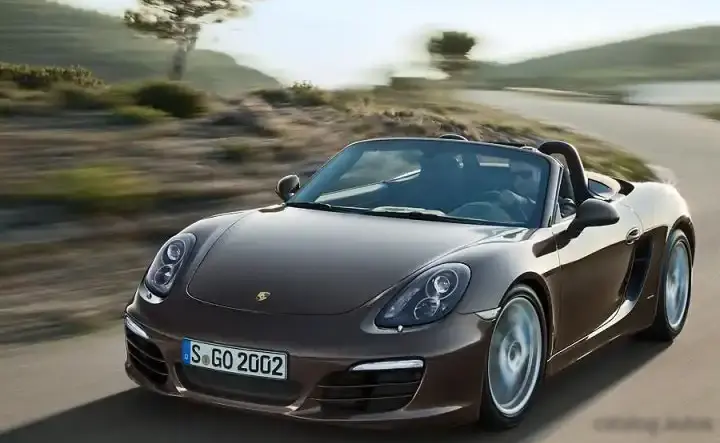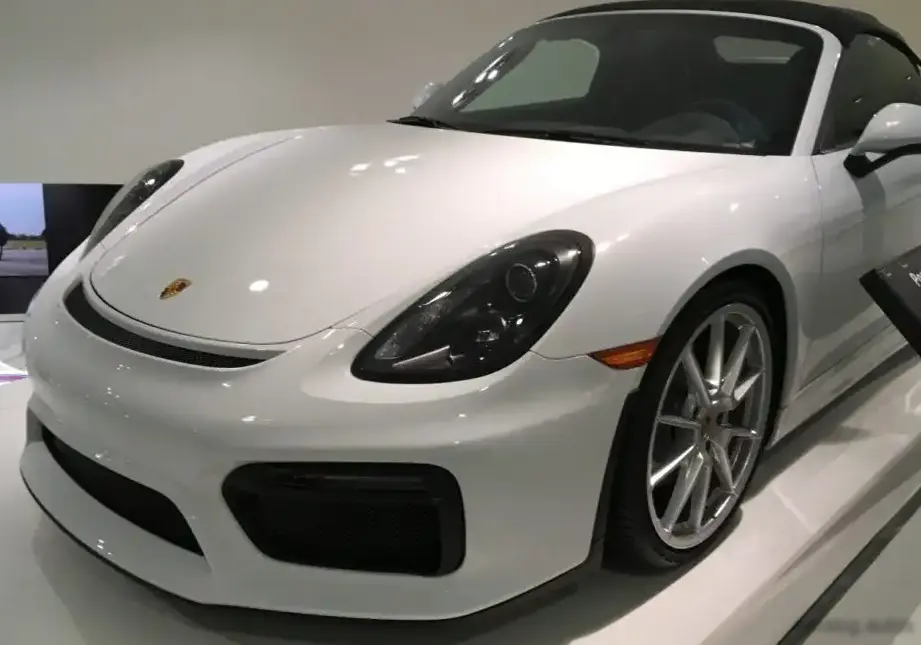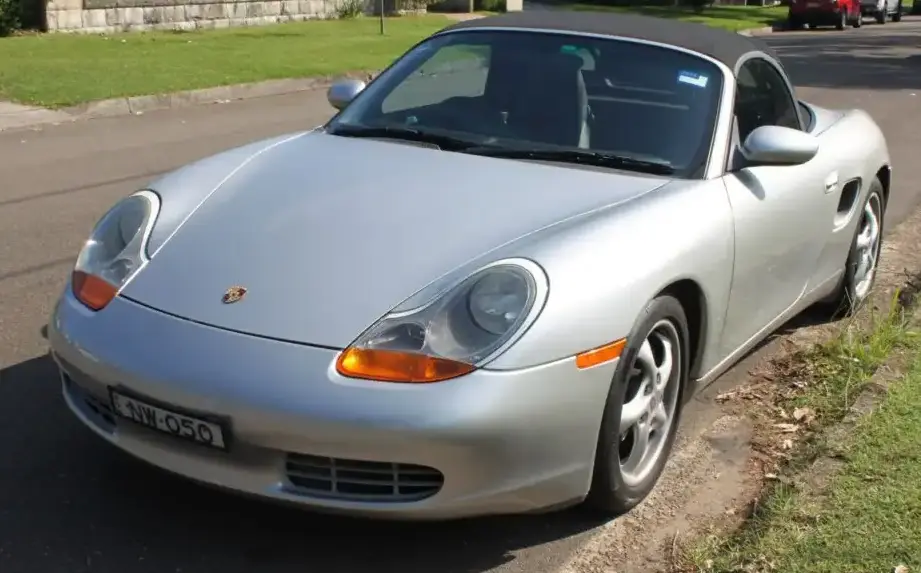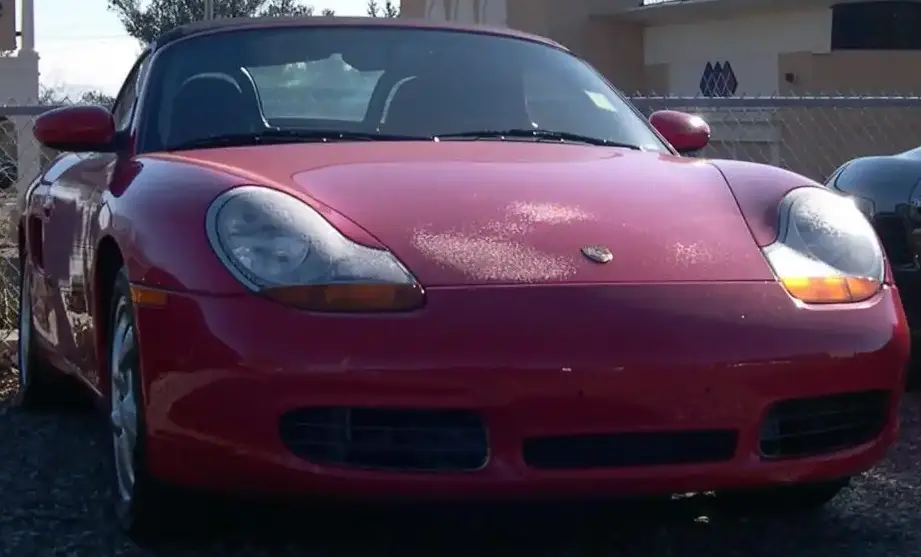
The Porsche Boxster (986) S 3.2 Tiptronic S, produced from 1999 to 2002, represented a significant step up in performance and refinement for Porsche’s entry-level roadster. Positioned as the higher-performance variant within the 986 generation, it slotted above the base 2.5-liter model and below the even more focused Boxster S with a manual transmission. This version combined a 3.2-liter flat-six engine with Porsche’s Tiptronic S five-speed automatic transmission, aiming to deliver a blend of sporting capability and ease of use. The 986 Boxster was Porsche’s first truly affordable roadster, designed to attract a wider audience to the brand and compete with rivals like the BMW Z3 and Mercedes-Benz SLK.
Technical Specifications
| Brand | Porsche |
| Model | Boxster |
| Generation | Boxster (986) |
| Type (Engine) | S 3.2 (252 Hp) Tiptronic S |
| Start of production | 1999 year |
| End of production | 2002 year |
| Powertrain Architecture | Internal Combustion engine |
| Body type | Roadster |
| Seats | 2 |
| Doors | 2 |
| Fuel consumption (economy) – urban (NEDC) | 17.2 l/100 km (13.7 US mpg, 16.4 UK mpg, 5.8 km/l) |
| Fuel consumption (economy) – extra urban (NEDC) | 8.2 l/100 km (28.7 US mpg, 34.4 UK mpg, 12.2 km/l) |
| Fuel consumption (economy) – combined (NEDC) | 11.3 l/100 km (20.8 US mpg, 25 UK mpg, 8.8 km/l) |
| CO2 emissions (NEDC) | 280 g/km |
| Fuel Type | Petrol (Gasoline) |
| Acceleration 0 – 100 km/h | 6.5 sec |
| Acceleration 0 – 62 mph | 6.5 sec |
| Acceleration 0 – 60 mph | 6.2 sec |
| Maximum speed | 255 km/h (158.45 mph) |
| Emission standard | Euro 3 |
| Weight-to-power ratio | 5.3 kg/Hp, 188.8 Hp/tonne |
| Weight-to-torque ratio | 4.4 kg/Nm, 228.5 Nm/tonne |
| Power | 252 Hp @ 6250 rpm |
| Power per litre | 79.3 Hp/l |
| Torque | 305 Nm @ 4500 rpm (224.96 lb.-ft. @ 4500 rpm) |
| Engine layout | Middle, Longitudinal |
| Engine Model/Code | M96.21 |
| Engine displacement | 3179 cm3 (193.99 cu. in.) |
| Number of cylinders | 6 |
| Engine configuration | Boxer |
| Cylinder Bore | 93 mm (3.66 in.) |
| Piston Stroke | 78 mm (3.07 in.) |
| Compression ratio | 11:1 |
| Number of valves per cylinder | 4 |
| Fuel injection system | Multi-port manifold injection |
| Engine aspiration | Naturally aspirated engine |
| Valvetrain | DOHC |
| Engine oil capacity | 8.5 l (8.98 US qt | 7.48 UK qt) |
| Coolant | 17 l (17.96 US qt | 14.96 UK qt) |
| Kerb Weight | 1335 kg (2943.17 lbs.) |
| Max. weight | 1655 kg (3648.65 lbs.) |
| Max load | 320 kg (705.48 lbs.) |
| Trunk (boot) space – minimum | 260 l (9.18 cu. ft.) |
| Fuel tank capacity | 64 l (16.91 US gal | 14.08 UK gal) |
| Max. roof load | 75 kg (165.35 lbs.) |
| Length | 4315 mm (169.88 in.) |
| Width | 1780 mm (70.08 in.) |
| Height | 1290 mm (50.79 in.) |
| Wheelbase | 2415 mm (95.08 in.) |
| Front track | 1455 mm (57.28 in.) |
| Rear (Back) track | 1508 mm (59.37 in.) |
| Ride height (ground clearance) | 121 mm (4.76 in.) |
| Drag coefficient (Cd) | 0.32 |
| Minimum turning circle (turning diameter) | 11.1 m (36.42 ft.) |
| Drivetrain Architecture | Rear wheel drive |
| Drive wheel | Rear wheel drive |
| Number of gears and type of gearbox | 5 gears, automatic transmission Tiptronic S |
| Front suspension | Independent type McPherson |
| Rear suspension | McPherson |
| Front brakes | Ventilated discs |
| Rear brakes | Ventilated discs |
| Assisting systems | ABS (Anti-lock braking system) |
| Steering type | Steering rack and pinion |
| Power steering | Hydraulic Steering |
| Tires size | Front wheel tires: 205/50 ZR 17 Rear wheel tires: 255/40 ZR 17 |
| Wheel rims size | Front wheel rims: 7 J x 17 Rear wheel rims: 8.5 J x 17 |
Powertrain & Engine Architecture
At the heart of the Boxster S 3.2 Tiptronic S lies the M96.21 engine, a 3.2-liter naturally aspirated flat-six. This engine builds upon the foundation of the earlier M96 series, featuring a dry-sump lubrication system – a hallmark of Porsche engineering – to ensure consistent oil supply during spirited driving. The engine utilizes multi-port fuel injection and a double overhead camshaft (DOHC) valvetrain with four valves per cylinder. This configuration allows for efficient combustion and contributes to the engine’s responsive nature. The Tiptronic S transmission is a five-speed automatic with a torque converter, but it also offers a manual shift mode allowing the driver some control over gear selection. This transmission was designed to provide smoother shifts and quicker response times compared to a standard automatic.
Driving Characteristics
The 90 hp increase over the base 2.5-liter Boxster was immediately noticeable. The 3.2-liter engine delivered a more substantial surge of power throughout the rev range, making overtaking and spirited driving considerably more enjoyable. While the Tiptronic S transmission offered convenience, it didn’t quite match the engagement and responsiveness of the six-speed manual available in the standard Boxster S. The automatic’s shift points were generally well-chosen, but lacked the precision and immediacy of a skilled driver. The gear ratios were optimized for a balance of acceleration and cruising efficiency. The car felt planted and stable, thanks to its mid-engine layout and well-tuned suspension.
Equipment & Trim Levels
The Boxster S 3.2 Tiptronic S came standard with a generous array of features, including leather upholstery, air conditioning, power windows and locks, and a high-fidelity sound system. Optional extras were plentiful, allowing buyers to personalize their vehicles. Popular options included heated seats, a navigation system, upgraded wheels, and various interior trim packages. The interior design was driver-focused, with a clear and concise instrument cluster and ergonomically placed controls. The Tiptronic S models often featured a sport steering wheel with paddle shifters for manual gear selection.
Chassis & Braking
The 986 Boxster utilized a lightweight chassis construction, employing galvanized steel and aluminum components to minimize weight and maximize rigidity. The suspension consisted of independent McPherson struts at all four corners, with stabilizer bars to reduce body roll. The braking system featured ventilated discs on all four wheels, providing ample stopping power. ABS (Anti-lock Braking System) was standard. The suspension tuning was geared towards providing a comfortable ride while maintaining excellent handling characteristics. The rear track was slightly wider than the front, contributing to the car’s stability.
Market Reception & Comparison
The Boxster S 3.2 Tiptronic S was generally well-received by automotive critics. It was praised for its engaging driving experience, responsive engine, and refined interior. However, some reviewers noted that the Tiptronic S transmission didn’t fully exploit the engine’s potential, and that the manual transmission offered a more rewarding driving experience. Compared to the base Boxster, the S model offered a significant performance upgrade, justifying its higher price tag. Fuel economy was reasonable for a sports car of its caliber, but not exceptional. Reliability was generally good, although some owners reported issues with the intermediate shaft (IMS) bearing, a common concern for early 996 and 986 Porsches.
Legacy
The Porsche Boxster (986) S 3.2 Tiptronic S remains a popular choice among enthusiasts today. Its combination of performance, style, and relative affordability has made it a desirable used sports car. While the IMS bearing issue is a known concern, preventative maintenance and upgrades can mitigate the risk. The 986 Boxster played a crucial role in revitalizing the Porsche brand and establishing the Boxster as a benchmark for open-top sports cars. Well-maintained examples continue to provide a thrilling and engaging driving experience, and are increasingly appreciated for their classic Porsche DNA.