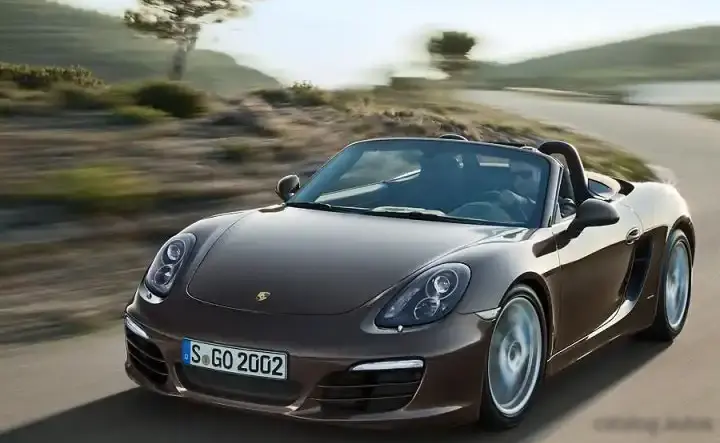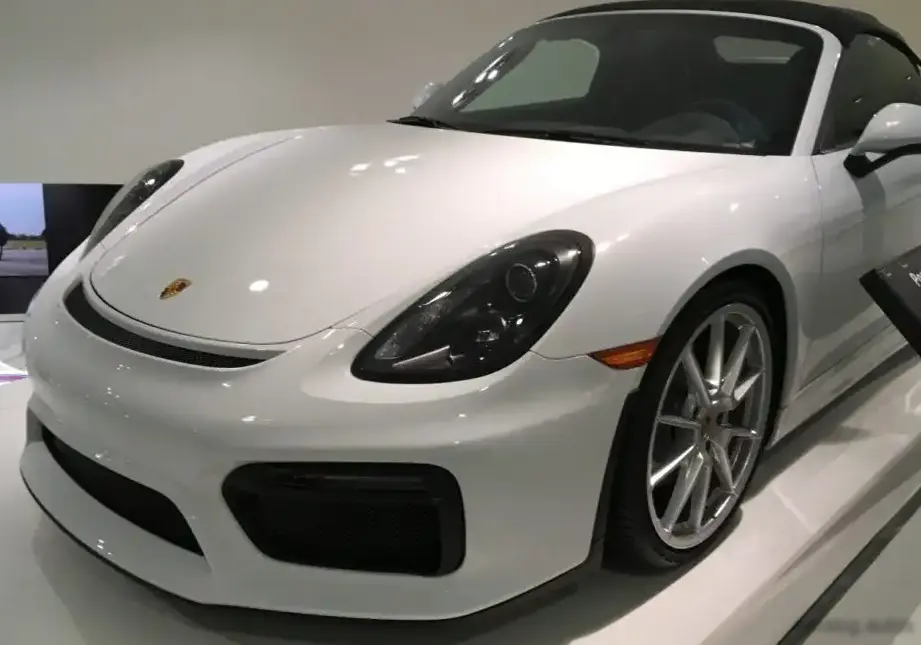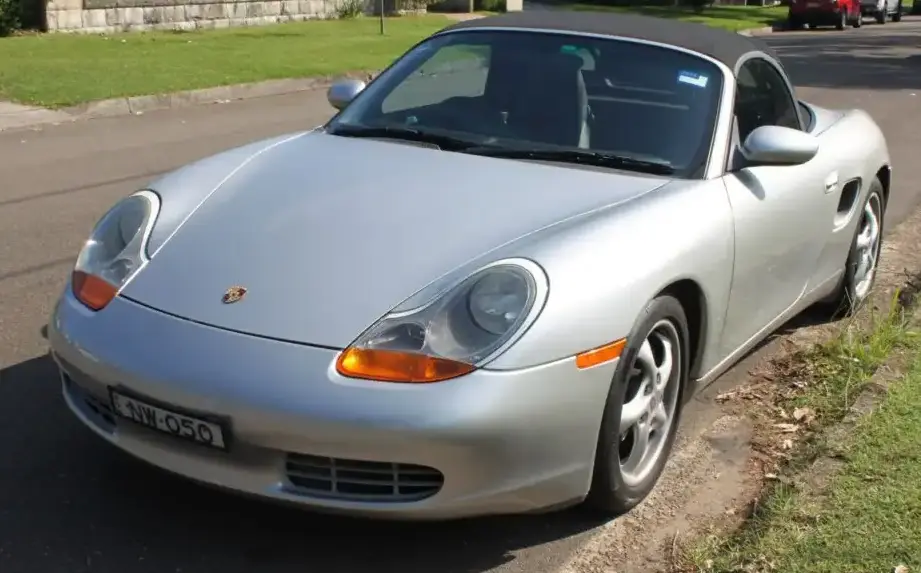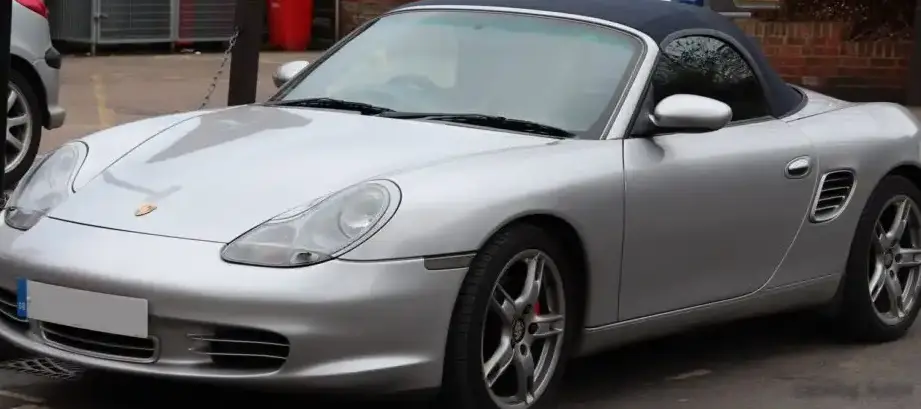
The Porsche Boxster (986) S 3.2, produced from 2002 to 2004, represented a significant evolution of Porsche’s entry-level roadster. Positioned as the higher-performance variant within the 986 generation, it bridged the gap between the base Boxster and the more expensive 911 models. The “S” designation denoted substantial upgrades over the standard Boxster, primarily centered around a larger, more powerful engine and enhanced chassis components. This model played a crucial role in expanding Porsche’s customer base and establishing the Boxster as a desirable sports car in its own right, particularly in the North American market where open-top motoring was highly popular.
Technical Specifications
| Brand | Porsche |
| Model | Boxster |
| Generation | Boxster (986) |
| Type (Engine) | S 3.2 (260 Hp) |
| Start of production | 2002 |
| End of production | 2004 |
| Powertrain Architecture | Internal Combustion engine |
| Body type | Roadster |
| Seats | 2 |
| Doors | 2 |
| Fuel consumption (economy) – urban (NEDC) | 15.3 l/100 km (15.4 US mpg, 18.5 UK mpg, 6.5 km/l) |
| Fuel consumption (economy) – extra urban (NEDC) | 7.8 l/100 km (30.2 US mpg, 36.2 UK mpg, 12.8 km/l) |
| Fuel consumption (economy) – combined (NEDC) | 10.5 l/100 km (22.4 US mpg, 26.9 UK mpg, 9.5 km/l) |
| CO2 emissions (NEDC) | 255 g/km |
| Fuel Type | Petrol (Gasoline) |
| Acceleration 0 – 100 km/h | 5.7 sec |
| Acceleration 0 – 62 mph | 5.7 sec |
| Acceleration 0 – 60 mph | 5.4 sec |
| Maximum speed | 264 km/h (164.04 mph) |
| Emission standard | Euro 3 |
| Weight-to-power ratio | 5.1 kg/Hp, 197 Hp/tonne |
| Weight-to-torque ratio | 4.3 kg/Nm, 234.8 Nm/tonne |
| Power | 260 Hp @ 6200 rpm |
| Power per litre | 81.8 Hp/l |
| Torque | 310 Nm @ 4600 rpm (228.64 lb.-ft. @ 4600 rpm) |
| Engine layout | Middle, Longitudinal |
| Engine Model/Code | M96.24 |
| Engine displacement | 3179 cm3 (193.99 cu. in.) |
| Number of cylinders | 6 |
| Engine configuration | Boxer |
| Cylinder Bore | 93 mm (3.66 in.) |
| Piston Stroke | 78 mm (3.07 in.) |
| Compression ratio | 11:1 |
| Number of valves per cylinder | 4 |
| Fuel injection system | Multi-port manifold injection |
| Engine aspiration | Naturally aspirated engine |
| Valvetrain | DOHC |
| Engine oil capacity | 8.3 l (8.77 US qt | 7.3 UK qt) |
| Coolant | 17 l (17.96 US qt | 14.96 UK qt) |
| Kerb Weight | 1320 kg (2910.1 lbs.) |
| Max. weight | 1630 kg (3593.53 lbs.) |
| Max load | 310 kg (683.43 lbs.) |
| Trunk (boot) space – minimum | 260 l (9.18 cu. ft.) |
| Fuel tank capacity | 64 l (16.91 US gal | 14.08 UK gal) |
| Max. roof load | 75 kg (165.35 lbs.) |
| Length | 4320 mm (170.08 in.) |
| Width | 1780 mm (70.08 in.) |
| Height | 1290 mm (50.79 in.) |
| Wheelbase | 2415 mm (95.08 in.) |
| Front track | 1455 mm (57.28 in.) |
| Rear (Back) track | 1514 mm (59.61 in.) |
| Drag coefficient (Cd) | 0.32 |
| Minimum turning circle | 11.1 m (36.42 ft.) |
| Drivetrain Architecture | Rear wheel drive |
| Drive wheel | Rear wheel drive |
| Number of gears and type of gearbox | 6 gears, manual transmission |
| Front suspension | Independent type McPherson |
| Rear suspension | McPherson |
| Front brakes | Ventilated discs |
| Rear brakes | Ventilated discs |
| Assisting systems | ABS (Anti-lock braking system) |
| Steering type | Steering rack and pinion |
| Power steering | Hydraulic Steering |
| Tires size | Front wheel tires: 205/50 ZR 17 Rear wheel tires: 255/40 ZR 17 |
| Wheel rims size | Front wheel rims: 7 J x 17 ET 55 Rear wheel rims: 8.5 J x 17 ET 48 |
Powertrain & Engine Architecture
The heart of the 986 Boxster S 3.2 is the M96.24 engine, a 3.2-liter naturally aspirated flat-six (boxer) engine. This engine represented a significant increase in displacement and power compared to the earlier 2.7-liter engine found in the base 986 models. The M96.24 featured an increased bore and stroke, along with revised cylinder heads and intake manifolds to optimize airflow. It utilized a multi-port fuel injection system, delivering fuel directly into the intake ports. The engine’s boxer configuration, with horizontally opposed cylinders, contributed to a low center of gravity, enhancing handling characteristics. The engine produced 260 horsepower at 6200 rpm and 310 Nm (228.64 lb-ft) of torque at 4600 rpm. The standard transmission was a six-speed manual, although a five-speed Tiptronic S automatic transmission was also available as an option. The Tiptronic S offered both fully automatic operation and manual gear selection via steering wheel-mounted buttons.
Driving Characteristics
The 986 Boxster S 3.2 offered a noticeably more engaging driving experience than the base Boxster. The increased power and torque of the 3.2-liter engine provided quicker acceleration and more robust performance across the rev range. The six-speed manual transmission was well-matched to the engine’s powerband, allowing for precise gear changes and optimal control. The rear-wheel-drive layout and mid-engine placement contributed to excellent balance and handling. While not as brutally fast as the contemporary 911, the Boxster S offered a pure and rewarding sports car experience, particularly on winding roads. The automatic Tiptronic S transmission, while convenient, did slightly diminish the sense of connection and responsiveness compared to the manual.
Equipment & Trim Levels
The Boxster S 3.2 came standard with a number of premium features. Interior appointments included leather upholstery, sport seats, and a leather-wrapped steering wheel. Standard exterior features included 17-inch alloy wheels, a body-colored front spoiler, and dual exhaust outlets. Optional extras were plentiful, including a Bose sound system, navigation system, heated seats, and various interior trim options. The “S” model also benefited from upgraded brakes and suspension components compared to the base Boxster.
Chassis & Braking
The 986 Boxster S 3.2 featured fully independent suspension with McPherson struts at both the front and rear. The suspension was tuned for a balance of comfort and performance, providing a relatively compliant ride while maintaining excellent body control. Braking duties were handled by ventilated disc brakes at all four corners, providing ample stopping power. The ABS (Anti-lock Braking System) was standard. The S model received larger brake rotors and calipers compared to the base Boxster, further enhancing braking performance.
Market Reception & Comparison
The 986 Boxster S 3.2 was generally well-received by automotive critics. It was praised for its engaging handling, powerful engine, and overall refinement. Compared to the base Boxster, the S model offered a significant performance upgrade, justifying its higher price tag. However, some critics noted that the engine could be somewhat noisy and that the interior, while well-built, lacked the luxurious feel of some competitors. Compared to the 911, the Boxster S offered a more accessible and affordable entry point into the Porsche brand, while still delivering a rewarding sports car experience. Fuel economy was reasonable for a sports car of its caliber, averaging around 22.4 US mpg in combined driving.
Legacy
The 986 Boxster S 3.2 has proven to be a relatively reliable sports car, although, like all Porsches, it requires regular maintenance. The M96.24 engine is generally considered to be more robust than the earlier 2.7-liter engine, but it is still susceptible to issues such as intermediate shaft (IMS) bearing failure. Proper maintenance, including regular oil changes and IMS bearing upgrades (often recommended by owners), can mitigate these risks. Today, the 986 Boxster S 3.2 remains a popular choice among enthusiasts seeking an affordable and engaging sports car. Well-maintained examples command a reasonable price on the used car market, and the model continues to be appreciated for its classic Porsche design and driving dynamics.