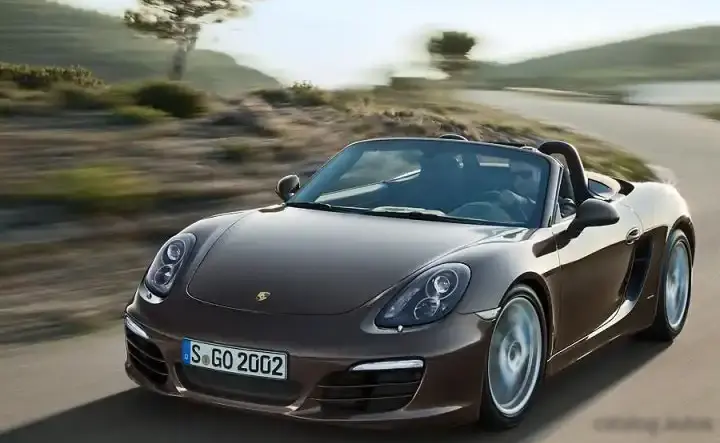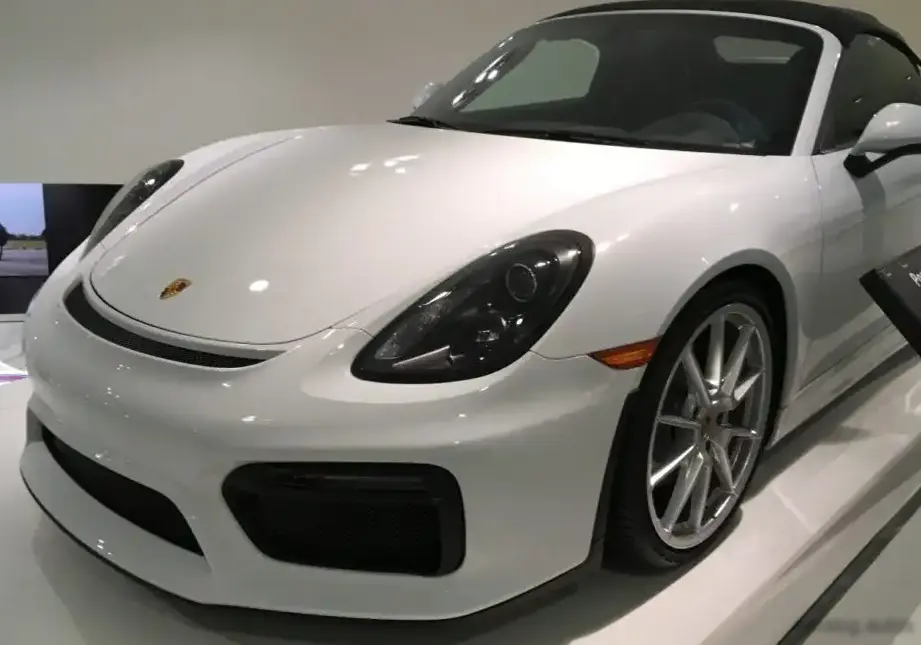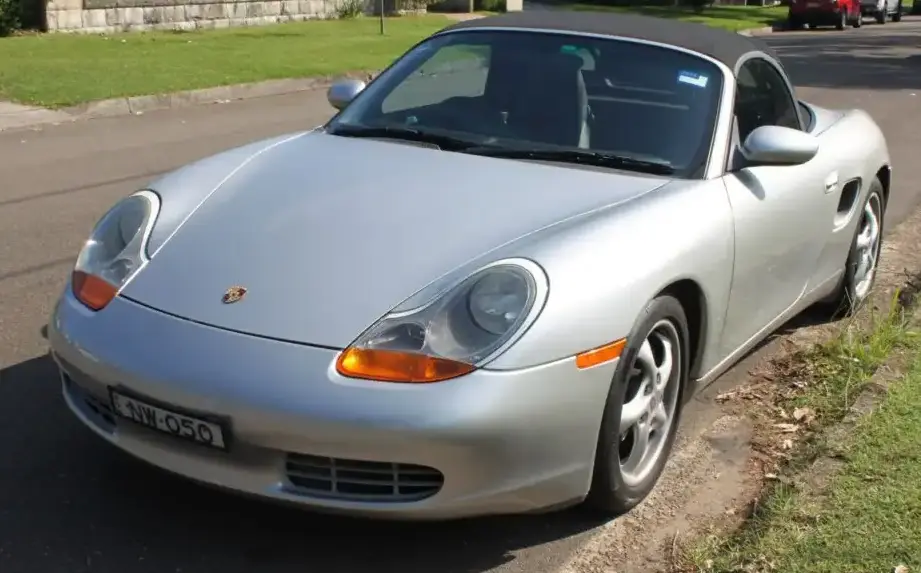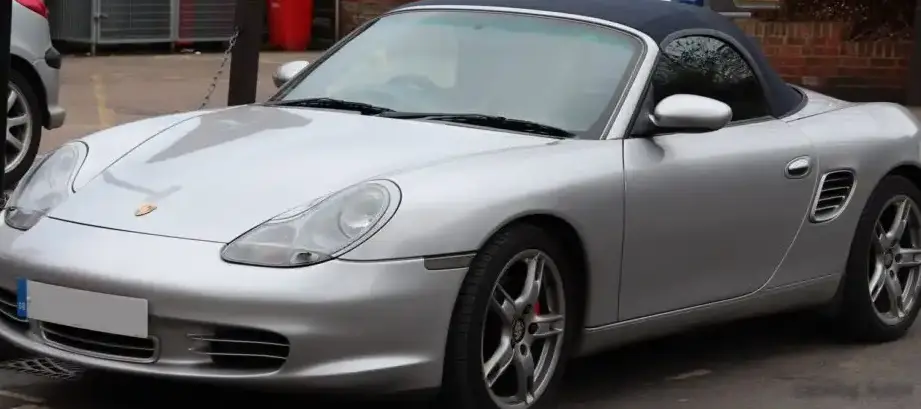
The Porsche Boxster (986) S 3.2 Tiptronic S, produced from 2002 to 2004, represented a significant evolution of Porsche’s mid-engine roadster. Positioned as the higher-performance variant within the 986 generation, it offered a step up in power and refinement compared to the base Boxster. The “S” designation denoted a larger engine, upgraded brakes, and a more focused driving experience, while the “Tiptronic S” transmission provided a degree of driver control alongside the convenience of an automatic. This model occupied the mid-to-upper range of the Boxster lineup, appealing to enthusiasts seeking a blend of performance and usability.
Technical Specifications
| Brand | Porsche |
| Model | Boxster |
| Generation | Boxster (986) |
| Type (Engine) | S 3.2 (260 Hp) Tiptronic S |
| Start of production | 2002 |
| End of production | 2004 |
| Powertrain Architecture | Internal Combustion engine |
| Body type | Roadster |
| Seats | 2 |
| Doors | 2 |
| Fuel consumption (economy) – urban (NEDC) | 16.4 l/100 km (14.3 US mpg, 17.2 UK mpg, 6.1 km/l) |
| Fuel consumption (economy) – extra urban (NEDC) | 8 l/100 km (29.4 US mpg, 35.3 UK mpg, 12.5 km/l) |
| Fuel consumption (economy) – combined (NEDC) | 11.1 l/100 km (21.2 US mpg, 25.4 UK mpg, 9 km/l) |
| CO2 emissions (NEDC) | 268 g/km |
| Fuel Type | Petrol (Gasoline) |
| Acceleration 0 – 100 km/h | 6.4 sec |
| Acceleration 0 – 62 mph | 6.4 sec |
| Acceleration 0 – 60 mph | 6.1 sec |
| Maximum speed | 258 km/h (160.31 mph) |
| Emission standard | Euro 3 |
| Weight-to-power ratio | 5.2 kg/Hp, 191.2 Hp/tonne |
| Weight-to-torque ratio | 4.4 kg/Nm, 227.9 Nm/tonne |
| Power | 260 Hp @ 6200 rpm |
| Power per litre | 81.8 Hp/l |
| Torque | 310 Nm @ 4600 rpm (228.64 lb.-ft. @ 4600 rpm) |
| Engine layout | Middle, Longitudinal |
| Engine Model/Code | M96.24 |
| Engine displacement | 3179 cm3 (193.99 cu. in.) |
| Number of cylinders | 6 |
| Engine configuration | Boxer |
| Cylinder Bore | 93 mm (3.66 in.) |
| Piston Stroke | 78 mm (3.07 in.) |
| Compression ratio | 11:1 |
| Number of valves per cylinder | 4 |
| Fuel injection system | Multi-port manifold injection |
| Engine aspiration | Naturally aspirated engine |
| Valvetrain | DOHC |
| Engine oil capacity | 8.3 l (8.77 US qt | 7.3 UK qt) |
| Coolant | 17 l (17.96 US qt | 14.96 UK qt) |
| Kerb Weight | 1360 kg (2998.29 lbs.) |
| Max. weight | 1670 kg (3681.72 lbs.) |
| Max load | 310 kg (683.43 lbs.) |
| Trunk (boot) space – minimum | 260 l (9.18 cu. ft.) |
| Fuel tank capacity | 64 l (16.91 US gal | 14.08 UK gal) |
| Max. roof load | 75 kg (165.35 lbs.) |
| Length | 4320 mm (170.08 in.) |
| Width | 1780 mm (70.08 in.) |
| Height | 1290 mm (50.79 in.) |
| Wheelbase | 2415 mm (95.08 in.) |
| Front track | 1455 mm (57.28 in.) |
| Rear (Back) track | 1514 mm (59.61 in.) |
| Ride height (ground clearance) | 121 mm (4.76 in.) |
| Drag coefficient (Cd) | 0.32 |
| Minimum turning circle (turning diameter) | 11.1 m (36.42 ft.) |
| Drivetrain Architecture | Rear wheel drive |
| Drive wheel | Rear wheel drive |
| Number of gears and type of gearbox | 5 gears, automatic transmission Tiptronic S |
| Front suspension | Independent type McPherson |
| Rear suspension | McPherson |
| Front brakes | Ventilated discs |
| Rear brakes | Ventilated discs |
| Assisting systems | ABS (Anti-lock braking system) |
| Front wheel tires | 205/50 ZR 17 |
| Rear wheel tires | 255/40 ZR 17 |
| Front wheel rims | 7 J x 17 ET 55 |
| Rear wheel rims | 8.5 J x 17 ET 48 |
Powertrain & Engine Architecture
At the heart of the 986 Boxster S 3.2 Tiptronic S lies the M96.24 engine, a 3.2-liter naturally aspirated flat-six. This engine, a hallmark of Porsche engineering, featured a 11:1 compression ratio and utilized multi-port fuel injection. The boxer configuration, with its horizontally opposed cylinders, contributed to a low center of gravity, enhancing handling. The engine produced 260 horsepower at 6200 rpm and 310 Nm (228.64 lb-ft) of torque at 4600 rpm. The Tiptronic S transmission was a five-speed automatic with a manual shift mode, allowing drivers to select gears for more spirited driving. It differed from the standard Tiptronic by offering quicker shift times and a more responsive feel.
Driving Characteristics
The 3.2-liter engine and Tiptronic S transmission combination delivered a compelling driving experience. While not as raw or engaging as the six-speed manual version, the Tiptronic S offered a good balance of performance and convenience. Acceleration from 0 to 60 mph took approximately 6.1 seconds, and the car could reach a top speed of 160.31 mph. The automatic transmission’s gear ratios were tuned for a blend of acceleration and fuel efficiency. In automatic mode, the transmission generally shifted smoothly, but the manual shift mode allowed for more control, particularly during aggressive driving or when navigating winding roads. Compared to the base 2.7-liter Boxster, the S model offered noticeably more power and torque throughout the rev range, resulting in a more exhilarating driving experience.
Equipment & Trim Levels
The Boxster S 3.2 Tiptronic S came standard with a number of features designed to enhance both comfort and performance. These included leather upholstery, heated seats, a premium sound system, and automatic climate control. The exterior featured a unique front fascia, larger wheels (typically 17-inch), and dual exhaust outlets. Optional extras included sport seats, a navigation system, and various interior trim options. The Tiptronic S transmission itself was considered an option, adding to the base price of the S model.
Chassis & Braking
The 986 Boxster S featured a fully independent suspension with McPherson struts at both the front and rear. Compared to the base Boxster, the S model benefited from stiffer springs and dampers, as well as a thicker stabilizer bar, resulting in reduced body roll and improved handling. Braking duties were handled by ventilated discs at all four corners, providing ample stopping power. ABS (Anti-lock Braking System) was standard. The chassis was designed to be lightweight and rigid, contributing to the car’s agility and responsiveness.
Market Reception & Comparison
The Porsche Boxster S 3.2 Tiptronic S was generally well-received by automotive critics. It was praised for its engaging driving dynamics, powerful engine, and refined interior. However, some reviewers noted that the Tiptronic S transmission, while improved over earlier iterations, didn’t offer the same level of driver involvement as the manual gearbox. Fuel economy was reasonable for a sports car of its caliber, averaging around 21.2 US mpg in combined driving. Compared to other trims, the S model offered a significant performance upgrade, but at a higher price point. The base Boxster appealed to buyers seeking a more affordable entry point into the Porsche brand, while the S model catered to enthusiasts who prioritized performance and refinement.
Legacy
The M96.24 engine, while generally reliable, is known to be susceptible to intermediate shaft (IMS) bearing failure, a potential issue that can lead to catastrophic engine damage. Preventative IMS upgrades are commonly performed on these engines by owners and mechanics. Despite this potential issue, the 986 Boxster S 3.2 Tiptronic S remains a popular choice in the used car market, offering a compelling combination of Porsche performance and relative affordability. Its mid-engine layout and balanced handling continue to appeal to driving enthusiasts, and well-maintained examples are highly sought after. The Tiptronic S transmission, while not as desirable as the manual, provides a more accessible entry point for those seeking a Porsche roadster experience without the complexity of a manual gearbox.