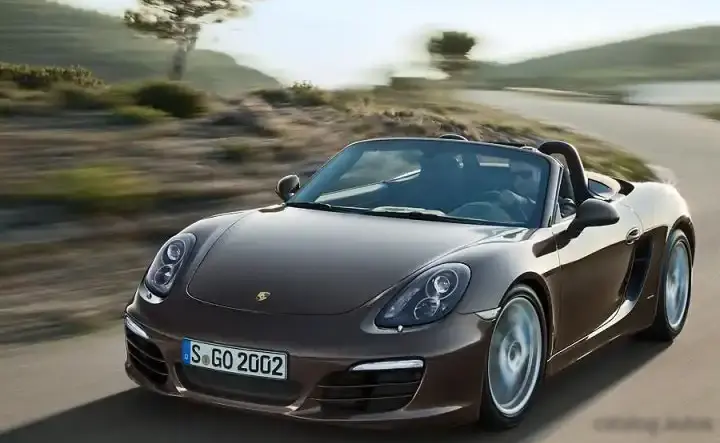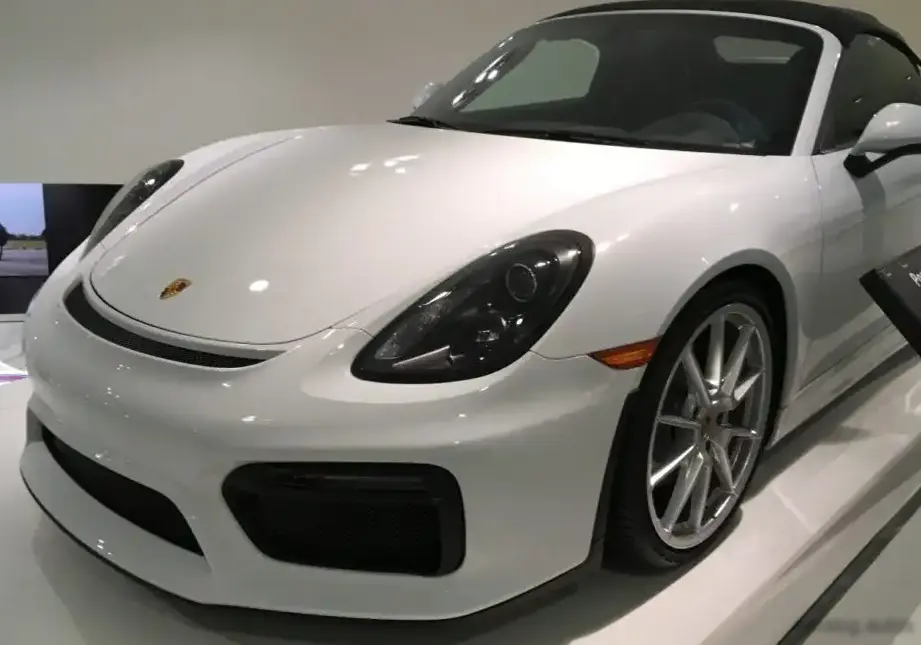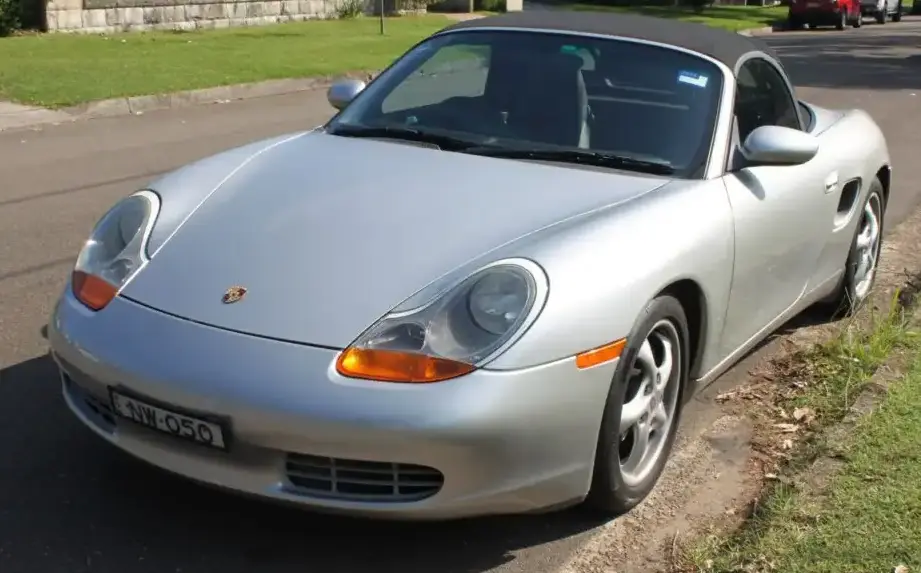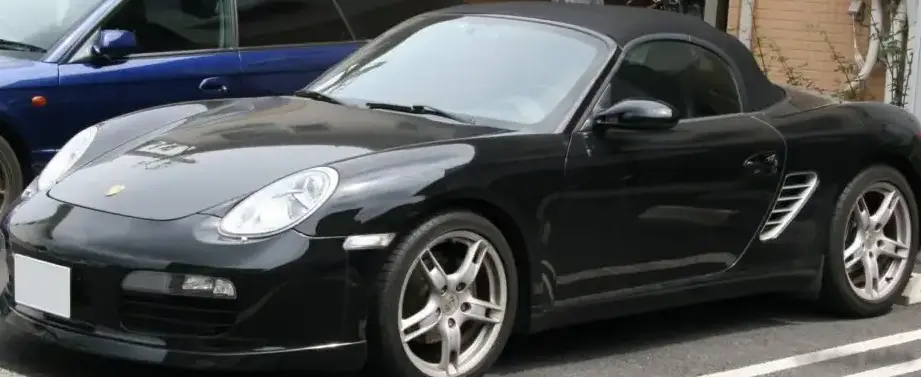
The Porsche Boxster (987) facelift, specifically the 2.9-liter variant producing 255 horsepower with the Porsche Doppelkupplung (PDK) dual-clutch transmission, represents a significant refinement of Porsche’s mid-engine roadster. Introduced in February 2009 and continuing through January 2012, this iteration of the 987 generation aimed to bridge the gap between the base 2.9-liter model and the more potent S variants. It occupied a mid-range position in the Boxster lineup, offering a compelling blend of performance, handling, and everyday usability. The facelift brought with it revised styling cues, including new headlights and taillights, as well as interior enhancements, solidifying the 987.2’s position as a desirable sports car.
Technical Specifications
| Brand | Porsche |
| Model | Boxster |
| Generation | Boxster (987, facelift 2009) |
| Type (Engine) | 2.9 (255 Hp) PDK |
| Start of production | February, 2009 |
| End of production | January, 2012 |
| Powertrain Architecture | Internal Combustion engine |
| Body type | Roadster |
| Seats | 2 |
| Doors | 2 |
| Fuel consumption (urban) | 13.6 l/100 km (17.3 US mpg, 20.8 UK mpg, 7.4 km/l) |
| Fuel consumption (extra urban) | 6.5 l/100 km (36.2 US mpg, 43.5 UK mpg, 15.4 km/l) |
| Fuel consumption (combined) | 9.1 l/100 km (25.8 US mpg, 31 UK mpg, 11 km/l) |
| CO2 emissions | 214 g/km |
| Fuel Type | Petrol (Gasoline) |
| Acceleration 0 – 100 km/h | 5.8 sec |
| Acceleration 0 – 62 mph | 5.8 sec |
| Acceleration 0 – 60 mph | 5.5 sec |
| Acceleration 0 – 200 km/h | 22.1 sec |
| Maximum speed | 261 km/h (162.18 mph) |
| Emission standard | Euro 5 |
| Weight-to-power ratio | 5.4 kg/Hp, 186.8 Hp/tonne |
| Weight-to-torque ratio | 4.7 kg/Nm, 212.5 Nm/tonne |
| Power | 255 Hp @ 7200 rpm |
| Torque | 290 Nm @ 4400-6000 rpm (213.89 lb.-ft. @ 4400-6000 rpm) |
| Maximum engine speed | 7500 rpm |
| Engine layout | Middle, Longitudinal |
| Engine Model/Code | MA1.20 |
| Engine displacement | 2893 cm3 (176.54 cu. in.) |
| Number of cylinders | 6 |
| Engine configuration | Boxer |
| Cylinder Bore | 89 mm (3.5 in.) |
| Piston Stroke | 77.5 mm (3.05 in.) |
| Compression ratio | 11.5:1 |
| Number of valves per cylinder | 4 |
| Fuel injection system | Multi-port manifold injection |
| Engine aspiration | Naturally aspirated engine |
| Valvetrain | DOHC |
| Engine oil capacity | 7.5 l (7.93 US qt | 6.6 UK qt) |
| Coolant | 23 l (24.3 US qt | 20.24 UK qt) |
| Kerb Weight | 1365 kg (3009.31 lbs.) |
| Max. weight | 1670 kg (3681.72 lbs.) |
| Max load | 305 kg (672.41 lbs.) |
| Trunk (boot) space – minimum | 130 l (4.59 cu. ft.) |
| Fuel tank capacity | 65 l (17.17 US gal | 14.3 UK gal) |
| Length | 4342 mm (170.94 in.) |
| Width | 1801 mm (70.91 in.) |
| Width including mirrors | 1978 mm (77.87 in.) |
| Height | 1292 mm (50.87 in.) |
| Wheelbase | 2415 mm (95.08 in.) |
| Front track | 1490 mm (58.66 in.) |
| Rear (Back) track | 1534 mm (60.39 in.) |
| Ride height (ground clearance) | 127 mm (5 in.) |
| Drag coefficient (Cd) | 0.30 |
| Minimum turning circle (turning diameter) | 11.1 m (36.42 ft.) |
| Drivetrain Architecture | The Internal combustion engine (ICE) drives the rear wheels of the vehicle. |
| Drive wheel | Rear wheel drive |
| Number of gears and type of gearbox | 7 gears, automatic transmission |
| Front suspension | Coil spring, Independent type McPherson, Trailing arm |
| Rear suspension | McPherson, Trailing arm, Coil spring |
| Front brakes | Ventilated discs, 318×28 mm |
| Rear brakes | Ventilated discs, 299×20 mm |
| Assisting systems | ABS (Anti-lock braking system) |
| Steering type | Steering rack and pinion |
| Power steering | Hydraulic Steering |
| Tires size | Front wheel tires: 205/55 ZR 17Rear wheel tires: 235/50 ZR 17 |
| Wheel rims size | Front wheel rims: 7 J x 17Rear wheel rims: 8.5 J x 17 |
INTRODUCTION
The 2009-2012 Porsche Boxster 2.9 PDK is a two-seat, mid-engine roadster that represents the second generation (987) of the Boxster model. The 987.2 facelift brought significant improvements over the original 987, including a more refined engine, updated styling, and the availability of Porsche’s advanced PDK dual-clutch transmission. This particular variant, with its 2.9-liter flat-six engine and PDK gearbox, was positioned as a sweet spot in the lineup, offering a balance of performance and affordability. It catered to drivers seeking a genuine Porsche driving experience without the higher price tag of the ‘S’ models.
Powertrain & Engine Architecture
At the heart of the Boxster 2.9 PDK lies the MA1.20 engine, a naturally aspirated 2.9-liter flat-six cylinder boxer engine. This engine benefits from direct fuel injection (DFI), a technology that improves both power and fuel efficiency. The engine produces 255 horsepower at 7200 rpm and 290 Nm (213.89 lb-ft) of torque between 4400 and 6000 rpm. The engine’s flat-six configuration contributes to a low center of gravity, enhancing handling characteristics. The PDK transmission is a seven-speed dual-clutch system that offers both fully automatic operation and manual gear changes via steering wheel-mounted paddles. This transmission provides incredibly quick and smooth shifts, contributing to the car’s overall performance. The PDK’s programming allows for both fuel-efficient cruising and aggressive, sporty driving.
Driving Characteristics
The Boxster 2.9 PDK delivers a refined and engaging driving experience. While not as brutally fast as the Boxster S, the 2.9-liter engine provides ample power for spirited driving on both winding roads and open highways. The PDK transmission enhances the driving experience with its rapid shifts and seamless operation. Compared to the six-speed manual transmission available on other Boxster models, the PDK offers quicker acceleration and improved fuel economy. The gear ratios are well-matched to the engine’s powerband, providing strong acceleration in all gears. The mid-engine layout contributes to excellent balance and handling, making the Boxster 2.9 PDK a joy to drive.
Equipment & Trim Levels
The Boxster 2.9 PDK came standard with a well-equipped interior, including leather upholstery, air conditioning, a CD stereo system, and power windows and locks. Optional extras included features such as navigation, heated seats, a premium sound system, and Porsche Active Suspension Management (PASM). The interior design was driver-focused, with a clear and concise instrument cluster and ergonomically placed controls. Upholstery options included various leather colors and materials, allowing buyers to personalize their vehicles. The standard wheels were 17-inch alloy wheels, with larger 18- and 19-inch wheels available as options.
Chassis & Braking
The Boxster 2.9 PDK features a lightweight chassis constructed from steel and aluminum. The suspension consists of independent McPherson struts at all four corners, with coil springs and stabilizer bars. The braking system utilizes ventilated disc brakes on all four wheels, providing ample stopping power. Anti-lock braking system (ABS) is standard. The suspension is tuned to provide a balance between comfort and handling, offering a compliant ride while maintaining excellent body control. The rear track is slightly wider than the front track, contributing to the car’s stability.
Market Reception & Comparison
The Boxster 2.9 PDK was generally well-received by automotive critics. It was praised for its balanced handling, responsive engine, and refined transmission. Compared to the base 2.7-liter Boxster, the 2.9-liter model offered a noticeable increase in power and performance. Compared to the Boxster S, the 2.9 PDK was more affordable and offered slightly better fuel economy. However, the Boxster S provided a more exhilarating driving experience due to its higher power output. Reliability was generally good, with the PDK transmission proving to be a durable and reliable unit.
Legacy
The Porsche Boxster 2.9 PDK has established itself as a desirable used sports car. Its combination of performance, handling, and reliability has made it a popular choice among enthusiasts. The PDK transmission is particularly sought after due to its smooth operation and quick shifts. While maintenance costs can be higher than those of some other sports cars, the Boxster 2.9 PDK is generally considered to be a well-built and durable vehicle. Today, well-maintained examples command a premium in the used car market, reflecting their enduring appeal.