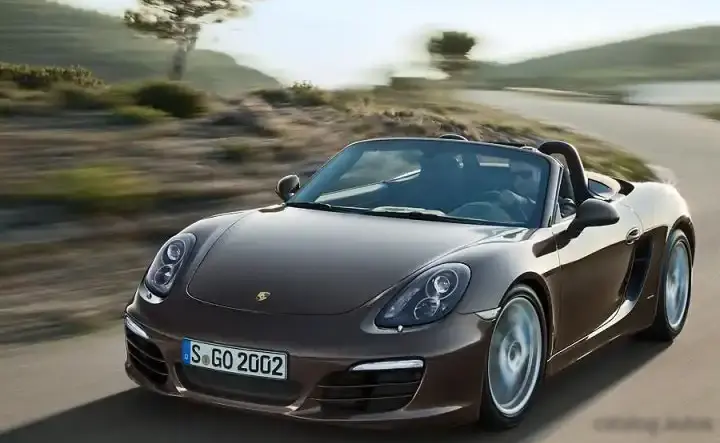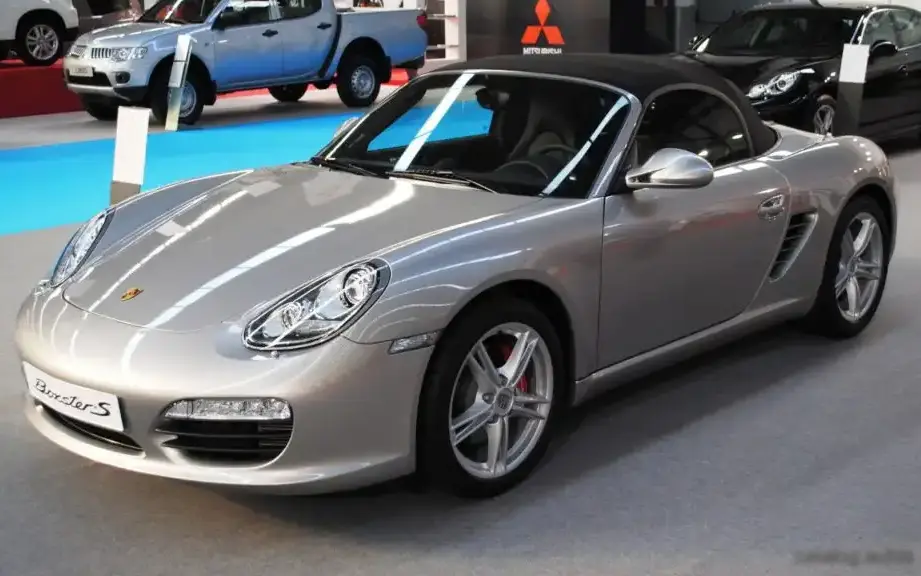
The Porsche Boxster (987) S 3.4, produced from February 2009 to January 2012, represents a significant mid-cycle refresh of the first-generation 987 platform. This variant occupied the performance-oriented tier within the Boxster lineup, positioned above the base 2.9-liter model and below the even more potent Spyder. The facelift, internally designated as the 987.2, brought with it a larger displacement engine, revised styling cues, and updated technology aimed at enhancing the driving experience and addressing some criticisms of the original 987. It continued Porsche’s tradition of offering a relatively accessible entry point into the mid-engine sports car world.
Technical Specifications
| Brand | Porsche |
| Model | Boxster |
| Generation | Boxster (987, facelift 2009) |
| Type (Engine) | S 3.4 (310 Hp) |
| Start of production | February, 2009 |
| End of production | January, 2012 |
| Powertrain Architecture | Internal Combustion engine |
| Body type | Roadster |
| Seats | 2 |
| Doors | 2 |
| Fuel consumption (economy) – urban | 14.4 l/100 km (16.3 US mpg, 19.6 UK mpg, 6.9 km/l) |
| Fuel consumption (economy) – extra urban | 7.2 l/100 km (32.7 US mpg, 39.2 UK mpg, 13.9 km/l) |
| Fuel consumption (economy) – combined | 9.8 l/100 km (24 US mpg, 28.8 UK mpg, 10.2 km/l) |
| CO2 emissions | 230 g/km |
| Fuel Type | Petrol (Gasoline) |
| Acceleration 0 – 100 km/h | 5.3 sec |
| Acceleration 0 – 62 mph | 5.3 sec |
| Acceleration 0 – 60 mph | 5 sec |
| Acceleration 0 – 200 km/h | 18.4 sec |
| Maximum speed | 274 km/h (170.26 mph) |
| Emission standard | Euro 5 |
| Weight-to-power ratio | 4.4 kg/Hp, 228.8 Hp/tonne |
| Weight-to-torque ratio | 3.8 kg/Nm, 265.7 Nm/tonne |
| Power | 310 Hp @ 7200 rpm |
| Power per litre | 90.2 Hp/l |
| Torque | 360 Nm @ 4750 rpm (265.52 lb.-ft. @ 4750 rpm) |
| Maximum engine speed | 7500 rpm |
| Engine layout | Middle, Longitudinal |
| Engine Model/Code | MA1.21 |
| Engine displacement | 3436 cm3 (209.68 cu. in.) |
| Number of cylinders | 6 |
| Engine configuration | Boxer |
| Cylinder Bore | 97 mm (3.82 in.) |
| Piston Stroke | 77.5 mm (3.05 in.) |
| Compression ratio | 12.5:1 |
| Number of valves per cylinder | 4 |
| Fuel injection system | Direct injection |
| Engine aspiration | Naturally aspirated engine |
| Valvetrain | DOHC |
| Engine oil capacity | 7.5 l (7.93 US qt | 6.6 UK qt) |
| Coolant | 23 l (24.3 US qt | 20.24 UK qt) |
| Kerb Weight | 1355 kg (2987.26 lbs.) |
| Max. weight | 1645 kg (3626.6 lbs.) |
| Max load | 290 kg (639.34 lbs.) |
| Trunk (boot) space – minimum | 130 l (4.59 cu. ft.) |
| Fuel tank capacity | 65 l (17.17 US gal | 14.3 UK gal) |
| Length | 4342 mm (170.94 in.) |
| Width | 1801 mm (70.91 in.) |
| Width including mirrors | 1978 mm (77.87 in.) |
| Height | 1294 mm (50.94 in.) |
| Wheelbase | 2415 mm (95.08 in.) |
| Front track | 1486 mm (58.5 in.) |
| Rear (Back) track | 1528 mm (60.16 in.) |
| Ride height (ground clearance) | 123 mm (4.84 in.) |
| Drag coefficient (Cd) | 0.29 |
| Minimum turning circle (turning diameter) | 11.1 m (36.42 ft.) |
| Drivetrain Architecture | Rear wheel drive |
| Drive wheel | Rear wheel drive |
| Number of gears and type of gearbox | 6 gears, manual transmission |
| Front suspension | Coil spring, Independent type McPherson, Trailing arm |
| Rear suspension | McPherson, Trailing arm, Coil spring |
| Front brakes | Ventilated discs, 318×28 mm |
| Rear brakes | Ventilated discs, 299×24 mm |
| Assisting systems | ABS (Anti-lock braking system) |
| Steering type | Steering rack and pinion |
| Power steering | Hydraulic Steering |
| Tires size | Front wheel tires: 235/55 ZR 18 Rear wheel tires: 265/50 ZR18 |
| Wheel rims size | Front wheel rims: 8 J x 18 Rear wheel rims: 9 J x 18 |
Powertrain & Engine Architecture
The heart of the 987.2 S 3.4 is the MA1.21 engine, a 3.4-liter naturally aspirated flat-six. This engine represented a significant upgrade over the 3.2-liter unit in the pre-facelift 987.2 S, boasting increased displacement and a higher redline. The engine utilizes direct fuel injection (DFI), a technology that improves combustion efficiency and power output. The DFI system operates at extremely high pressures, requiring specialized fuel pumps and injectors. The valvetrain employs dual overhead camshafts (DOHC) with four valves per cylinder, optimizing airflow for enhanced performance. The engine’s boxer configuration, with horizontally opposed cylinders, contributes to a low center of gravity, improving handling characteristics. The 6-speed manual transmission was standard, offering precise shifts and a direct connection to the engine. Porsche’s Tiptronic S automatic transmission was also available as an option, featuring manual shift capability.
Driving Characteristics
The 987.2 S 3.4 delivers a distinctly engaging driving experience. The 310 horsepower and 265 lb-ft of torque provide ample power for spirited driving, with a 0-60 mph time of around 5 seconds. The engine is remarkably responsive, building revs quickly and delivering a linear power curve. The manual transmission’s gear ratios are well-matched to the engine’s characteristics, allowing for precise control and maximizing acceleration. While the automatic transmission offers convenience, it doesn’t quite match the engagement and responsiveness of the manual. The mid-engine layout contributes to exceptional balance and handling, making the Boxster feel nimble and planted in corners. The steering is precise and communicative, providing excellent feedback to the driver.
Equipment & Trim Levels
The Boxster S 3.4 came standard with a generous array of features, including leather upholstery, bi-xenon headlights, a power-retractable soft top, and a premium sound system. Optional extras were plentiful, allowing buyers to customize their vehicles to their preferences. Popular options included Porsche Active Suspension Management (PASM), which electronically adjusts the dampers for improved ride comfort and handling; sport seats with enhanced bolstering; and a navigation system. Interior trim options included various leather colors and materials, as well as carbon fiber accents.
Chassis & Braking
The 987.2 Boxster S 3.4 features a lightweight chassis constructed from steel and aluminum. The suspension utilizes coil springs and independent McPherson struts at all four corners. The S model benefits from a stiffer suspension setup compared to the base Boxster, further enhancing handling performance. Braking duties are handled by ventilated disc brakes at all four wheels, providing ample stopping power. The standard ABS (Anti-lock Braking System) ensures stability during hard braking. The S model also received larger brake rotors and calipers compared to the base model.
Market Reception & Comparison
The 987.2 Boxster S 3.4 was widely praised by automotive critics for its performance, handling, and overall driving experience. It was often lauded as one of the best sports cars in its price range. Compared to the base Boxster, the S 3.4 offered a significant performance upgrade, justifying its higher price tag. Compared to the 987.1 S, the 987.2 S benefited from the larger engine, improved fuel economy, and revised styling. The 987.2 Spyder, while even more focused on performance, came at a substantial premium and sacrificed some everyday usability.
Legacy
The 987.2 Boxster S 3.4 has proven to be a reliable and durable sports car. The MA1.21 engine is generally considered to be robust, although regular maintenance is essential. The direct fuel injection system can be prone to carbon buildup over time, requiring periodic cleaning. On the used car market, the 987.2 S 3.4 remains a popular choice for enthusiasts seeking a well-balanced and engaging sports car experience. Its combination of performance, handling, and relative affordability has cemented its place as a modern classic.