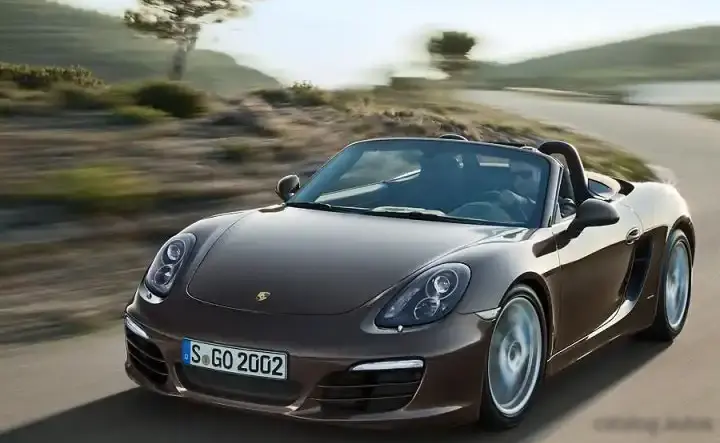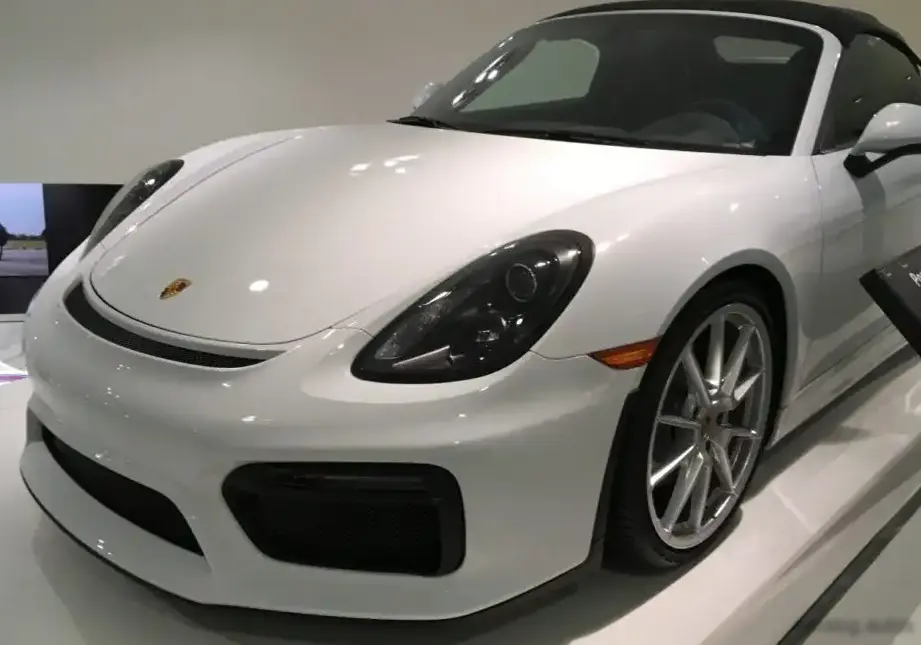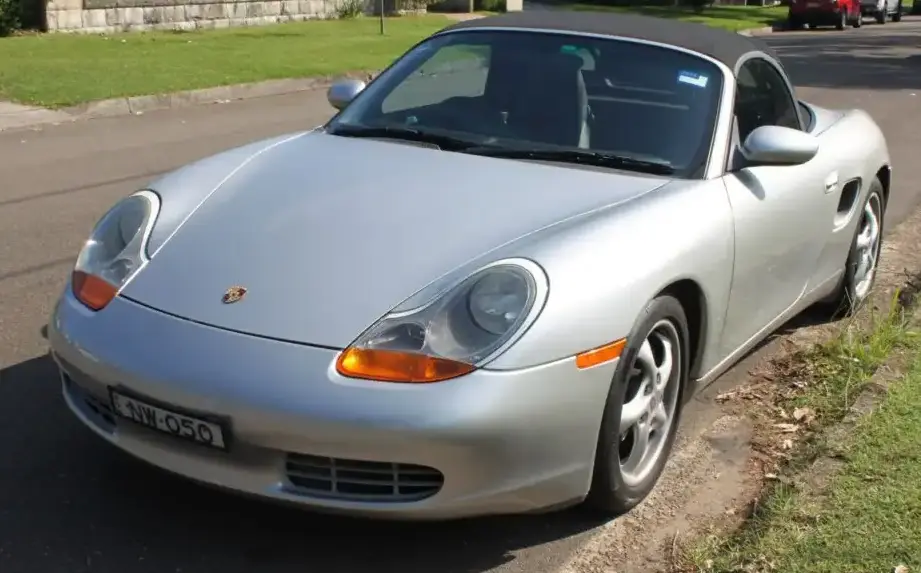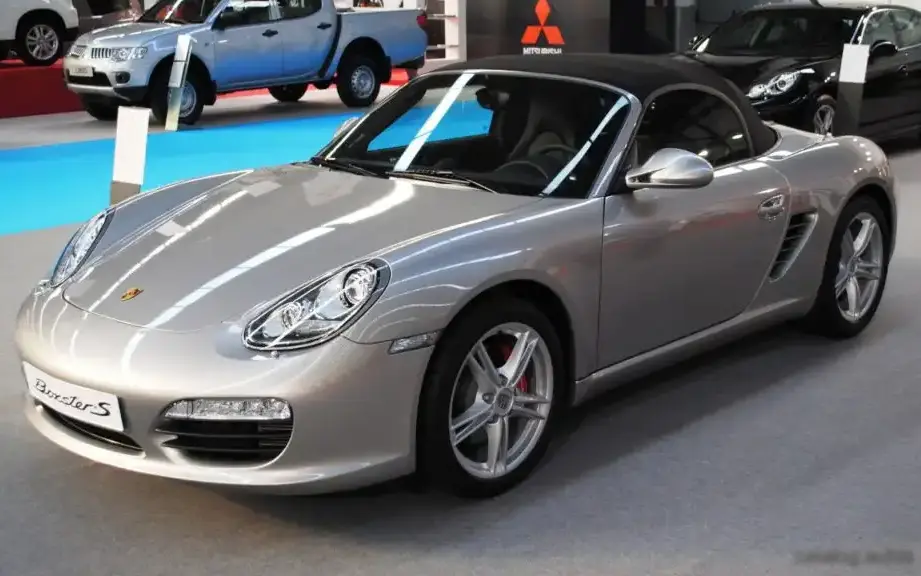
The Porsche Boxster (987, facelift) S 3.4, produced from February 2009 to January 2012, represents a significant evolution of Porsche’s mid-engine roadster. This variant, equipped with a 3.4-liter flat-six engine producing 310 horsepower and paired with Porsche’s innovative PDK (Porsche Doppelkupplung) dual-clutch transmission, occupied the performance-oriented mid-range of the 987.2 generation. It bridged the gap between the base Boxster and the even more potent Spyder model, offering a compelling blend of performance, handling, and everyday usability. The 987.2 facelift brought with it revised styling, a more refined interior, and improvements to the engine and transmission for enhanced efficiency and driving experience.
Technical Specifications
| Brand | Porsche |
| Model | Boxster |
| Generation | Boxster (987, facelift 2009) |
| Type (Engine) | S 3.4 (310 Hp) PDK |
| Start of production | February, 2009 |
| End of production | January, 2012 |
| Powertrain Architecture | Internal Combustion engine |
| Body type | Roadster |
| Seats | 2 |
| Doors | 2 |
| Fuel consumption (economy) – urban | 14.1 l/100 km (16.7 US mpg, 20 UK mpg, 7.1 km/l) |
| Fuel consumption (economy) – extra urban | 6.6 l/100 km (35.6 US mpg, 42.8 UK mpg, 15.2 km/l) |
| Fuel consumption (economy) – combined | 9.4 l/100 km (25 US mpg, 30.1 UK mpg, 10.6 km/l) |
| CO2 emissions | 221 g/km |
| Fuel Type | Petrol (Gasoline) |
| Acceleration 0 – 100 km/h | 5.2 sec |
| Acceleration 0 – 62 mph | 5.2 sec |
| Acceleration 0 – 60 mph | 4.9 sec |
| Acceleration 0 – 200 km/h | 18.2 sec |
| Maximum speed | 272 km/h (169.01 mph) |
| Weight-to-power ratio | 4.5 kg/Hp, 224.6 Hp/tonne |
| Weight-to-torque ratio | 3.8 kg/Nm, 260.9 Nm/tonne |
| Power | 310 Hp @ 7200 rpm |
| Power per litre | 90.2 Hp/l |
| Torque | 360 Nm @ 4750 rpm (265.52 lb.-ft. @ 4750 rpm) |
| Maximum engine speed | 7500 rpm |
| Engine layout | Middle, Longitudinal |
| Engine Model/Code | MA1.21 |
| Engine displacement | 3436 cm3 (209.68 cu. in.) |
| Number of cylinders | 6 |
| Engine configuration | Boxer |
| Cylinder Bore | 97 mm (3.82 in.) |
| Piston Stroke | 77.5 mm (3.05 in.) |
| Compression ratio | 12.5:1 |
| Number of valves per cylinder | 4 |
| Fuel injection system | Direct injection |
| Engine aspiration | Naturally aspirated engine |
| Valvetrain | DOHC |
| Engine oil capacity | 7.5 l (7.93 US qt | 6.6 UK qt) |
| Coolant | 23 l (24.3 US qt | 20.24 UK qt) |
| Kerb Weight | 1380 kg (3042.38 lbs.) |
| Max. weight | 1675 kg (3692.74 lbs.) |
| Max load | 295 kg (650.36 lbs.) |
| Trunk (boot) space – minimum | 130 l (4.59 cu. ft.) |
| Fuel tank capacity | 65 l (17.17 US gal | 14.3 UK gal) |
| Length | 4342 mm (170.94 in.) |
| Width | 1801 mm (70.91 in.) |
| Width including mirrors | 1978 mm (77.87 in.) |
| Height | 1294 mm (50.94 in.) |
| Wheelbase | 2415 mm (95.08 in.) |
| Front track | 1486 mm (58.5 in.) |
| Rear (Back) track | 1528 mm (60.16 in.) |
| Ride height (ground clearance) | 123 mm (4.84 in.) |
| Drag coefficient (Cd) | 0.30 |
| Minimum turning circle (turning diameter) | 11.1 m (36.42 ft.) |
| Drivetrain Architecture | Rear wheel drive |
| Drive wheel | Rear wheel drive |
| Number of gears and type of gearbox | 7 gears, automatic transmission |
| Front suspension | Coil spring, Independent type McPherson, Trailing arm |
| Rear suspension | McPherson, Trailing arm, Coil spring |
| Front brakes | Ventilated discs, 318×28 mm |
| Rear brakes | Ventilated discs, 299×24 mm |
| Assisting systems | ABS (Anti-lock braking system) |
| Steering type | Steering rack and pinion |
| Power steering | Hydraulic Steering |
| Tires size | Front wheel tires: 235/55 ZR 18Rear wheel tires: 265/50 ZR18 |
| Wheel rims size | Front wheel rims: 8 J x 18Rear wheel rims: 9 J x 18 |
Powertrain & Engine Architecture
At the heart of the Boxster S 3.4 PDK lies the MA1.21 engine, a 3.4-liter naturally aspirated flat-six. This engine builds upon the advancements made in previous Porsche engines, featuring direct fuel injection (DFI) for improved efficiency and power delivery. The DFI system precisely meters fuel directly into the combustion chamber, optimizing the air-fuel mixture for enhanced combustion. The engine utilizes a dual overhead camshaft (DOHC) valvetrain with four valves per cylinder, allowing for efficient cylinder filling and exhaust scavenging. The engine’s boxer configuration, with horizontally opposed cylinders, contributes to a low center of gravity, enhancing handling balance. The 3.4L engine produced 310 hp at 7200 rpm and 360 Nm (265 lb-ft) of torque at 4750 rpm.
The PDK transmission is a seven-speed dual-clutch automated manual transmission. Unlike a traditional automatic, PDK offers incredibly fast and precise gear changes, mimicking the feel of a manual gearbox but without the need for a clutch pedal. It operates with two separate clutches, one for odd-numbered gears and one for even-numbered gears, allowing for pre-selection of the next gear for seamless shifts. Paddles behind the steering wheel allow for manual gear selection, providing the driver with greater control.
Driving Characteristics
The combination of the 3.4-liter engine and the PDK transmission delivers a thrilling driving experience. Acceleration from 0 to 60 mph takes approximately 4.9 seconds, and the car reaches a top speed of 169 mph. The PDK transmission’s quick shifts contribute to a responsive and engaging feel. While not as raw or visceral as a traditional manual transmission, the PDK offers a level of performance and convenience that appeals to a wide range of drivers. The engine’s power delivery is linear and predictable, making it easy to modulate throttle and maintain control. Compared to the base Boxster’s 2.9-liter engine, the S 3.4 offers a significant increase in power and torque, resulting in noticeably quicker acceleration and improved passing performance. It doesn’t quite match the ultimate performance of the Boxster Spyder, but provides a more accessible and comfortable driving experience.
Equipment & Trim Levels
The Boxster S 3.4 PDK came standard with a generous array of features, including leather upholstery, automatic climate control, a Bose sound system, and bi-xenon headlights. Optional extras included navigation, sport seats, and various interior trim packages. The standard interior featured a sporty design with a focus on driver ergonomics. The PDK transmission included steering wheel-mounted paddle shifters. The S model also received upgraded brakes and suspension components compared to the base Boxster.
Chassis & Braking
The 987.2 Boxster S 3.4 utilizes a lightweight chassis construction, contributing to its agile handling. The suspension features coil springs and independent McPherson struts at all four corners. The S model benefits from a stiffer suspension setup and larger stabilizer bars compared to the base Boxster, further enhancing its handling capabilities. The braking system consists of ventilated discs at all four wheels, providing ample stopping power. ABS (Anti-lock Braking System) is standard.
Market Reception & Comparison
The Boxster S 3.4 PDK was well-received by automotive critics, who praised its performance, handling, and refinement. It was often lauded as a compelling alternative to more expensive sports cars. Fuel economy was respectable for a sports car of its caliber, averaging around 25 mpg in combined driving. Reliability was generally good, although some owners reported minor issues with the PDK transmission. Compared to the base Boxster, the S 3.4 offered a significant performance upgrade, justifying its higher price tag for enthusiasts seeking a more engaging driving experience.
Legacy
The Porsche Boxster (987.2) S 3.4 PDK remains a desirable sports car in the used market. Its combination of performance, handling, and everyday usability makes it a compelling choice for enthusiasts. The PDK transmission, while requiring periodic maintenance, has proven to be a reliable and durable unit. The 3.4-liter engine is known for its longevity and relatively straightforward maintenance requirements. The 987.2 generation Boxster, and particularly the S variant, is considered by many to be a sweet spot in the model’s history, offering a balanced blend of classic Porsche driving dynamics and modern technology.