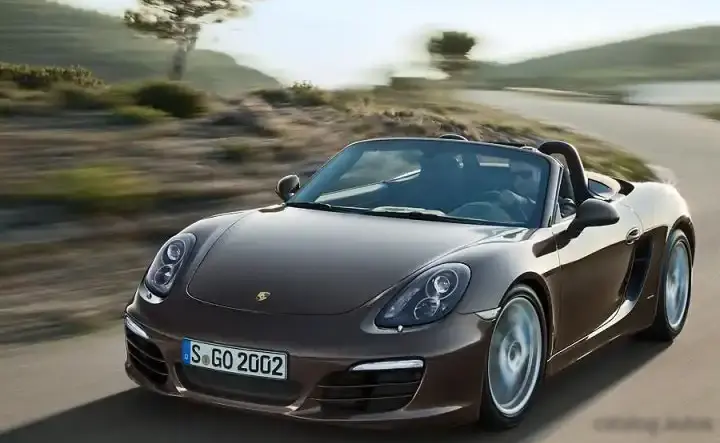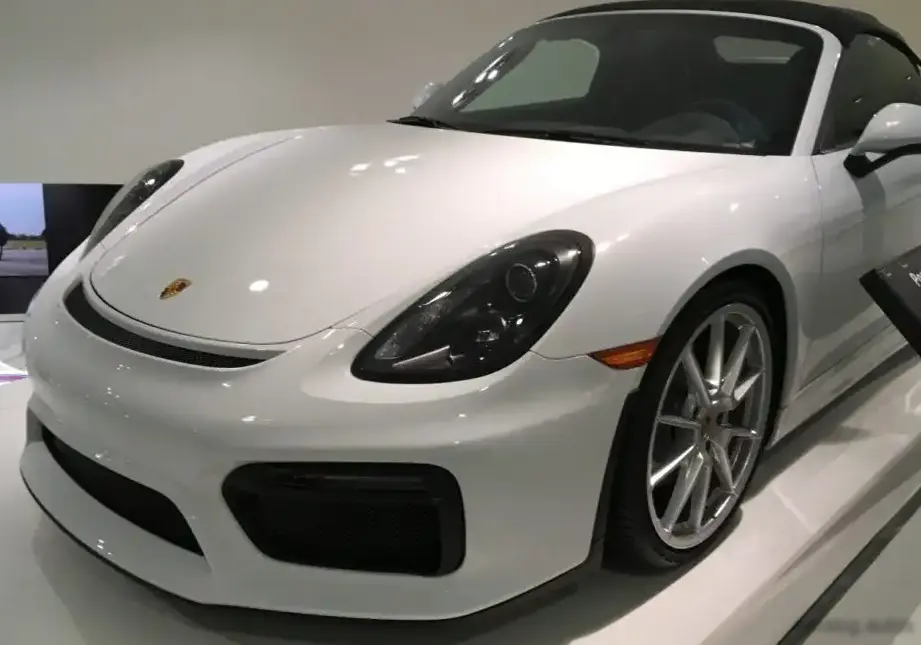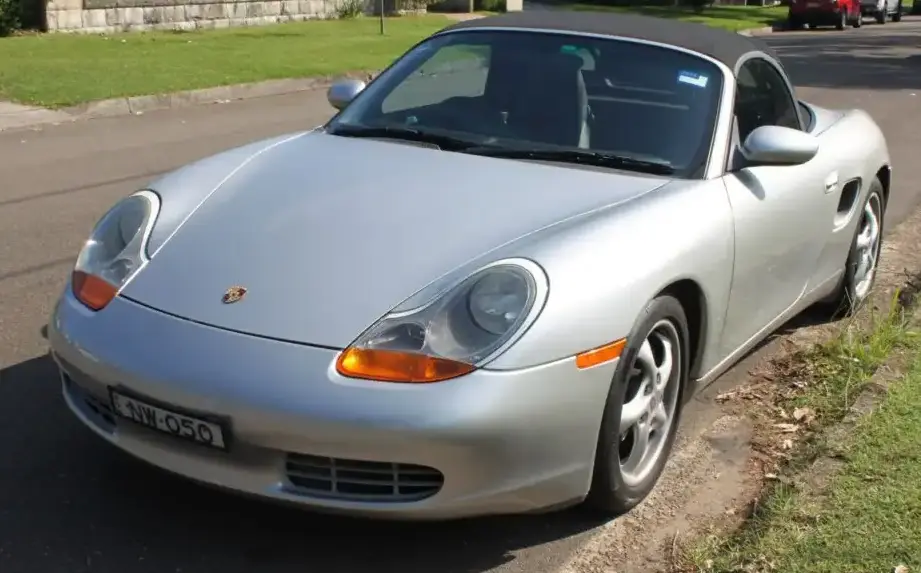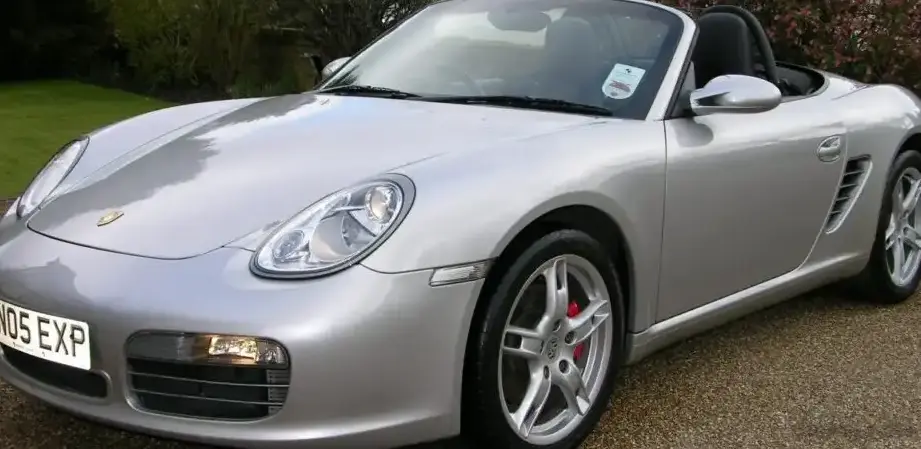
The Porsche Boxster (987) S 3.4 Tiptronic, produced from August 2006 to January 2009, represents a significant evolution of Porsche’s mid-engine roadster. Positioned as the higher-performance variant within the 987 generation, it offered a blend of sporting dynamics and relative accessibility compared to the 911. The “S” designation denoted increased power and upgraded components, while the “Tiptronic” transmission provided an alternative to the standard six-speed manual. This model occupied the mid-to-upper range of the Boxster lineup, appealing to drivers seeking a more engaging experience than the base 2.7-liter model, but without the outright track focus of later, more specialized versions.
Technical Specifications
| Brand | Porsche |
| Model | Boxster |
| Generation | Boxster (987) |
| Type (Engine) | S 3.4 (295 Hp) Tiptronic |
| Start of production | August, 2006 |
| End of production | January, 2009 |
| Powertrain Architecture | Internal Combustion engine |
| Body type | Roadster |
| Seats | 2 |
| Doors | 2 |
| Fuel consumption (economy) – urban | 16.3 l/100 km (14.4 US mpg, 17.3 UK mpg, 6.1 km/l) |
| Fuel consumption (economy) – extra urban | 7.9 l/100 km (29.8 US mpg, 35.8 UK mpg, 12.7 km/l) |
| Fuel consumption (economy) – combined | 11 l/100 km (21.4 US mpg, 25.7 UK mpg, 9.1 km/l) |
| CO2 emissions | 262 g/km |
| Fuel Type | Petrol (Gasoline) |
| Acceleration 0 – 100 km/h | 6.1 sec |
| Acceleration 0 – 62 mph | 6.1 sec |
| Acceleration 0 – 60 mph | 5.8 sec |
| Acceleration 0 – 200 km/h | 21.8 sec |
| Maximum speed | 264 km/h (164.04 mph) |
| Emission standard | Euro 4 |
| Weight-to-power ratio | 4.7 kg/Hp, 211.5 Hp/tonne |
| Weight-to-torque ratio | 4.1 kg/Nm, 243.7 Nm/tonne |
| Power | 295 Hp @ 6250 rpm |
| Power per litre | 87.1 Hp/l |
| Torque | 340 Nm @ 4400-6000 rpm (250.77 lb.-ft. @ 4400-6000 rpm) |
| Maximum engine speed | 7300 rpm |
| Engine layout | Middle, Longitudinal |
| Engine Model/Code | M97.21 |
| Engine displacement | 3387 cm3 (206.69 cu. in.) |
| Number of cylinders | 6 |
| Engine configuration | Boxer |
| Cylinder Bore | 96 mm (3.78 in.) |
| Piston Stroke | 78 mm (3.07 in.) |
| Compression ratio | 11.1:1 |
| Number of valves per cylinder | 4 |
| Fuel injection system | Multi-port manifold injection |
| Engine aspiration | Naturally aspirated engine |
| Valvetrain | DOHC |
| Engine oil capacity | 7.8 l (8.24 US qt | 6.86 UK qt) |
| Coolant | 22.3 l (23.56 US qt | 19.62 UK qt) |
| Kerb Weight | 1395 kg (3075.45 lbs.) |
| Max. weight | 1670 kg (3681.72 lbs.) |
| Max load | 275 kg (606.27 lbs.) |
| Trunk (boot) space – minimum | 130 l (4.59 cu. ft.) |
| Fuel tank capacity | 64 l (16.91 US gal | 14.08 UK gal) |
| Length | 4329 mm (170.43 in.) |
| Width | 1801 mm (70.91 in.) |
| Width including mirrors | 1978 mm (77.87 in.) |
| Height | 1292 mm (50.87 in.) |
| Wheelbase | 2415 mm (95.08 in.) |
| Front track | 1486 mm (58.5 in.) |
| Rear (Back) track | 1528 mm (60.16 in.) |
| Ride height (ground clearance) | 121 mm (4.76 in.) |
| Drag coefficient (Cd) | 0.30 |
| Minimum turning circle (turning diameter) | 11.1 m (36.42 ft.) |
| Drivetrain Architecture | The Internal combustion engine (ICE) drives the rear wheels of the vehicle. |
| Drive wheel | Rear wheel drive |
| Number of gears and type of gearbox | 5 gears, automatic transmission |
| Front suspension | Coil spring, Independent type McPherson, Trailing arm |
| Rear suspension | McPherson, Trailing arm, Coil spring |
| Front brakes | Ventilated discs, 318×28 mm |
| Rear brakes | Ventilated discs, 299×24 mm |
| Assisting systems | ABS (Anti-lock braking system) |
| Steering type | Steering rack and pinion |
| Power steering | Hydraulic Steering |
| Tires size | Front wheel tires: 235/40 ZR 18Rear wheel tires: 265/40 ZR 18 |
| Wheel rims size | Front wheel rims: 8 J x 18Rear wheel rims: 9 J x 18 |
INTRODUCTION
The 987 generation Porsche Boxster, launched in 2005, represented a significant leap forward in terms of refinement, performance, and driving dynamics compared to its predecessor, the 986. The S 3.4 Tiptronic variant, introduced in 2006, built upon this foundation with a larger displacement engine and the convenience of an automatic transmission. This model aimed to broaden the Boxster’s appeal, offering a more relaxed driving experience without sacrificing the core Porsche attributes of precision handling and engaging performance. It was a key part of Porsche’s strategy to attract a wider customer base to the mid-engine roadster segment.
Powertrain & Engine Architecture
At the heart of the Boxster S 3.4 Tiptronic lies the M97.21 engine, a 3.4-liter naturally aspirated flat-six (boxer) engine. This engine benefited from a revised cylinder head design, improved intake and exhaust systems, and a higher compression ratio compared to the earlier 3.2-liter unit. The engine utilizes multi-port fuel injection and a dual overhead camshaft (DOHC) valvetrain. The “Tiptronic” transmission is a five-speed automatic with a manual shift mode, allowing drivers to select gears for more control. This transmission featured adaptive shift programming, adjusting shift points based on driving style. Unlike some modern automatics, the Tiptronic wasn’t known for lightning-fast shifts, but it provided smooth and predictable gear changes.
Driving Characteristics
The 90 hp difference between the base Boxster and the S 3.4 is immediately noticeable. The S model delivers significantly stronger acceleration and a more responsive feel. The Tiptronic transmission, while convenient, does slightly diminish the raw performance feel compared to the six-speed manual. Gear ratios are tuned for a balance of acceleration and cruising efficiency. While the manual offered a more direct connection to the engine, the Tiptronic provided a more relaxed driving experience, particularly in urban traffic. The engine’s torque curve is relatively flat, providing ample pulling power throughout the rev range. The mid-engine layout contributes to exceptional balance and handling, making the Boxster S 3.4 a rewarding car to drive on winding roads.
Equipment & Trim Levels
The Boxster S 3.4 Tiptronic came standard with a generous array of features, including leather upholstery, air conditioning, a CD stereo system, and power windows and locks. Optional extras were plentiful, allowing buyers to personalize their vehicles. Popular options included Porsche Communication Management (PCM) with navigation, sport seats, a Bose sound system, and various interior trim packages. The S model also received larger diameter wheels and tires, along with upgraded brakes compared to the base Boxster. Exterior options included different wheel designs, paint colors, and a wind deflector to reduce turbulence in the cabin.
Chassis & Braking
The 987 Boxster featured a lightweight chassis with a galvanized steel body and aluminum components. The suspension utilized coil springs, independent McPherson struts at the front, and a multi-link setup at the rear. The S model benefited from stiffer springs and dampers, along with a thicker stabilizer bar, to reduce body roll and improve handling. Braking duties were handled by ventilated disc brakes on all four wheels. The S model featured larger front rotors (318mm) compared to the base Boxster, providing increased stopping power. ABS (Anti-lock Braking System) was standard.
Market Reception & Comparison
Critics generally praised the Boxster S 3.4 Tiptronic for its engaging driving dynamics, refined interior, and strong performance. The Tiptronic transmission was seen as a good compromise for drivers who preferred the convenience of an automatic but still wanted some control over gear selection. Compared to the base Boxster, the S model offered a significant performance upgrade, justifying the higher price tag for many buyers. Compared to the 911, the Boxster S offered a similar level of driving enjoyment at a more accessible price point. Fuel economy was reasonable for a sports car of this caliber, but not exceptional. Reliability was generally good, although some owners reported issues with the intermediate shaft (IMS) bearing, a common concern for early 987 models.
Legacy
The Porsche Boxster (987) S 3.4 Tiptronic remains a desirable sports car in the used market today. Its combination of performance, handling, and relative affordability makes it an attractive option for enthusiasts. While the IMS bearing issue is a known concern, many owners have proactively addressed it with preventative maintenance. The 987 generation Boxster is widely regarded as a significant step forward for the model, establishing it as a true contender in the premium roadster segment. The S 3.4 Tiptronic, in particular, offers a unique blend of sporting character and everyday usability, ensuring its continued appeal for years to come.