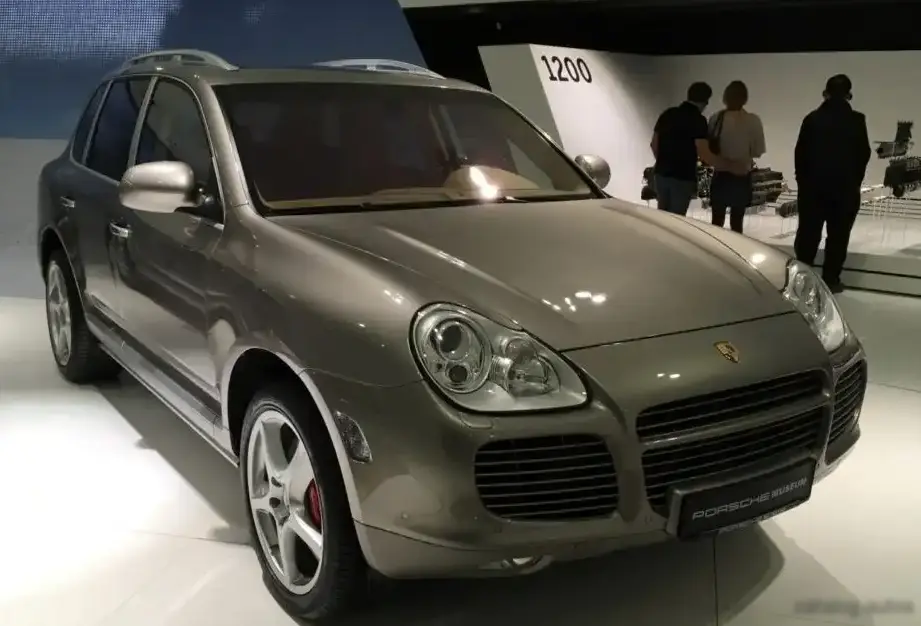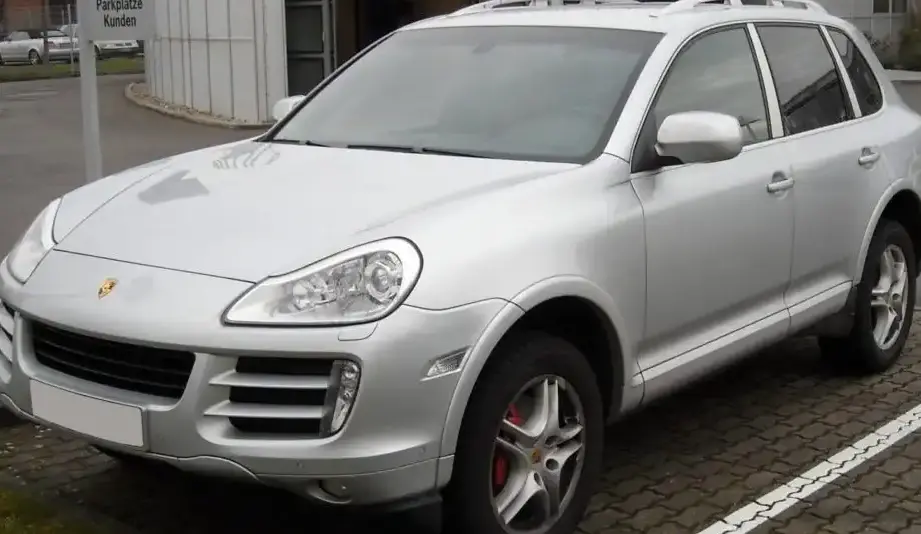
The Porsche Cayenne (955, facelift 2007) 3.6 V6 (290 Hp) AWD represents a significant iteration of Porsche’s entry into the luxury SUV market. Introduced as part of the 955 facelift in 2007 and continuing through 2010, this variant aimed to broaden the Cayenne’s appeal by offering a more accessible price point and a balance between performance and fuel efficiency compared to the higher-end V8 models. It occupied a mid-range position within the Cayenne lineup, slotting below the Cayenne S and Turbo, and above any potential base model offerings in certain markets. This version was primarily aimed at buyers seeking the Cayenne’s prestige and capability without the substantial cost associated with the flagship trims.
Technical Specifications
| Brand | Porsche |
| Model | Cayenne |
| Generation | Cayenne (955, facelift 2007) |
| Type (Engine) | 3.6 V6 (290 Hp) AWD |
| Start of production | 2007 |
| End of production | 2010 |
| Powertrain Architecture | Internal Combustion engine |
| Body type | SUV |
| Seats | 5 |
| Doors | 5 |
| Fuel consumption (economy) – urban (NEDC) | 18.5 l/100 km (12.7 US mpg, 15.3 UK mpg, 5.4 km/l) |
| Fuel consumption (economy) – extra urban (NEDC) | 9.7 l/100 km (24.2 US mpg, 29.1 UK mpg, 10.3 km/l) |
| Fuel consumption (economy) – combined (NEDC) | 12.9 l/100 km (18.2 US mpg, 21.9 UK mpg, 7.8 km/l) |
| CO2 emissions (NEDC) | 310 g/km |
| Fuel Type | Petrol (Gasoline) |
| Acceleration 0 – 100 km/h | 8.1 sec |
| Acceleration 0 – 62 mph | 8.1 sec |
| Acceleration 0 – 60 mph | 7.7 sec |
| Maximum speed | 227 km/h (141.05 mph) |
| Emission standard | Euro 4 |
| Weight-to-power ratio | 7.4 kg/Hp, 134.3 Hp/tonne |
| Weight-to-torque ratio | 5.6 kg/Nm, 178.2 Nm/tonne |
| Power | 290 Hp @ 6200 rpm |
| Power per litre | 80.6 Hp/l |
| Torque | 385 Nm @ 3000 rpm (283.96 lb.-ft. @ 3000 rpm) |
| Engine layout | Front, Longitudinal |
| Engine Model/Code | M55.01 |
| Engine displacement | 3598 cm3 (219.56 cu. in.) |
| Number of cylinders | 6 |
| Engine configuration | VR-engine |
| Cylinder Bore | 89 mm (3.5 in.) |
| Piston Stroke | 96.4 mm (3.8 in.) |
| Compression ratio | 12.3:1 |
| Number of valves per cylinder | 4 |
| Fuel injection system | Direct injection |
| Engine aspiration | Naturally aspirated engine |
| Valvetrain | DOHC |
| Engine oil capacity | 6.9 l (7.29 US qt | 6.07 UK qt) |
| Coolant | 13 l (13.74 US qt | 11.44 UK qt) |
| Kerb Weight | 2160 kg (4761.98 lbs.) |
| Max. weight | 2945 kg (6492.61 lbs.) |
| Max load | 785 kg (1730.63 lbs.) |
| Trunk (boot) space – minimum | 540 l (19.07 cu. ft.) |
| Trunk (boot) space – maximum | 1770 l (62.51 cu. ft.) |
| Fuel tank capacity | 100 l (26.42 US gal | 22 UK gal) |
| Length | 4798 mm (188.9 in.) |
| Width | 1928 mm (75.91 in.) |
| Width including mirrors | 2200 mm (86.61 in.) |
| Height | 1699 mm (66.89 in.) |
| Wheelbase | 2855 mm (112.4 in.) |
| Front track | 1647 mm (64.84 in.) |
| Rear (Back) track | 1662 mm (65.43 in.) |
| Ride height (ground clearance) | 218 mm (8.58 in.) |
| Drag coefficient (Cd) | 0.35 |
| Approach angle | 28.6° |
| Departure angle | 22.8° |
| Ramp-over (brakeover) angle | 20.4° |
| Wading depth | 500 mm (19.69 in.) |
| Drivetrain Architecture | The Internal combustion engine (ICE) drives permanently the four wheels of the vehicle. |
| Drive wheel | All wheel drive (4×4) |
| Number of gears and type of gearbox | 6 gears, manual transmission |
| Front suspension | Double wishbone |
| Rear suspension | Independent multi-link suspension |
| Front brakes | Ventilated discs |
| Rear brakes | Ventilated discs |
| Assisting systems | ABS (Anti-lock braking system) |
| Steering type | Steering rack and pinion |
| Power steering | Hydraulic Steering |
| Tires size | 235/65 R17 |
| Wheel rims size | 7.5J x 17 |
Powertrain & Engine Architecture
The heart of the Cayenne 3.6 V6 is Porsche’s M55.01 engine, a 3.6-liter naturally aspirated VR6. This engine, a derivative of the Volkswagen Group’s VR6 family, features a 60-degree V-angle, which allows for a relatively compact engine design. The M55.01 utilizes direct fuel injection (DFI), a technology that improves fuel efficiency and power output by injecting fuel directly into the combustion chamber. The engine also employs a double overhead camshaft (DOHC) valvetrain with four valves per cylinder, optimizing airflow for enhanced performance. The 6-speed manual transmission was standard, providing drivers with direct control over the engine’s power. The engine’s longitudinal mounting and all-wheel-drive system contribute to balanced handling and traction.
Driving Characteristics
The 3.6 V6 Cayenne offered a noticeably different driving experience compared to its more powerful siblings. While it didn’t possess the blistering acceleration of the Cayenne S or Turbo, it provided adequate power for everyday driving and comfortable highway cruising. The 0-60 mph time of around 7.7 seconds was respectable for an SUV of its size. The manual transmission, while engaging for enthusiasts, required more driver involvement than the optional Tiptronic automatic. The gear ratios were tuned for a balance of acceleration and fuel economy, with a focus on providing usable torque in the mid-range. Compared to the V8 models, the 3.6 V6 felt less urgent but more manageable, making it a suitable choice for drivers prioritizing comfort and efficiency.
Equipment & Trim Levels
The 3.6 V6 Cayenne typically came standard with features such as leather upholstery, automatic climate control, a CD stereo system, and power-adjustable front seats. Optional extras included a navigation system, sunroof, heated seats, upgraded audio systems, and various interior trim options. The exterior styling was largely consistent across the Cayenne range, with the 3.6 V6 often distinguished by its smaller wheels and less aggressive body kit compared to the S and Turbo models. The interior dashboard configuration was similar across all trims, though the availability of certain features, like premium leather or wood trim, varied depending on the options selected.
Chassis & Braking
The Cayenne 955 utilized a robust chassis featuring a double wishbone front suspension and an independent multi-link rear suspension. This setup provided a comfortable ride while maintaining good handling characteristics. The 3.6 V6 models typically came equipped with ventilated disc brakes on all four wheels, providing adequate stopping power for the vehicle’s weight. Anti-lock braking system (ABS) was standard. The suspension tuning was geared towards comfort, with a focus on absorbing bumps and providing a stable ride. Stabilizer bars were used to reduce body roll during cornering.
Market Reception & Comparison
The Cayenne 3.6 V6 was generally well-received by critics as a more accessible entry point into the Porsche SUV lineup. It was praised for its comfortable ride, spacious interior, and respectable performance. However, some reviewers noted that the engine lacked the punch of the V8 models and that the fuel economy, while improved compared to the higher-end trims, was still relatively high. Compared to competitors like the BMW X5 and Mercedes-Benz ML-Class, the Cayenne 3.6 V6 offered a unique blend of Porsche performance and luxury. The manual transmission was appreciated by driving enthusiasts, but the Tiptronic automatic was more popular among buyers seeking convenience.
Legacy
The Porsche Cayenne 3.6 V6 (955, facelift 2007) has established a reputation for reasonable reliability, particularly when properly maintained. The VR6 engine is known for its durability, although it can be susceptible to oil leaks and timing chain wear over time. The Tiptronic automatic transmission, while generally reliable, can experience issues with solenoid packs and valve bodies. In the used car market, these Cayennes represent a relatively affordable way to experience Porsche ownership. They are often sought after by buyers looking for a capable and comfortable SUV with a touch of prestige. The 3.6 V6 variant remains a popular choice for those who prioritize value and practicality over outright performance.