Technical Specifications
| Brand | Porsche |
| Model | Cayenne |
| Generation | Cayenne (955, facelift 2007) |
| Type (Engine) | 3.6 V6 (290 Hp) AWD Tiptronic S |
| Start of production | 2007 |
| End of production | 2010 |
| Powertrain Architecture | Internal Combustion engine |
| Body type | SUV |
| Seats | 5 |
| Doors | 5 |
| Fuel consumption (economy) – urban (NEDC) | 18.3 l/100 km (12.9 US mpg, 15.4 UK mpg, 5.5 km/l) |
| Fuel consumption (economy) – extra urban (NEDC) | 9.9 l/100 km (23.8 US mpg, 28.5 UK mpg, 10.1 km/l) |
| Fuel consumption (economy) – combined (NEDC) | 12.9 l/100 km (18.2 US mpg, 21.9 UK mpg, 7.8 km/l) |
| CO2 emissions (NEDC) | 310 g/km |
| Fuel Type | Petrol (Gasoline) |
| Acceleration 0 – 100 km/h | 8.5 sec |
| Acceleration 0 – 62 mph | 8.5 sec |
| Acceleration 0 – 60 mph | 8.1 sec |
| Maximum speed | 227 km/h (141.05 mph) |
| Emission standard | Euro 4 |
| Weight-to-power ratio | 7.5 kg/Hp, 133.6 Hp/tonne |
| Weight-to-torque ratio | 5.6 kg/Nm, 177.4 Nm/tonne |
| Power | 290 Hp @ 6200 rpm |
| Power per litre | 80.6 Hp/l |
| Torque | 385 Nm @ 3000 rpm (283.96 lb.-ft. @ 3000 rpm) |
| Engine layout | Front, Longitudinal |
| Engine Model/Code | M55.01 |
| Engine displacement | 3598 cm3 (219.56 cu. in.) |
| Number of cylinders | 6 |
| Engine configuration | VR-engine |
| Cylinder Bore | 89 mm (3.5 in.) |
| Piston Stroke | 96.4 mm (3.8 in.) |
| Compression ratio | 12.3:1 |
| Number of valves per cylinder | 4 |
| Fuel injection system | Direct injection |
| Engine aspiration | Naturally aspirated engine |
| Valvetrain | DOHC |
| Engine oil capacity | 6.9 l (7.29 US qt, 6.07 UK qt) |
| Coolant | 13 l (13.74 US qt, 11.44 UK qt) |
| Kerb Weight | 2170 kg (4784.03 lbs.) |
| Max. weight | 2945 kg (6492.61 lbs.) |
| Max load | 775 kg (1708.58 lbs.) |
| Trunk (boot) space – minimum | 540 l (19.07 cu. ft.) |
| Trunk (boot) space – maximum | 1770 l (62.51 cu. ft.) |
| Fuel tank capacity | 100 l (26.42 US gal, 22 UK gal) |
| Length | 4798 mm (188.9 in.) |
| Width | 1928 mm (75.91 in.) |
| Width including mirrors | 2200 mm (86.61 in.) |
| Height | 1699 mm (66.89 in.) |
| Wheelbase | 2855 mm (112.4 in.) |
| Front track | 1647 mm (64.84 in.) |
| Rear (Back) track | 1662 mm (65.43 in.) |
| Ride height (ground clearance) | 218 mm (8.58 in.) |
| Drag coefficient (Cd) | 0.35 |
| Approach angle | 28.6° |
| Departure angle | 22.8° |
| Ramp-over (brakeover) angle | 20.4° |
| Wading depth | 500 mm (19.69 in.) |
| Drivetrain Architecture | The Internal combustion engine (ICE) drives permanently the four wheels of the vehicle. |
| Drive wheel | All wheel drive (4×4) |
| Number of gears and type of gearbox | 6 gears, automatic transmission Tiptronic S |
| Front suspension | Double wishbone |
| Rear suspension | Independent multi-link suspension |
| Front brakes | Ventilated discs |
| Rear brakes | Ventilated discs |
| Assisting systems | ABS (Anti-lock braking system) |
| Steering type | Steering rack and pinion |
| Power steering | Hydraulic Steering |
| Tires size | 235/65 R17 |
| Wheel rims size | 7.5J x 17 |
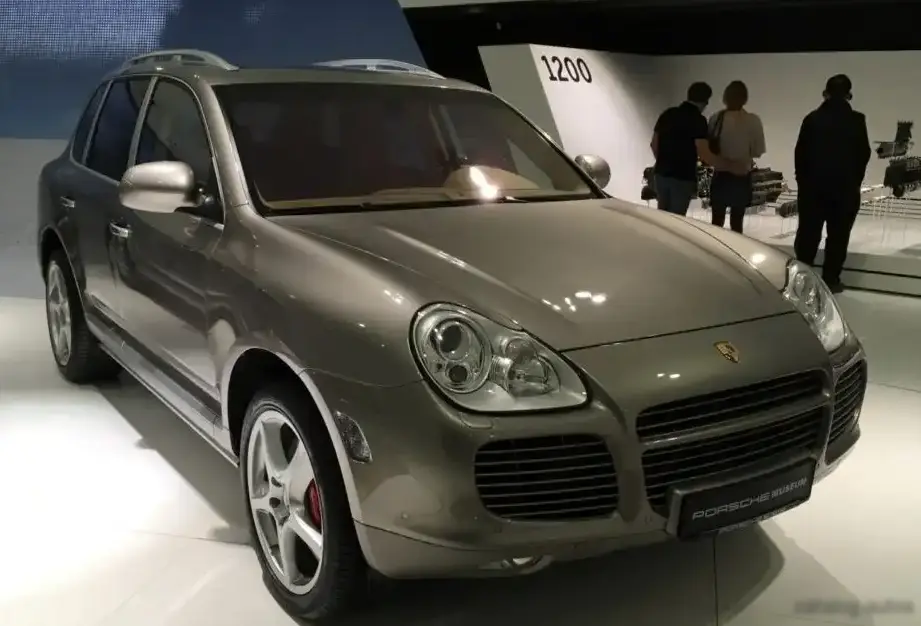
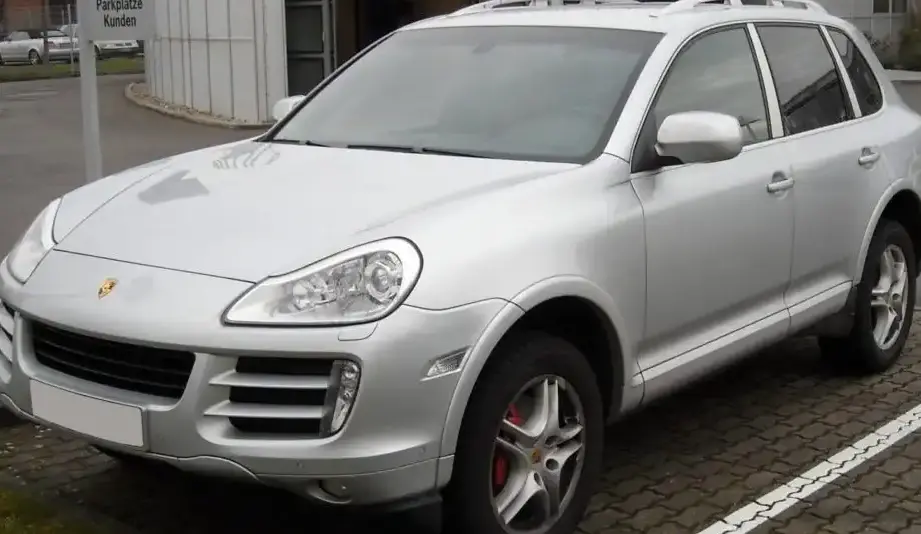
The Porsche Cayenne (955) facelift, specifically the 3.6 V6 variant producing 290 horsepower and equipped with the Tiptronic S automatic transmission and all-wheel drive, was produced from 2007 to 2010. This model represented a pivotal moment in Porsche’s history, marking a significant expansion beyond its traditional sports car roots. It offered a luxury SUV imbued with the brand’s renowned performance DNA. The 955.2 facelift brought with it subtle yet effective styling updates and a refined interior, further solidifying the Cayenne’s position within the competitive premium SUV segment. This particular configuration occupied a middle ground in the Cayenne lineup, striking a balance between performance and affordability compared to the V8 models, while simultaneously delivering a more refined and comfortable experience than the base V6.
Powertrain & Engine Architecture
The core of this Cayenne variant is the M55.01 3.6-liter VR6 engine. This engine, a testament to Volkswagen Group’s engineering prowess, features a narrow-angle V6 configuration – essentially two narrow-angle inline-3 cylinder banks sharing a common cylinder head. This unique design allows for a relatively compact engine package while maintaining good balance and smoothness. The engine utilizes direct fuel injection (DFI), a technology that significantly improves both fuel efficiency and power output by precisely injecting fuel directly into the combustion chamber. The valvetrain is a dual overhead camshaft (DOHC) design with four valves per cylinder, optimizing airflow for enhanced performance across the rev range. The Tiptronic S automatic transmission is a six-speed torque converter automatic with a manual shift mode, granting drivers a degree of control over gear selection. This transmission was lauded for its smooth and responsive shifts, contributing to a more engaging driving experience than a conventional automatic.
Driving Characteristics
The 290 hp and 284 lb-ft of torque generated by the 3.6L V6 were sufficient for propelling the Cayenne’s substantial weight. Acceleration from 0-60 mph took approximately 8.1 seconds, making it reasonably quick for an SUV of its size. However, it didn’t quite match the briskness of the V8-powered models. The Tiptronic S transmission offered smooth and relatively quick shifts, but it lacked the immediate responsiveness of a manual transmission or the lightning-fast shifts of the dual-clutch PDK transmission that would appear in later Cayenne iterations. The standard all-wheel-drive system provided exceptional traction in a variety of driving conditions, enhancing stability and driver confidence. The gear ratios were carefully tuned to balance acceleration with fuel economy, prioritizing everyday usability over outright performance. Compared to the base V6, the 3.6L offered a noticeable power increase, while the Tiptronic S transmission provided a more refined and sophisticated driving experience than the standard automatic.
Equipment & Trim Levels
The 3.6 V6 Tiptronic S Cayenne typically came equipped with a generous array of standard features, including leather upholstery, dual-zone automatic climate control, a premium audio system, and power-adjustable front seats. A range of optional extras were available, allowing buyers to personalize their vehicle with features such as a sunroof, a navigation system, heated seats, and upgraded interior trim materials. The exterior styling was relatively understated, featuring standard alloy wheels and subtle chrome accents. The interior design was both functional and luxurious, with a clear focus on comfort and ease of use. This trim level was designed to provide a well-equipped and comfortable SUV experience without the significantly higher price tag associated with the V8 models.
Chassis & Braking
The Cayenne 955 boasted a fully independent suspension system, featuring double wishbones at the front and a sophisticated multi-link setup at the rear. This suspension design delivered a comfortable ride quality while also providing good handling characteristics. The braking system consisted of ventilated discs on all four wheels, ensuring ample stopping power. Anti-lock brakes (ABS) were standard equipment, enhancing safety and control in emergency braking situations. The Cayenne’s chassis was robust and well-engineered, providing a solid foundation for both its off-road capabilities and its on-road performance. Stabilizer bars were fitted to both the front and rear axles to minimize body roll during cornering maneuvers.
Market Reception & Comparison
The 3.6 V6 Tiptronic S Cayenne was generally well-received by automotive critics as a capable and comfortable luxury SUV. It offered a compelling blend of performance, fuel economy, and features. However, some reviewers pointed out that it didn’t quite possess the exhilarating performance of the V8 models. Fuel economy was considered average for its class, with combined fuel consumption hovering around 18.2 US mpg. When compared to the Cayenne S (V8), the 3.6L offered lower running costs but a less dramatic driving experience. In contrast to the diesel variants, the 3.6L provided a different driving character, with a more responsive engine but slightly lower fuel efficiency.
Legacy
The 3.6L V6 engine found in the 955 Cayenne has proven to be relatively reliable, provided that preventative maintenance is diligently performed. Common issues to be aware of include potential oil leaks and possible problems with the cooling system. The Tiptronic S transmission is generally durable but may require servicing as the vehicle ages. Today, these Cayennes are readily available on the used car market at relatively affordable prices. They represent a good value proposition for buyers seeking a luxurious and capable SUV with the prestigious Porsche badge. However, prospective buyers should be mindful of the potential maintenance costs associated with a vehicle of this age and complexity, and a thorough pre-purchase inspection is highly recommended.