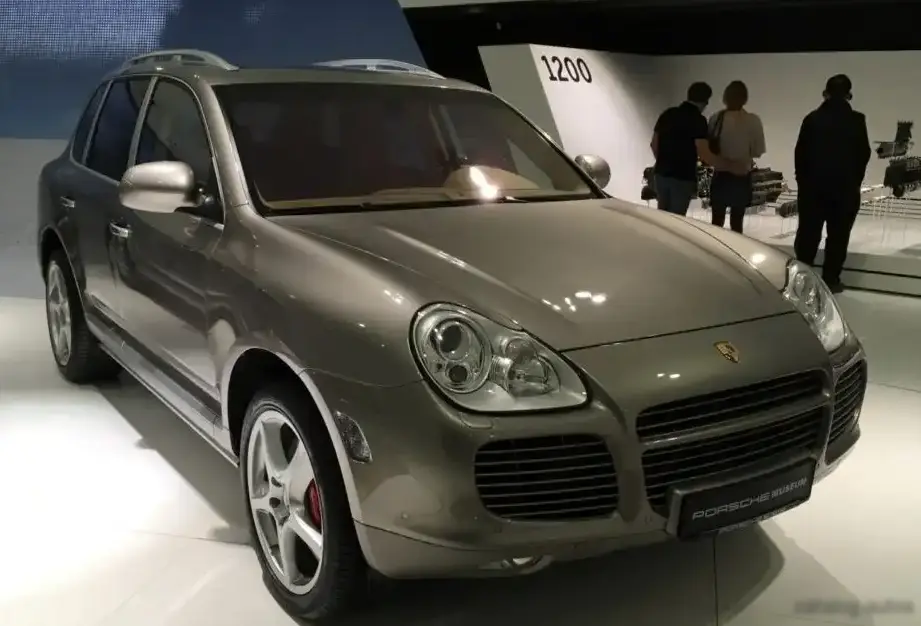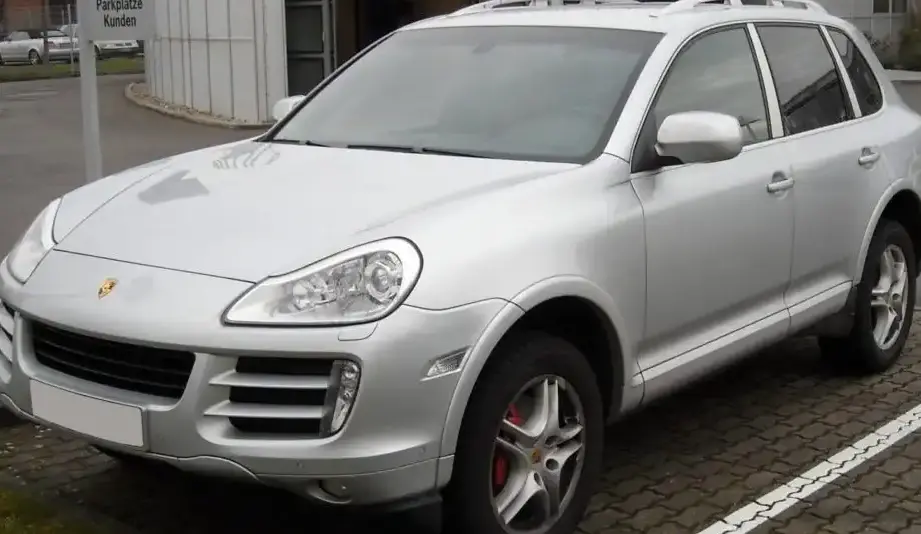
The Porsche Cayenne Diesel 3.0 V6 (240 hp) Tiptronic S, produced from 2009 to 2010, represents a significant entry point into the second-generation (955, facelift) Cayenne lineup. Introduced as Porsche sought to broaden the appeal of its first SUV, this variant aimed to deliver a balance of performance, fuel efficiency, and luxury. It occupied a mid-range position within the Cayenne family, slotting below the more powerful gasoline-powered models like the Cayenne S and Turbo, and above the base gasoline engine. This diesel variant was primarily aimed at the European market, where diesel fuel was more prevalent and favorable tax incentives existed, but was also available in limited quantities in other regions.
Technical Specifications
| Brand | Porsche |
| Model | Cayenne |
| Generation | Cayenne (955, facelift 2007) |
| Type (Engine) | Diesel 3.0 V6 (240 Hp) Tiptronic S |
| Start of production | 2009 |
| End of production | 2010 |
| Powertrain Architecture | Internal Combustion engine |
| Body type | SUV |
| Seats | 5 |
| Doors | 5 |
| Fuel consumption (economy) – urban (NEDC) | 11.6 l/100 km (20.3 US mpg, 24.4 UK mpg, 8.6 km/l) |
| Fuel consumption (economy) – extra urban (NEDC) | 7.9 l/100 km (29.8 US mpg, 35.8 UK mpg, 12.7 km/l) |
| Fuel consumption (economy) – combined (NEDC) | 9.3 l/100 km (25.3 US mpg, 30.4 UK mpg, 10.8 km/l) |
| CO2 emissions (NEDC) | 244 g/km |
| Fuel Type | Diesel |
| Acceleration 0 – 100 km/h | 8.3 sec |
| Acceleration 0 – 62 mph | 8.3 sec |
| Acceleration 0 – 60 mph | 7.9 sec |
| Maximum speed | 214 km/h (132.97 mph) |
| Emission standard | Euro 4 |
| Weight-to-power ratio | 9.3 kg/Hp, 107.1 Hp/tonne |
| Weight-to-torque ratio | 4.1 kg/Nm, 245.5 Nm/tonne |
| Power | 240 Hp @ 4000-4400 rpm |
| Power per litre | 80.9 Hp/l |
| Torque | 550 Nm @ 2000-2250 rpm (405.66 lb.-ft. @ 2000-2250 rpm) |
| Engine layout | Front, Longitudinal |
| Engine Model/Code | M05.9D |
| Engine displacement | 2967 cm3 (181.06 cu. in.) |
| Number of cylinders | 6 |
| Engine configuration | V-engine |
| Cylinder Bore | 83 mm (3.27 in.) |
| Piston Stroke | 91.4 mm (3.6 in.) |
| Compression ratio | 16.8:1 |
| Number of valves per cylinder | 4 |
| Fuel injection system | Diesel Commonrail |
| Engine aspiration | Turbocharger, Intercooler |
| Valvetrain | DOHC |
| Engine oil capacity | 8.3 l (8.77 US qt | 7.3 UK qt) |
| Coolant | 18 l (19.02 US qt | 15.84 UK qt) |
| Kerb Weight | 2240 kg (4938.35 lbs.) |
| Max. weight | 3015 kg (6646.94 lbs.) |
| Max load | 775 kg (1708.58 lbs.) |
| Trunk (boot) space – minimum | 540 l (19.07 cu. ft.) |
| Trunk (boot) space – maximum | 1770 l (62.51 cu. ft.) |
| Fuel tank capacity | 100 l (26.42 US gal | 22 UK gal) |
| Max. roof load | 100 kg (220.46 lbs.) |
| Permitted trailer load with brakes (12%) | 3500 kg (7716.18 lbs.) |
| Permitted towbar download | 140 kg (308.65 lbs.) |
| Length | 4798 mm (188.9 in.) |
| Width | 1928 mm (75.91 in.) |
| Width including mirrors | 2200 mm (86.61 in.) |
| Height | 1699 mm (66.89 in.) |
| Wheelbase | 2855 mm (112.4 in.) |
| Front track | 1647 mm (64.84 in.) |
| Rear (Back) track | 1662 mm (65.43 in.) |
| Ride height (ground clearance) | 218 mm (8.58 in.) |
| Drag coefficient (Cd) | 0.36 |
| Approach angle | 28.6° |
| Departure angle | 22.8° |
| Ramp-over (brakeover) angle | 20.4° |
| Wading depth | 500 mm (19.69 in.) |
| Drivetrain Architecture | The Internal combustion engine (ICE) drives permanently the four wheels of the vehicle. |
| Drive wheel | All wheel drive (4×4) |
| Number of gears and type of gearbox | 6 gears, automatic transmission Tiptronic S |
| Front suspension | Double wishbone |
| Rear suspension | Independent multi-link suspension |
| Front brakes | Ventilated discs |
| Rear brakes | Ventilated discs |
| Assisting systems | ABS (Anti-lock braking system) |
| Steering type | Steering rack and pinion |
| Power steering | Hydraulic Steering |
| Tires size | 235/65 R17 |
| Wheel rims size | 7.5J x 17 |
Powertrain & Engine Architecture
The heart of this Cayenne variant is the M05.9D, a 3.0-liter V6 turbodiesel engine. This engine is part of the Volkswagen Group’s modular engine family and utilizes common rail direct injection technology. The common rail system, operating at extremely high pressures, allows for precise fuel metering and optimized combustion. The engine features a variable geometry turbocharger (VGT) and an intercooler to enhance power and efficiency. The VGT adjusts the turbine vanes to optimize airflow across the engine’s operating range, improving both low-end torque and high-end horsepower. The engine also incorporates four valves per cylinder and a double overhead camshaft (DOHC) configuration for improved breathing. Paired with the engine is Porsche’s Tiptronic S six-speed automatic transmission. This transmission offers both fully automatic operation and manual gear selection via steering wheel-mounted paddles or the gear selector, providing drivers with greater control. The Tiptronic S is known for its smooth and relatively quick shifts.
Driving Characteristics
The 240 hp and 405 lb-ft of torque delivered by the 3.0-liter diesel engine provide adequate, though not exhilarating, performance for the Cayenne. Acceleration from 0-60 mph takes around 7.9 seconds, and top speed is rated at 133 mph. The Tiptronic S transmission is tuned for comfort and efficiency, with gear ratios optimized for relaxed cruising. While it offers manual shift capability, it isn’t as sporty or responsive as a dedicated performance transmission. Compared to the gasoline-powered Cayenne S, the diesel variant feels noticeably slower, particularly during quick acceleration maneuvers. However, the diesel’s abundant low-end torque makes it well-suited for towing and provides effortless highway cruising. Fuel economy is a significant advantage, with combined fuel consumption around 25 mpg, substantially better than the gasoline alternatives.
Equipment & Trim Levels
The Cayenne Diesel 3.0 V6 Tiptronic S typically came standard with a respectable level of equipment. This included leather upholstery, dual-zone automatic climate control, a power liftgate, and a basic audio system. Optional extras were plentiful, as expected from a Porsche, and could include features like navigation, upgraded audio systems (Bose or Burmester), heated and ventilated front seats, adaptive air suspension, and various interior trim options. The exterior styling was largely consistent across the Cayenne range, with the diesel variant often distinguished by subtle badging.
Chassis & Braking
The Cayenne’s chassis features a fully independent suspension, with double wishbones at the front and a multi-link setup at the rear. This provides a comfortable ride and good handling characteristics. The diesel variant, being slightly lighter than some of the higher-powered models, benefits from a slightly more agile feel. Braking duties are handled by ventilated discs on all four wheels, providing ample stopping power. Anti-lock brakes (ABS) are standard, along with electronic stability control (ESC) to enhance safety.
Market Reception & Comparison
The Cayenne Diesel was generally well-received in Europe, where its fuel efficiency and torque were highly valued. Critics praised its comfortable ride and refined interior. However, some noted that the diesel engine lacked the sporty character of the gasoline engines. Compared to the Cayenne S, the diesel offered a more economical alternative, but at the expense of outright performance. Against competitors like the BMW X5 and Mercedes-Benz ML-Class, the Cayenne Diesel held its own in terms of luxury and refinement, but its fuel economy was often a key selling point.
Legacy
The 3.0-liter diesel engine in the Cayenne has proven to be relatively reliable, although like any modern diesel, it is susceptible to issues with the diesel particulate filter (DPF) and fuel injectors. Proper maintenance, including regular oil changes and DPF regeneration, is crucial for long-term reliability. On the used car market, these Cayennes represent a more affordable entry point into Porsche ownership. They are often sought after by buyers who prioritize fuel efficiency and practicality over outright performance. While not as collectible as the higher-performance Cayenne models, the Diesel 3.0 V6 Tiptronic S remains a capable and comfortable luxury SUV.