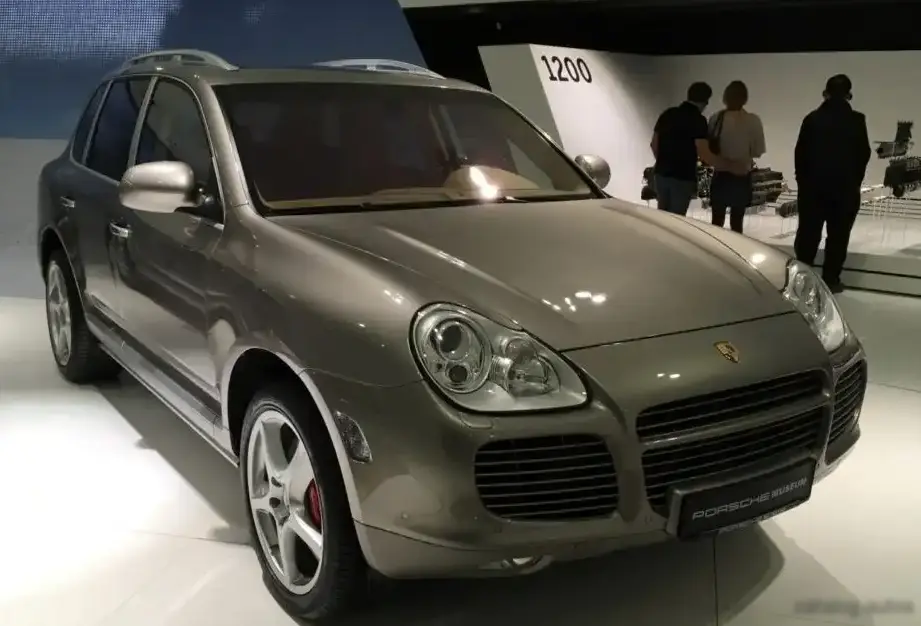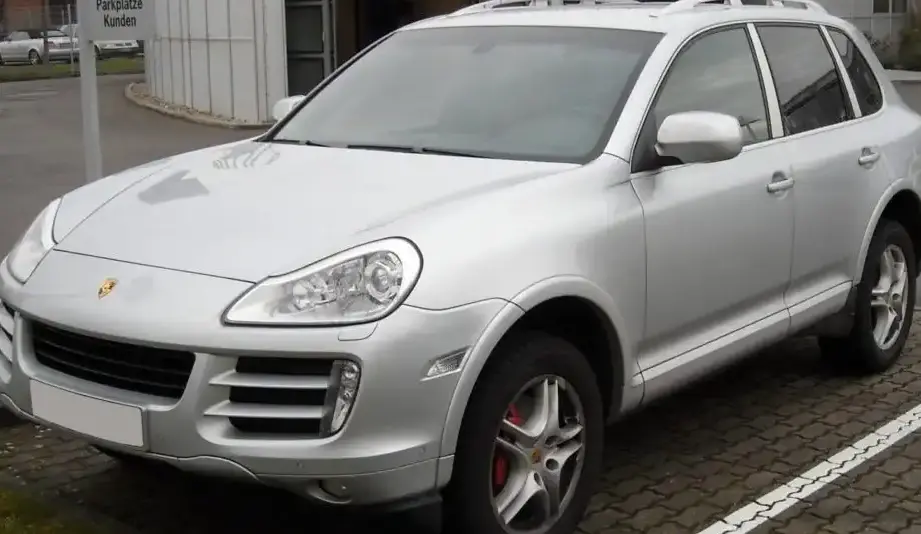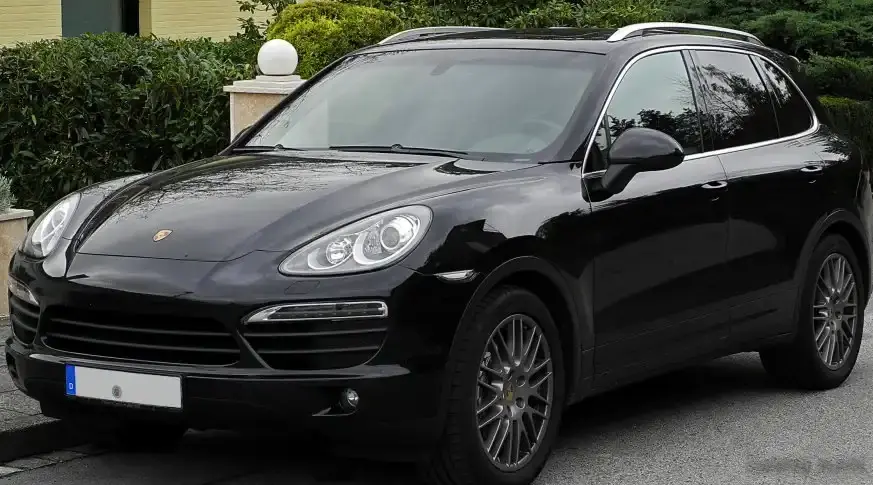
The Porsche Cayenne II Diesel 3.0 V6 (240 hp) AWD Tiptronic S was a variant of Porsche’s second-generation Cayenne, produced from 2010 to 2011. Positioned as a mid-range offering within the Cayenne II lineup, it aimed to balance performance, fuel efficiency, and luxury. This model represented Porsche’s continued expansion into the diesel SUV market, catering to European buyers particularly, where diesel engines enjoyed significant popularity due to favorable taxation and fuel economy. It utilized the Volkswagen Group’s MLB platform (specifically the PL74 version), shared with other premium SUVs like the Audi Q7 and Volkswagen Touareg.
Technical Specifications
| Brand | Porsche |
| Model | Cayenne |
| Generation | Cayenne II |
| Type (Engine) | Diesel 3.0 V6 (240 Hp) AWD Tiptronic S |
| Start of production | 2010 |
| End of production | 2011 |
| Powertrain Architecture | Internal Combustion engine |
| Body type | SUV |
| Seats | 5 |
| Doors | 5 |
| Fuel consumption (economy) – urban (NEDC) | 8.8 l/100 km (26.7 US mpg, 32.1 UK mpg, 11.4 km/l) |
| Fuel consumption (economy) – extra urban (NEDC) | 6.5 l/100 km (36.2 US mpg, 43.5 UK mpg, 15.4 km/l) |
| Fuel consumption (economy) – combined (NEDC) | 7.4 l/100 km (31.8 US mpg, 38.2 UK mpg, 13.5 km/l) |
| CO2 emissions (NEDC) | 195 g/km |
| Fuel Type | Diesel |
| Acceleration 0 – 100 km/h | 7.8 sec |
| Acceleration 0 – 62 mph | 7.8 sec |
| Acceleration 0 – 60 mph | 7.4 sec |
| Maximum speed | 218 km/h (135.46 mph) |
| Emission standard | Euro 5 |
| Weight-to-power ratio | 8.8 kg/Hp, 114.3 Hp/tonne |
| Weight-to-torque ratio | 3.8 kg/Nm, 261.9 Nm/tonne |
| Power | 240 Hp @ 4000-4400 rpm |
| Power per litre | 80.9 Hp/l |
| Torque | 550 Nm @ 2000-2250 rpm (405.66 lb.-ft. @ 2000-2250 rpm) |
| Maximum engine speed | 4800 rpm |
| Engine layout | Front, Longitudinal |
| Engine Model/Code | M05.9E |
| Engine displacement | 2967 cm3 (181.06 cu. in.) |
| Number of cylinders | 6 |
| Engine configuration | V-engine |
| Cylinder Bore | 83 mm (3.27 in.) |
| Piston Stroke | 91.4 mm (3.6 in.) |
| Compression ratio | 16.8:1 |
| Number of valves per cylinder | 4 |
| Fuel injection system | Diesel Commonrail |
| Engine aspiration | Turbocharger, Intercooler |
| Valvetrain | DOHC |
| Engine oil capacity | 7.3 l (7.71 US qt | 6.42 UK qt) |
| Kerb Weight | 2100 kg (4629.71 lbs.) |
| Max. weight | 2860 kg (6305.22 lbs.) |
| Max load | 760 kg (1675.51 lbs.) |
| Trunk (boot) space – minimum | 670 l (23.66 cu. ft.) |
| Trunk (boot) space – maximum | 1780 l (62.86 cu. ft.) |
| Fuel tank capacity | 85 l (22.45 US gal | 18.7 UK gal) |
| Max. roof load | 100 kg (220.46 lbs.) |
| Length | 4846 mm (190.79 in.) |
| Width | 1939 mm (76.34 in.) |
| Width including mirrors | 2155 mm (84.84 in.) |
| Height | 1705 mm (67.13 in.) |
| Wheelbase | 2895 mm (113.98 in.) |
| Front track | 1655 mm (65.16 in.) |
| Rear (Back) track | 1669 mm (65.71 in.) |
| Ride height (ground clearance) | 215 mm (8.46 in.) |
| Drag coefficient (Cd) | 0.36 |
| Approach angle | 26° |
| Departure angle | 24.5° |
| Ramp-over (brakeover) angle | 20.5° |
| Wading depth | 500 mm (19.69 in.) |
| Drivetrain Architecture | The Internal combustion engine (ICE) drives permanently the four wheels of the vehicle. |
| Drive wheel | All wheel drive (4×4) |
| Number of gears and type of gearbox | 8 gears, automatic transmission Tiptronic S |
| Front suspension | Double wishbone |
| Rear suspension | Independent multi-link suspension |
| Front brakes | Ventilated discs, 350×34 mm |
| Rear brakes | Ventilated discs, 330×28 mm |
| Assisting systems | ABS (Anti-lock braking system) |
| Steering type | Steering rack and pinion |
| Power steering | Hydraulic Steering |
| Tires size | 255/55 R18 |
| Wheel rims size | 8J x 18 |
Powertrain & Engine Architecture
The heart of the Cayenne II Diesel 3.0 V6 was the M05.9E engine, a 3.0-liter V6 diesel. This engine was part of the Volkswagen Group’s modular engine family and featured common-rail direct injection, a variable geometry turbocharger, and an intercooler. The common-rail system, operating at extremely high pressures, allowed for precise fuel metering and optimized combustion. The engine employed a double overhead camshaft (DOHC) valvetrain with four valves per cylinder, enhancing volumetric efficiency. The engine produced 240 horsepower between 4000 and 4400 rpm and a substantial 405.66 lb-ft of torque from 2000 to 2250 rpm. This torque output was a key characteristic of the engine, providing strong pulling power at lower engine speeds. The engine also featured a particulate filter to reduce emissions, complying with Euro 5 standards. Paired with the engine was Porsche’s Tiptronic S eight-speed automatic transmission. This transmission offered both fully automatic operation and manual gear selection via steering wheel-mounted paddles or the gear selector. The Tiptronic S was known for its smooth and quick shifts, contributing to a refined driving experience.
Driving Characteristics
The 1.8L Automatic configuration delivered a comfortable and capable driving experience. While not as overtly sporty as the Cayenne S or Turbo models, the diesel engine’s abundant torque provided brisk acceleration, with a 0-60 mph time of around 7.4 seconds. The Tiptronic S transmission was well-matched to the engine, providing smooth gear changes and allowing the driver to maintain optimal engine speed for various driving conditions. The all-wheel-drive system ensured excellent traction in all weather conditions. Compared to the manual transmission versions of the same engine, the Tiptronic S offered greater convenience, particularly in urban driving. However, some enthusiasts noted that the automatic transmission could feel slightly less responsive than the manual. The gear ratios were tuned for a balance of acceleration and fuel economy, with higher gears designed for relaxed cruising on the highway.
Equipment & Trim Levels
The Cayenne II Diesel 3.0 V6 AWD Tiptronic S came standard with a comprehensive list of features, including leather upholstery, dual-zone automatic climate control, a touchscreen infotainment system, and parking sensors. Optional extras included adaptive air suspension, a panoramic sunroof, heated seats, and a premium sound system. Interior trim options included various wood and aluminum finishes. The standard seats provided good support and comfort, and the interior was generally well-appointed, reflecting Porsche’s commitment to luxury. The dashboard layout was clean and functional, with intuitive controls.
Chassis & Braking
The Cayenne II featured a fully independent suspension system, with double wishbones at the front and a multi-link setup at the rear. This suspension design provided a comfortable ride and good handling characteristics. The Cayenne II Diesel 3.0 V6 typically came equipped with ventilated disc brakes on all four wheels. The front brakes measured 350×34 mm, while the rear brakes were 330×28 mm. Anti-lock braking system (ABS) was standard, enhancing braking performance and stability. The Cayenne II also featured a hydraulic power steering system, providing precise and responsive steering feel.
Market Reception & Comparison
The Cayenne II Diesel 3.0 V6 AWD Tiptronic S was generally well-received by automotive critics. It was praised for its fuel efficiency, comfortable ride, and strong performance. However, some critics noted that the diesel engine lacked the refinement and sound of the gasoline engines offered in the Cayenne lineup. Compared to the Cayenne S, the diesel model offered lower performance but significantly better fuel economy. Compared to the base Cayenne, the diesel provided more power and torque. The diesel variant was particularly popular in Europe, where diesel fuel was cheaper and more readily available than gasoline.
Legacy
The M05.9E engine proved to be a reliable and durable powertrain. While diesel engines can be susceptible to issues with the particulate filter and fuel injection system, the Cayenne II Diesel 3.0 V6 generally held up well over time with proper maintenance. On the used car market, these Cayennes are often sought after for their combination of luxury, performance, and fuel efficiency. However, potential buyers should be aware of the potential maintenance costs associated with diesel engines, particularly the diesel particulate filter. The Cayenne II Diesel 3.0 V6 represents a significant chapter in Porsche’s history, demonstrating the brand’s ability to successfully integrate diesel technology into its luxury SUV lineup.