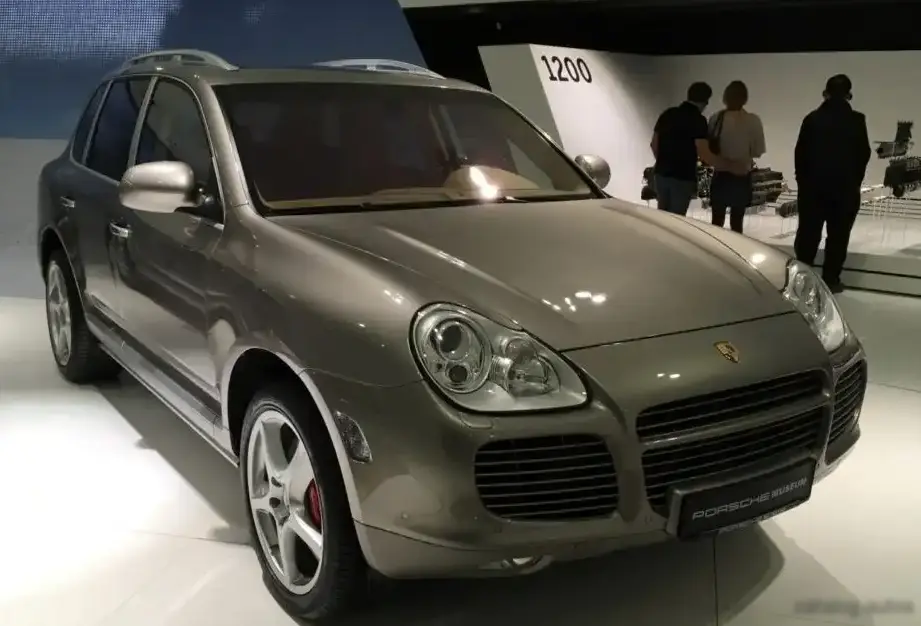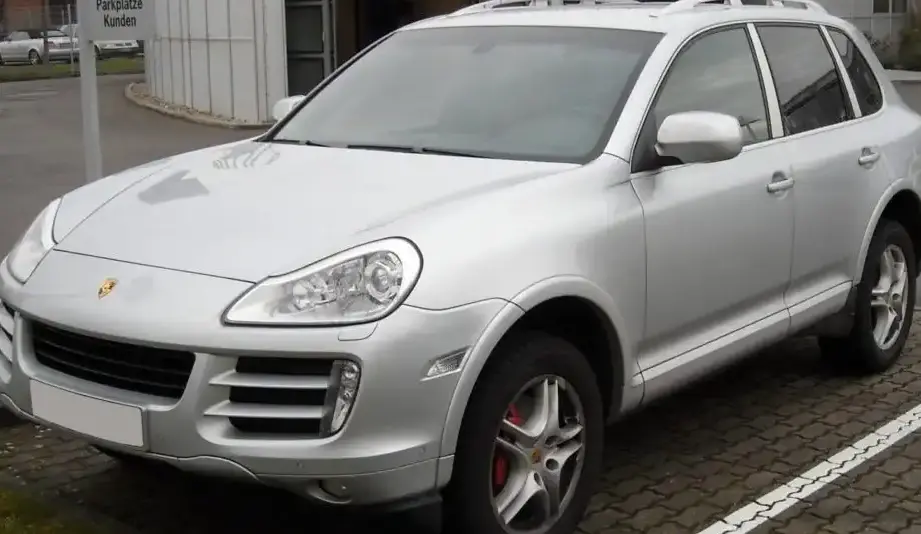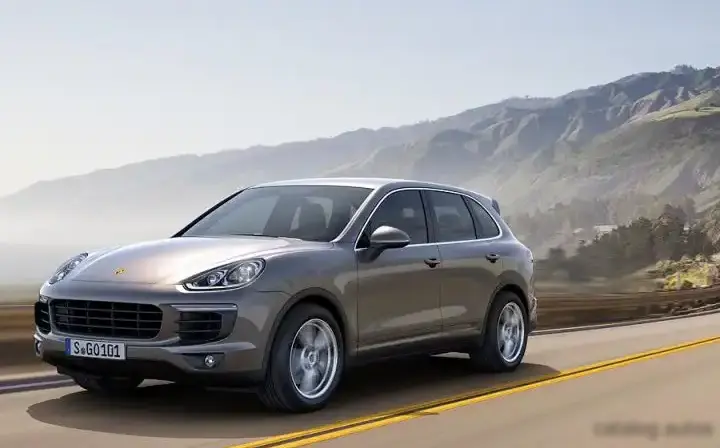
The Porsche Cayenne II (facelift, 2014) S 3.0 V6 E-Hybrid Tiptronic S represents a significant step in Porsche’s foray into plug-in hybrid technology within the luxury SUV segment. Produced from 2014 to 2017, this variant combined a supercharged 3.0-liter V6 gasoline engine with an electric motor, offering a blend of performance and efficiency. It sat within the second generation (958.2) of the Cayenne, positioned as a premium offering bridging the gap between the base Cayenne and the higher-performance Cayenne Turbo S. The “E-Hybrid” designation signified Porsche’s commitment to offering electrified options, appealing to a growing market segment focused on reduced emissions and fuel consumption without sacrificing the driving experience expected from the brand.
Technical Specifications
| Brand | Porsche |
| Model | Cayenne |
| Generation | Cayenne II (facelift 2014) |
| Type (Engine) | S 3.0 V6 (416 Hp) E-Hybrid Tiptronic S |
| Start of production | 2014 |
| End of production | 2017 |
| Powertrain Architecture | PHEV (Plug-in Hybrid Electric Vehicle) |
| Body type | SUV |
| Seats | 5 |
| Doors | 5 |
| Fuel consumption (combined) | 3.4 l/100 km (69.2 US mpg, 83.1 UK mpg, 29.4 km/l) |
| CO2 emissions | 79 g/km |
| Fuel Type | Petrol / electricity |
| Acceleration 0 – 100 km/h | 5.9 sec |
| Acceleration 0 – 62 mph | 5.9 sec |
| Acceleration 0 – 60 mph | 5.4 sec |
| Maximum speed | 243 km/h (150.99 mph) |
| Emission standard | Euro 6 |
| Weight-to-power ratio | 5.6 kg/Hp, 177 Hp/tonne |
| Weight-to-torque ratio | 4 kg/Nm, 251.1 Nm/tonne |
| Gross battery capacity | 10.8 kWh |
| Battery voltage | 382 V |
| Battery technology | Lithium-ion (Li-Ion) |
| Battery location | Under the trunk |
| All-electric range | 18-36 km (11.18 – 22.37 mi) |
| Average Energy consumption | 20.8 kWh/100 km (33.47 kWh/100 mi, 101 MPGe, 4.8 km/kWh, 3 mi/kWh) |
| Max speed (electric) | 125 km/h (77.67 mph) |
| Electric motor power | 95 Hp @ 2200-2600 rpm (310 Nm @ 0-1700 rpm / 228.64 lb.-ft. @ 0-1700 rpm) |
| System power | 416 Hp @ 5500 rpm (590 Nm @ 1250-4000 rpm / 435.16 lb.-ft. @ 1250-4000 rpm) |
| Internal combustion engine power | 333 Hp @ 5500-6500 rpm (440 Nm @ 3000-5250 rpm / 324.53 lb.-ft. @ 3000-5250 rpm) |
| Engine displacement | 2995 cm3 (182.77 cu. in.) |
| Number of cylinders | 6 |
| Engine configuration | V-engine |
| Cylinder Bore | 84.5 mm (3.33 in.) |
| Piston Stroke | 89 mm (3.5 in.) |
| Compression ratio | 10.5:1 |
| Kerb Weight | 2350 kg (5180.86 lbs.) |
| Max. weight | 3050 kg (6724.1 lbs.) |
| Fuel tank capacity | 80 l (21.13 US gal, 17.6 UK gal) |
| Length | 4855 mm (191.14 in.) |
| Width | 1939 mm (76.34 in.) |
| Height | 1705 mm (67.13 in.) |
| Wheelbase | 2895 mm (113.98 in.) |
| Number of gears | 8 |
| Gearbox type | automatic transmission Tiptronic S |
Introduction
The 2014-2017 Porsche Cayenne S E-Hybrid represented Porsche’s initial serious attempt at a plug-in hybrid SUV. Built on the updated 958.2 platform, it combined a 3.0-liter supercharged V6 engine with an electric motor integrated into the eight-speed Tiptronic S transmission. This configuration allowed for both all-electric driving for shorter distances and a combined output of 416 horsepower, delivering performance comparable to naturally aspirated V8 Cayennes while significantly improving fuel economy. The S E-Hybrid was positioned as a more environmentally conscious alternative within the Cayenne range, appealing to buyers seeking a luxury SUV with reduced running costs and a smaller carbon footprint.
Powertrain & Engine Architecture
At the heart of the Cayenne S E-Hybrid lies the Porsche-developed 3.0-liter V6 engine, internally designated as the CGE. This engine utilizes direct fuel injection and a mechanically driven supercharger to deliver 333 horsepower and 324.53 lb-ft of torque. The supercharger provides instant boost at lower engine speeds, eliminating turbo lag and enhancing responsiveness. The electric motor, producing 95 horsepower and 228.64 lb-ft of torque, is integrated between the engine and the transmission. This allows for both electric-only propulsion and the ability to assist the gasoline engine during acceleration. The 10.8 kWh lithium-ion battery pack is located under the trunk floor, minimizing impact on passenger space. The eight-speed Tiptronic S automatic transmission is specifically tuned to work seamlessly with both the gasoline engine and the electric motor, offering smooth and efficient gear changes. The hybrid system intelligently manages the power flow between the engine, motor, and battery, optimizing for efficiency or performance as needed.
Driving Characteristics
The Cayenne S E-Hybrid offers a unique driving experience. In electric-only mode, it provides near-silent operation and a range of 18-36 kilometers (11-22 miles), sufficient for many daily commutes. When the gasoline engine engages, the transition is remarkably smooth. The combined output of 416 horsepower allows for brisk acceleration, reaching 0-60 mph in approximately 5.4 seconds. While not as overtly sporty as the Cayenne S or Turbo models, the E-Hybrid delivers ample power for confident overtaking and highway cruising. The Tiptronic S transmission provides quick and precise shifts, and the hybrid system’s torque-fill capabilities minimize any perceived interruption during gear changes. Compared to the standard Cayenne S, the E-Hybrid feels slightly heavier due to the added weight of the battery pack and electric motor, but the instant torque from the electric motor helps to offset this. The gear ratios are optimized for both electric and hybrid operation, providing strong acceleration in all driving scenarios.
Equipment & Trim Levels
The Cayenne S E-Hybrid came generously equipped as standard. Interior features typically included leather upholstery, power-adjustable front seats with memory function, a touchscreen infotainment system with navigation, and a premium sound system. Standard safety features included Porsche Stability Management (PSM), multiple airbags, and parking sensors. Optional extras included adaptive air suspension, Porsche Dynamic Chassis Control (PDCC), a panoramic sunroof, and various interior trim options. The E-Hybrid also featured unique instrumentation and displays within the instrument cluster to provide information about the hybrid system’s operation and energy flow. Exterior styling cues were subtle, with “E-Hybrid” badging and unique wheel designs differentiating it from other Cayenne models.
Chassis & Braking
The Cayenne S E-Hybrid utilizes a double-wishbone front suspension and an independent multi-link rear suspension, providing a comfortable and controlled ride. The suspension is tuned to accommodate the added weight of the hybrid system without compromising handling. Ventilated disc brakes are fitted on all four wheels, providing ample stopping power. The braking system incorporates regenerative braking, which captures energy during deceleration and stores it in the battery, further enhancing efficiency. The steering is a hydraulic power-assisted rack-and-pinion system, offering precise and responsive steering feel. The vehicle’s electronic stability control system is specifically calibrated to work with the hybrid powertrain, ensuring optimal stability and control in all driving conditions.
Market Reception & Comparison
The Cayenne S E-Hybrid was generally well-received by automotive critics. It was praised for its blend of performance, efficiency, and luxury. However, some reviewers noted that the added weight of the hybrid system slightly diminished the Cayenne’s handling agility compared to the standard models. Fuel economy was a significant selling point, with the E-Hybrid achieving significantly better MPG figures than the gasoline-only Cayennes. Compared to the Cayenne S, the E-Hybrid offered a more environmentally friendly option without a substantial compromise in performance. Compared to the Cayenne Diesel, the E-Hybrid provided a lower emissions alternative, albeit with a higher initial purchase price. Reliability reports have been generally positive, with the hybrid system proving to be relatively robust.
Legacy
The Porsche Cayenne S E-Hybrid paved the way for Porsche’s broader electrification strategy. It demonstrated the feasibility of combining Porsche’s performance DNA with hybrid technology. The powertrain, while complex, has proven to be reasonably reliable in the long term, with many examples still on the road today. On the used car market, the S E-Hybrid represents a good value proposition for buyers seeking a luxury SUV with a plug-in hybrid powertrain. The battery pack’s capacity has diminished somewhat over time in some vehicles, reducing the all-electric range, but the overall system remains functional and efficient. The Cayenne S E-Hybrid served as a crucial stepping stone in Porsche’s transition towards a more sustainable future, influencing the development of subsequent hybrid and electric models.