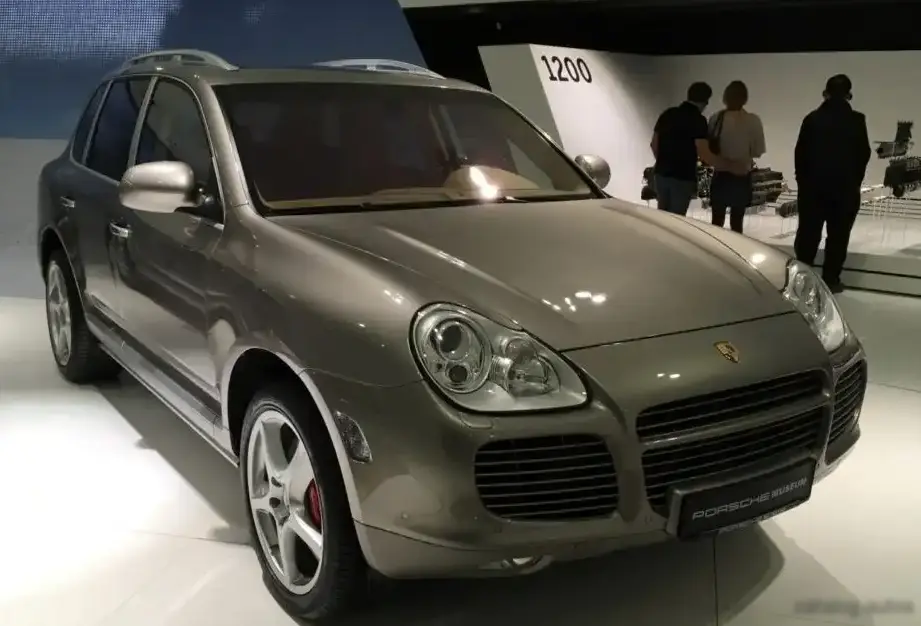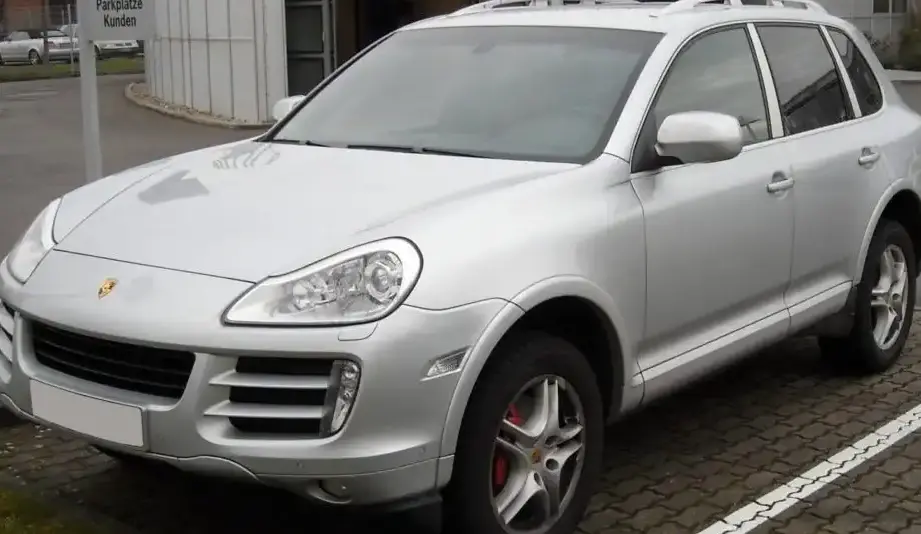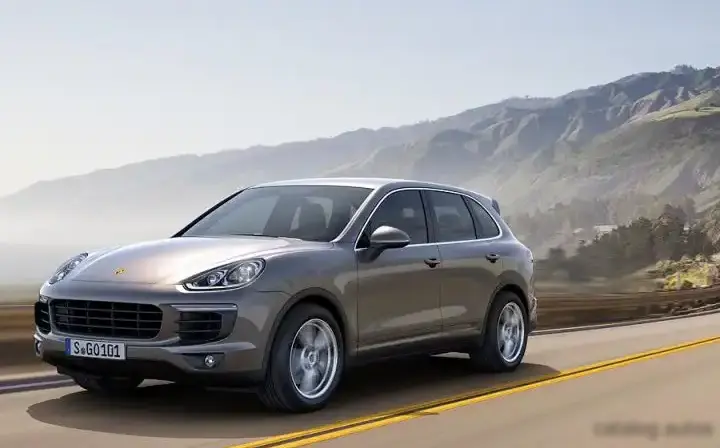
The Porsche Cayenne II Turbo, specifically the facelift model produced from 2014 to 2017, represents a significant evolution in Porsche’s luxury SUV offerings. This variant, equipped with a 4.8-liter twin-turbocharged V8 engine producing 520 horsepower and paired with Porsche’s Tiptronic S eight-speed automatic transmission, positioned itself as the performance flagship of the Cayenne lineup. It catered to buyers seeking the ultimate combination of luxury, performance, and all-weather capability within the Porsche brand. The 2014 facelift brought styling updates, enhanced technology, and refinements to the powertrain, solidifying the Cayenne Turbo’s status as a competitor to high-end SUVs from BMW, Mercedes-Benz, and Land Rover.
Technical Specifications
| Brand | Porsche |
| Model | Cayenne |
| Generation | Cayenne II (facelift 2014) |
| Type (Engine) | Turbo 4.8 V8 (520 Hp) Tiptronic |
| Start of production | 2014 |
| End of production | 2017 |
| Powertrain Architecture | Internal Combustion engine |
| Body type | SUV |
| Seats | 5 |
| Doors | 5 |
| Fuel consumption (urban) | 15.9 – 15.5 l/100 km (14.8 – 15.2 US mpg, 17.8 – 18.2 UK mpg, 6.3 – 6.5 km/l) |
| Fuel consumption (extra urban) | 8.9 – 8.7 l/100 km (26.4 – 27 US mpg, 31.7 – 32.5 UK mpg, 11.2 – 11.5 km/l) |
| Fuel consumption (combined) | 11.5 – 11.2 l/100 km (20.5 – 21 US mpg, 24.6 – 25.2 UK mpg, 8.7 – 8.9 km/l) |
| CO2 emissions | 267 – 261 g/km |
| Fuel Type | Petrol (Gasoline) |
| Acceleration 0 – 100 km/h | 4.5 sec |
| Acceleration 0 – 62 mph | 4.5 sec |
| Acceleration 0 – 60 mph | 4.3 sec |
| Maximum speed | 279 km/h (173.36 mph) |
| Emission standard | Euro 6 |
| Weight-to-power ratio | 4.2 kg/Hp, 238 Hp/tonne |
| Weight-to-torque ratio | 2.9 kg/Nm, 343.2 Nm/tonne |
| Power | 520 Hp @ 6000 rpm |
| Power per litre | 108.2 Hp/l |
| Torque | 750 Nm @ 2250-4000 rpm (553.17 lb.-ft. @ 2250-4000 rpm) |
| Engine layout | Front, Longitudinal |
| Engine Model/Code | CFTB |
| Engine displacement | 4806 cm3 (293.28 cu. in.) |
| Number of cylinders | 8 |
| Engine configuration | V-engine |
| Cylinder Bore | 96 mm (3.78 in.) |
| Piston Stroke | 83 mm (3.27 in.) |
| Compression ratio | 10.5:1 |
| Number of valves per cylinder | 4 |
| Fuel injection system | Direct injection |
| Engine aspiration | BiTurbo, Intercooler |
| Engine oil capacity | 9.5 l (10.04 US qt | 8.36 UK qt) |
| Kerb Weight | 2185 kg (4817.1 lbs.) |
| Max. weight | 2895 kg (6382.38 lbs.) |
| Max load | 710 kg (1565.28 lbs.) |
| Trunk (boot) space – minimum | 670 l (23.66 cu. ft.) |
| Trunk (boot) space – maximum | 1780 l (62.86 cu. ft.) |
| Fuel tank capacity | 100 l (26.42 US gal | 22 UK gal) |
| Length | 4855 mm (191.14 in.) |
| Width | 1939 mm (76.34 in.) |
| Height | 1702 mm (67.01 in.) |
| Wheelbase | 2895 mm (113.98 in.) |
| Front track | 1643 mm (64.69 in.) |
| Rear (Back) track | 1657 mm (65.24 in.) |
| Drag coefficient (Cd) | 0.36 |
| Drive wheel | All wheel drive (4×4) |
| Number of gears and type of gearbox | 8 gears, automatic transmission Tiptronic S |
| Front suspension | Double wishbone |
| Rear suspension | Independent multi-link suspension |
| Front brakes | Ventilated discs |
| Rear brakes | Ventilated discs |
| Assisting systems | ABS (Anti-lock braking system) |
| Steering type | Steering rack and pinion |
| Tires size | 265/50 R19 |
| Wheel rims size | 8.5J x 19 |
Powertrain & Engine Architecture
At the heart of the Cayenne Turbo lies the CFTB engine, a 4.8-liter twin-turbocharged V8. This engine utilizes direct fuel injection, a technology that precisely meters fuel directly into the combustion chamber, improving efficiency and power output. The engine’s valvetrain features four valves per cylinder, optimizing airflow for enhanced performance. The twin turbochargers, strategically positioned, minimize turbo lag and deliver a broad, flat torque curve. The Tiptronic S eight-speed automatic transmission is a crucial component, offering both fully automatic operation and manual control via steering wheel-mounted paddles. This transmission is designed to handle the engine’s substantial torque output and provides quick, smooth shifts. The transmission’s gear ratios are tuned for both acceleration and fuel efficiency, with closer ratios in the lower gears for responsive performance and taller ratios for relaxed highway cruising.
Driving Characteristics
The Cayenne Turbo’s driving experience is defined by its effortless power and surprisingly agile handling for a vehicle of its size. The 520 horsepower and 750 Nm (553 lb-ft) of torque provide exhilarating acceleration, with 0-60 mph times consistently around 4.3 seconds. The Tiptronic S transmission contributes to this performance, offering precise and responsive shifts. Compared to the base Cayenne models or the diesel variants, the Turbo delivers a significantly more engaging and dynamic driving experience. While the lower-powered models prioritize fuel economy and comfort, the Turbo emphasizes performance and driver involvement. The all-wheel-drive system provides excellent traction in all conditions, enhancing stability and control.
Equipment & Trim Levels
The Cayenne Turbo came standard with a comprehensive array of luxury and performance features. Standard equipment included leather upholstery, heated and ventilated front seats, a panoramic sunroof, a premium sound system, and Porsche’s Communication Management (PCM) infotainment system. Optional extras were plentiful, allowing buyers to personalize their Cayenne Turbo with features such as adaptive air suspension, Porsche Dynamic Chassis Control (PDCC), carbon ceramic brakes, and a variety of interior trim options. The interior design focused on a driver-centric layout with high-quality materials and meticulous attention to detail.
Chassis & Braking
The Cayenne Turbo’s chassis is engineered to handle the engine’s power and provide a comfortable ride. It features a double wishbone front suspension and an independent multi-link rear suspension. The standard suspension setup provides a good balance between comfort and handling, while the optional adaptive air suspension allows drivers to adjust the ride height and damping characteristics. The braking system consists of ventilated discs on all four wheels, providing ample stopping power. Larger, carbon ceramic brakes were available as an option for even more aggressive braking performance. The Cayenne Turbo’s steering is precise and well-weighted, providing good feedback to the driver.
Market Reception & Comparison
The Cayenne Turbo was generally well-received by automotive critics, who praised its performance, luxury, and handling. However, its high price tag and relatively high fuel consumption were often noted. Compared to its competitors, such as the BMW X5 M and the Mercedes-Benz ML63 AMG, the Cayenne Turbo offered a unique blend of Porsche’s sports car DNA and the practicality of an SUV. Fuel economy, while not a strong point, was comparable to other high-performance SUVs in its class. Reliability was generally good, although the complex twin-turbocharged engine and advanced technology could potentially lead to higher maintenance costs.
Legacy
The 2014-2017 Cayenne Turbo remains a desirable SUV in the used car market. Its powerful engine, luxurious interior, and engaging driving dynamics continue to appeal to buyers seeking a high-performance luxury SUV. While maintenance costs can be higher than those of more mainstream SUVs, the Cayenne Turbo’s robust construction and relatively good reliability record make it a worthwhile investment for those who prioritize performance and prestige. The CFTB engine, while complex, has proven to be durable when properly maintained, and parts availability remains good. The Cayenne Turbo’s influence can be seen in subsequent Porsche SUV models, which continue to push the boundaries of performance and luxury in the SUV segment.