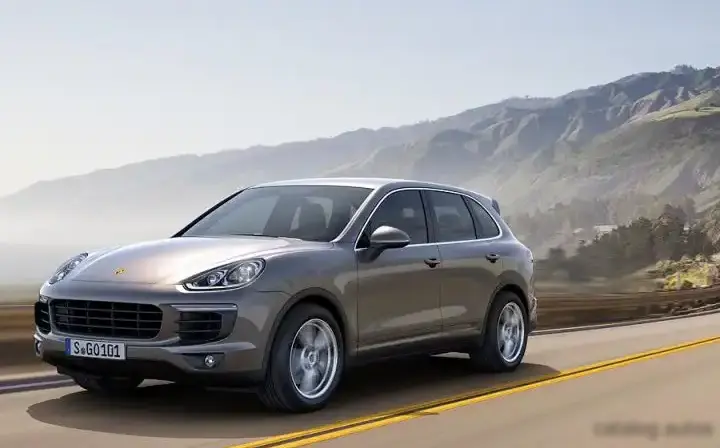
The Porsche Cayenne II Turbo S, specifically the facelifted model produced from 2015 to 2017, represents the pinnacle of performance within the second-generation Cayenne lineup. Positioned as the flagship variant, it offered a substantial increase in power and luxury compared to the base and S models. This iteration of the Cayenne Turbo S built upon the foundation of the 958 platform, introducing styling refinements and enhanced technology while retaining the core characteristics that defined Porsche’s entry into the luxury SUV segment. It was a key model for Porsche in the North American market, where large, powerful SUVs were – and continue to be – highly sought after.
Technical Specifications
| Brand | Porsche |
| Model | Cayenne |
| Generation | Cayenne II (facelift 2014) |
| Type (Engine) | Turbo S 4.8 V8 (570 Hp) Tiptronic |
| Start of production | 2015 |
| End of production | 2017 |
| Powertrain Architecture | Internal Combustion engine |
| Body type | SUV |
| Seats | 5 |
| Doors | 5 |
| Fuel consumption (economy) – urban | 15.9 l/100 km (14.8 US mpg, 17.8 UK mpg, 6.3 km/l) |
| Fuel consumption (economy) – extra urban | 8.9 l/100 km (26.4 US mpg, 31.7 UK mpg, 11.2 km/l) |
| Fuel consumption (economy) – combined | 11.5 l/100 km (20.5 US mpg, 24.6 UK mpg, 8.7 km/l) |
| CO2 emissions | 267 g/km |
| Fuel Type | Petrol (Gasoline) |
| Acceleration 0 – 100 km/h | 4.1 sec |
| Acceleration 0 – 62 mph | 4.1 sec |
| Acceleration 0 – 60 mph | 3.9 sec |
| Maximum speed | 284 km/h (176.47 mph) |
| Emission standard | Euro 6 |
| Weight-to-power ratio | 3.9 kg/Hp, 255 Hp/tonne |
| Weight-to-torque ratio | 2.8 kg/Nm, 357.9 Nm/tonne |
| Power | 570 Hp @ 6000 rpm |
| Power per litre | 118.6 Hp/l |
| Torque | 800 Nm @ 2500-4000 rpm (590.05 lb.-ft. @ 2500-4000 rpm) |
| Engine layout | Front, Longitudinal |
| Engine Model/Code | CYXA |
| Engine displacement | 4806 cm3 (293.28 cu. in.) |
| Number of cylinders | 8 |
| Engine configuration | V-engine |
| Cylinder Bore | 96 mm (3.78 in.) |
| Piston Stroke | 83 mm (3.27 in.) |
| Compression ratio | 10.5:1 |
| Number of valves per cylinder | 4 |
| Fuel injection system | Direct injection |
| Engine aspiration | BiTurbo, Intercooler |
| Engine oil capacity | 9.5 l (10.04 US qt | 8.36 UK qt) |
| Kerb Weight | 2235 kg (4927.33 lbs.) |
| Max. weight | 2900 kg (6393.41 lbs.) |
| Max load | 665 kg (1466.07 lbs.) |
| Trunk (boot) space – minimum | 670 l (23.66 cu. ft.) |
| Trunk (boot) space – maximum | 1780 l (62.86 cu. ft.) |
| Fuel tank capacity | 100 l (26.42 US gal | 22 UK gal) |
| Length | 4855 mm (191.14 in.) |
| Width | 1954 mm (76.93 in.) |
| Height | 1702 mm (67.01 in.) |
| Wheelbase | 2895 mm (113.98 in.) |
| Front track | 1661 mm (65.39 in.) |
| Rear (Back) track | 1675 mm (65.94 in.) |
| Drag coefficient (Cd) | 0.36 |
| Drive wheel | All wheel drive (4×4) |
| Number of gears and type of gearbox | 8 gears, automatic transmission Tiptronic S |
| Front suspension | Double wishbone |
| Rear suspension | Independent multi-link suspension |
| Front brakes | Ventilated discs |
| Rear brakes | Ventilated discs |
| Assisting systems | ABS (Anti-lock braking system) |
| Steering type | Steering rack and pinion |
| Tires size | 295/35 R21 |
| Wheel rims size | 10J x 21 |
Powertrain & Engine Architecture
At the heart of the Cayenne Turbo S lies the CYXA engine, a 4.8-liter twin-turbocharged V8. This engine is a significant evolution of Porsche’s earlier V8 designs, incorporating direct fuel injection and variable valve timing to optimize performance and efficiency. The twin-turbocharger setup utilizes sequentially activated turbochargers, providing both rapid response at low engine speeds and substantial power at higher RPMs. The engine produces 570 horsepower at 6000 rpm and a robust 800 Nm (590 lb-ft) of torque available from 2500 to 4000 rpm. This broad torque curve contributes to the Cayenne Turbo S’s impressive acceleration. The engine is paired with Porsche’s eight-speed Tiptronic S automatic transmission. This transmission offers both fully automatic operation and manual control via steering wheel-mounted paddle shifters, allowing drivers to tailor the driving experience to their preferences. The Tiptronic S transmission is known for its quick and smooth shifts, enhancing both performance and comfort.
Driving Characteristics
The Cayenne Turbo S delivers a driving experience that is both remarkably powerful and surprisingly refined for a vehicle of its size. The combination of the potent V8 engine and the eight-speed transmission results in blistering acceleration – 0 to 60 mph in approximately 3.9 seconds. The all-wheel-drive system provides excellent traction, ensuring confident handling in a variety of conditions. Compared to the standard Cayenne or the Cayenne S, the Turbo S offers a significantly more engaging and dynamic driving experience. The suspension, while tuned for comfort, is firm enough to minimize body roll during cornering. The steering is precise and well-weighted, providing a direct connection to the road. The Tiptronic S transmission allows for precise gear selection, enabling drivers to maximize performance on winding roads or maintain optimal engine speed during highway cruising.
Equipment & Trim Levels
The Cayenne Turbo S came standard with a comprehensive array of luxury and performance features. Interior appointments included leather upholstery, heated and ventilated front seats with massage function, a premium sound system, and a panoramic sunroof. Standard technology features included Porsche’s Communication Management (PCM) system with navigation, Bluetooth connectivity, and a suite of driver-assistance systems such as adaptive cruise control and lane departure warning. Optional extras included carbon fiber trim, upgraded leather packages, and a rear-seat entertainment system. The overall interior ambiance was one of understated luxury, with a focus on high-quality materials and meticulous craftsmanship.
Chassis & Braking
The Cayenne Turbo S features a sophisticated chassis designed to handle the vehicle’s substantial power and weight. The suspension utilizes a double-wishbone front suspension and an independent multi-link rear suspension, both with air suspension and Porsche Active Suspension Management (PASM). PASM continuously adjusts the damping characteristics of the suspension to optimize ride comfort and handling. The braking system consists of ventilated discs on all four wheels, with larger rotors and more powerful calipers compared to the base Cayenne. Porsche Ceramic Composite Brakes (PCCB) were available as an option, offering even greater stopping power and fade resistance. The Cayenne Turbo S also features Porsche Torque Vectoring Plus (PTV Plus), which enhances cornering agility by selectively braking individual rear wheels.
Market Reception & Comparison
The Cayenne Turbo S was widely praised by automotive critics for its exceptional performance, luxurious interior, and refined driving dynamics. It was often compared favorably to other high-performance luxury SUVs, such as the BMW X5 M and the Range Rover Sport SVR. While the Turbo S commanded a premium price, reviewers generally considered it to be worth the investment for buyers seeking the ultimate Cayenne experience. Fuel economy, as expected for a vehicle of this type, was relatively low, averaging around 20.5 US mpg in combined driving. Reliability was generally good, although the complex twin-turbocharged engine and advanced technology systems could potentially lead to higher maintenance costs compared to simpler Cayenne models.
Legacy
The 2015-2017 Cayenne Turbo S remains a highly desirable SUV in the used car market. Its combination of performance, luxury, and practicality continues to appeal to discerning buyers. The CYXA engine, while complex, has proven to be relatively durable when properly maintained. Regular servicing, including oil changes and inspections of the turbochargers and cooling system, is crucial for ensuring long-term reliability. The Cayenne Turbo S represents a significant achievement in Porsche’s engineering history, demonstrating the company’s ability to create a high-performance SUV that is both exhilarating to drive and comfortable to live with.