Technical Specifications
| Brand | Porsche |
| Model | Cayenne |
| Generation | Cayenne II |
| Type (Engine) | GTS 4.8 V8 (420 Hp) Tiptronic |
| Start of production | 2012 |
| End of production | 2014 |
| Powertrain Architecture | Internal Combustion engine |
| Body type | SUV |
| Seats | 5 |
| Doors | 5 |
| Fuel consumption (economy) – urban | 14.8 l/100 km (15.9 US mpg, 19.1 UK mpg, 6.8 km/l) |
| Fuel consumption (economy) – extra urban | 8.5 l/100 km (27.7 US mpg, 33.2 UK mpg, 11.8 km/l) |
| Fuel consumption (economy) – combined | 10.7 l/100 km (22 US mpg, 26.4 UK mpg, 9.3 km/l) |
| CO2 emissions | 251 g/km |
| Fuel Type | Petrol (Gasoline) |
| Acceleration 0 – 100 km/h | 5.7 sec |
| Acceleration 0 – 62 mph | 5.7 sec |
| Acceleration 0 – 60 mph | 5.4 sec |
| Maximum speed | 261 km/h (162.18 mph) |
| Emission standard | Euro 5 |
| Weight-to-power ratio | 5 kg/Hp, 201.9 Hp/tonne |
| Weight-to-torque ratio | 4 kg/Nm, 247.6 Nm/tonne |
| Power | 420 Hp @ 6500 rpm |
| Power per litre | 87.4 Hp/l |
| Torque | 515 Nm @ 3500 rpm (379.84 lb.-ft. @ 3500 rpm) |
| Engine layout | Front, Longitudinal |
| Engine Model/Code | M48.02 |
| Engine displacement | 4806 cm3 (293.28 cu. in.) |
| Number of cylinders | 8 |
| Engine configuration | V-engine |
| Cylinder Bore | 96 mm (3.78 in.) |
| Piston Stroke | 83 mm (3.27 in.) |
| Compression ratio | 12.5:1 |
| Number of valves per cylinder | 4 |
| Fuel injection system | Direct injection |
| Engine aspiration | Naturally aspirated engine |
| Engine oil capacity | 9.5 l (10.04 US qt, 8.36 UK qt) |
| Kerb Weight | 2080 kg (4585.62 lbs.) |
| Max. weight | 2840 kg (6261.13 lbs.) |
| Max load | 760 kg (1675.51 lbs.) |
| Trunk (boot) space – minimum | 670 l (23.66 cu. ft.) |
| Trunk (boot) space – maximum | 1780 l (62.86 cu. ft.) |
| Fuel tank capacity | 85 l (22.45 US gal, 18.7 UK gal) |
| Length | 4846 mm (190.79 in.) |
| Width | 1939 mm (76.34 in.) |
| Height | 1705 mm (67.13 in.) |
| Wheelbase | 2895 mm (113.98 in.) |
| Front track | 1655 mm (65.16 in.) |
| Rear (Back) track | 1669 mm (65.71 in.) |
| Ride height (ground clearance) | 215 mm (8.46 in.) |
| Drag coefficient (Cd) | 0.37 |
| Drive wheel | All wheel drive (4×4) |
| Number of gears and type of gearbox | 8 gears, automatic transmission Tiptronic |
| Front suspension | Double wishbone |
| Rear suspension | Independent multi-link suspension |
| Front brakes | Ventilated discs |
| Rear brakes | Ventilated discs |
| Assisting systems | ABS (Anti-lock braking system) |
| Steering type | Steering rack and pinion |
| Power steering | Electric Steering |
| Tires size | 255/55 R18 |
| Wheel rims size | 8J x 18 |
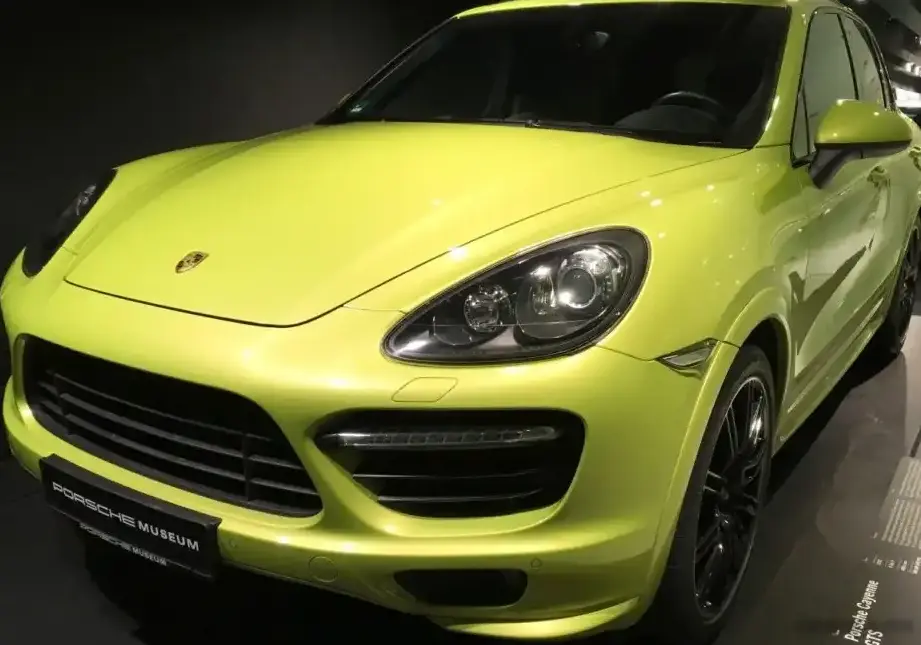
The Porsche Cayenne II GTS 4.8 V8 Tiptronic, produced from 2012 to 2014, was a performance-oriented variant within the second-generation (958) Cayenne lineup. Positioned as a sportier alternative to the base and S models, the GTS bridged the gap between those trims and the range-topping Turbo. It aimed to deliver a more engaging driving experience while maintaining the Cayenne’s reputation for luxury and practicality. This variant was primarily marketed towards enthusiasts seeking a high-performance SUV with Porsche’s renowned handling characteristics, and was a significant offering in the North American and European markets.
Powertrain & Engine Architecture
At the heart of the Cayenne GTS was the M48.02 4.8-liter naturally aspirated V8 engine. This engine, a member of Porsche’s highly regarded V8 family, featured direct fuel injection (DFI) and variable valve timing (VVT) on both intake and exhaust camshafts. The DFI system, operating at pressures up to 200 bar, optimized fuel atomization for improved combustion efficiency and power output. The engine produced 420 horsepower at 6,500 rpm and 379.84 lb-ft of torque at 3,500 rpm. The engine’s architecture was a 90-degree V8, known for its inherent balance and smooth operation. Paired with the engine was Porsche’s eight-speed Tiptronic S automatic transmission. This transmission offered both fully automatic operation and manual gear selection via steering wheel-mounted paddles or the gear selector. The Tiptronic S featured a wider gear spread than earlier Porsche automatics, contributing to both improved acceleration and fuel economy.
Driving Characteristics
The Cayenne GTS Tiptronic delivered a noticeably more engaging driving experience than the base Cayenne or S models. While the automatic transmission provided convenience, it was programmed for quicker shifts and a more responsive feel in Sport mode. The 420 hp output, combined with the eight-speed transmission, allowed for brisk acceleration – 0 to 60 mph in approximately 5.4 seconds. The GTS’s suspension was tuned for a firmer ride and reduced body roll compared to the standard Cayenne, enhancing handling precision. However, it didn’t sacrifice all-day comfort. Compared to the manual transmission equipped GTS, the Tiptronic version offered slightly slower acceleration times, but provided a smoother and more accessible driving experience for a wider range of drivers. The automatic transmission’s gear ratios were optimized for both performance and fuel efficiency, providing adequate power delivery in most driving situations.
Equipment & Trim Levels
The Cayenne GTS Tiptronic came standard with a comprehensive list of features, including leather upholstery, power-adjustable front seats with memory function, a touchscreen infotainment system with navigation, bi-xenon headlights, and a panoramic sunroof. The interior typically featured Alcantara accents and sport seats with enhanced bolstering. Optional extras included adaptive air suspension, Porsche Dynamic Chassis Control (PDCC), a premium sound system, and various customization options for interior trim and exterior paint colors. The GTS trim level generally sat above the base Cayenne and Cayenne S in terms of standard equipment and performance features.
Chassis & Braking
The Cayenne GTS utilized a fully independent suspension system, with double wishbones at the front and a multi-link setup at the rear. The suspension was specifically tuned for the GTS model, with stiffer springs and dampers compared to the standard Cayenne. Braking duties were handled by ventilated discs on all four wheels. The GTS also featured Porsche’s Composite Brakes (PCCB) as an optional upgrade, offering even greater stopping power and fade resistance. The standard braking system was more than adequate for most driving conditions, providing confident and consistent performance. The vehicle’s all-wheel-drive system, Porsche Traction Management (PTM), distributed power between the front and rear axles as needed, optimizing traction and stability.
Market Reception & Comparison
The Cayenne GTS Tiptronic was generally well-received by automotive critics. Reviewers praised its blend of performance, luxury, and practicality. The V8 engine was lauded for its smooth power delivery and satisfying exhaust note. The Tiptronic transmission was considered a good compromise between convenience and driver engagement. Compared to the Cayenne S, the GTS offered a noticeable performance upgrade and a more sporting driving experience. Compared to the range-topping Turbo, the GTS provided a similar level of luxury and technology but with a slightly less aggressive character and a lower price point. Fuel economy, while not a strong point for any Cayenne model, was comparable to other V8-powered SUVs in its class.
Legacy
The Cayenne II GTS 4.8 V8 Tiptronic has proven to be a relatively reliable vehicle, although maintenance costs can be significant due to its Porsche pedigree. The naturally aspirated V8 engine is generally considered robust and durable, but regular maintenance, including oil changes and inspections, is crucial. The Tiptronic transmission has also proven to be reliable, but may require servicing at higher mileage. In the used car market, the Cayenne GTS Tiptronic remains a desirable option for buyers seeking a high-performance luxury SUV with Porsche’s renowned engineering and driving dynamics. Its combination of power, handling, and practicality continues to appeal to enthusiasts today.