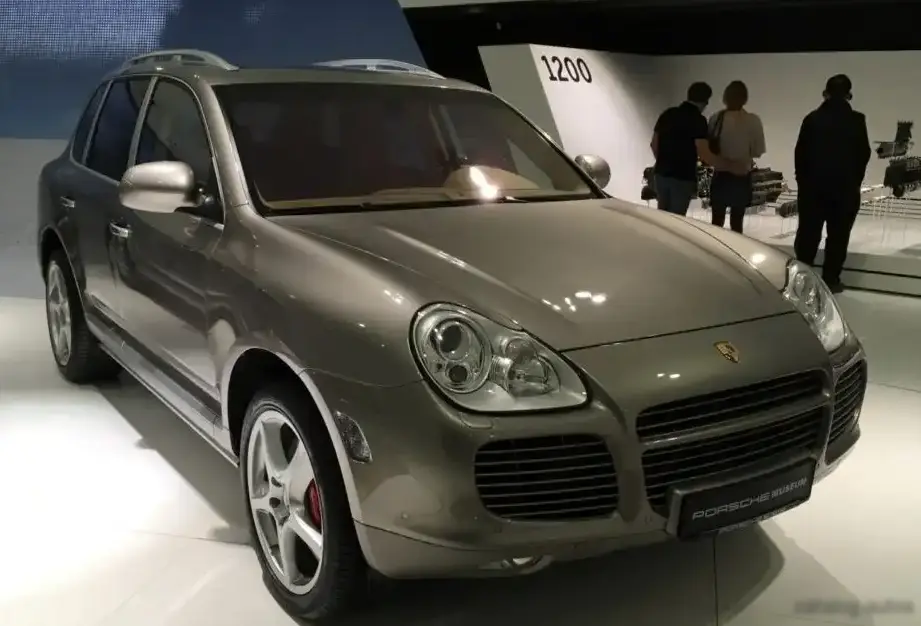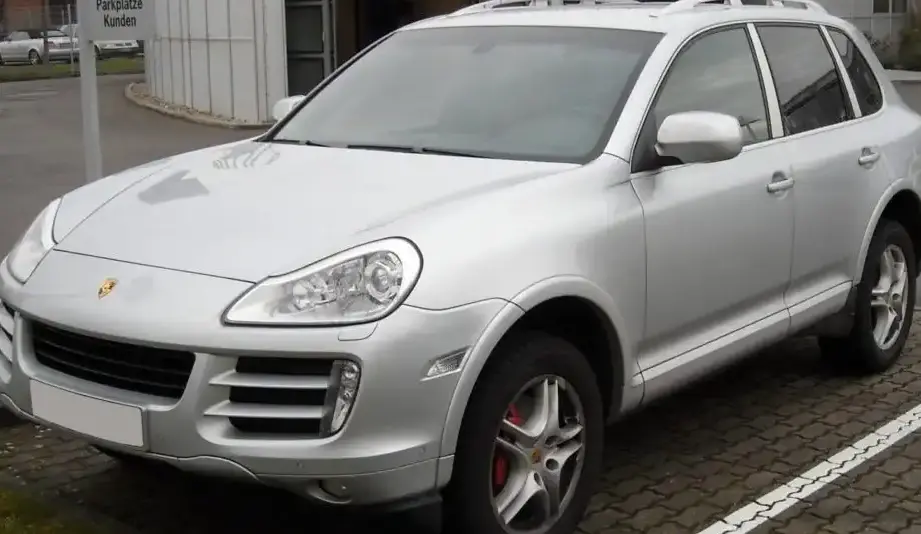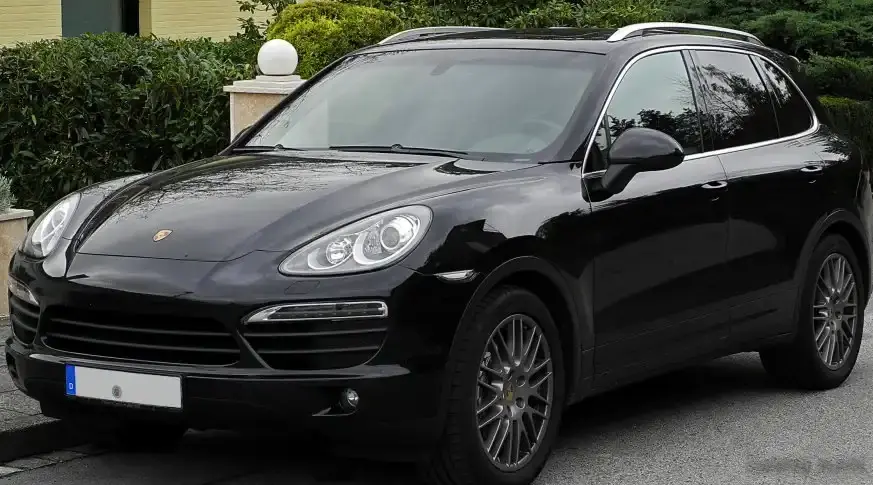
The Porsche Cayenne II Turbo, specifically the 4.8 V8 (500 Hp) Tiptronic variant, represents a significant evolution in Porsche’s foray into the luxury SUV market. Produced from 2010 to 2014, this model occupied the top performance tier of the second-generation Cayenne (958) lineup. It aimed to deliver the driving experience expected of a Porsche, combined with the practicality and space of a sport utility vehicle. This variant distinguished itself through its powerful twin-turbocharged V8 engine and the responsive Tiptronic automatic transmission, positioning it as a high-performance luxury SUV aimed at discerning buyers.
Technical Specifications
| Brand | Porsche |
| Model | Cayenne |
| Generation | Cayenne II |
| Type (Engine) | Turbo 4.8 V8 (500 Hp) Tiptronic |
| Start of production | 2010 |
| End of production | 2014 |
| Powertrain Architecture | Internal Combustion engine |
| Body type | SUV |
| Seats | 5 |
| Doors | 5 |
| Fuel consumption (economy) – urban | 16.2 l/100 km (14.5 US mpg, 17.4 UK mpg, 6.2 km/l) |
| Fuel consumption (economy) – extra urban | 8.8 l/100 km (26.7 US mpg, 32.1 UK mpg, 11.4 km/l) |
| Fuel consumption (economy) – combined | 11.5 l/100 km (20.5 US mpg, 24.6 UK mpg, 8.7 km/l) |
| CO2 emissions | 270 g/km |
| Fuel Type | Petrol (Gasoline) |
| Acceleration 0 – 100 km/h | 4.7 sec |
| Acceleration 0 – 62 mph | 4.7 sec |
| Acceleration 0 – 60 mph | 4.5 sec |
| Maximum speed | 278 km/h (172.74 mph) |
| Emission standard | Euro 5 |
| Weight-to-power ratio | 4.3 kg/Hp, 230.4 Hp/tonne |
| Weight-to-torque ratio | 3.1 kg/Nm, 322.6 Nm/tonne |
| Power | 500 Hp @ 6000 rpm |
| Power per litre | 104 Hp/l |
| Torque | 700 Nm @ 2250-4500 rpm (516.29 lb.-ft. @ 2250-4500 rpm) |
| Engine layout | Front, Longitudinal |
| Engine Model/Code | M48.52 |
| Engine displacement | 4806 cm3 (293.28 cu. in.) |
| Number of cylinders | 8 |
| Engine configuration | V-engine |
| Cylinder Bore | 96 mm (3.78 in.) |
| Piston Stroke | 83 mm (3.27 in.) |
| Compression ratio | 10.5:1 |
| Number of valves per cylinder | 4 |
| Fuel injection system | Direct injection |
| Engine aspiration | Twin-Turbo, Intercooler |
| Engine oil capacity | 8.5 l (8.98 US qt | 7.48 UK qt) |
| Coolant | 18 l (19.02 US qt | 15.84 UK qt) |
| Kerb Weight | 2170 kg (4784.03 lbs.) |
| Max. weight | 2880 kg (6349.31 lbs.) |
| Max load | 710 kg (1565.28 lbs.) |
| Trunk (boot) space – minimum | 670 l (23.66 cu. ft.) |
| Trunk (boot) space – maximum | 1780 l (62.86 cu. ft.) |
| Fuel tank capacity | 85 l (22.45 US gal | 18.7 UK gal) |
| Length | 4846 mm (190.79 in.) |
| Width | 1939 mm (76.34 in.) |
| Width including mirrors | 2155 mm (84.84 in.) |
| Height | 1705 mm (67.13 in.) |
| Wheelbase | 2895 mm (113.98 in.) |
| Front track | 1655 mm (65.16 in.) |
| Rear (Back) track | 1669 mm (65.71 in.) |
| Ride height (ground clearance) | 215 mm (8.46 in.) |
| Drag coefficient (Cd) | 0.36 |
| Approach angle | 26° |
| Departure angle | 24.5° |
| Ramp-over (brakeover) angle | 20° |
| Wading depth | 500 mm (19.69 in.) |
| Drive wheel | All wheel drive (4×4) |
| Number of gears and type of gearbox | 8 gears, automatic transmission Tiptronic |
| Front suspension | Double wishbone |
| Rear suspension | Independent multi-link suspension |
| Front brakes | Ventilated discs |
| Rear brakes | Ventilated discs |
| Assisting systems | ABS (Anti-lock braking system) |
| Steering type | Steering rack and pinion |
| Power steering | Electric Steering |
| Tires size | 265/50 R19 |
| Wheel rims size | 8.5J x 19 |
Powertrain & Engine Architecture
At the heart of the Cayenne Turbo lies the M48.52 engine, a 4.8-liter twin-turbocharged V8. This engine utilizes direct fuel injection and variable valve timing to optimize performance and efficiency. The twin turbochargers, one for each cylinder bank, provide significant boost, contributing to the engine’s impressive 500 horsepower and 700 Nm (516 lb-ft) of torque. The engine’s architecture is longitudinally mounted at the front of the vehicle. The Tiptronic S eight-speed automatic transmission, a Porsche-engineered unit, was specifically tuned to handle the high output of the V8. It offers both fully automatic operation and manual gear selection via steering wheel-mounted paddles, allowing drivers to tailor the driving experience. The transmission’s gear ratios are optimized for both acceleration and highway cruising.
Driving Characteristics
The Cayenne Turbo with the Tiptronic transmission delivers a compelling blend of performance and comfort. Acceleration from 0 to 60 mph takes approximately 4.5 seconds, and the vehicle boasts a top speed of 172.74 mph. While not as overtly sporty as a dedicated sports car, the Cayenne Turbo offers a surprisingly agile driving experience for an SUV of its size. The Tiptronic transmission provides smooth and quick shifts, and the all-wheel-drive system ensures excellent traction in various conditions. Compared to the naturally aspirated V6 models, the Turbo offers significantly more power and torque, resulting in a more effortless driving experience. It also provides a more refined and responsive feel than the diesel-powered variants.
Equipment & Trim Levels
The Cayenne Turbo came standard with a comprehensive list of features, including leather upholstery, heated and ventilated front seats, a premium audio system, navigation, and a panoramic sunroof. Optional extras included adaptive air suspension, Porsche Dynamic Chassis Control (PDCC), and a variety of interior customization options. The interior typically featured a dark wood or carbon fiber trim, emphasizing the vehicle’s luxurious character. The standard seats were 8-way power adjustable, with more supportive sport seats available as an option.
Chassis & Braking
The Cayenne Turbo features a fully independent suspension system, with double wishbones at the front and a multi-link setup at the rear. This suspension design, combined with the optional adaptive air suspension, provides a comfortable ride while maintaining excellent handling characteristics. The braking system consists of ventilated discs on all four wheels, providing ample stopping power. Porsche’s ABS (Anti-lock Braking System) and stability control systems are standard, enhancing safety and control.
Market Reception & Comparison
The Cayenne Turbo was generally well-received by automotive critics, who praised its performance, handling, and luxurious interior. However, its high price tag and relatively high fuel consumption were often cited as drawbacks. Compared to other high-performance SUVs of the time, such as the BMW X5 M and the Range Rover Sport Supercharged, the Cayenne Turbo offered a unique blend of Porsche’s sports car DNA and SUV practicality. Fuel economy, while not a strong point, was comparable to other vehicles in its class. Reliability was generally good, although the complex twin-turbocharged engine and advanced technology could potentially lead to higher maintenance costs.
Legacy
The Porsche Cayenne II Turbo remains a desirable SUV in the used car market. Its powerful engine, luxurious interior, and Porsche badge continue to attract buyers. While maintenance costs can be higher than those of more mainstream SUVs, the Cayenne Turbo offers a unique driving experience and a level of performance that few other SUVs can match. The M48.52 engine, while complex, has proven to be relatively durable when properly maintained, and parts availability remains good. This variant solidified Porsche’s position as a serious player in the luxury SUV segment, paving the way for future Cayenne models.