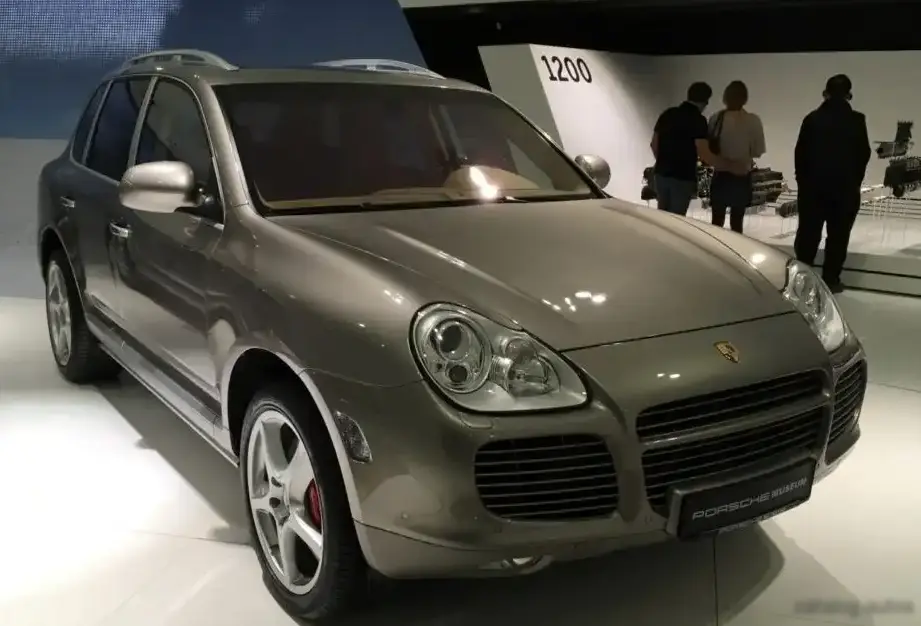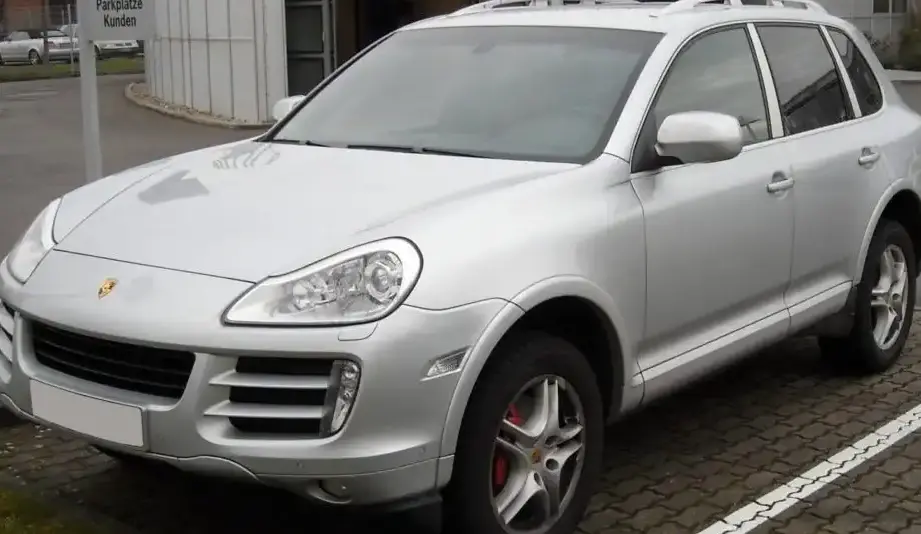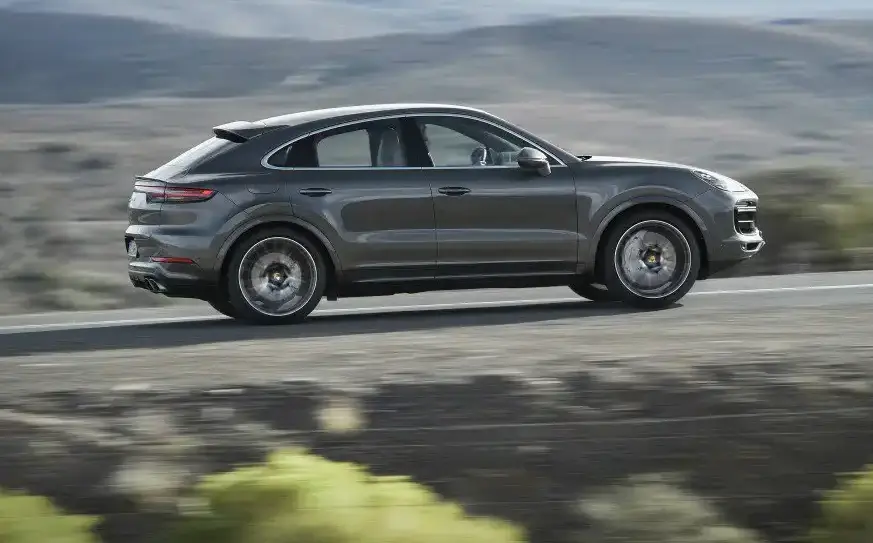
The Porsche Cayenne III Coupe Turbo S 4.0 V8 (680 Hp) E-Hybrid Tiptronic S represents the pinnacle of performance and technology within the second generation (9YA) Cayenne Coupe range. Produced from August 2019 to October 2020, this variant combined a potent twin-turbocharged V8 engine with an electric motor, creating a plug-in hybrid electric vehicle (PHEV) designed for both exhilarating performance and improved efficiency. It occupied the top-tier position within the Cayenne Coupe lineup, offering the highest levels of power, luxury, and advanced features. This model is a key example of Porsche’s commitment to blending sports car dynamics with the practicality of a luxury SUV.
Technical Specifications
| Brand | Porsche |
| Model | Cayenne |
| Generation | Cayenne III Coupe |
| Type (Engine) | Turbo S 4.0 V8 (680 Hp) E-Hybrid Tiptronic S |
| Start of production | August, 2019 |
| End of production | October, 2020 |
| Powertrain Architecture | PHEV (Plug-in Hybrid Electric Vehicle) |
| Body type | Coupe, SUV |
| Seats | 4 |
| Doors | 5 |
| Fuel consumption (economy) – combined (NEDC) | 3.7-3.9 l/100 km (63.6 – 60.3 US mpg, 76.3 – 72.4 UK mpg, 27 – 25.6 km/l) |
| CO2 emissions (NEDC) | 85-90 g/km |
| Fuel Type | Petrol / electricity |
| Acceleration 0 – 100 km/h | 3.8 sec |
| Acceleration 0 – 62 mph | 3.8 sec |
| Acceleration 0 – 60 mph | 3.6 sec |
| Maximum speed | 295 km/h (183.3 mph) |
| Emission standard | Euro 6d-TEMP-EVAP-ISC |
| Weight-to-power ratio | 3.7 kg/Hp, 268.2 Hp/tonne |
| Weight-to-torque ratio | 2.8 kg/Nm, 355 Nm/tonne |
| Gross battery capacity | 14.1 kWh |
| Battery technology | Lithium-ion (Li-Ion) |
| Battery location | Under the trunk |
| All-electric range (NEDC) | 40 km (24.85 mi) |
| Average Energy consumption (NEDC) | 18.7-19.6 kWh/100 km (30.09 – 31.54 kWh/100 mi, 112 – 107 MPGe, 5.3 – 5.1 km/kWh, 3.3 – 3.2 mi/kWh) |
| Max speed (electric) | 135 km/h (83.89 mph) |
| Electric motor power | 136 Hp @ 2800 rpm |
| Electric motor Torque | 400 Nm @ 0-2300 rpm (295.02 lb.-ft. @ 0-2300 rpm) |
| Electric motor location | Between the combustion engine and the transmission |
| System power | 680 Hp @ 5750-6000 rpm |
| System torque | 900 Nm @ 1500-5000 rpm (663.81 lb.-ft. @ 1500-5000 rpm) |
| Power | 550 Hp @ 5750-6000 rpm |
| Torque | 770 Nm @ 2100-4500 rpm (567.92 lb.-ft. @ 2100-4500 rpm) |
| Engine layout | Front, Longitudinal |
| Engine Model/Code | M.DCUA, DCUA |
| Engine displacement | 3996 cm3 (243.85 cu. in.) |
| Number of cylinders | 8 |
| Engine configuration | V-engine |
| Cylinder Bore | 86 mm (3.39 in.) |
| Piston Stroke | 86 mm (3.39 in.) |
| Number of valves per cylinder | 4 |
| Fuel injection system | Direct injection |
| Engine aspiration | BiTurbo, Intercooler |
| Valvetrain | DOHC |
| Engine oil capacity | 9 l (9.51 US qt | 7.92 UK qt) |
| Kerb Weight | 2535 kg (5588.72 lbs.) |
| Max. weight | 3095 kg (6823.31 lbs.) |
| Max load | 560 kg (1234.59 lbs.) |
| Trunk (boot) space – minimum | 500 l (17.66 cu. ft.) |
| Trunk (boot) space – maximum | 1440 l (50.85 cu. ft.) |
| Fuel tank capacity | 75 l (19.81 US gal | 16.5 UK gal) |
| Max. roof load | 75 kg (165.35 lbs.) |
| Permitted trailer load with brakes (12%) | 3000 kg (6613.87 lbs.) |
| Permitted trailer load without brakes | 750 kg (1653.47 lbs.) |
| Length | 4939 mm (194.45 in.) |
| Width | 1989 mm (78.31 in.) |
| Width including mirrors | 2194 mm (86.38 in.) |
| Height | 1653 mm (65.08 in.) |
| Wheelbase | 2895 mm (113.98 in.) |
| Front track | 1687 mm (66.42 in.) |
| Rear (Back) track | 1688 mm (66.46 in.) |
| Ride height (ground clearance) | 190-245 mm (7.48 – 9.65 in.) |
| Drag coefficient (Cd) | 0.34 |
| Minimum turning circle (turning diameter) | 11.53 m (37.83 ft.) |
| Front brakes | Ventilated discs, 440 mm |
| Rear brakes | Ventilated discs, 410 mm |
| Number of gears and type of gearbox | 8 gears, automatic transmission Tiptronic S |
INTRODUCTION
The Porsche Cayenne III Coupe Turbo S E-Hybrid represents a significant step forward in the evolution of the Cayenne line. Introduced as part of the 9YA generation, the Coupe variant offered a more aggressively sloped roofline compared to the standard Cayenne SUV, enhancing its sporty aesthetic. The “Turbo S E-Hybrid” designation signifies the combination of Porsche’s top-tier Turbo S performance with a plug-in hybrid powertrain. This model aimed to deliver the exhilarating driving experience expected of a Porsche, while also providing the benefits of electric driving and reduced emissions. It was positioned as the flagship model within the Cayenne Coupe range, appealing to buyers seeking the ultimate in performance, luxury, and technology.
Powertrain & Engine Architecture
At the heart of the Cayenne Turbo S E-Hybrid lies a 4.0-liter twin-turbocharged V8 engine, internally designated as the M.DCUA or DCUA. This engine produces 550 horsepower and 567.92 lb-ft of torque. The engine utilizes direct fuel injection and a sophisticated valvetrain (DOHC) to optimize combustion efficiency and power delivery. Supplementing the V8 is a 136-horsepower electric motor integrated between the engine and the eight-speed Tiptronic S automatic transmission. This arrangement allows for both electric-only driving and a combined system output of 680 horsepower and 663.81 lb-ft of torque. The 14.1 kWh lithium-ion battery pack, located under the trunk floor, provides an all-electric range of up to 40 km (24.85 miles) under NEDC testing. The Tiptronic S transmission is specifically tuned to handle the combined power output and provides smooth, responsive shifts.
Driving Characteristics
The Cayenne Turbo S E-Hybrid delivers a remarkably dynamic driving experience. The instant torque from the electric motor provides brisk acceleration, while the twin-turbo V8 contributes to a surge of power at higher speeds. The 0-60 mph sprint is achieved in just 3.6 seconds, and the vehicle boasts a top speed of 183.3 mph. The eight-speed Tiptronic S transmission offers quick and precise gear changes, enhancing the overall responsiveness. The hybrid system allows for a variety of driving modes, including E-Power (electric-only), Hybrid Auto, Hybrid Sport, and Sport Plus, each tailoring the powertrain’s behavior to suit different driving conditions and preferences. Despite its size and weight, the Cayenne Coupe handles remarkably well, thanks to its advanced suspension system and precise steering.
Equipment & Trim Levels
As the range-topping model, the Cayenne Turbo S E-Hybrid came standard with a comprehensive array of luxury and technology features. Standard equipment included Porsche Active Suspension Management (PASM), Porsche Dynamic Chassis Control (PDCC), a panoramic sunroof, adaptive air suspension, and a premium Bose surround sound system. The interior featured leather upholstery, heated and ventilated front seats, and a 12.3-inch touchscreen infotainment system. Numerous customization options were available, including various interior trim materials, exterior paint colors, and optional equipment such as carbon fiber accents, a sport exhaust system, and rear-axle steering.
Chassis & Braking
The Cayenne Turbo S E-Hybrid utilizes an independent multi-link suspension system at both the front and rear, enhanced by adaptive air suspension. This system allows for adjustable ride height and damping characteristics, providing a comfortable ride while maintaining excellent handling. Large ventilated disc brakes (440mm front, 410mm rear) provide exceptional stopping power. The vehicle also incorporates ABS (Anti-lock braking system) and Porsche Surface Coated Brake (PSCB) as standard, with optional Porsche Ceramic Composite Brake (PCCB) available for even greater performance.
Market Reception & Comparison
The Cayenne Turbo S E-Hybrid was generally well-received by automotive critics, who praised its impressive performance, luxurious interior, and advanced technology. However, some reviewers noted the complexity of the hybrid system and the relatively high price tag. Compared to the standard Cayenne Turbo, the E-Hybrid offered improved fuel economy and the ability to drive in electric-only mode, but at a higher initial cost. Compared to the Cayenne E-Hybrid (without the “S” designation), the Turbo S E-Hybrid provided significantly more power and performance. Its fuel economy, while impressive for a vehicle of its size and performance, was still lower than that of more conventional hybrid SUVs.
Legacy
The Cayenne Turbo S E-Hybrid represents a pivotal moment in Porsche’s electrification strategy. While early plug-in hybrid systems can present long-term maintenance challenges related to the battery and electric motor components, the Cayenne’s robust engineering and Porsche’s reputation for quality generally contribute to good long-term reliability. On the used car market, these models hold their value well, appealing to buyers seeking a high-performance, luxurious, and technologically advanced SUV. The powertrain’s combination of power and efficiency continues to be relevant, and the Cayenne Turbo S E-Hybrid remains a desirable vehicle for enthusiasts and luxury car buyers alike.