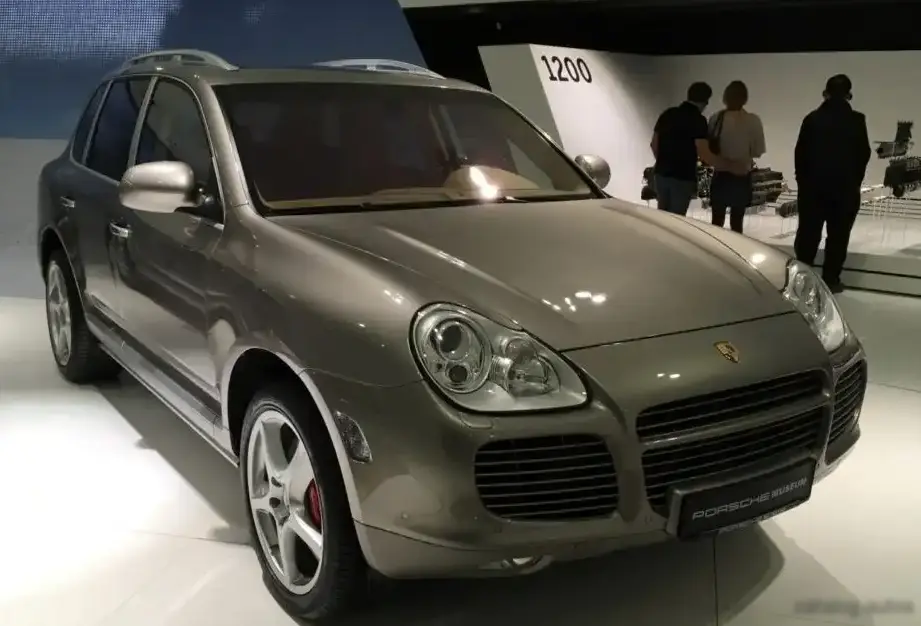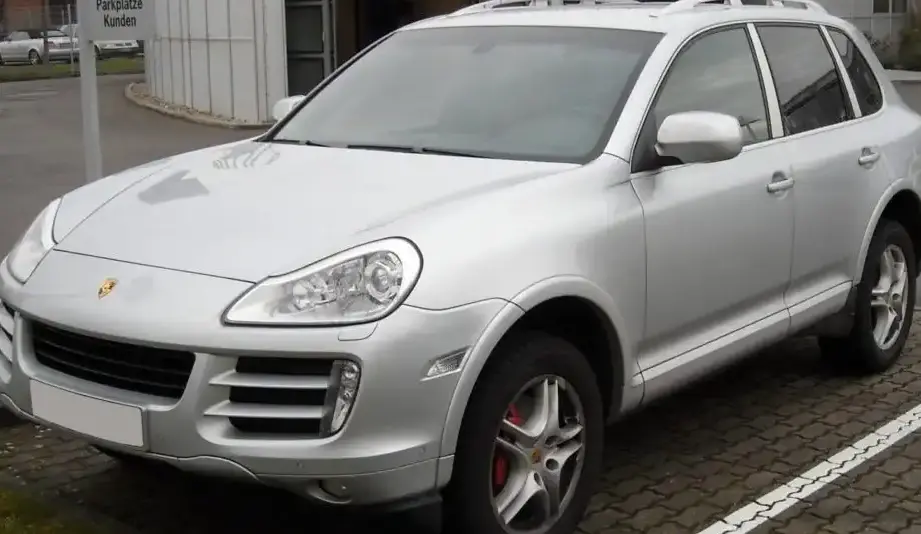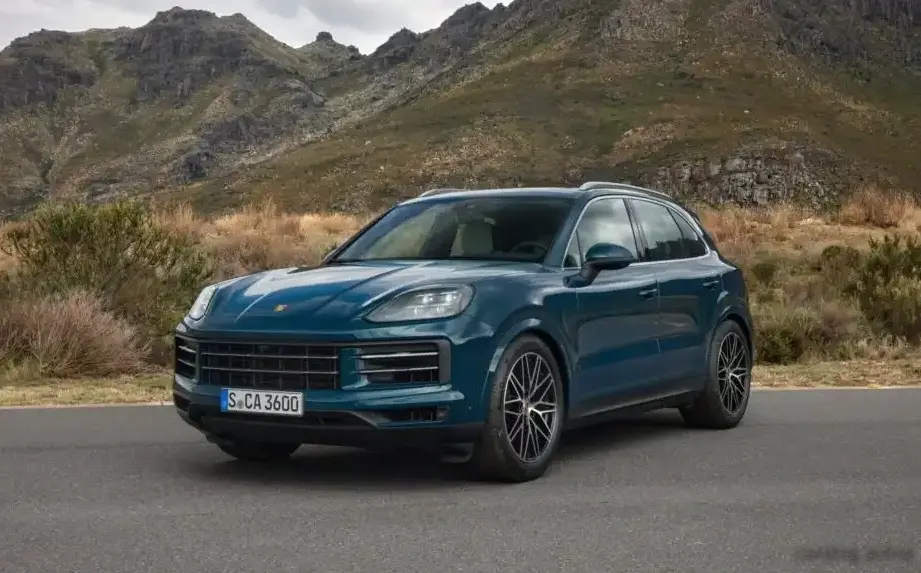
The Porsche Cayenne III, specifically the 3.0 V6 (353 Hp) Tiptronic S variant, represents a significant evolution in Porsche’s luxury SUV lineup. Introduced with the facelift in July 2023, this model builds upon the foundation laid by the third-generation Cayenne (introduced in 2018), offering a blend of performance, luxury, and technology. Positioned as a mid-range offering within the Cayenne family, it slots between the base model and the higher-performance Turbo variants. This iteration caters to buyers seeking a powerful yet refined driving experience, prioritizing comfort and everyday usability alongside Porsche’s signature dynamic capabilities. The Cayenne III continues Porsche’s successful foray into the SUV market, competing with established rivals like the BMW X5, Audi Q7, and Mercedes-Benz GLE.
Technical Specifications
| Brand | Porsche |
| Model | Cayenne |
| Generation | Cayenne III (facelift 2023) |
| Type (Engine) | 3.0 V6 (353 Hp) Tiptronic S |
| Start of production | July, 2023 |
| Powertrain Architecture | Internal Combustion engine |
| Body type | SUV |
| Seats | 5 |
| Doors | 5 |
| Fuel consumption at Low speed (WLTP) | 15.7 l/100 km (15 US mpg, 18 UK mpg, 6.4 km/l) |
| Fuel consumption at Medium speed (WLTP) | 10.8 l/100 km (21.8 US mpg, 26.2 UK mpg, 9.3 km/l) |
| Fuel consumption at high speed (WLTP) | 9.1 l/100 km (25.8 US mpg, 31 UK mpg, 11 km/l) |
| Fuel consumption at very high speed (WLTP) | 10.6 l/100 km (22.2 US mpg, 26.6 UK mpg, 9.4 km/l) |
| Combined fuel consumption (WLTP) | 10.8-12.1 l/100 km (21.8 – 19.4 US mpg, 26.2 – 23.3 UK mpg, 9.3 – 8.3 km/l) |
| CO2 emissions (WLTP) | 246-275 g/km |
| Fuel Type | Petrol (Gasoline) |
| Acceleration 0 – 100 km/h | 6 sec |
| Acceleration 0 – 62 mph | 6 sec |
| Acceleration 0 – 60 mph | 5.7 sec |
| Acceleration 0 – 200 km/h | 24.0 sec |
| Maximum speed | 248 km/h (154.1 mph) |
| Emission standard | Euro 6d-ISC-FCM |
| Weight-to-power ratio | 5.8 kg/Hp, 171.8 Hp/tonne |
| Weight-to-torque ratio | 4.1 kg/Nm, 243.3 Nm/tonne |
| Power | 353 Hp @ 5400-6400 rpm |
| Power per litre | 117.9 Hp/l |
| Torque | 500 Nm @ 1450-4500 rpm (368.78 lb.-ft. @ 1450-4500 rpm) |
| Maximum engine speed | 6500 rpm |
| Engine layout | Front, Longitudinal |
| Engine displacement | 2995 cm3 (182.77 cu. in.) |
| Number of cylinders | 6 |
| Engine configuration | V-engine |
| Cylinder Bore | 84.5 mm (3.33 in.) |
| Piston Stroke | 89 mm (3.5 in.) |
| Compression ratio | 11.2:1 |
| Number of valves per cylinder | 4 |
| Fuel injection system | Direct injection |
| Engine aspiration | Turbocharger, Intercooler |
| Engine systems | Start & Stop System, Particulate filter |
| Kerb Weight | 2055 kg (4530.5 lbs.) |
| Max. weight | 2835 kg (6250.11 lbs.) |
| Max load | 780 kg (1719.61 lbs.) |
| Trunk (boot) space – minimum | 772 l (27.26 cu. ft.) |
| Trunk (boot) space – maximum | 1708 l (60.32 cu. ft.) |
| Fuel tank capacity | 75 l (19.81 US gal, 16.5 UK gal) |
| Max. roof load | 100 kg (220.46 lbs.) |
| Permitted trailer load with brakes (12%) | 3500 kg (7716.18 lbs.) |
| Permitted trailer load without brakes | 750 kg (1653.47 lbs.) |
| Permitted towbar download | 140 kg (308.65 lbs.) |
| Length | 4930 mm (194.09 in.) |
| Width | 1983 mm (78.07 in.) |
| Width including mirrors | 2194 mm (86.38 in.) |
| Height | 1698 mm (66.85 in.) |
| Wheelbase | 2895 mm (113.98 in.) |
| Front track | 1676 mm (65.98 in.) |
| Rear (Back) track | 1653 mm (65.08 in.) |
| Ride height (ground clearance) | 193 mm (7.6 in.) |
| Drag coefficient (Cd) | 0.35 |
| Minimum turning circle (turning diameter) | 12.2 m (40.03 ft.) |
| Approach angle | 23.9° |
| Departure angle | 21° |
| Ramp-over (brakeover) angle | 17.2° |
| Wading depth | 475 mm (18.7 in.) |
| Drivetrain Architecture | The Internal combustion engine (ICE) drives permanently the four wheels of the vehicle. |
| Drive wheel | All wheel drive (4×4) |
| Number of gears and type of gearbox | 8 gears, automatic transmission Tiptronic S |
| Front suspension | Independent multi-link suspension |
| Rear suspension | Independent multi-link suspension |
| Front brakes | Ventilated discs, 360×36 mm |
| Rear brakes | Ventilated discs, 330×28 mm |
| Assisting systems | ABS (Anti-lock braking system) |
| Steering type | Steering rack and pinion |
| Power steering | Electric Steering |
| Tires size | Front wheel tires: 255/55 ZR20, Rear wheel tires: 295/45 ZR20 |
| Wheel rims size | Front wheel rims: 9J x 20, Rear wheel rims: 10.5J x 20 |
Powertrain & Engine Architecture
At the heart of the Cayenne III 3.0 V6 Tiptronic S lies a 2.995-liter twin-turbocharged V6 engine, designated as the EA836 engine family within the Volkswagen Group. This engine produces 353 horsepower at 5400-6400 rpm and 500 Nm (368.78 lb-ft) of torque between 1450 and 4500 rpm. The engine utilizes direct fuel injection and variable valve timing on both intake and exhaust sides for optimized efficiency and performance. The turbochargers, positioned within the V of the engine, contribute to rapid response and a broad torque curve. Paired with this engine is Porsche’s 8-speed Tiptronic S automatic transmission. This transmission offers smooth and quick shifts, with the ability for the driver to manually select gears via steering wheel-mounted paddles. The Tiptronic S is designed to handle the engine’s substantial torque output and provide a responsive driving experience.
Driving Characteristics
The 3.0 V6 Tiptronic S delivers a refined and capable driving experience. While not as overtly sporty as the Turbo models, it provides ample power for everyday driving and confident highway passing. The automatic transmission is well-tuned, offering seamless gear changes and contributing to a comfortable ride. The all-wheel-drive system provides excellent traction in various conditions. Compared to a manual transmission equipped Cayenne, the Tiptronic S prioritizes ease of use and comfort over outright driver engagement. Acceleration from 0-60 mph takes approximately 5.7 seconds, making it a competitive performer in its class. The engine’s torque delivery is strong throughout the rev range, minimizing the need for frequent downshifts.
Equipment & Trim Levels
The Cayenne III 3.0 V6 Tiptronic S comes standard with a comprehensive suite of features, including Porsche Communication Management (PCM) with a 12.3-inch touchscreen display, leather upholstery, power-adjustable front seats, dual-zone automatic climate control, and a suite of advanced driver-assistance systems such as Porsche Active Lane Keep Assist and Adaptive Cruise Control. Optional extras include a panoramic sunroof, upgraded audio systems (such as Bose or Burmester), ventilated and massaging front seats, and a variety of interior trim options. The exterior styling features subtle enhancements over the base model, including unique wheel designs and exterior accents.
Chassis & Braking
The Cayenne III utilizes a sophisticated chassis design featuring an independent multi-link suspension at both the front and rear. The suspension is tuned to provide a balance between comfort and handling. Standard brakes consist of ventilated discs all around, with larger rotors available as an option. Porsche’s Surface Coated Brake (PSCB) system, featuring tungsten carbide coating, is also available for improved braking performance and reduced brake dust. The Cayenne’s steering is precise and well-weighted, providing good feedback to the driver. Porsche Active Suspension Management (PASM), an optional adaptive damping system, allows the driver to adjust the suspension firmness to suit their preferences.
Market Reception & Comparison
The Cayenne III 3.0 V6 Tiptronic S has been well-received by automotive critics, praised for its blend of performance, luxury, and technology. It offers a compelling alternative to its rivals, providing a more engaging driving experience than some competitors while maintaining a high level of refinement. Fuel economy is respectable for a vehicle of its size and performance, although it doesn’t match the efficiency of hybrid or electric alternatives. Compared to the Cayenne’s higher-performance variants, the 3.0 V6 offers a more accessible price point and lower running costs. Reliability has generally been good, although preventative maintenance is crucial to ensure long-term durability.
Legacy
The Cayenne III 3.0 V6 Tiptronic S represents a continuation of Porsche’s successful SUV formula. The EA836 engine family has proven to be robust and reliable when properly maintained. As these vehicles enter the used car market, they are likely to hold their value well due to Porsche’s strong brand reputation and the Cayenne’s enduring popularity. The combination of a powerful V6 engine, a smooth-shifting automatic transmission, and a luxurious interior makes this variant a desirable choice for buyers seeking a premium SUV experience.