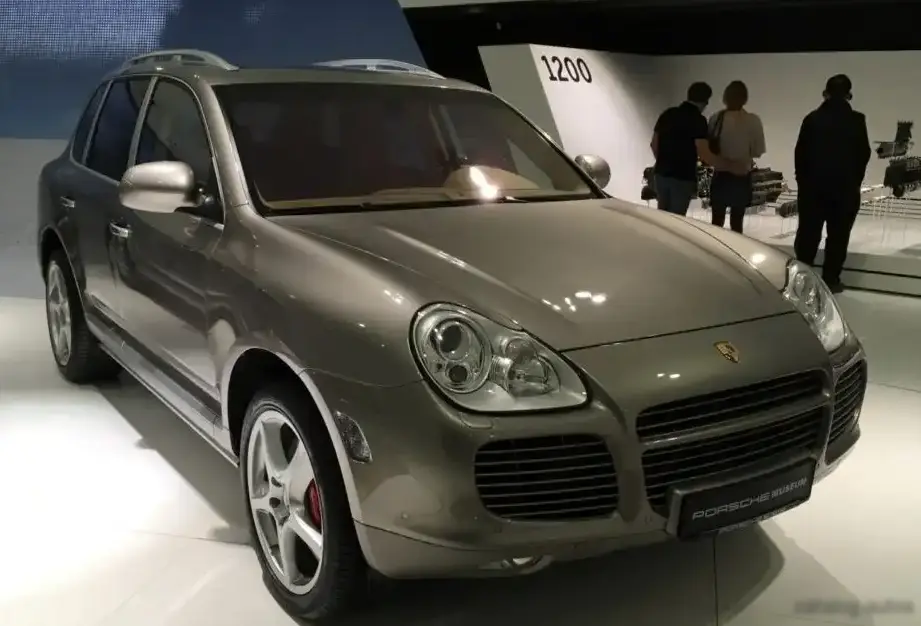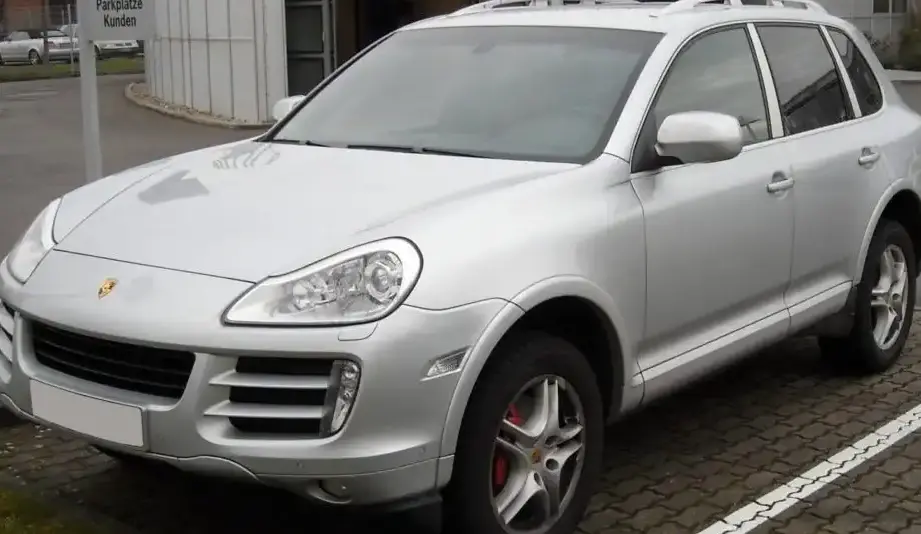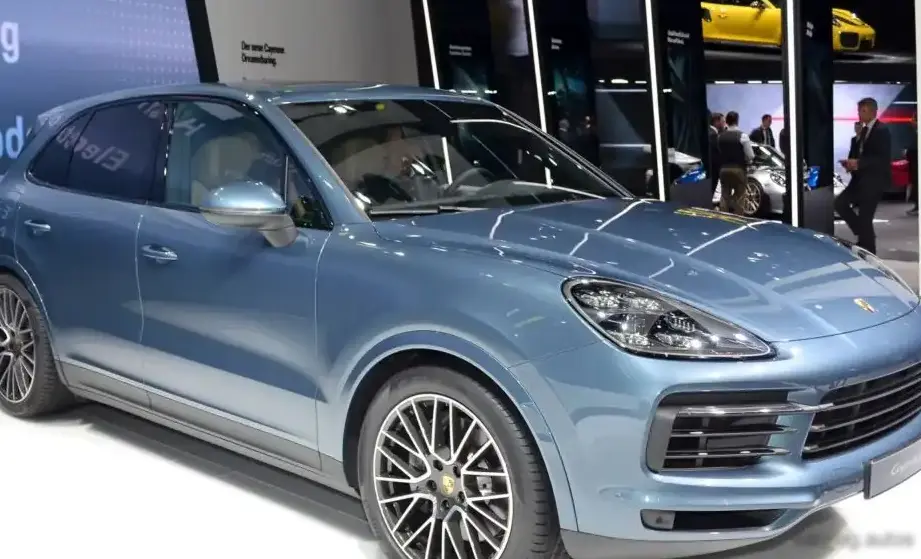
The Porsche Cayenne III Turbo, specifically the 4.0 V8 (550 Hp) Tiptronic S variant, represents the pinnacle of performance within the third-generation Cayenne lineup, produced from 2017 through April 2023. Positioned as the flagship model, it catered to buyers seeking uncompromising power and luxury within the mid-size luxury SUV segment. This iteration built upon the foundation of the 92A platform (Porsche’s internal designation for the third-generation Cayenne), introducing a significantly more potent engine and refined transmission compared to the base and S models. It served as a direct competitor to high-performance SUVs like the BMW X5 M and Mercedes-AMG GLE 63.
Technical Specifications
| Brand | Porsche |
| Model | Cayenne |
| Generation | Cayenne III |
| Type (Engine) | Turbo 4.0 V8 (550 Hp) Tiptronic S |
| Start of production | 2017 |
| End of production | April, 2023 |
| Powertrain Architecture | Internal Combustion engine |
| Body type | SUV |
| Seats | 5 |
| Doors | 5 |
| Fuel consumption (urban) | 16.2-16.4 l/100 km (14.5 – 14.3 US mpg, 17.4 – 17.2 UK mpg, 6.2 – 6.1 km/l) |
| Fuel consumption (extra urban) | 9.3-9.5 l/100 km (25.3 – 24.8 US mpg, 30.4 – 29.7 UK mpg, 10.8 – 10.5 km/l) |
| Fuel consumption (combined) | 11.7-11.9 l/100 km (20.1 – 19.8 US mpg, 24.1 – 23.7 UK mpg, 8.5 – 8.4 km/l) |
| CO2 emissions | 267-272 g/km |
| Fuel Type | Petrol (Gasoline) |
| Acceleration 0 – 100 km/h | 4.1 sec |
| Acceleration 0 – 62 mph | 4.1 sec |
| Acceleration 0 – 60 mph | 3.9 sec |
| Maximum speed | 286 km/h (177.71 mph) |
| Emission standard | Euro 6 |
| Weight-to-power ratio | 4 kg/Hp, 252.9 Hp/tonne |
| Weight-to-torque ratio | 2.8 kg/Nm, 354 Nm/tonne |
| Power | 550 Hp @ 5750-6000 rpm |
| Power per litre | 137.6 Hp/l |
| Torque | 770 Nm @ 1960-4500 rpm (567.92 lb.-ft. @ 1960-4500 rpm) |
| Engine layout | Front, Longitudinal |
| Engine Model/Code | DCUA, M.DCUA |
| Engine displacement | 3996 cm3 (243.85 cu. in.) |
| Number of cylinders | 8 |
| Engine configuration | V-engine |
| Number of valves per cylinder | 4 |
| Fuel injection system | Direct injection |
| Engine aspiration | BiTurbo, Intercooler |
| Engine oil capacity | 9.5 l (10.04 US qt | 8.36 UK qt) |
| Kerb Weight | 2175 kg (4795.05 lbs.) |
| Max. weight | 2935 kg (6470.57 lbs.) |
| Max load | 760 kg (1675.51 lbs.) |
| Trunk (boot) space – minimum | 745 l (26.31 cu. ft.) |
| Trunk (boot) space – maximum | 1680 l (59.33 cu. ft.) |
| Fuel tank capacity | 90 l (23.78 US gal | 19.8 UK gal) |
| Length | 4926 mm (193.94 in.) |
| Width | 1983 mm (78.07 in.) |
| Height | 1673 mm (65.87 in.) |
| Wheelbase | 2895 mm (113.98 in.) |
| Drag coefficient (Cd) | 0.35 |
| Drive wheel | All wheel drive (4×4) |
| Number of gears and type of gearbox | 8 gears, automatic transmission Tiptronic S |
| Front brakes | Ventilated discs |
| Rear brakes | Ventilated discs |
| Assisting systems | ABS (Anti-lock braking system) |
| Steering type | Steering rack and pinion |
| Power steering | Electric Steering |
Powertrain & Engine Architecture
At the heart of the Cayenne Turbo lies the M.DCUA 4.0-liter twin-turbocharged V8 engine. This engine is a significant departure from the naturally aspirated V8s of previous generations, offering substantially increased power and torque. The engine utilizes direct fuel injection, a technology that precisely meters fuel into the combustion chambers for improved efficiency and performance. The twin-turbocharger setup employs sequentially activated turbochargers – a smaller turbocharger for quick response at low engine speeds, and a larger turbocharger for maximum power at higher RPMs. This minimizes turbo lag and provides a broad, flat torque curve. The engine’s valvetrain features four valves per cylinder, optimized for efficient gas exchange. Paired with the engine is Porsche’s eight-speed Tiptronic S automatic transmission. This transmission offers both fully automatic operation and manual control via steering wheel-mounted paddle shifters. The Tiptronic S is known for its quick and smooth shifts, contributing to the Cayenne Turbo’s impressive acceleration.
Driving Characteristics
The Cayenne Turbo Tiptronic S delivers a driving experience that blends impressive performance with a surprising degree of comfort. The 550 horsepower and 770 Nm (567.92 lb-ft) of torque provide effortless acceleration in any situation. The 0-60 mph sprint is dispatched in around 3.9 seconds, making it one of the quickest SUVs available. The eight-speed transmission is well-tuned, providing seamless gear changes and keeping the engine in its optimal power band. Compared to the base Cayenne or the Cayenne S, the Turbo model offers a significantly more engaging and responsive driving experience. While the manual transmission options available on other Cayenne models offered a more direct connection to the drivetrain, the Tiptronic S provides a refined and convenient alternative, particularly for everyday driving. The all-wheel-drive system ensures excellent traction and stability, even in adverse weather conditions.
Equipment & Trim Levels
The Cayenne Turbo came standard with a comprehensive list of features, reflecting its position as the range-topping model. Standard equipment included Porsche Active Suspension Management (PASM), which electronically adjusts the dampers for optimal ride comfort and handling. Inside, the Turbo featured leather upholstery, heated and ventilated front seats with memory function, a premium sound system, and a large touchscreen infotainment system with navigation. Optional extras included Porsche Ceramic Composite Brakes (PCCB), a sport exhaust system, adaptive cruise control, lane keep assist, and a panoramic sunroof. Interior trim options included a variety of leather colors and wood or carbon fiber accents.
Chassis & Braking
The Cayenne Turbo’s chassis is engineered to handle the engine’s substantial power. It features a fully independent suspension system with air springs and PASM. The air suspension allows for adjustable ride height, providing increased ground clearance for off-road driving or a lower, more aerodynamic stance for on-road performance. Braking duties are handled by large, ventilated discs on all four wheels. The braking system is powerful and provides excellent stopping performance. The Cayenne Turbo also features Porsche’s Surface Coated Brake (PSCB) system as an option, which provides improved braking performance and reduced brake dust.
Market Reception & Comparison
The Cayenne Turbo was generally well-received by automotive critics, who praised its powerful engine, refined handling, and luxurious interior. However, some critics noted the high price tag and the complexity of the infotainment system. Compared to the Cayenne S, the Turbo offered a significant performance upgrade, but at a considerable cost. The Cayenne Turbo also faced competition from other high-performance luxury SUVs, such as the BMW X5 M and Mercedes-AMG GLE 63. Fuel economy, while respectable for a vehicle of its size and performance, was not a strong point, with combined fuel consumption averaging around 20 mpg. Reliability was generally good, although the complex twin-turbocharged engine and advanced electronic systems could potentially lead to higher maintenance costs.
Legacy
The Porsche Cayenne III Turbo remains a desirable SUV in the used car market. Its combination of performance, luxury, and practicality continues to appeal to buyers. The 4.0-liter twin-turbo V8 engine has proven to be relatively reliable, although regular maintenance is essential. The Tiptronic S transmission is also generally considered to be durable. However, potential buyers should be aware of the potential for higher maintenance costs associated with the vehicle’s complex systems. The Cayenne Turbo represents a high point in Porsche’s SUV development, showcasing the brand’s engineering prowess and commitment to performance.