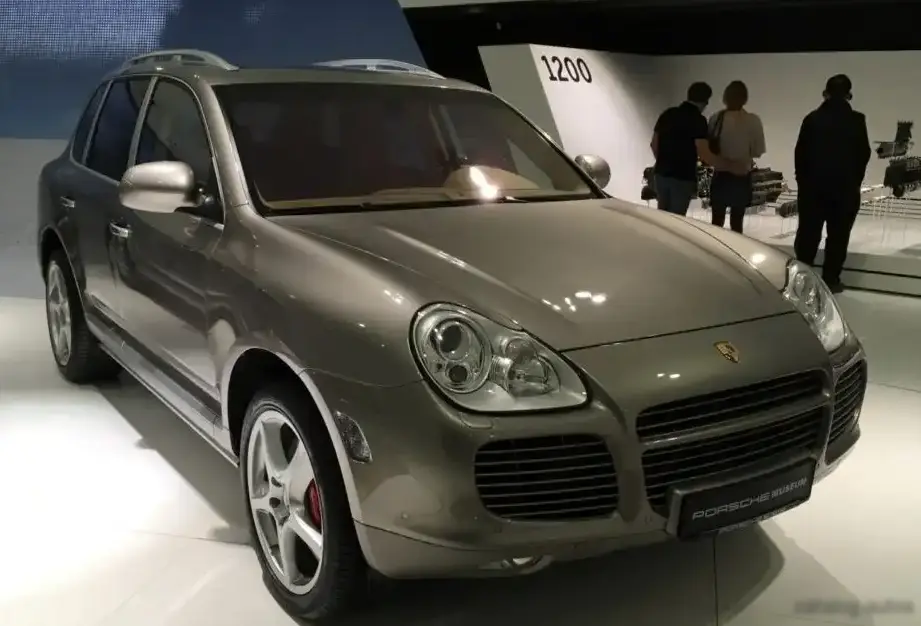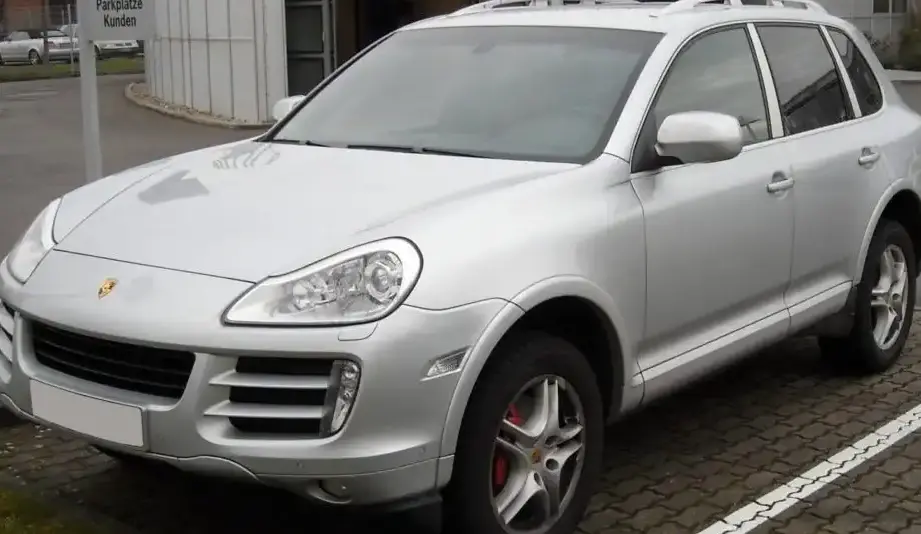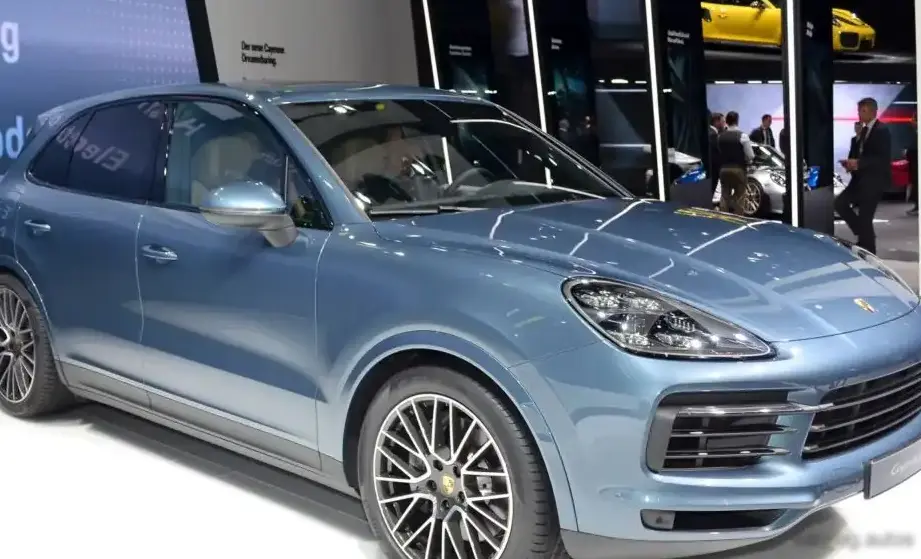
The Porsche Cayenne III Turbo S 4.0 V8 (680 Hp) E-Hybrid Tiptronic S represents the pinnacle of performance and efficiency within the third-generation Cayenne lineup, produced from 2019 to 2020. Positioned as the flagship model, this plug-in hybrid SUV combined a potent twin-turbocharged V8 engine with an electric motor, delivering exceptional power and a surprising degree of electric-only range. It was a key offering for Porsche as they expanded their hybrid technology into the luxury SUV segment, appealing to buyers seeking both environmental consciousness and uncompromising performance. The Cayenne III (9YA) generation, built on the Volkswagen Group’s MLB Evo platform, aimed to improve upon the previous generation with increased interior space, enhanced technology, and a more refined driving experience.
Technical Specifications
| Brand | Porsche |
| Model | Cayenne |
| Generation | Cayenne III |
| Type (Engine) | Turbo S 4.0 V8 (680 Hp) E-Hybrid Tiptronic S |
| Start of production | 2019 |
| End of production | 2020 |
| Powertrain Architecture | PHEV (Plug-in Hybrid Electric Vehicle) |
| Body type | SUV |
| Seats | 5 |
| Doors | 5 |
| Fuel consumption (combined) | 3.7-3.9 l/100 km (63.6 – 60.3 US mpg, 76.3 – 72.4 UK mpg, 27 – 25.6 km/l) |
| CO2 emissions | 85-90 g/km |
| Fuel Type | Petrol / electricity |
| Acceleration 0 – 100 km/h | 3.8 sec |
| Acceleration 0 – 62 mph | 3.8 sec |
| Acceleration 0 – 60 mph | 3.6 sec |
| Acceleration 0 – 200 km/h | 13.2 sec |
| Maximum speed | 295 km/h (183.3 mph) |
| Emission standard | Euro 6d-TEMP-EVAP-ISC |
| Weight-to-power ratio | 3.7 kg/Hp, 273.1 Hp/tonne |
| Weight-to-torque ratio | 2.8 kg/Nm, 361.4 Nm/tonne |
| Gross battery capacity | 14.1 kWh |
| Battery technology | Lithium-ion (Li-Ion) |
| Battery weight | 138 kg (304.24 lbs) |
| Battery location | Under the trunk |
| All-electric range | 40 km (24.85 mi) |
| Average Energy consumption | 18.7-19.6 kWh/100 km (30.09 – 31.54 kWh/100 mi, 112 – 107 MPGe, 5.3 – 5.1 km/kWh, 3.3 – 3.2 mi/kWh) |
| Max speed (electric) | 135 km/h (83.89 mph) |
| Electric motor power | 136 Hp @ 2800 rpm |
| Electric motor Torque | 400 Nm @ 100-2300 rpm (295.02 lb.-ft. @ 100-2300 rpm) |
| Electric motor location | Between the combustion engine and the transmission |
| System power | 680 Hp @ 5750-6000 rpm |
| System torque | 900 Nm @ 1500-5000 rpm (663.81 lb.-ft. @ 1500-5000 rpm) |
| Power | 550 Hp @ 5750-6000 rpm |
| Torque | 770 Nm @ 2100-4500 rpm (567.92 lb.-ft. @ 2100-4500 rpm) |
| Engine layout | Front, Longitudinal |
| Engine Model/Code | M.DCUA, DCUA |
| Engine displacement | 3996 cm3 (243.85 cu. in.) |
| Number of cylinders | 8 |
| Engine configuration | V-engine |
| Cylinder Bore | 86 mm (3.39 in.) |
| Piston Stroke | 86 mm (3.39 in.) |
| Compression ratio | 10.1:1 |
| Number of valves per cylinder | 4 |
| Fuel injection system | Direct injection |
| Engine aspiration | BiTurbo, Intercooler |
| Valvetrain | DOHC |
| Engine oil capacity | 9 l (9.51 US qt | 7.92 UK qt) |
| Kerb Weight | 2490 kg (5489.51 lbs) |
| Max. weight | 3075 kg (6779.21 lbs) |
| Max load | 585 kg (1289.7 lbs) |
| Trunk (boot) space – minimum | 645 l (22.78 cu. ft.) |
| Trunk (boot) space – maximum | 1605 l (56.68 cu. ft.) |
| Fuel tank capacity | 75 l (19.81 US gal | 16.5 UK gal) |
| Max. roof load | 100 kg (220.46 lbs) |
| Permitted trailer load with brakes (12%) | 3000 kg (6613.87 lbs) |
| Permitted trailer load without brakes | 750 kg (1653.47 lbs) |
| Length | 4926 mm (193.94 in.) |
| Width | 1983 mm (78.07 in.) |
| Width including mirrors | 2194 mm (86.38 in.) |
| Height | 1673 mm (65.87 in.) |
| Wheelbase | 2895 mm (113.98 in.) |
| Front track | 1687 mm (66.42 in.) |
| Rear (Back) track | 1670 mm (65.75 in.) |
| Ride height (ground clearance) | 190-245 mm (7.48 – 9.65 in.) |
| Drag coefficient (Cd) | 0.35 |
| Minimum turning circle | 11.5 m (37.73 ft.) |
| Front brakes | Ventilated discs, 440 mm |
| Rear brakes | Ventilated discs, 410 mm |
| Gearbox | 8 gears, automatic transmission Tiptronic S |
| Front suspension | Independent multi-link suspension, Air suspension |
| Rear suspension | Independent multi-link suspension, Air suspension |
| Front tires | 285/40 R21 |
| Rear tires | 315/35 R21 |
| Front wheel rims | 9.5J x 21 |
| Rear wheel rims | 11J x 21 |
Powertrain & Engine Architecture
At the heart of the Cayenne Turbo S E-Hybrid lies a 4.0-liter twin-turbocharged V8 engine, internally designated as the M.DCUA or DCUA. This engine utilizes direct fuel injection and a dual-scroll turbocharger configuration to deliver 550 horsepower and 567.92 lb-ft of torque. The addition of a 136-horsepower electric motor, integrated between the engine and the eight-speed Tiptronic S automatic transmission, boosts the total system output to a formidable 680 horsepower and 663.81 lb-ft of torque. The electric motor draws power from a 14.1 kWh lithium-ion battery pack located under the trunk floor. The Tiptronic S transmission is specifically tuned to handle the combined output of the engine and motor, offering smooth and responsive shifts. The engine features a 10.1:1 compression ratio and a DOHC valvetrain, contributing to its efficiency and power delivery.
Driving Characteristics
The Cayenne Turbo S E-Hybrid delivers a uniquely refined driving experience. In electric-only mode, it can travel up to 40 km (24.85 miles) with zero emissions, making it suitable for short commutes and city driving. Switching to hybrid mode seamlessly blends the power of the V8 engine and the electric motor, resulting in blistering acceleration – 0 to 60 mph in just 3.6 seconds. The eight-speed Tiptronic S transmission provides quick and precise gear changes, while the air suspension ensures a comfortable ride even on rough roads. Compared to the standard Cayenne or even the Cayenne S, the Turbo S E-Hybrid offers significantly more power and a more luxurious experience. While the electric motor adds weight, the instant torque it provides enhances responsiveness, particularly at lower speeds. The hybrid system also allows for regenerative braking, capturing energy during deceleration and feeding it back into the battery.
Equipment & Trim Levels
The Turbo S E-Hybrid came standard with a comprehensive suite of features, including Porsche Active Suspension Management (PASM), Porsche Dynamic Chassis Control (PDCC), and a Sport Chrono Package. Interior appointments were equally luxurious, with standard features like leather upholstery, heated and ventilated front seats, a panoramic sunroof, and a premium sound system. Optional extras included carbon fiber trim, massaging seats, and a rear-seat entertainment system. The Cayenne’s infotainment system, featuring a large touchscreen display, provided access to navigation, audio controls, and vehicle settings. Exterior styling cues included unique front and rear fascias, larger wheels, and distinctive badging.
Chassis & Braking
The Cayenne Turbo S E-Hybrid utilizes an independent multi-link suspension system at both the front and rear, enhanced by air suspension for adjustable ride height and improved comfort. Large ventilated disc brakes – 440mm at the front and 410mm at the rear – provide exceptional stopping power. Porsche’s Surface Coated Brake (PSCB) system, featuring tungsten carbide coating, was available as an option for even greater durability and performance. The vehicle also incorporates advanced driver-assistance systems, including adaptive cruise control, lane keep assist, and automatic emergency braking.
Market Reception & Comparison
The Cayenne Turbo S E-Hybrid was generally well-received by automotive critics, who praised its impressive performance, luxurious interior, and surprisingly good fuel economy for a vehicle of its size and capability. Compared to the Cayenne S, the Turbo S E-Hybrid offered a significant power upgrade and the added benefit of electric-only driving. However, it also carried a substantial price premium. Against competitors like the BMW X5 xDrive40e and the Mercedes-Benz GLE 550e, the Cayenne Turbo S E-Hybrid stood out with its superior performance and more engaging driving dynamics. Fuel economy, while improved over non-hybrid Cayennes, was still relatively high compared to smaller hybrid SUVs.
Legacy
The Cayenne Turbo S E-Hybrid represented a significant step forward in Porsche’s hybrid technology. While early plug-in hybrid systems sometimes faced reliability concerns, the Cayenne’s powertrain has proven to be relatively robust. On the used car market, these models hold their value well, appealing to buyers seeking a high-performance, luxurious, and relatively efficient SUV. The combination of a powerful V8 engine, an electric motor, and Porsche’s engineering expertise has created a vehicle that remains desirable and capable even years after its initial release. The lessons learned from the development of the Cayenne Turbo S E-Hybrid have informed Porsche’s subsequent hybrid and electric vehicle offerings.