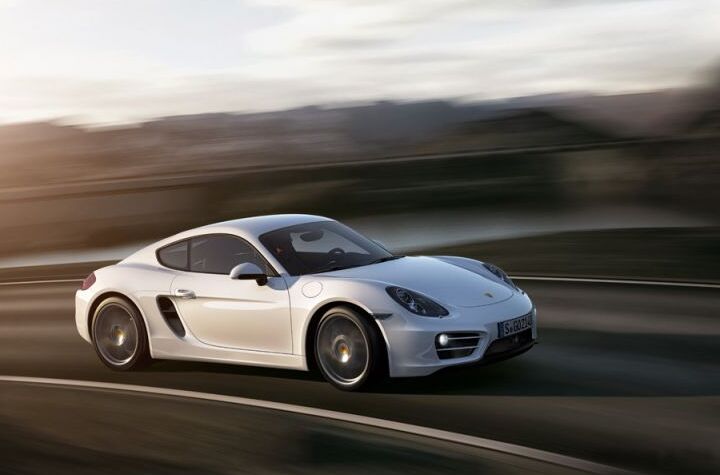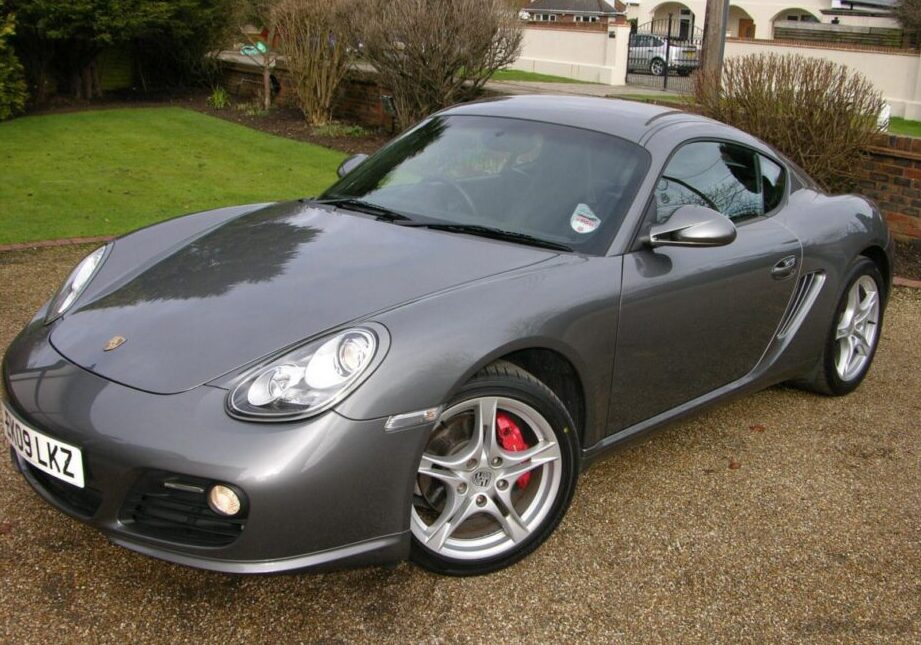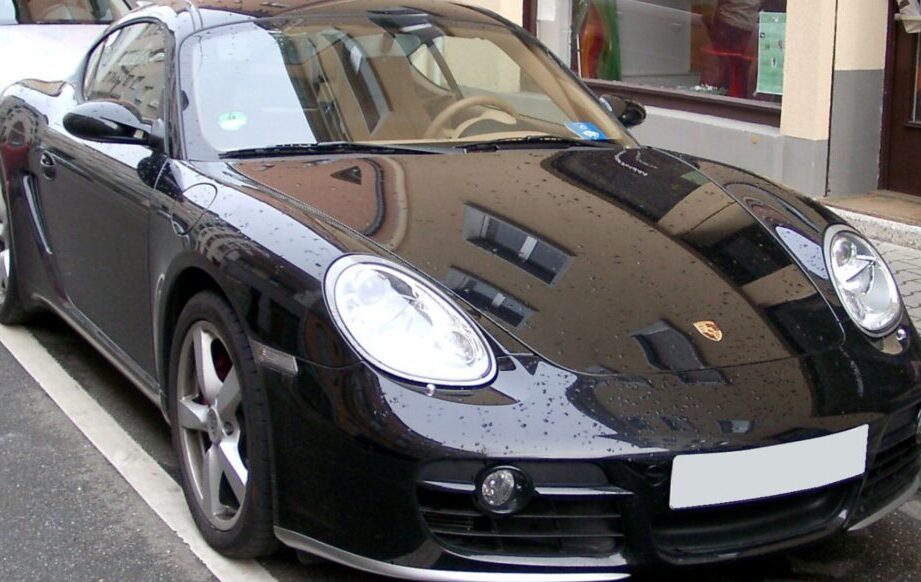
The Porsche Cayman (987c) 2.7, produced from July 2006 to January 2009, represents the entry point into the second-generation Cayman lineup. Positioned below the more powerful Cayman S, the 2.7-liter variant offered a compelling blend of Porsche performance and handling in a more accessible package. It was a key model for attracting a broader customer base to the mid-engine sports car platform, particularly those prioritizing efficiency and everyday usability alongside the renowned Porsche driving experience. The 987c generation marked a significant evolution over the original 986, with a redesigned chassis, updated interior, and improved engine technology.
Technical Specifications
| Brand | Porsche |
| Model | Cayman |
| Generation | Cayman (987c) |
| Type (Engine) | 2.7 (245 Hp) |
| Start of production | July, 2006 |
| End of production | January, 2009 |
| Powertrain Architecture | Internal Combustion engine |
| Body type | Coupe |
| Seats | 2 |
| Doors | 2 |
| Fuel consumption (economy) – urban | 13.8 l/100 km (17 US mpg, 20.5 UK mpg, 7.2 km/l) |
| Fuel consumption (economy) – extra urban | 6.8 l/100 km (34.6 US mpg, 41.5 UK mpg, 14.7 km/l) |
| Fuel consumption (economy) – combined | 9.3 l/100 km (25.3 US mpg, 30.4 UK mpg, 10.8 km/l) |
| CO2 emissions | 222 g/km |
| Fuel Type | Petrol (Gasoline) |
| Acceleration 0 – 100 km/h | 6.1 sec |
| Acceleration 0 – 62 mph | 6.1 sec |
| Acceleration 0 – 60 mph | 5.8 sec |
| Acceleration 0 – 200 km/h | 23.7 sec |
| Maximum speed | 258 km/h (160.31 mph) |
| Weight-to-power ratio | 5.3 kg/Hp, 188.5 Hp/tonne |
| Weight-to-torque ratio | 4.8 kg/Nm, 210 Nm/tonne |
| Power | 245 Hp @ 6500 rpm |
| Power per litre | 91.2 Hp/l |
| Torque | 273 Nm @ 4600-6000 rpm (201.35 lb.-ft. @ 4600-6000 rpm) |
| Maximum engine speed | 7300 rpm |
| Engine layout | Middle, Longitudinal |
| Engine Model/Code | M97.20 |
| Engine displacement | 2687 cm3 (163.97 cu. in.) |
| Number of cylinders | 6 |
| Engine configuration | Boxer |
| Cylinder Bore | 85.5 mm (3.37 in.) |
| Piston Stroke | 78 mm (3.07 in.) |
| Compression ratio | 11.3:1 |
| Number of valves per cylinder | 4 |
| Fuel injection system | Multi-port manifold injection |
| Engine aspiration | Naturally aspirated engine |
| Valvetrain | DOHC |
| Engine oil capacity | 7.8 l (8.24 US qt, 6.86 UK qt) |
| Coolant | 22 l (23.25 US qt, 19.36 UK qt) |
| Kerb Weight | 1300 kg (2866.01 lbs.) |
| Max. weight | 1620 kg (3571.49 lbs.) |
| Max load | 320 kg (705.48 lbs.) |
| Trunk (boot) space – minimum | 260 l (9.18 cu. ft.) |
| Fuel tank capacity | 64 l (16.91 US gal, 14.08 UK gal) |
| Max. roof load | 60 kg (132.28 lbs.) |
| Length | 4341 mm (170.91 in.) |
| Width | 1801 mm (70.91 in.) |
| Width including mirrors | 1978 mm (77.87 in.) |
| Height | 1305 mm (51.38 in.) |
| Wheelbase | 2415 mm (95.08 in.) |
| Front track | 1490 mm (58.66 in.) |
| Rear (Back) track | 1534 mm (60.39 in.) |
| Ride height (ground clearance) | 121 mm (4.76 in.) |
| Drag coefficient (Cd) | 0.29 |
| Minimum turning circle | 11.1 m (36.42 ft.) |
| Drivetrain Architecture | Rear wheel drive |
| Drive wheel | Rear wheel drive |
| Number of gears and type of gearbox | 5 gears, manual transmission |
| Front suspension | Independent type McPherson |
| Rear suspension | McPherson |
| Front brakes | Ventilated discs, 298×24 mm |
| Rear brakes | Ventilated discs, 299×20 mm |
| Assisting systems | ABS (Anti-lock braking system) |
| Steering type | Steering rack and pinion |
| Power steering | Hydraulic Steering |
| Tires size | Front wheel tires: 205/55 ZR 17, Rear wheel tires: 235/50 ZR 17 |
| Wheel rims size | Front wheel rims: 6.5 J x 17, Rear wheel rims: 8 J x 17 |
Powertrain & Engine Architecture
The heart of the Cayman 2.7 is the M97.20 engine, a 2.7-liter naturally aspirated flat-six (boxer) engine. This engine is a direct descendant of the powerplant found in the 997-generation Porsche 911, albeit detuned for the Cayman’s application. It utilizes multi-port fuel injection and a double overhead camshaft (DOHC) valvetrain. The boxer configuration contributes to a low center of gravity, enhancing the car’s handling characteristics. The engine produces 245 horsepower at 6500 rpm and 273 Nm (201.35 lb-ft) of torque between 4600 and 6000 rpm. The standard transmission for this variant was a 5-speed manual, though a 5-speed Tiptronic S automatic transmission was also available. The automatic transmission featured manual shift capability, allowing drivers some control over gear selection.
Driving Characteristics
The Cayman 2.7 with the manual transmission offered a balanced and engaging driving experience. While not as brutally quick as the Cayman S, it provided ample power for spirited driving on both roads and tracks. The 0-60 mph sprint took approximately 5.8 seconds, and the car could reach a top speed of 160.31 mph. The automatic transmission, while offering convenience, did slightly diminish acceleration times and responsiveness. Gear ratios were tuned for a blend of performance and fuel efficiency. The mid-engine layout and well-tuned suspension contributed to exceptional handling balance and cornering grip. The steering was precise and communicative, providing the driver with a strong sense of connection to the road.
Equipment & Trim Levels
The base Cayman 2.7 came standard with a respectable level of equipment, including air conditioning, power windows and locks, a basic audio system, and alloy wheels. Upholstery was typically cloth, though leather options were available. Optional extras included a premium audio system, navigation system, heated seats, and various cosmetic enhancements. The interior design was functional and driver-focused, with a clear instrument cluster and ergonomically placed controls. While not as lavishly appointed as the Cayman S, the 2.7 offered a comfortable and well-built cabin.
Chassis & Braking
The 987c Cayman featured a lightweight chassis constructed primarily of steel, with aluminum components used in certain areas to reduce weight. The suspension utilized independent McPherson struts at both the front and rear, providing a comfortable ride and excellent handling. The braking system consisted of ventilated discs at all four corners, providing ample stopping power. Anti-lock braking system (ABS) was standard. The base model typically featured smaller rear rotors compared to the Cayman S. The car’s relatively low weight (approximately 2866 lbs) contributed to its agile handling characteristics.
Market Reception & Comparison
The Cayman 2.7 was generally well-received by automotive critics. It was praised for its handling, balance, and overall driving experience. However, some reviewers noted that the engine lacked the outright punch of the Cayman S. Compared to the Cayman S, the 2.7 offered a more affordable entry point into the Porsche sports car world. It also provided better fuel economy. Against competitors like the BMW Z4 and Audi TT, the Cayman 2.7 stood out for its mid-engine layout and superior handling balance. The automatic transmission was often criticized for feeling slightly sluggish compared to the manual.
Legacy
The M97.20 engine, while generally reliable, is known to be susceptible to intermediate shaft (IMS) bearing failure, a common issue across several Porsche models of this era. Preventative IMS bearing upgrades are often recommended for owners of these vehicles. Despite this potential issue, the Cayman 2.7 remains a popular choice in the used car market, offering a compelling combination of performance, handling, and Porsche prestige at a relatively affordable price. Its reputation as a well-balanced and engaging sports car has ensured its continued desirability among enthusiasts.