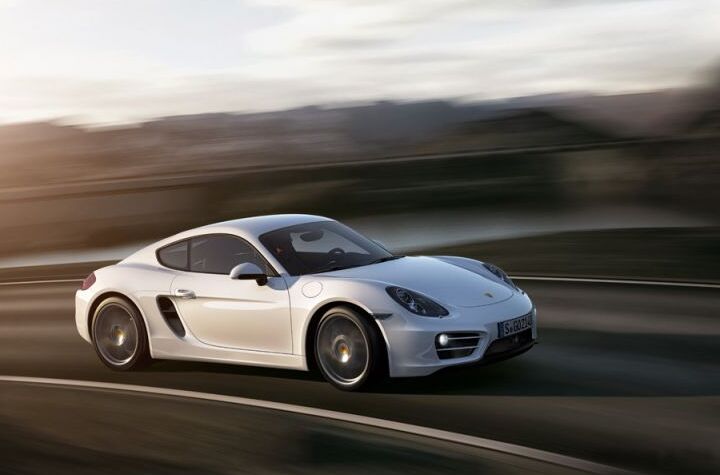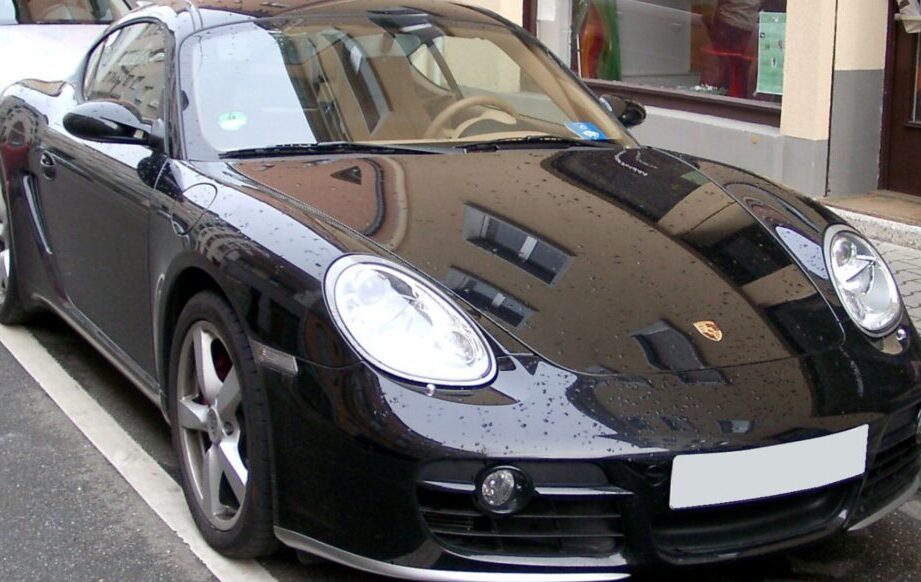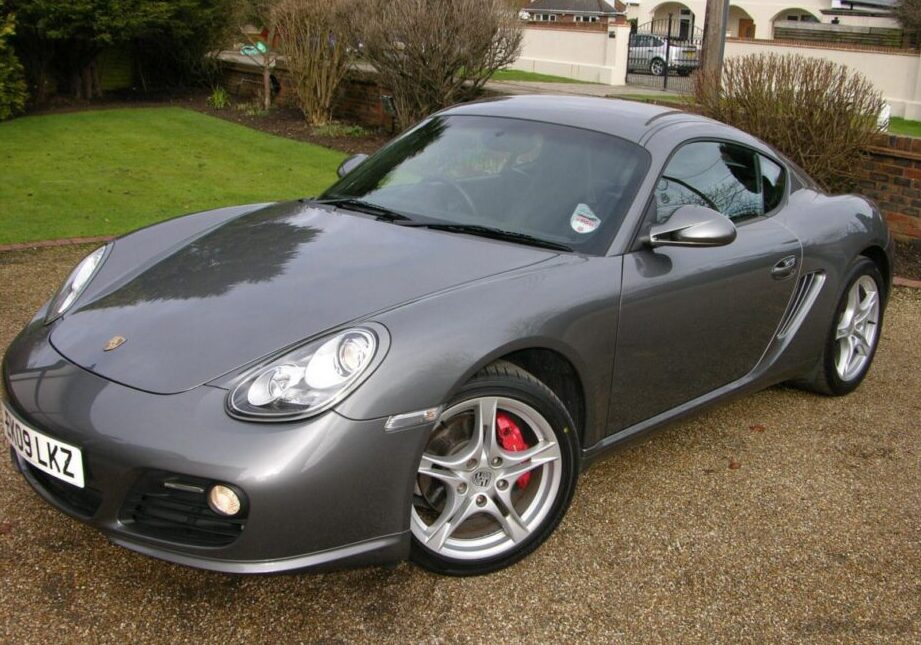
The Porsche Cayman (987c), specifically the 2.9-liter (265 hp) variant equipped with the Porsche Doppelkupplung (PDK) dual-clutch transmission, represents a significant refinement of the first-generation Cayman. Introduced in February 2009 as part of a mid-cycle facelift, this model year saw improvements to both the exterior styling and internal components. The 987c, internally designated as the 987.2, addressed some criticisms leveled at the original 987, offering a more mature and capable sports car experience. This particular configuration, combining the naturally aspirated 2.9-liter flat-six engine with the PDK transmission, occupied a sweet spot in the Cayman lineup, providing a balance of performance, efficiency, and driving engagement. Production continued through November 2012.
Technical Specifications
| Brand | Porsche |
| Model | Cayman |
| Generation | Cayman (987c, facelift 2009) |
| Type (Engine) | 2.9 (265 Hp) PDK |
| Start of production | February, 2009 |
| End of production | November, 2012 |
| Powertrain Architecture | Internal Combustion engine |
| Body type | Coupe |
| Seats | 2 |
| Doors | 2 |
| Fuel consumption (economy) – urban | 13.6 l/100 km (17.3 US mpg, 20.8 UK mpg, 7.4 km/l) |
| Fuel consumption (economy) – extra urban | 6.4 l/100 km (36.8 US mpg, 44.1 UK mpg, 15.6 km/l) |
| Fuel consumption (economy) – combined | 9.1 l/100 km (25.8 US mpg, 31 UK mpg, 11 km/l) |
| CO2 emissions | 214 g/km |
| Fuel Type | Petrol (Gasoline) |
| Acceleration 0 – 100 km/h | 5.7 sec |
| Acceleration 0 – 62 mph | 5.7 sec |
| Acceleration 0 – 60 mph | 5.4 sec |
| Acceleration 0 – 200 km/h | 21.8 sec |
| Maximum speed | 263 km/h (163.42 mph) |
| Weight-to-power ratio | 5.1 kg/Hp, 194.9 Hp/tonne |
| Weight-to-torque ratio | 4.5 kg/Nm, 220.6 Nm/tonne |
| Power | 265 Hp @ 7200 rpm |
| Power per litre | 91.6 Hp/l |
| Torque | 300 Nm @ 4400-6000 rpm (221.27 lb.-ft. @ 4400-6000 rpm) |
| Maximum engine speed | 7500 rpm |
| Engine layout | Middle, Longitudinal |
| Engine Model/Code | MA1.20 |
| Engine displacement | 2893 cm3 (176.54 cu. in.) |
| Number of cylinders | 6 |
| Engine configuration | Boxer |
| Cylinder Bore | 89 mm (3.5 in.) |
| Piston Stroke | 77.5 mm (3.05 in.) |
| Compression ratio | 11.5:1 |
| Number of valves per cylinder | 4 |
| Fuel injection system | Multi-port manifold injection |
| Engine aspiration | Naturally aspirated engine |
| Valvetrain | DOHC |
| Engine oil capacity | 7.5 l (7.93 US qt | 6.6 UK qt) |
| Coolant | 23 l (24.3 US qt | 20.24 UK qt) |
| Kerb Weight | 1360 kg (2998.29 lbs.) |
| Max. weight | 1670 kg (3681.72 lbs.) |
| Max load | 310 kg (683.43 lbs.) |
| Trunk (boot) space – minimum | 260 l (9.18 cu. ft.) |
| Fuel tank capacity | 65 l (17.17 US gal | 14.3 UK gal) |
| Max. roof load | 60 kg (132.28 lbs.) |
| Length | 4347 mm (171.14 in.) |
| Width | 1801 mm (70.91 in.) |
| Width including mirrors | 1978 mm (77.87 in.) |
| Height | 1304 mm (51.34 in.) |
| Wheelbase | 2415 mm (95.08 in.) |
| Front track | 1490 mm (58.66 in.) |
| Rear (Back) track | 1534 mm (60.39 in.) |
| Ride height (ground clearance) | 130 mm (5.12 in.) |
| Drag coefficient (Cd) | 0.29 |
| Minimum turning circle (turning diameter) | 11.1 m (36.42 ft.) |
| Drivetrain Architecture | The Internal combustion engine (ICE) drives the rear wheels of the vehicle. |
| Drive wheel | Rear wheel drive |
| Number of gears and type of gearbox | 7 gears, automatic transmission |
| Front suspension | Independent type McPherson |
| Rear suspension | McPherson |
| Front brakes | Ventilated discs, 318×28 mm |
| Rear brakes | Ventilated discs, 299×20 mm |
| Assisting systems | ABS (Anti-lock braking system) |
| Steering type | Steering rack and pinion |
| Power steering | Hydraulic Steering |
| Tires size | Front wheel tires: 205/55 ZR 17Rear wheel tires: 235/50 ZR 17 |
| Wheel rims size | Front wheel rims: 7 J x 17Rear wheel rims: 8.5 J x 17 |
INTRODUCTION
The 2009-2012 Porsche Cayman 2.9 PDK is a two-door, mid-engine sports coupe that represents a significant evolution of the 987 generation. Positioned as a step up from the base 2.9-liter manual transmission model, the PDK variant offered quicker acceleration and improved fuel efficiency. It sat below the more powerful Cayman S and Cayman R in Porsche’s lineup, appealing to drivers seeking a balanced blend of performance and everyday usability. The 987.2 generation, and this variant specifically, benefited from revised suspension geometry, a more refined interior, and updated engine management systems compared to the original 987.
Powertrain & Engine Architecture
At the heart of the Cayman 2.9 PDK lies the MA1.20 engine, a 2.9-liter naturally aspirated flat-six cylinder boxer engine. This engine utilizes direct fuel injection (DFI) and a variable valve timing system (VVT) to optimize performance and efficiency. The engine produces 265 horsepower at 7200 rpm and 300 Nm (221 lb-ft) of torque between 4400 and 6000 rpm. The engine’s flat-six configuration contributes to a low center of gravity, enhancing handling characteristics. The PDK transmission is a seven-speed dual-clutch automated manual transmission. It offers both fully automatic operation and manual gear selection via steering wheel-mounted paddles. The PDK’s quick shift times and smooth operation contribute significantly to the car’s overall performance.
Driving Characteristics
The Cayman 2.9 PDK delivers a distinctly engaging driving experience. While not as brutally fast as the Cayman S, the 2.9-liter engine provides ample power for spirited driving. The PDK transmission allows for incredibly quick upshifts and downshifts, keeping the engine in its optimal power band. Compared to the six-speed manual version, the PDK offers faster acceleration, particularly during upshifts. The gear ratios are tuned to provide a good balance between acceleration and fuel economy. The car feels nimble and responsive, thanks to its mid-engine layout and well-tuned suspension. The steering is precise and communicative, providing excellent feedback to the driver. The PDK transmission, while offering convenience, can sometimes feel slightly less connected than a traditional manual gearbox.
Equipment & Trim Levels
The Cayman 2.9 PDK came standard with a respectable array of features, including air conditioning, power windows and locks, a basic audio system, and sport seats. Optional extras were plentiful, allowing buyers to customize their cars to their preferences. Popular options included the Sport Chrono Package (which added a Sport Plus mode and launch control), upgraded audio systems (Bose or Burmester), leather upholstery, navigation, and various interior trim options. The interior design was relatively minimalist, focusing on functionality and driver engagement. Dashboard materials were generally of high quality, although some plastics were present.
Chassis & Braking
The Cayman 2.9 PDK utilizes an independent suspension system with McPherson struts at both the front and rear. The suspension was revised in the 987.2 generation to improve handling and ride comfort. The car features ventilated disc brakes at all four corners, providing ample stopping power. ABS (Anti-lock Braking System) is standard. The 987.2 Cayman benefited from a slightly wider rear track compared to the original 987, further enhancing stability. The car’s relatively low weight (1360 kg / 2998 lbs) contributes to its agile handling.
Market Reception & Comparison
The Cayman 2.9 PDK was generally well-received by automotive critics. It was praised for its balanced handling, responsive engine, and quick-shifting PDK transmission. Some critics noted that the engine lacked the outright punch of the Cayman S, but the 2.9-liter variant offered a more affordable entry point into the Porsche sports car world. Compared to the manual transmission version, the PDK was often favored for its ease of use and faster acceleration. Fuel economy was also slightly better with the PDK. Against competitors like the BMW Z4 and Audi TT, the Cayman 2.9 PDK stood out for its mid-engine layout and superior handling balance.
Legacy
The Porsche Cayman 2.9 PDK has proven to be a reliable and durable sports car. The MA1.20 engine is known for its longevity, provided it receives regular maintenance. The PDK transmission, while complex, has also proven to be relatively reliable. On the used car market, these Caymans are sought after by enthusiasts who appreciate their blend of performance, handling, and practicality. Values have remained relatively stable, reflecting the car’s enduring appeal. The 987.2 generation, and the 2.9 PDK variant in particular, is considered a sweet spot in the Cayman lineage, offering a rewarding driving experience at a reasonable price point.