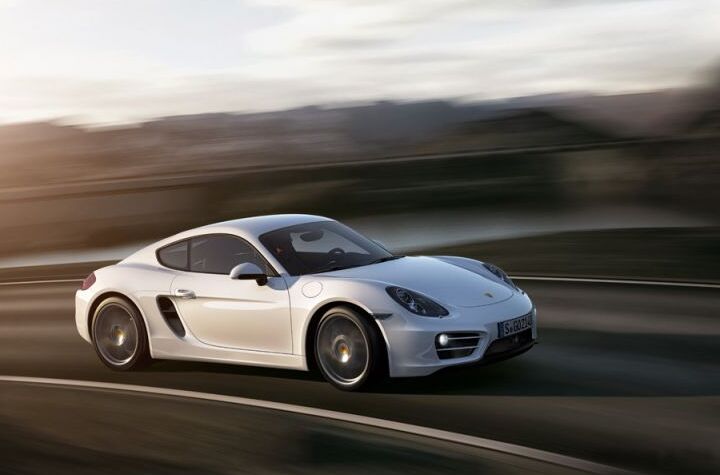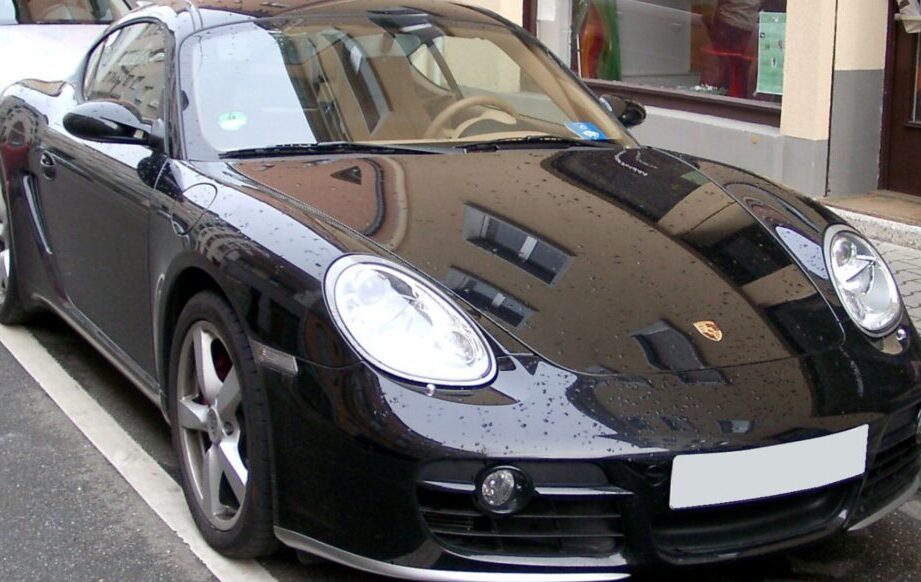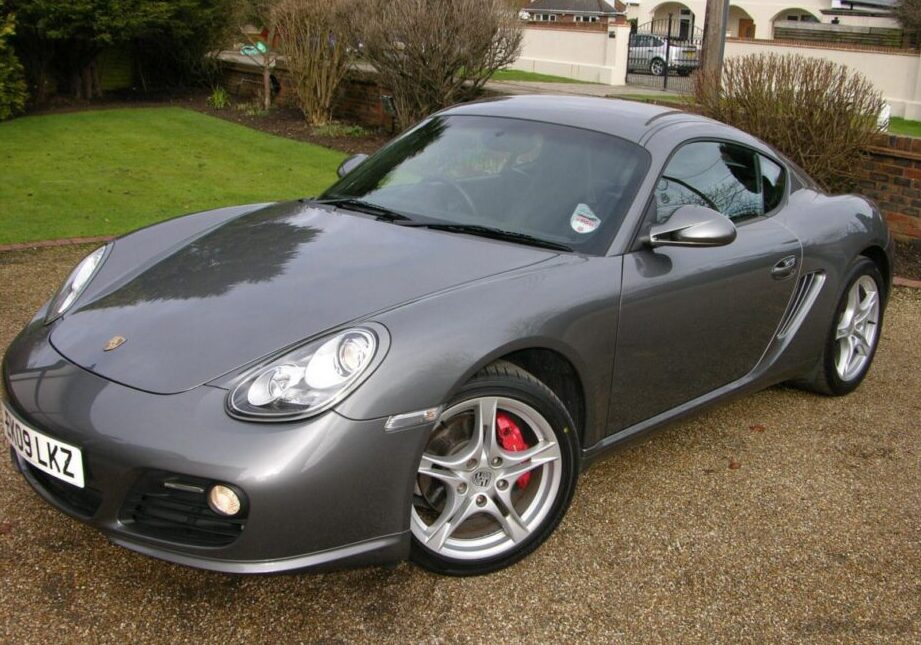
The Porsche Cayman S 3.4 (320 Hp) PDK, produced from February 2009 to November 2012, represents a significant mid-cycle refresh of the 987c generation Cayman. This variant occupied the performance-oriented mid-range within the 987.2 lineup, positioned above the base Cayman and below the track-focused Cayman R. It aimed to deliver a compelling blend of everyday usability and exhilarating sports car performance, leveraging Porsche’s engineering prowess and the increasingly popular dual-clutch transmission (PDK) technology. The 987.2 facelift brought notable improvements over the original 987, including a revised engine, updated styling, and enhanced interior refinement.
Technical Specifications
| Brand | Porsche |
| Model | Cayman |
| Generation | Cayman (987c, facelift 2009) |
| Type (Engine) | S 3.4 (320 Hp) PDK |
| Start of production | February, 2009 |
| End of production | November, 2012 |
| Powertrain Architecture | Internal Combustion engine |
| Body type | Coupe |
| Seats | 2 |
| Doors | 2 |
| Fuel consumption (economy) – urban | 14.1 l/100 km (16.7 US mpg, 20 UK mpg, 7.1 km/l) |
| Fuel consumption (economy) – extra urban | 6.6 l/100 km (35.6 US mpg, 42.8 UK mpg, 15.2 km/l) |
| Fuel consumption (economy) – combined | 9.4 l/100 km (25 US mpg, 30.1 UK mpg, 10.6 km/l) |
| CO2 emissions | 221 g/km |
| Fuel Type | Petrol (Gasoline) |
| Acceleration 0 – 100 km/h | 5.1 sec |
| Acceleration 0 – 62 mph | 5.1 sec |
| Acceleration 0 – 60 mph | 4.8 sec |
| Acceleration 0 – 200 km/h | 19.7 sec |
| Maximum speed | 275 km/h (170.88 mph) |
| Weight-to-power ratio | 4.3 kg/Hp, 232.7 Hp/tonne |
| Weight-to-torque ratio | 3.7 kg/Nm, 269.1 Nm/tonne |
| Power | 320 Hp @ 7200 rpm |
| Power per litre | 93.1 Hp/l |
| Torque | 370 Nm @ 4750 rpm (272.9 lb.-ft. @ 4750 rpm) |
| Maximum engine speed | 7500 rpm |
| Engine layout | Middle, Longitudinal |
| Engine Model/Code | MA1.21 |
| Engine displacement | 3436 cm3 (209.68 cu. in.) |
| Number of cylinders | 6 |
| Engine configuration | Boxer |
| Cylinder Bore | 97 mm (3.82 in.) |
| Piston Stroke | 77.5 mm (3.05 in.) |
| Compression ratio | 12.5:1 |
| Number of valves per cylinder | 4 |
| Fuel injection system | Direct injection |
| Engine aspiration | Naturally aspirated engine |
| Valvetrain | DOHC |
| Engine oil capacity | 7.5 l (7.93 US qt, 6.6 UK qt) |
| Coolant | 23 l (24.3 US qt, 20.24 UK qt) |
| Kerb Weight | 1375 kg (3031.36 lbs.) |
| Max. weight | 1675 kg (3692.74 lbs.) |
| Max load | 300 kg (661.39 lbs.) |
| Trunk (boot) space – minimum | 260 l (9.18 cu. ft.) |
| Fuel tank capacity | 65 l (17.17 US gal, 14.3 UK gal) |
| Max. roof load | 60 kg (132.28 lbs.) |
| Length | 4347 mm (171.14 in.) |
| Width | 1801 mm (70.91 in.) |
| Width including mirrors | 1978 mm (77.87 in.) |
| Height | 1306 mm (51.42 in.) |
| Wheelbase | 2415 mm (95.08 in.) |
| Front track | 1486 mm (58.5 in.) |
| Rear (Back) track | 1528 mm (60.16 in.) |
| Ride height (ground clearance) | 126 mm (4.96 in.) |
| Drag coefficient (Cd) | 0.30 |
| Minimum turning circle (turning diameter) | 11.1 m (36.42 ft.) |
| Drivetrain Architecture | Rear wheel drive |
| Drive wheel | Rear wheel drive |
| Number of gears and type of gearbox | 7 gears, automatic transmission |
| Front suspension | Independent type McPherson |
| Rear suspension | McPherson |
| Front brakes | Ventilated discs, 318×28 mm |
| Rear brakes | Ventilated discs, 299×24 mm |
| Assisting systems | ABS (Anti-lock braking system) |
| Steering type | Steering rack and pinion |
| Power steering | Hydraulic Steering |
| Tires size | Front wheel tires: 235/40 ZR 18 Rear wheel tires: 265/40 ZR 18 |
| Wheel rims size | Front wheel rims: 8 J x 18 Rear wheel rims: 9 J x 18 |
Powertrain & Engine Architecture
At the heart of the Cayman S 3.4 PDK lies the MA1.21 engine, a 3.4-liter naturally aspirated flat-six (boxer) engine. This engine benefited from direct fuel injection (DFI), a key upgrade in the 987.2 generation. DFI allowed for more precise fuel metering, resulting in improved power, efficiency, and reduced emissions. The engine produced 320 horsepower at 7200 rpm and 370 Nm (272.9 lb-ft) of torque at 4750 rpm. The valvetrain employed dual overhead camshafts (DOHC) with four valves per cylinder, optimizing gas flow for enhanced performance. The engine’s flat-six configuration contributes to a low center of gravity, improving handling characteristics. The seven-speed Porsche Doppelkupplung (PDK) dual-clutch transmission was a defining feature, offering incredibly fast and smooth gear changes. Unlike a traditional automatic, the PDK utilizes two separate clutches for odd and even gears, pre-selecting the next gear for near-instantaneous shifts.
Driving Characteristics
The Cayman S 3.4 PDK delivered a distinctly engaging driving experience. The PDK transmission, while offering convenience, didn’t sacrifice the involvement expected of a sports car. Paddle shifters allowed for manual control, and the transmission responded quickly to driver inputs. Compared to the six-speed manual version, the PDK offered slightly quicker acceleration due to the elimination of shift interruption. The 3.4-liter engine provided ample power throughout the rev range, with a noticeable surge in performance as it approached its 7500 rpm redline. The mid-engine layout contributed to excellent balance and predictable handling. The steering was precise and communicative, providing a strong connection to the road. While not as raw or visceral as some competitors, the Cayman S PDK offered a refined and accessible performance experience.
Equipment & Trim Levels
The Cayman S 3.4 PDK came standard with a generous array of features, including leather upholstery, automatic climate control, a premium sound system, and bi-xenon headlights. Optional extras were plentiful, allowing buyers to personalize their vehicles. Popular options included the Sport Chrono Package (which added a Sport Plus mode and launch control), adaptive suspension (PASM), and various interior trim upgrades. The interior design was driver-focused, with a well-laid-out dashboard and supportive sport seats. The center console featured a touchscreen infotainment system, although it was relatively basic by modern standards.
Chassis & Braking
The Cayman S 3.4 PDK utilized an independent McPherson strut suspension at both the front and rear. This suspension setup provided a good balance between comfort and handling. The car was equipped with ventilated disc brakes at all four corners, providing ample stopping power. ABS (Anti-lock Braking System) was standard. The chassis was designed to be lightweight and rigid, contributing to the car’s agility. The standard wheel and tire sizes were 8 J x 18 with 235/40 ZR 18 tires at the front and 9 J x 18 with 265/40 ZR 18 tires at the rear.
Market Reception & Comparison
The Cayman S 3.4 PDK was generally well-received by automotive critics. It was praised for its balanced handling, powerful engine, and the responsiveness of the PDK transmission. Compared to the base Cayman, the S model offered a significant performance upgrade. Compared to the higher-performance Cayman R, the S model prioritized comfort and usability, making it a more practical choice for everyday driving. Fuel economy was respectable for a sports car, averaging around 25 mpg in combined driving. Reliability was generally good, although some owners reported issues with the PDK transmission, particularly early units.
Legacy
The Porsche Cayman S 3.4 PDK remains a desirable sports car in the used market. Its combination of performance, handling, and relative practicality has ensured its enduring appeal. The PDK transmission, while potentially requiring more specialized maintenance than a manual gearbox, is generally considered reliable when properly maintained. The 987.2 generation Cayman, and particularly the S model, is often seen as a sweet spot in the Cayman lineage, offering a compelling blend of classic Porsche values and modern technology. Well-maintained examples continue to command strong prices, reflecting their status as a benchmark for mid-engine sports cars.