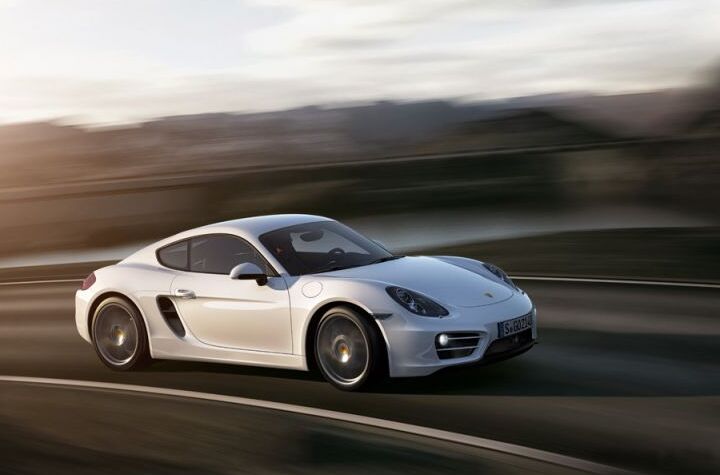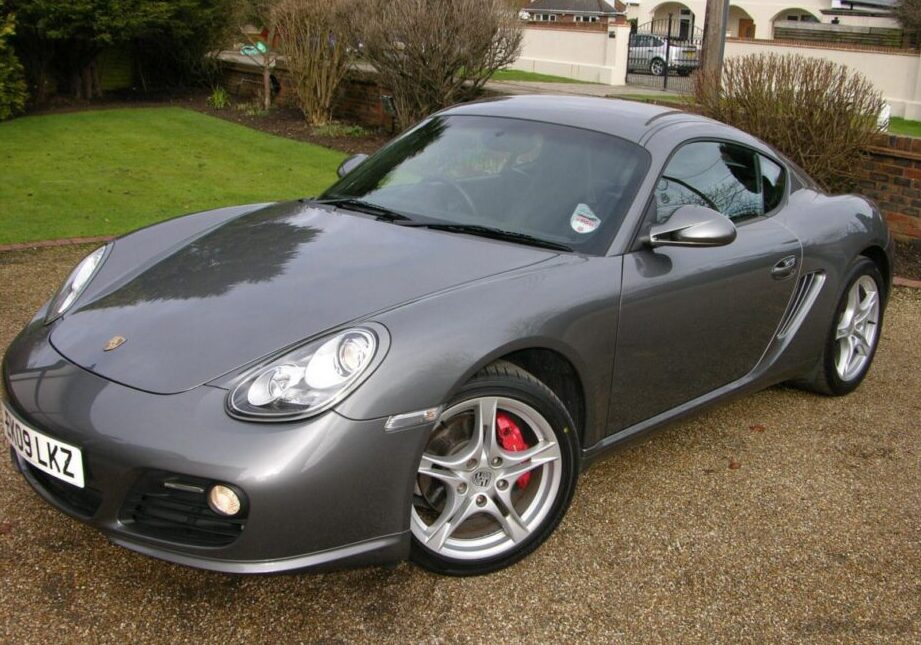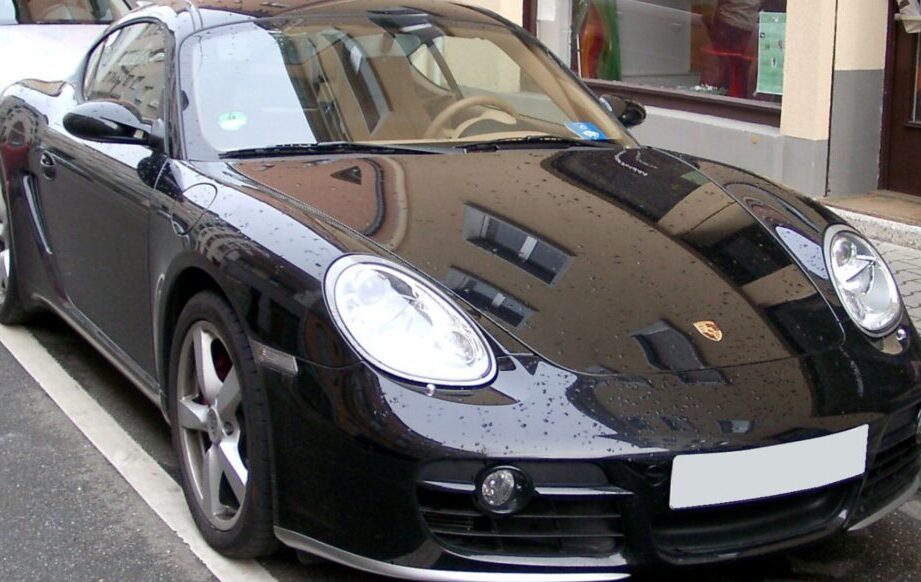
The Porsche Cayman S 3.4 (987c) represents a pivotal iteration of Porsche’s mid-engine sports car, produced between November 2005 and January 2009. Positioned as the higher-performance variant within the first-generation (987) Cayman lineup, it offered a significant step up in power and driving experience compared to the base Cayman. The 987c designation refers to the model’s internal Porsche code, and it was a key component of Porsche’s strategy to offer a more accessible, yet still distinctly Porsche, sports car experience. This model played a crucial role in establishing the Cayman as a serious contender in the sports coupe segment, appealing to enthusiasts seeking a balanced and engaging driving machine.
Technical Specifications
| Brand | Porsche |
| Model | Cayman |
| Generation | Cayman (987c) |
| Type (Engine) | S 3.4 (295 Hp) |
| Start of production | November, 2005 |
| End of production | January, 2009 |
| Powertrain Architecture | Internal Combustion engine |
| Body type | Coupe |
| Seats | 2 |
| Doors | 2 |
| Fuel consumption (economy) – urban | 15.3 l/100 km (15.4 US mpg, 18.5 UK mpg, 6.5 km/l) |
| Fuel consumption (economy) – extra urban | 7.8 l/100 km (30.2 US mpg, 36.2 UK mpg, 12.8 km/l) |
| Fuel consumption (economy) – combined | 10.6 l/100 km (22.2 US mpg, 26.6 UK mpg, 9.4 km/l) |
| CO2 emissions | 254 g/km |
| Fuel Type | Petrol (Gasoline) |
| Acceleration 0 – 100 km/h | 5.4 sec |
| Acceleration 0 – 62 mph | 5.4 sec |
| Acceleration 0 – 60 mph | 5.1 sec |
| Acceleration 0 – 200 km/h | 18.6 sec |
| Maximum speed | 275 km/h (170.88 mph) |
| Weight-to-power ratio | 4.6 kg/Hp, 218.5 Hp/tonne |
| Weight-to-torque ratio | 4 kg/Nm, 251.9 Nm/tonne |
| Power | 295 Hp @ 6250 rpm |
| Power per litre | 87.1 Hp/l |
| Torque | 340 Nm @ 4400-6000 rpm (250.77 lb.-ft. @ 4400-6000 rpm) |
| Maximum engine speed | 7300 rpm |
| Engine layout | Middle, Longitudinal |
| Engine Model/Code | M97.21 |
| Engine displacement | 3386 cm3 (206.63 cu. in.) |
| Number of cylinders | 6 |
| Engine configuration | Boxer |
| Cylinder Bore | 96 mm (3.78 in.) |
| Piston Stroke | 78 mm (3.07 in.) |
| Compression ratio | 11.1:1 |
| Number of valves per cylinder | 4 |
| Fuel injection system | Multi-port manifold injection |
| Engine aspiration | Naturally aspirated engine |
| Valvetrain | DOHC |
| Engine oil capacity | 7.8 l (8.24 US qt, 6.86 UK qt) |
| Coolant | 25 l (26.42 US qt, 22 UK qt) |
| Kerb Weight | 1350 kg (2976.24 lbs.) |
| Max. weight | 1630 kg (3593.53 lbs.) |
| Max load | 280 kg (617.29 lbs.) |
| Trunk (boot) space – minimum | 260 l (9.18 cu. ft.) |
| Fuel tank capacity | 64 l (16.91 US gal, 14.08 UK gal) |
| Max. roof load | 60 kg (132.28 lbs.) |
| Length | 4341 mm (170.91 in.) |
| Width | 1801 mm (70.91 in.) |
| Width including mirrors | 1978 mm (77.87 in.) |
| Height | 1305 mm (51.38 in.) |
| Wheelbase | 2415 mm (95.08 in.) |
| Front track | 1486 mm (58.5 in.) |
| Rear (Back) track | 1528 mm (60.16 in.) |
| Ride height (ground clearance) | 121 mm (4.76 in.) |
| Drag coefficient (Cd) | 0.29 |
| Minimum turning circle | 11.1 m (36.42 ft.) |
| Drivetrain Architecture | Rear wheel drive |
| Drive wheel | Rear wheel drive |
| Number of gears and type of gearbox | 6 gears, manual transmission |
| Front suspension | Independent type McPherson |
| Rear suspension | McPherson |
| Front brakes | Ventilated discs, 318×28 mm |
| Rear brakes | Ventilated discs, 299×24 mm |
| Assisting systems | ABS (Anti-lock braking system) |
| Steering type | Steering rack and pinion |
| Power steering | Hydraulic Steering |
| Tires size | Front wheel tires: 235/40 ZR 18, Rear wheel tires: 265/40 ZR 18 |
| Wheel rims size | Front wheel rims: 8 J x 18, Rear wheel rims: 9 J x 18 |
INTRODUCTION
The Cayman S 3.4, launched in late 2005, was a significant upgrade over the base Cayman. It addressed criticisms that the original model lacked the outright performance expected of a Porsche. The “S” designation denoted a more powerful engine and enhanced performance features. Built on the 987 platform – shared with the Porsche Boxster – the Cayman S offered a fixed-roof coupe experience, prioritizing a more rigid chassis and focused handling. It quickly became a favorite among driving enthusiasts, offering a compelling alternative to the iconic 911 at a lower price point.
Powertrain & Engine Architecture
At the heart of the Cayman S 3.4 lies the M97.21 engine, a 3.4-liter naturally aspirated flat-six (boxer) engine. This engine is a direct descendant of the engines used in the 996 and 997 generations of the Porsche 911, albeit with modifications tailored for the mid-engine layout. The M97.21 featured an increased bore and stroke compared to the earlier 3.2-liter version, resulting in a displacement of 3386 cc. It utilized a multi-port fuel injection system and a dual overhead camshaft (DOHC) valvetrain with four valves per cylinder. The engine’s dry-sump lubrication system, a hallmark of Porsche engineering, ensured consistent oil supply even under extreme cornering forces. The engine produced 295 horsepower at 6250 rpm and 340 Nm (250.77 lb-ft) of torque between 4400 and 6000 rpm. The standard transmission was a six-speed manual, providing precise and engaging gear changes. While a Tiptronic S automatic transmission was available, the manual was favored by enthusiasts for its superior control and responsiveness.
Driving Characteristics
The Cayman S 3.4 delivered a remarkably balanced and engaging driving experience. The mid-engine layout contributed to exceptional handling and a neutral cornering balance. The 3.4-liter engine provided ample power for spirited driving, with a linear power delivery that encouraged exploration of the rev range. The six-speed manual transmission featured well-chosen gear ratios, allowing for quick acceleration and precise control. Compared to the base Cayman, the S model offered noticeably quicker acceleration – 0-60 mph in approximately 5.1 seconds – and a higher top speed of 170.88 mph. The steering was precise and communicative, providing excellent feedback to the driver. While not as raw or visceral as some other sports cars, the Cayman S offered a refined and sophisticated driving experience that was both rewarding and accessible.
Equipment & Trim Levels
The Cayman S 3.4 came standard with a generous array of features, including air conditioning, power windows and locks, a CD stereo system, and sport seats. Leather upholstery was standard, along with aluminum trim accents. Optional extras included a navigation system, Bose sound system, heated seats, and a sunroof. Porsche offered a wide range of customization options, allowing buyers to personalize their Cayman S to their specific preferences. The interior design was driver-focused, with a clear and concise instrument cluster and ergonomically positioned controls. The cabin was relatively compact, but well-appointed and comfortable for two occupants.
Chassis & Braking
The Cayman S 3.4 benefited from a stiff and lightweight chassis, contributing to its exceptional handling. The suspension featured independent McPherson struts at both the front and rear, with stabilizer bars to reduce body roll. The braking system consisted of ventilated discs at all four corners, providing ample stopping power. ABS (Anti-lock Braking System) was standard. The S model featured larger brake rotors and calipers compared to the base Cayman, further enhancing its braking performance. The car’s relatively low weight – approximately 2976 lbs – contributed to its agility and responsiveness.
Market Reception & Comparison
The Cayman S 3.4 was widely praised by automotive critics for its exceptional handling, powerful engine, and balanced driving dynamics. It was often compared favorably to the Porsche 911, offering a similar level of performance and refinement at a lower price point. Some critics noted that the Cayman S lacked the emotional appeal of the 911, but its objective performance and practicality were highly regarded. Compared to the base Cayman, the S model offered a significant performance upgrade, justifying its higher price tag. The Tiptronic S automatic transmission, while convenient, was generally considered less engaging than the manual gearbox. Fuel economy was reasonable for a sports car of its caliber, averaging around 22.2 US mpg in combined driving.
Legacy
The Cayman S 3.4 (987c) has proven to be a reliable and durable sports car. The M97.21 engine is generally considered robust, although regular maintenance is essential. The intermediate shaft (IMS) bearing issue, which affected some earlier Porsche engines, is less prevalent in the M97.21, but it remains a potential concern. Today, the 987c Cayman S is a popular choice among enthusiasts seeking an affordable and engaging sports car. Well-maintained examples command a premium in the used car market, reflecting their enduring appeal and Porsche pedigree. It remains a benchmark for mid-engine sports car design and a testament to Porsche’s commitment to driving excellence.