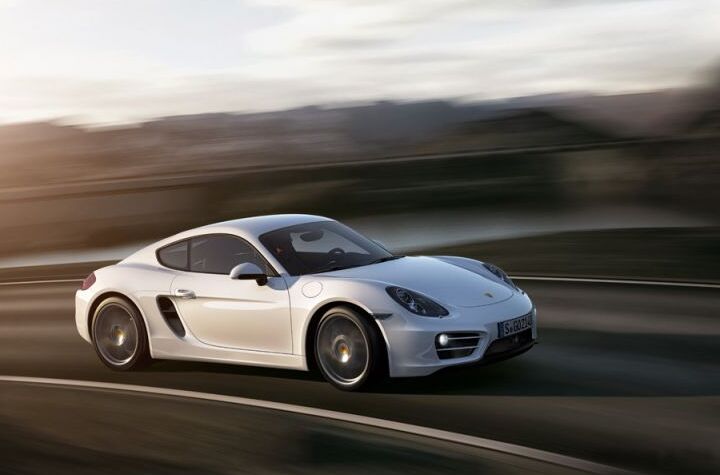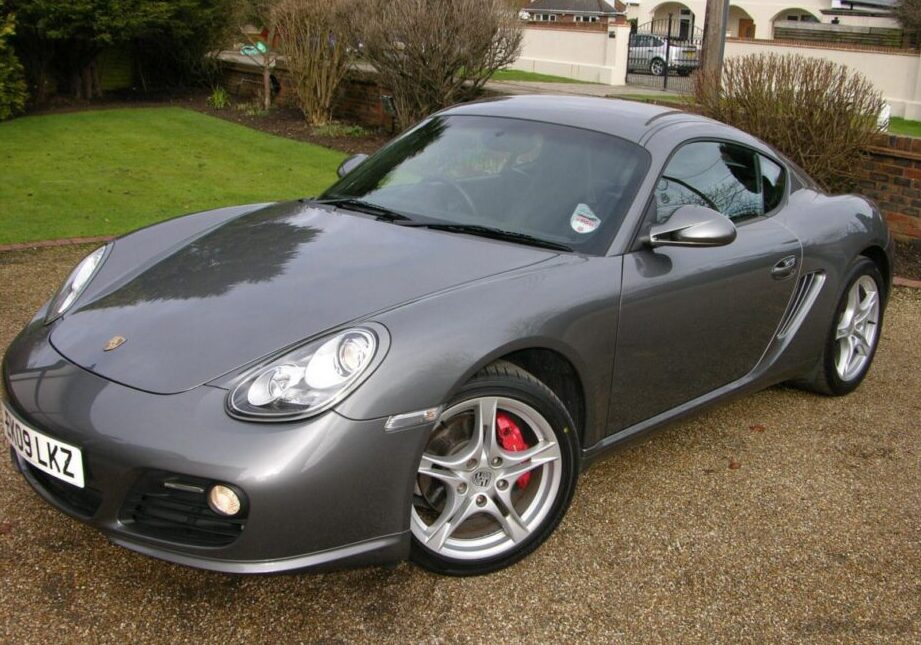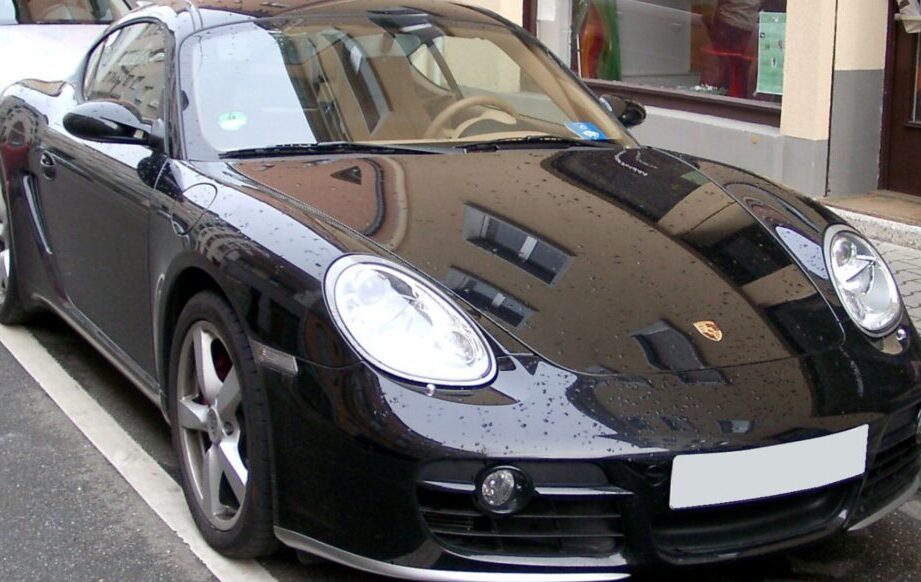
The Porsche Cayman S 3.4 Tiptronic S, produced between November 2005 and January 2009, represents a significant iteration within the 987c generation of Porsche’s mid-engine sports car. Positioned as a premium offering within the Cayman lineup, it combined a naturally aspirated 3.4-liter flat-six engine with Porsche’s Tiptronic S five-speed automatic transmission. This variant aimed to deliver a blend of performance and convenience, appealing to drivers seeking the Cayman experience without the involvement of a manual gearbox. It served as a bridge between the base Cayman and the more focused, track-oriented variants.
Technical Specifications
| Brand | Porsche |
| Model | Cayman |
| Generation | Cayman (987c) |
| Type (Engine) | S 3.4 (295 Hp) Tiptronic S |
| Start of production | November, 2005 |
| End of production | January, 2009 |
| Powertrain Architecture | Internal Combustion engine |
| Body type | Coupe |
| Seats | 2 |
| Doors | 2 |
| Fuel consumption (economy) – urban | 16.3 l/100 km (14.4 US mpg, 17.3 UK mpg, 6.1 km/l) |
| Fuel consumption (economy) – extra urban | 7.9 l/100 km (29.8 US mpg, 35.8 UK mpg, 12.7 km/l) |
| Fuel consumption (economy) – combined | 11 l/100 km (21.4 US mpg, 25.7 UK mpg, 9.1 km/l) |
| CO2 emissions | 262 g/km |
| Fuel Type | Petrol (Gasoline) |
| Acceleration 0 – 100 km/h | 6.1 sec |
| Acceleration 0 – 62 mph | 6.1 sec |
| Acceleration 0 – 60 mph | 5.8 sec |
| Acceleration 0 – 200 km/h | 21.6 sec |
| Maximum speed | 267 km/h (165.91 mph) |
| Emission standard | Euro 4 |
| Weight-to-power ratio | 4.7 kg/Hp, 212.2 Hp/tonne |
| Weight-to-torque ratio | 4.1 kg/Nm, 244.6 Nm/tonne |
| Power | 295 Hp @ 6250 rpm |
| Power per litre | 87.1 Hp/l |
| Torque | 340 Nm @ 4400-6000 rpm (250.77 lb.-ft. @ 4400-6000 rpm) |
| Maximum engine speed | 7300 rpm |
| Engine layout | Middle, Longitudinal |
| Engine Model/Code | M97.21 |
| Engine displacement | 3386 cm3 (206.63 cu. in.) |
| Number of cylinders | 6 |
| Engine configuration | Boxer |
| Cylinder Bore | 96 mm (3.78 in.) |
| Piston Stroke | 78 mm (3.07 in.) |
| Compression ratio | 11.1:1 |
| Number of valves per cylinder | 4 |
| Fuel injection system | Multi-port manifold injection |
| Engine aspiration | Naturally aspirated engine |
| Valvetrain | DOHC |
| Engine oil capacity | 7.8 l (8.24 US qt, 6.86 UK qt) |
| Coolant | 25 l (26.42 US qt, 22 UK qt) |
| Kerb Weight | 1390 kg (3064.43 lbs.) |
| Max. weight | 1670 kg (3681.72 lbs.) |
| Max load | 280 kg (617.29 lbs.) |
| Trunk (boot) space – minimum | 260 l (9.18 cu. ft.) |
| Fuel tank capacity | 64 l (16.91 US gal, 14.08 UK gal) |
| Max. roof load | 60 kg (132.28 lbs.) |
| Length | 4341 mm (170.91 in.) |
| Width | 1801 mm (70.91 in.) |
| Width including mirrors | 1978 mm (77.87 in.) |
| Height | 1305 mm (51.38 in.) |
| Wheelbase | 2415 mm (95.08 in.) |
| Front track | 1486 mm (58.5 in.) |
| Rear (Back) track | 1528 mm (60.16 in.) |
| Ride height (ground clearance) | 121 mm (4.76 in.) |
| Drag coefficient (Cd) | 0.29 |
| Minimum turning circle | 11.1 m (36.42 ft.) |
| Drivetrain Architecture | Rear wheel drive |
| Drive wheel | Rear wheel drive |
| Number of gears and type of gearbox | 5 gears, automatic transmission |
| Front suspension | Independent type McPherson |
| Rear suspension | McPherson |
| Front brakes | Ventilated discs, 318×28 mm |
| Rear brakes | Ventilated discs, 299×24 mm |
| Assisting systems | ABS (Anti-lock braking system) |
| Steering type | Steering rack and pinion |
| Power steering | Hydraulic Steering |
| Tires size | Front wheel tires: 235/40 ZR 18, Rear wheel tires: 265/40 ZR 18 |
| Wheel rims size | Front wheel rims: 8 J x 18, Rear wheel rims: 9 J x 18 |
INTRODUCTION
The Porsche Cayman S 3.4 Tiptronic S, launched in late 2005, was a key component of the first-generation (987) Cayman lineup. Built on the 987c platform, shared with the Porsche 911 (997), the Cayman offered a more accessible entry point into the Porsche sports car world compared to its 911 sibling. The “S” designation denoted a higher performance variant, and the “Tiptronic S” indicated the inclusion of Porsche’s five-speed automatic transmission with manual shift capability. This model aimed to broaden the Cayman’s appeal by providing a more comfortable and user-friendly driving experience without sacrificing the core Porsche driving dynamics.
Powertrain & Engine Architecture
At the heart of the Cayman S 3.4 Tiptronic S lies the M97.21 engine, a 3.4-liter naturally aspirated flat-six (boxer) engine. This engine, a derivative of the 997.1 generation 911’s powerplant, featured an aluminum alloy block and heads, contributing to its relatively lightweight construction. It utilized a multi-port fuel injection system and a double overhead camshaft (DOHC) valvetrain with four valves per cylinder. The engine produced 295 horsepower at 6250 rpm and 340 Nm (250.77 lb-ft) of torque between 4400 and 6000 rpm. The Tiptronic S transmission is a five-speed automatic with the ability for the driver to manually select gears via steering wheel-mounted paddles or the gear selector. This transmission featured adaptive shift programming, adjusting shift points based on driving style.
Driving Characteristics
The Cayman S 3.4 Tiptronic S offered a distinct driving experience compared to its manual transmission counterpart and the base Cayman. While the Tiptronic S transmission provided smooth and relatively quick shifts, it did introduce a slight performance deficit compared to the six-speed manual. The automatic transmission’s torque converter inherently absorbs some power. The gear ratios were tuned to balance acceleration and fuel efficiency. In real-world driving, the Tiptronic S delivered a comfortable and refined experience, making it well-suited for daily commutes and long-distance journeys. However, enthusiasts often preferred the more engaging and direct feel of the manual transmission for spirited driving and track use. The mid-engine layout provided excellent balance and handling characteristics, contributing to the Cayman’s renowned agility.
Equipment & Trim Levels
The Cayman S 3.4 Tiptronic S came standard with a generous array of features, reflecting its position as a premium model. Standard equipment included leather upholstery, automatic climate control, a CD stereo system, and power windows and locks. Optional extras were plentiful, allowing buyers to personalize their Cayman. Popular options included the Sport Chrono Package (which enhanced throttle response and provided a stopwatch), navigation system, heated seats, and upgraded sound systems. Interior trim options included various leather colors and materials, allowing for a degree of customization. The dashboard layout was typical of Porsche at the time, with a focus on functionality and driver ergonomics.
Chassis & Braking
The Cayman S 3.4 Tiptronic S utilized a fully independent suspension system, with McPherson struts at the front and rear. The suspension was tuned to provide a balance between comfort and handling. The car featured ventilated disc brakes on all four wheels, providing ample stopping power. The front brakes measured 318x28mm, while the rear brakes were 299x24mm. Anti-lock braking system (ABS) was standard. The chassis was designed to be stiff and lightweight, contributing to the car’s responsive handling. The weight distribution was optimized for neutral handling characteristics.
Market Reception & Comparison
The Cayman S 3.4 Tiptronic S received generally positive reviews from automotive critics. It was praised for its engaging handling, powerful engine, and comfortable ride. However, some critics noted that the Tiptronic S transmission didn’t quite match the responsiveness of the manual gearbox. Compared to the base Cayman, the S model offered a significant performance upgrade, while the Tiptronic S added convenience. Fuel economy was reasonable for a sports car of its caliber, but not exceptional. Reliability was generally good, although some owners reported issues with the cooling system and oil leaks, common to the 987 generation.
Legacy
The Porsche Cayman S 3.4 Tiptronic S remains a desirable sports car in the used car market. Its combination of performance, comfort, and Porsche pedigree continues to appeal to enthusiasts. The M97.21 engine is generally considered to be robust and reliable, although regular maintenance is essential. The Tiptronic S transmission, while not as engaging as a manual, has proven to be durable. Values have been steadily increasing in recent years, reflecting the growing appreciation for well-maintained examples of this iconic Porsche model. It represents a sweet spot in the Cayman lineage, offering a blend of performance and usability that continues to resonate with drivers today.