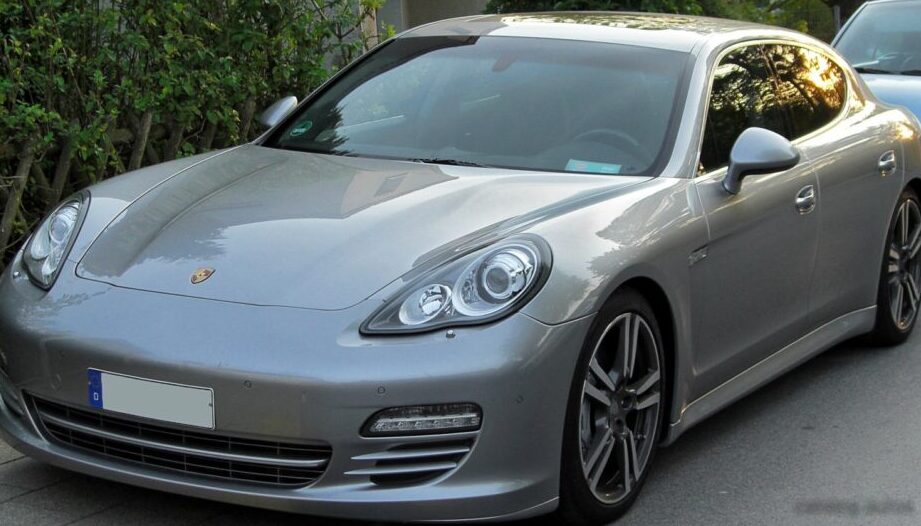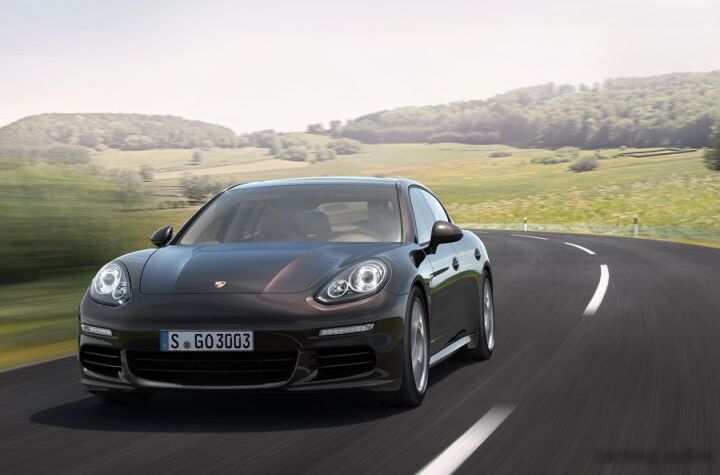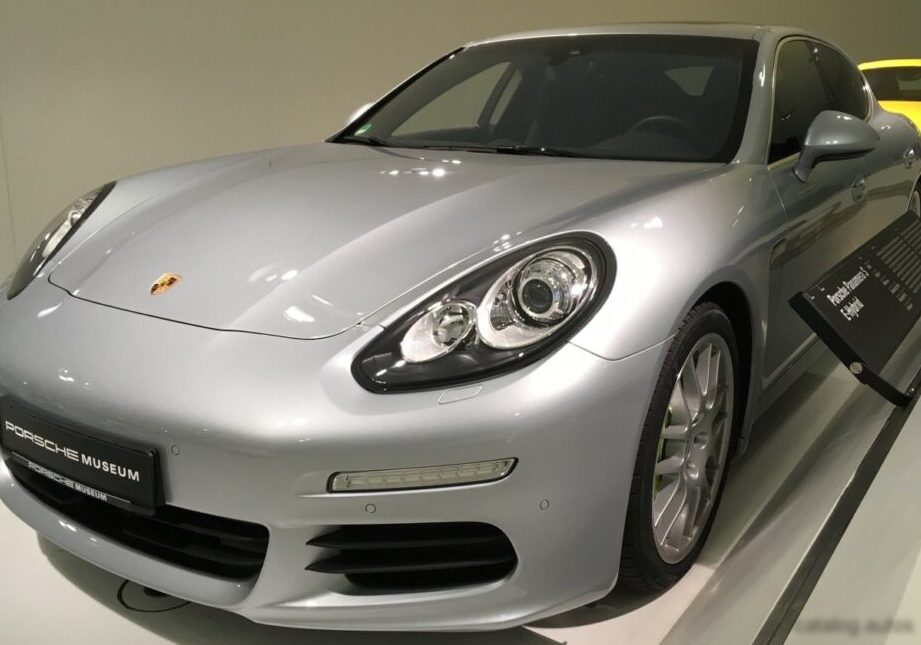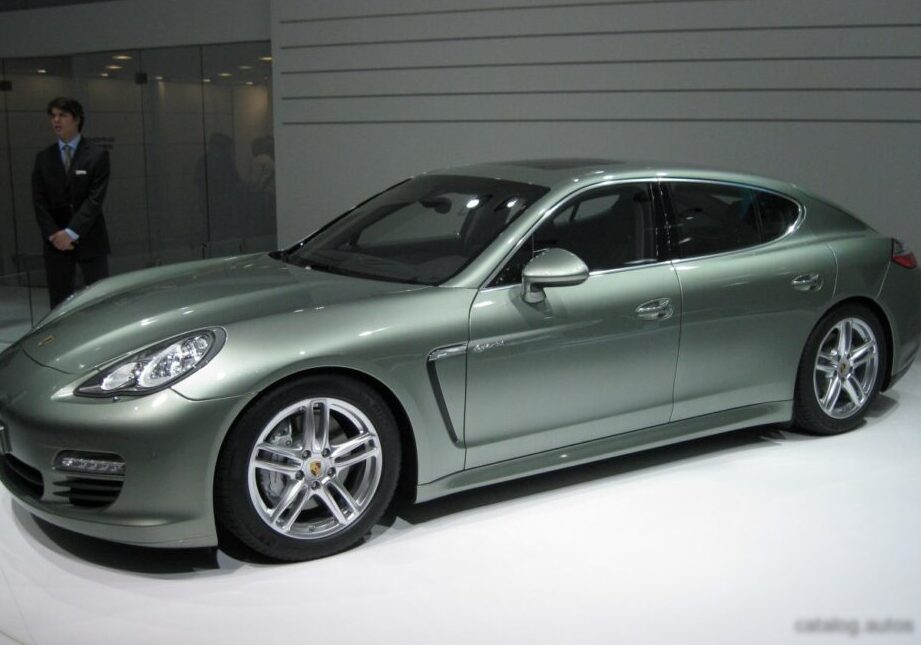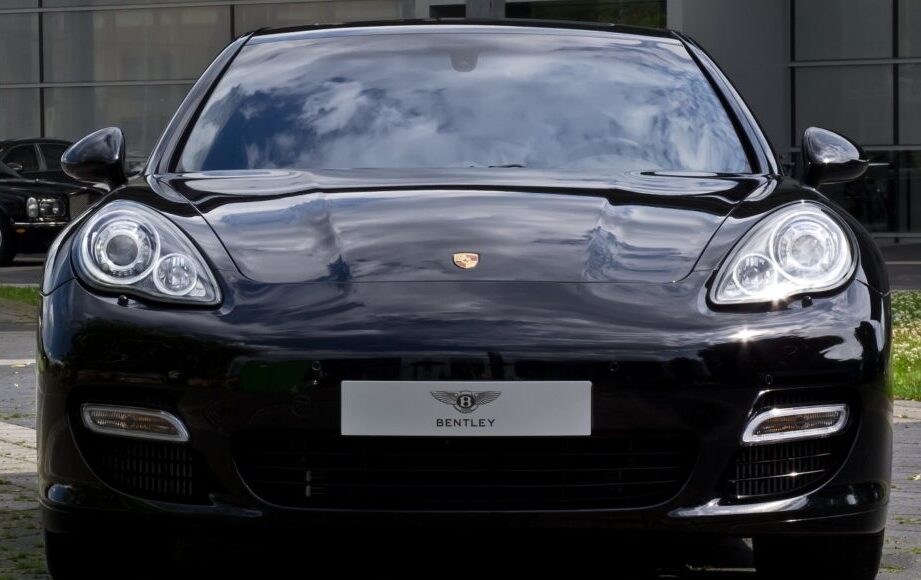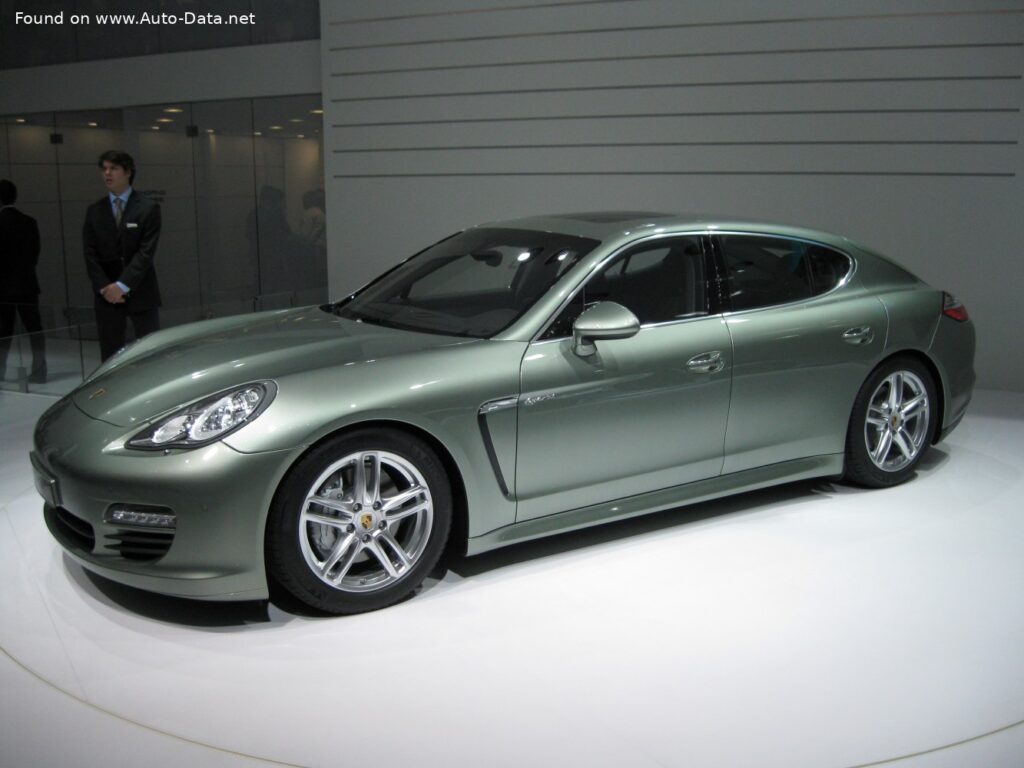
The Porsche Panamera (G1), launched in 2010, represented a pivotal moment for the German automaker. It was Porsche’s first production four-door sedan, a bold departure from its traditional sports car focus. The Panamera aimed to blend the performance and handling expected of a Porsche with the practicality of a luxury sedan, targeting a segment previously dominated by brands like Mercedes-Benz and BMW. The G1 generation, produced from 2010 to 2013, established the Panamera as a unique offering, and the 4 3.6 V6 (300 Hp) PDK model was a key part of the initial lineup, offering a balance of power and efficiency.
Porsche Panamera (G1) 4 3.6 V6 PDK: An Overview
The Panamera G1, specifically the 4 3.6 V6 variant equipped with Porsche’s Doppelkupplung (PDK) dual-clutch transmission, was designed to appeal to drivers seeking a high-performance luxury vehicle capable of both spirited driving and comfortable long-distance travel. The “4” designation indicates Porsche’s all-wheel-drive system, enhancing traction and stability. This model served as an entry point into the Panamera range, offering a compelling alternative to rear-wheel-drive versions while maintaining the core Porsche driving experience. It was sold globally, including North America, where it competed directly with established luxury performance sedans.
Engine & Performance
At the heart of the Panamera 4 3.6 V6 PDK lies a naturally aspirated 3.6-liter V6 engine, producing 300 horsepower at 6,200 rpm and 295.02 lb-ft of torque at 3,750 rpm. This engine, internally designated as the 4640, features direct fuel injection and a compression ratio of 12.5:1, contributing to both power output and efficiency. The engine is mounted longitudinally in the front of the vehicle. The seven-speed PDK transmission provides rapid and seamless gear changes, enhancing acceleration and responsiveness. Porsche’s all-wheel-drive system distributes power between the front and rear axles, optimizing grip in various driving conditions. Performance figures include a 0-60 mph time of approximately 5.6 seconds and a top speed of 159.69 mph (257 km/h). The power-to-weight ratio of 6.1 kg/Hp and torque-to-weight ratio of 4.6 kg/Nm contribute to the car’s dynamic capabilities.
Design & Features
The Panamera G1’s design was initially controversial, with its elongated silhouette and sloping roofline. However, it quickly became recognizable and established a unique aesthetic within the luxury sedan segment. The body style is a liftback, offering the practicality of a hatchback with the elegance of a sedan. The five-door configuration provides easy access to both the front and rear seats. Inside, the Panamera 4 3.6 V6 PDK offered a luxurious and well-appointed cabin with seating for four passengers. Standard features included leather upholstery, a high-end audio system, and a comprehensive suite of safety technologies, including ABS (Anti-lock Braking System). The trunk offered a generous 15.72 cu. ft. of space, expandable to 44.6 cu. ft. with the rear seats folded down. The drag coefficient of 0.30 contributes to aerodynamic efficiency. The suspension utilizes a double wishbone setup at the front and an independent multi-link setup at the rear, providing a comfortable ride and precise handling. Ventilated disc brakes are fitted on all four wheels, measuring 360 mm at the front and 330 mm at the rear.
Technical Specifications
| Brand | Porsche |
| Model | Panamera |
| Generation | Panamera (G1) |
| Type (Engine) | 4 3.6 V6 (300 Hp) PDK |
| Start of production | April, 2010 |
| End of production | June, 2013 |
| Powertrain Architecture | Internal Combustion engine |
| Body type | Liftback |
| Seats | 4 |
| Doors | 5 |
| Fuel consumption (economy) – urban | 12.8 l/100 km (18.4 US mpg, 22.1 UK mpg, 7.8 km/l) |
| Fuel consumption (economy) – extra urban | 7.2 l/100 km (32.7 US mpg, 39.2 UK mpg, 13.9 km/l) |
| Fuel consumption (economy) – combined | 9.6 l/100 km (24.5 US mpg, 29.4 UK mpg, 10.4 km/l) |
| CO2 emissions | 225 g/km |
| Fuel Type | Petrol (Gasoline) |
| Acceleration 0 – 100 km/h | 5.9-6.1 sec |
| Acceleration 0 – 62 mph | 5.9-6.1 sec |
| Acceleration 0 – 60 mph | 5.6 sec |
| Maximum speed | 257 km/h (159.69 mph) |
| Weight-to-power ratio | 6.1 kg/Hp, 164.8 Hp/tonne |
| Weight-to-torque ratio | 4.6 kg/Nm, 219.8 Nm/tonne |
| Power | 300 Hp @ 6200 rpm |
| Power per litre | 83.2 Hp/l |
| Torque | 400 Nm @ 3750 rpm (295.02 lb.-ft. @ 3750 rpm) |
| Engine layout | Front, Longitudinal |
| Engine Model/Code | 4640 |
| Engine displacement | 3605 cm3 (219.99 cu. in.) |
| Number of cylinders | 6 |
| Engine configuration | V-engine |
| Compression ratio | 12.5:1 |
| Number of valves per cylinder | 4 |
| Fuel injection system | Direct injection |
| Engine oil capacity | 8.5 l (8.98 US qt | 7.48 UK qt) |
| Kerb Weight | 1820 kg (4012.41 lbs.) |
| Max. weight | 2400 kg (5291.09 lbs.) |
| Max load | 580 kg (1278.68 lbs.) |
| Trunk (boot) space – minimum | 445 l (15.72 cu. ft.) |
| Trunk (boot) space – maximum | 1263 l (44.6 cu. ft.) |
| Fuel tank capacity | 80 l (21.13 US gal | 17.6 UK gal) |
| Length | 4970 mm (195.67 in.) |
| Width | 1931 mm (76.02 in.) |
| Width including mirrors | 2114 mm (83.23 in.) |
| Height | 1418 mm (55.83 in.) |
| Wheelbase | 2920 mm (114.96 in.) |
| Drag coefficient (Cd) | 0.30 |
| Drive wheel | All wheel drive (4×4) |
| Number of gears and type of gearbox | 7 gears, automatic transmission PDK |
| Front suspension | Double wishbone |
| Rear suspension | Independent multi-link suspension |
| Front brakes | Ventilated discs, 360 mm |
| Rear brakes | Ventilated discs, 330 mm |
| Assisting systems | ABS (Anti-lock braking system) |
| Steering type | Steering rack and pinion |
| Tires size | Front wheel tires: 245/50 ZR18 Rear wheel tires: 275/45 ZR18 |
| Wheel rims size | Front wheel rims: 8J x 18 Rear wheel rims: 9J x 18 |
The Porsche Panamera G1 4 3.6 V6 PDK successfully established Porsche in the luxury sedan market. While later generations would refine the design and introduce more advanced technologies, the G1 remains a significant model, demonstrating Porsche’s willingness to innovate and expand its product portfolio while staying true to its performance-oriented roots.