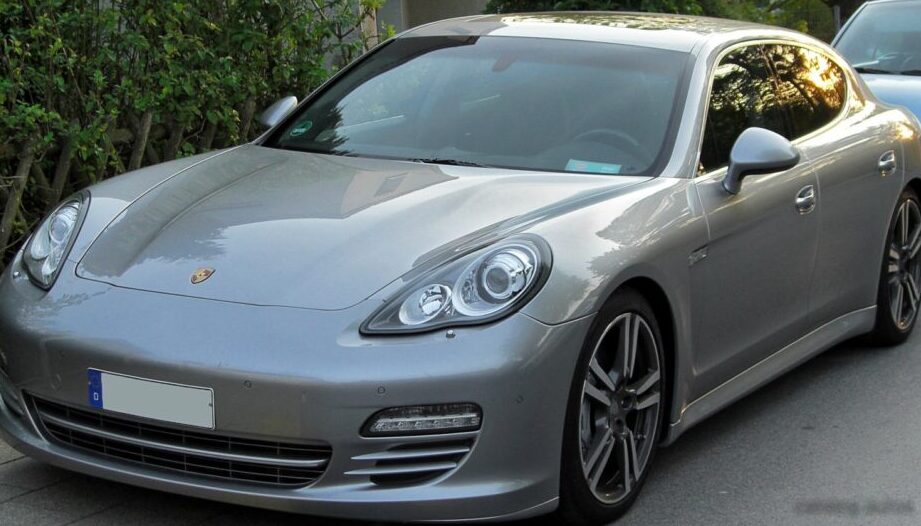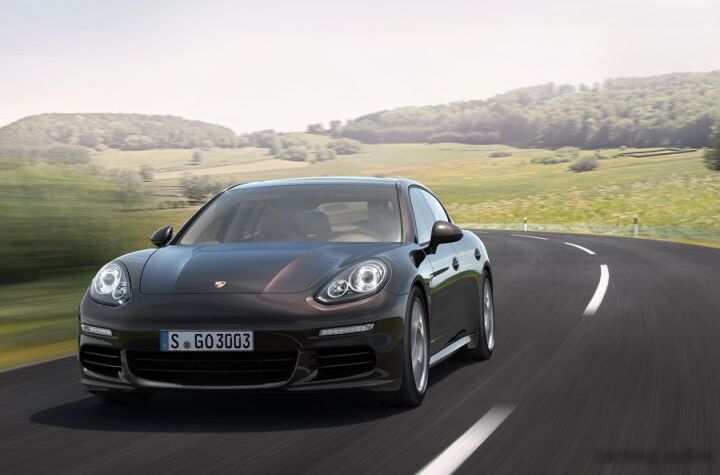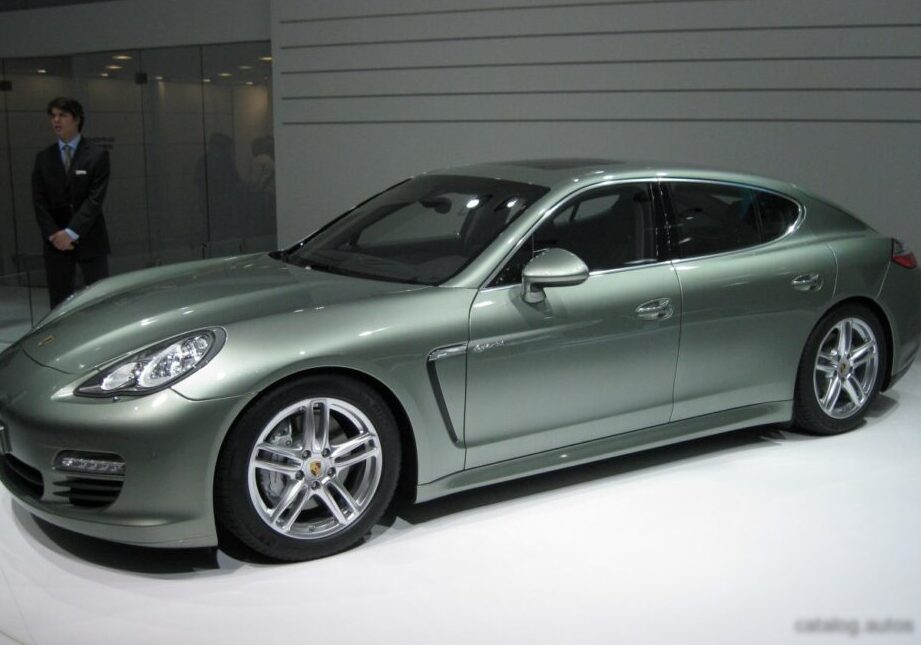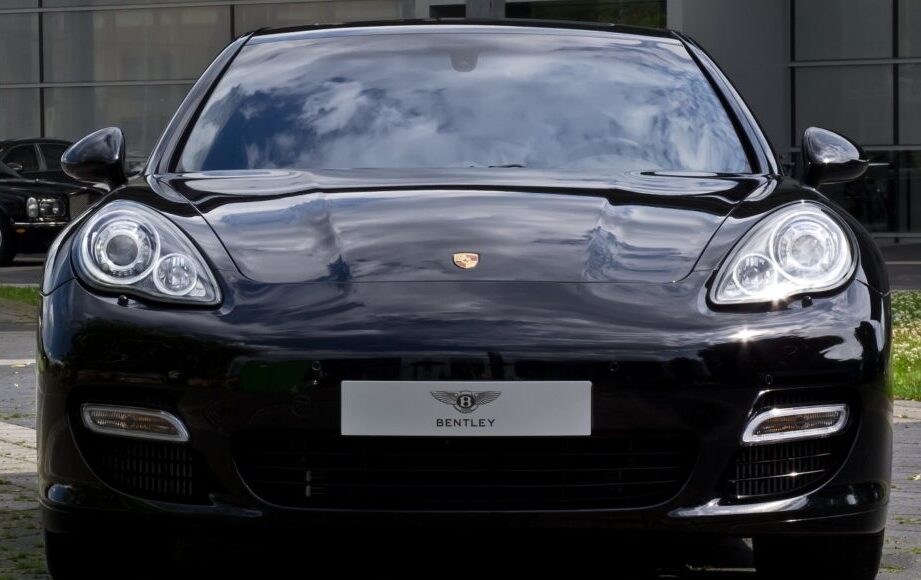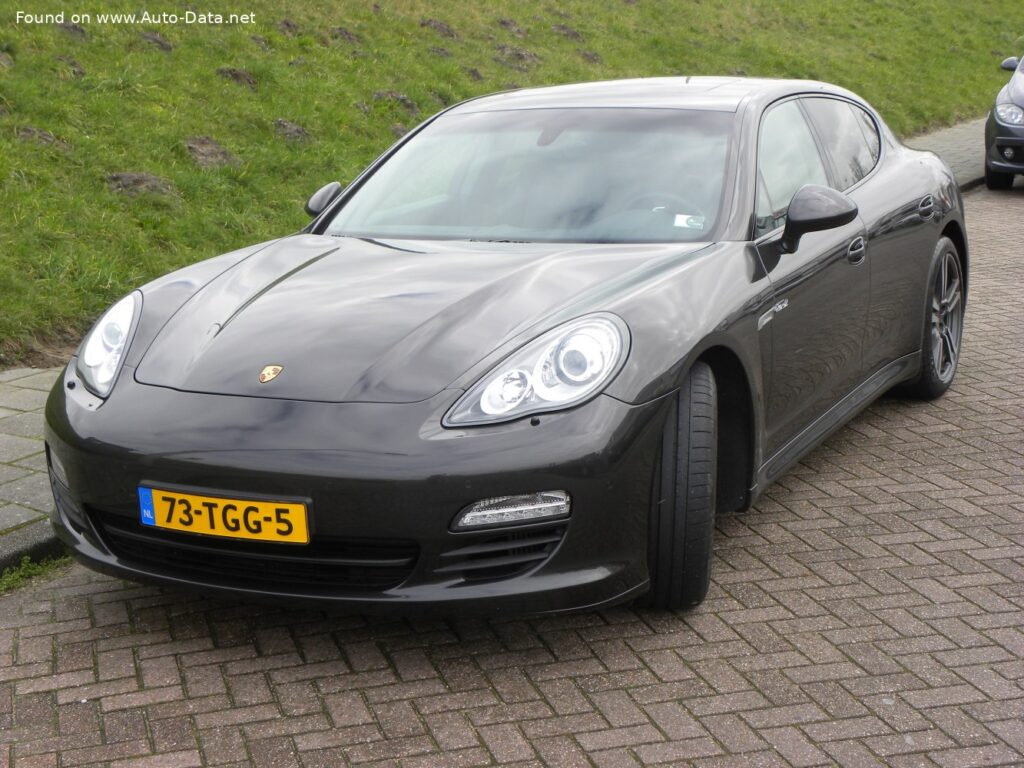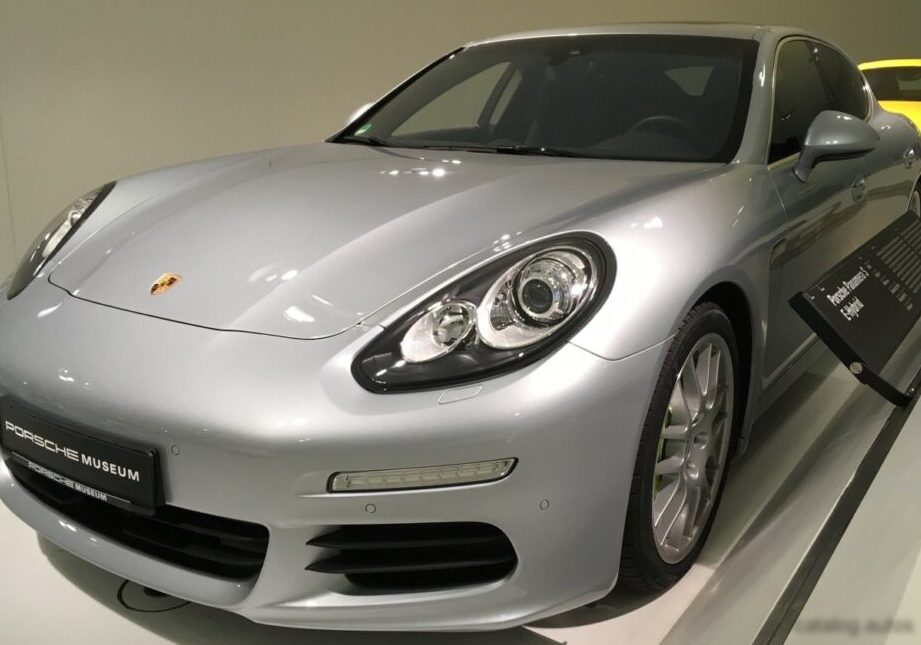
The Porsche Panamera G1 II S 3.0 V6 E-Hybrid Tiptronic, produced between 2013 and 2016, represents Porsche’s foray into the burgeoning plug-in hybrid market. Positioned as a mid-to-high range offering within the second generation (G1 II) Panamera lineup, this variant combined a supercharged 3.0-liter V6 gasoline engine with an electric motor, delivering a combined system output of 416 horsepower. It was designed to offer a blend of performance, luxury, and improved fuel efficiency compared to its solely gasoline-powered siblings. The Panamera G1 II platform, based on the Volkswagen Group’s D7 platform, aimed to provide a more comfortable and technologically advanced grand touring experience than the original Panamera.
Technical Specifications
| Brand | Porsche |
| Model | Panamera |
| Generation | Panamera (G1 II) |
| Type (Engine) | S 3.0 V6 (416 Hp) E-Hybrid Tiptronic |
| Start of production | 2013 |
| End of production | 2016 |
| Powertrain Architecture | PHEV (Plug-in Hybrid Electric Vehicle) |
| Body type | Liftback |
| Seats | 4 |
| Doors | 5 |
| Fuel consumption (combined) | 3.1 l/100 km (75.9 US mpg, 91.1 UK mpg, 32.3 km/l) |
| CO2 emissions | 71 g/km |
| Fuel Type | Petrol / electricity |
| Acceleration 0 – 100 km/h | 5.5 sec |
| Acceleration 0 – 62 mph | 5.5 sec |
| Acceleration 0 – 60 mph | 5.2 sec |
| Acceleration 0 – 200 km/h | 19 sec |
| Maximum speed | 270 km/h (167.77 mph) |
| Emission standard | Euro 6 |
| Weight-to-power ratio | 5 kg/Hp, 198.6 Hp/tonne |
| Weight-to-torque ratio | 3.6 kg/Nm, 281.6 Nm/tonne |
| Gross battery capacity | 9.4 kWh |
| Battery voltage | 384 V |
| Battery technology | Lithium-ion (Li-Ion) |
| Battery location | Under the trunk |
| All-electric range | 18-36 km (11.18 – 22.37 mi) |
| Average Energy consumption | 16.2 kWh/100 km (26.07 kWh/100 mi, 129 MPGe, 6.2 km/kWh, 3.8 mi/kWh) |
| Max speed (electric) | 135 km/h (83.89 mph) |
| Electric motor power | 95 Hp @ 2200-2600 rpm |
| Electric motor Torque | 310 Nm @ 0-1700 rpm (228.64 lb.-ft. @ 0-1700 rpm) |
| Electric motor location | Between the combustion engine and the transmission |
| System power | 416 Hp @ 5500 rpm |
| System torque | 590 Nm @ 1250-4000 rpm (435.16 lb.-ft. @ 1250-4000 rpm) |
| Power | 333 Hp @ 5500-6500 rpm |
| Torque | 440 Nm @ 3000-5250 rpm (324.53 lb.-ft. @ 3000-5250 rpm) |
| Maximum engine speed | 6700 rpm |
| Engine layout | Front, Longitudinal |
| Engine Model/Code | CGEA, CGFA |
| Engine displacement | 2995 cm3 (182.77 cu. in.) |
| Number of cylinders | 6 |
| Engine configuration | V-engine |
| Cylinder Bore | 84.5 mm (3.33 in.) |
| Piston Stroke | 89 mm (3.5 in.) |
| Compression ratio | 10.5:1 |
| Number of valves per cylinder | 4 |
| Fuel injection system | Direct injection |
| Engine aspiration | Supercharger |
| Valvetrain | DOHC |
| Engine oil capacity | 8.1 l (8.56 US qt | 7.13 UK qt) |
| Kerb Weight | 2095 kg (4618.68 lbs.) |
| Max. weight | 2580 kg (5687.93 lbs.) |
| Max load | 485 kg (1069.24 lbs.) |
| Trunk (boot) space – minimum | 335 l (11.83 cu. ft.) |
| Trunk (boot) space – maximum | 1153 l (40.72 cu. ft.) |
| Fuel tank capacity | 80 l (21.13 US gal | 17.6 UK gal) |
| Max. roof load | 75 kg (165.35 lbs.) |
| Length | 5015 mm (197.44 in.) |
| Width | 1931 mm (76.02 in.) |
| Width including mirrors | 2114 mm (83.23 in.) |
| Height | 1418 mm (55.83 in.) |
| Wheelbase | 2920 mm (114.96 in.) |
| Front track | 1658 mm (65.28 in.) |
| Rear (Back) track | 1662 mm (65.43 in.) |
| Drag coefficient (Cd) | 0.29 |
| Drivetrain Architecture | Rear wheel drive. PHEV. ICE and electric motor drive rear wheels. |
| Drive wheel | Rear wheel drive |
| Number of gears and type of gearbox | 8 gears, automatic transmission Tiptronic S |
| Front suspension | Double wishbone, Air suspension |
| Rear suspension | Independent multi-link suspension, Air suspension |
| Front brakes | Ventilated discs, 360×36 mm |
| Rear brakes | Ventilated discs, 330×28 mm |
Powertrain & Engine Architecture
At the heart of the Panamera S E-Hybrid lies Porsche’s CGEA (or CGFA) 3.0-liter V6 engine. This engine utilizes direct fuel injection and a mechanically driven supercharger to deliver a responsive and powerful driving experience. The supercharger provides instant boost at lower engine speeds, mitigating turbo lag often associated with turbocharged engines. The engine is paired with a 95-horsepower electric motor integrated between the engine and the eight-speed Tiptronic S automatic transmission. This configuration allows for both all-electric driving and a combined power output of 416 horsepower and 590 Nm (435 lb-ft) of torque. The 9.4 kWh lithium-ion battery pack, located under the trunk floor, provides an all-electric range of between 18 and 36 kilometers (11 to 22 miles) depending on driving conditions. The transmission itself is a sophisticated eight-speed automatic with a Tiptronic manual shifting mode, offering drivers greater control over gear selection.
Driving Characteristics
The Panamera S E-Hybrid Tiptronic offers a unique driving experience. In all-electric mode, the car provides near-silent acceleration and impressive responsiveness for city driving. Switching to Hybrid mode seamlessly blends the power of the V6 engine and the electric motor, resulting in brisk acceleration – 0 to 60 mph in approximately 5.2 seconds. While not as overtly sporty as the Panamera S or 4S models, the E-Hybrid delivers ample power for comfortable and confident highway cruising. The Tiptronic transmission provides smooth and precise gear changes, and the air suspension contributes to a refined ride quality. The added weight of the battery pack, however, does slightly impact handling agility compared to lighter Panamera variants.
Equipment & Trim Levels
The Panamera S E-Hybrid Tiptronic typically came well-equipped with standard features including leather upholstery, a touchscreen infotainment system, navigation, automatic climate control, and a suite of safety features. Optional extras included adaptive cruise control, lane keep assist, a premium sound system, and various interior customization options. The interior design was focused on luxury and comfort, with high-quality materials and a driver-centric layout. Exterior styling was largely consistent with other Panamera models, with subtle “E-Hybrid” badging to denote its hybrid powertrain.
Chassis & Braking
The Panamera S E-Hybrid utilizes a double-wishbone front suspension and an independent multi-link rear suspension, both incorporating Porsche Active Suspension Management (PASM) with air suspension. This system provides adjustable damping, allowing drivers to tailor the ride quality to their preferences. Braking duties are handled by ventilated discs on all four wheels. The regenerative braking system captures energy during deceleration, helping to recharge the battery and improve overall efficiency. The added weight of the hybrid components necessitated a robust braking system to ensure adequate stopping power.
Market Reception & Comparison
The Panamera S E-Hybrid was generally well-received by automotive critics, who praised its fuel efficiency, comfortable ride, and refined driving experience. However, some reviewers noted that the added weight of the hybrid system diminished the car’s handling agility compared to the standard Panamera models. Compared to the Panamera S, the E-Hybrid offered significantly better fuel economy, but slightly less outright performance. Against the Panamera 4S, the E-Hybrid provided a different character – prioritizing efficiency and electric range over pure sporting prowess. The 1.8L and 3.6L models were significantly less expensive, but lacked the technological sophistication and fuel-saving benefits of the hybrid system.
Legacy
The Porsche Panamera S E-Hybrid Tiptronic was a significant step forward for Porsche, demonstrating the brand’s commitment to hybrid technology. While early plug-in hybrids sometimes faced concerns about battery longevity, the Panamera’s battery pack has proven relatively durable in real-world use. On the used car market, these models represent a compelling value proposition for buyers seeking a luxurious and fuel-efficient grand tourer. Maintenance costs can be higher than those of traditional gasoline-powered Panameras due to the complexity of the hybrid system, but the benefits of reduced fuel consumption and a unique driving experience continue to appeal to a growing number of buyers.