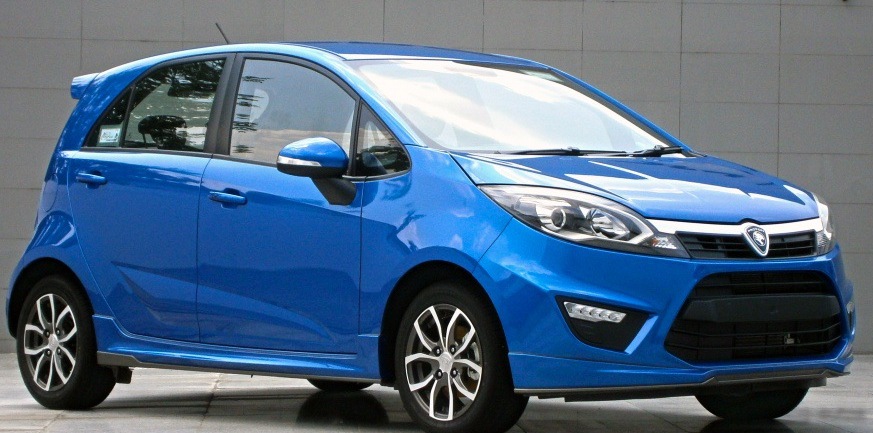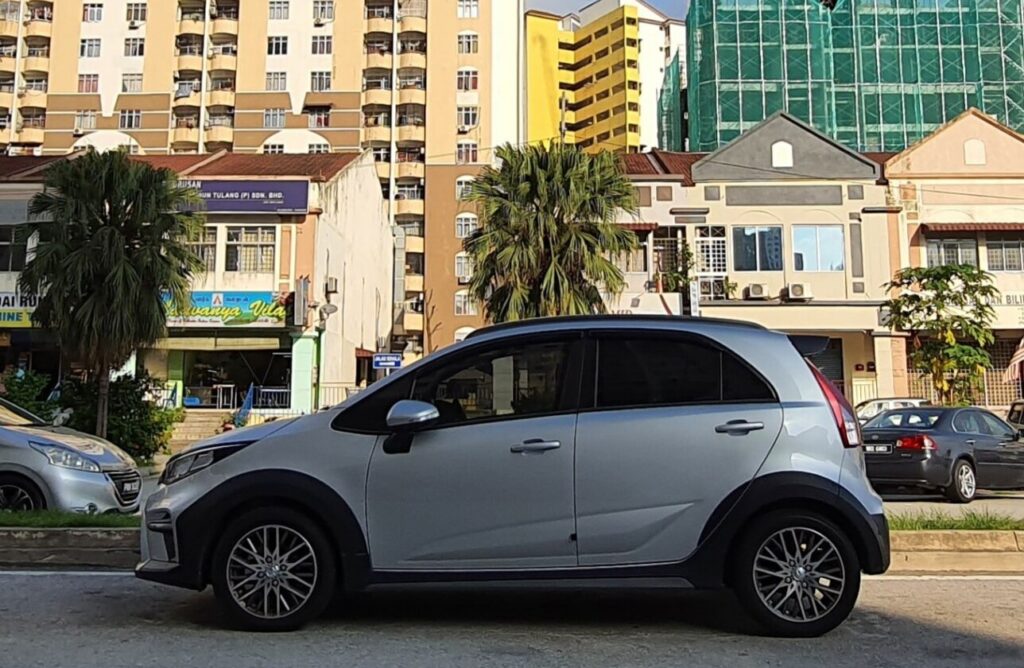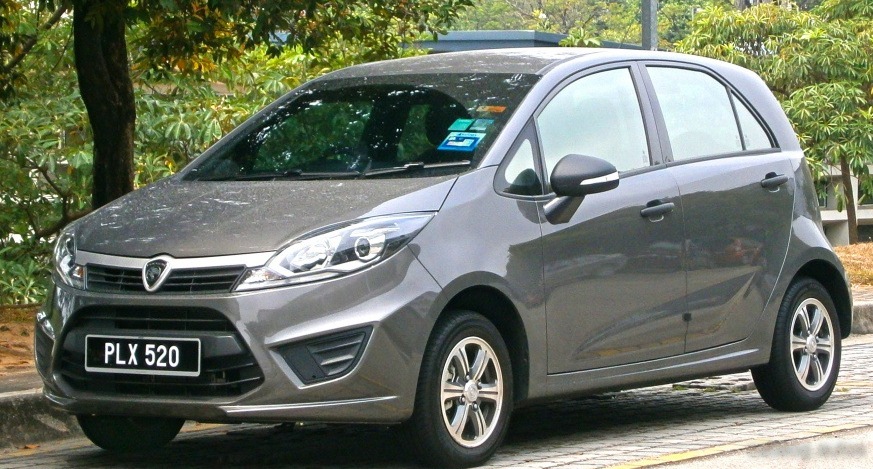
The Proton Iriz 1.3 (95 Hp) CVT was a subcompact hatchback produced by the Malaysian automaker Proton from 2014 to 2017. Positioned as the entry-level variant of the first-generation Iriz (introduced in 2014), it aimed to provide affordable and fuel-efficient transportation for the Malaysian market. The Iriz represented Proton’s attempt to modernize its lineup and compete more effectively with established players in the Southeast Asian automotive industry. This particular configuration, pairing a 1.3-liter engine with a continuously variable transmission (CVT), was designed to appeal to buyers prioritizing ease of use and economy over outright performance.
Technical Specifications
| Brand | Proton |
| Model | Iriz |
| Type (Engine) | 1.3 (95 Hp) CVT |
| Start of production | 2014 |
| End of production | 2017 |
| Powertrain Architecture | Internal Combustion engine |
| Body type | Hatchback |
| Seats | 5 |
| Doors | 5 |
| Fuel Type | Petrol (Gasoline) |
| Acceleration 0 – 100 km/h | 13.1 sec |
| Acceleration 0 – 62 mph | 13.1 sec |
| Acceleration 0 – 60 mph | 12.4 sec |
| Maximum speed | 160 km/h (99.42 mph) |
| Weight-to-power ratio | 12.1 kg/Hp, 82.6 Hp/tonne |
| Weight-to-torque ratio | 9.6 kg/Nm, 104.3 Nm/tonne |
| Power | 95 Hp @ 5750 rpm |
| Power per litre | 71.3 Hp/l |
| Torque | 120 Nm @ 4000 rpm (88.51 lb.-ft. @ 4000 rpm) |
| Engine layout | Front, Transverse |
| Engine displacement | 1332 cm3 (81.28 cu. in.) |
| Number of cylinders | 4 |
| Engine configuration | Inline |
| Cylinder Bore | 76 mm (2.99 in.) |
| Piston Stroke | 73.4 mm (2.89 in.) |
| Compression ratio | 10:1 |
| Number of valves per cylinder | 4 |
| Fuel injection system | Multi-port manifold injection |
| Engine aspiration | Naturally aspirated engine |
| Valvetrain | DOHC-VVT |
| Kerb Weight | 1150-1158 kg (2535.32 – 2552.95 lbs.) |
| Fuel tank capacity | 40 l (10.57 US gal | 8.8 UK gal) |
| Length | 3920 mm (154.33 in.) |
| Width | 1722 mm (67.8 in.) |
| Height | 1554 mm (61.18 in.) |
| Wheelbase | 2555 mm (100.59 in.) |
| Ride height (ground clearance) | 155 mm (6.1 in.) |
| Minimum turning circle | 10 m (32.81 ft.) |
| Drivetrain Architecture | The Internal combustion engine (ICE) drives the front wheels of the vehicle. |
| Drive wheel | Front wheel drive |
| Number of gears and type of gearbox | automatic transmission CVT |
| Front suspension | Independent, type McPherson with coil spring and anti-roll bar |
| Rear suspension | independent torsion suspension |
| Front brakes | Ventilated discs |
| Rear brakes | Drum |
| Assisting systems | ABS (Anti-lock braking system) |
| Steering type | Steering rack and pinion |
| Power steering | Electric Steering |
| Tires size | 175/65 R14 |
| Wheel rims size | 5.5J x 14 |
Powertrain & Engine Architecture
The Proton Iriz 1.3 CVT was powered by Proton’s CamPro 1.3-liter inline-four engine. This engine, designated as the E13A, featured a double overhead camshaft (DOHC) design with variable valve timing (VVT) on the intake camshaft. The multi-point fuel injection system delivered fuel to the cylinders, and the engine produced a maximum of 95 horsepower at 5750 rpm and 120 Nm (88.51 lb-ft) of torque at 4000 rpm. The engine’s relatively modest output was paired with a CVT (Continuously Variable Transmission) sourced from Punch Powertrain. This CVT offered seamless gear changes and aimed to optimize fuel efficiency. Unlike traditional automatic transmissions with fixed gear ratios, the CVT provided an infinite number of ratios within its operating range, allowing the engine to remain in its optimal power band.
Driving Characteristics
The Iriz 1.3 CVT’s driving experience was characterized by its smooth and predictable acceleration. The CVT eliminated the noticeable shifts associated with conventional automatics, resulting in a linear power delivery. However, the 95 hp engine and the CVT’s inherent efficiency focus meant that acceleration was not particularly brisk. 0-60 mph took approximately 12.4 seconds, and top speed was limited to 99.42 mph. Compared to the higher-spec Iriz variants equipped with a 1.6-liter engine or a manual transmission, the 1.3 CVT felt noticeably slower. The CVT also sometimes exhibited a “rubber band” effect, where engine revs would rise quickly under hard acceleration without a corresponding increase in speed. This was a common characteristic of early CVT designs. Despite these limitations, the Iriz 1.3 CVT proved to be a comfortable and easy-to-drive city car.
Equipment & Trim Levels
The Iriz 1.3 CVT typically came with a reasonable level of standard equipment for its price point. Features included air conditioning, power windows, power steering, and a basic audio system with USB connectivity. Safety features such as dual airbags and ABS (Anti-lock Braking System) were also standard. Interior upholstery was typically cloth, and the dashboard featured a simple, functional design. Optional extras included alloy wheels, a more advanced audio system, and body-colored door handles and mirrors. The trim level was generally considered the base model, offering essential features without the added luxuries found in the higher-spec 1.6 variants.
Chassis & Braking
The Iriz 1.3 CVT utilized a McPherson strut suspension setup at the front and an independent torsion beam suspension at the rear. This suspension configuration provided a comfortable ride quality, although it wasn’t particularly sporty. The front brakes were ventilated discs, while the rear brakes were drums. The use of drum brakes on the rear was a cost-saving measure common in this segment. Electric power steering provided light and easy steering feel, making it ideal for urban driving. The 175/65 R14 tires offered a good balance of comfort and grip.
Market Reception & Comparison
The Proton Iriz 1.3 CVT was generally well-received in the Malaysian market as an affordable and practical hatchback. Critics praised its fuel efficiency and comfortable ride, but noted its lack of outright performance. Compared to the 1.6-liter variants, the 1.3 CVT offered significantly lower running costs but at the expense of driving enjoyment. The CVT transmission was also a point of contention for some reviewers, who preferred the more engaging feel of a manual gearbox. In terms of reliability, the CamPro engine was known to be generally robust, although some owners reported minor issues with the CVT transmission over time. Fuel economy was a strong point, with the Iriz 1.3 CVT achieving around 6.5 liters per 100 kilometers (approximately 36 mpg) in real-world driving conditions.
Legacy
The Proton Iriz 1.3 CVT, while not a performance standout, played an important role in Proton’s efforts to modernize its product lineup. The combination of a fuel-efficient engine and a CVT transmission appealed to a broad range of buyers in the Malaysian market. In the used car market today, the Iriz 1.3 CVT remains an affordable and practical option for those seeking a reliable and economical city car. The CamPro engine is generally considered to be durable, but potential buyers should be aware of the possibility of CVT transmission issues. Overall, the Iriz 1.3 CVT represents a significant step forward for Proton in terms of design, technology, and build quality.