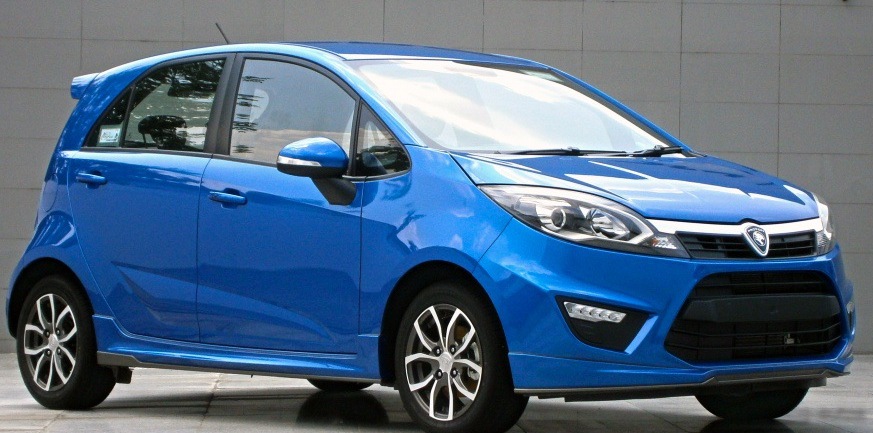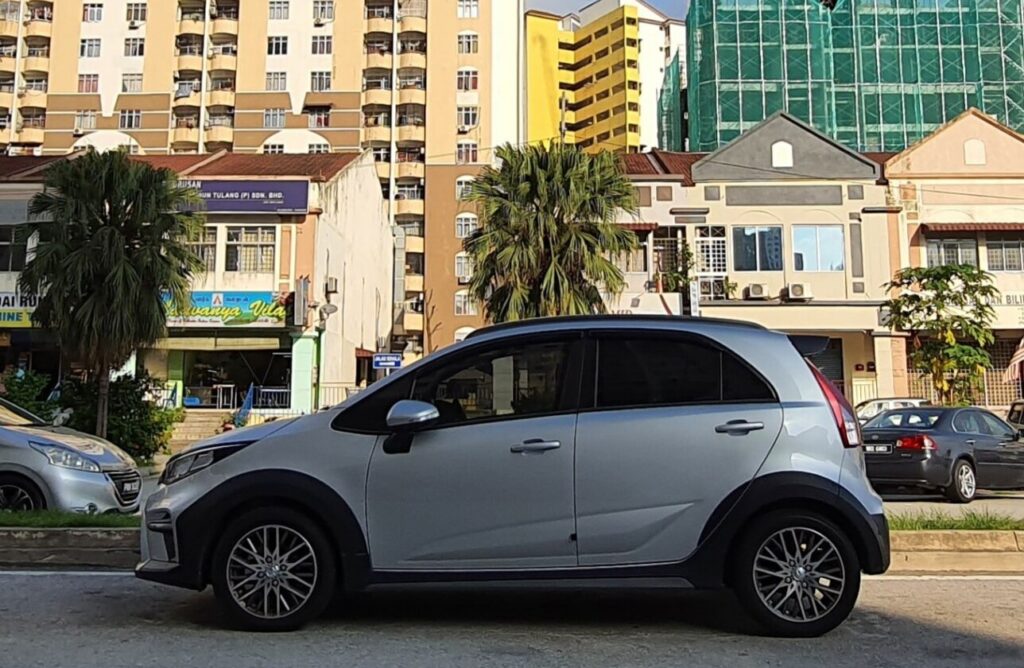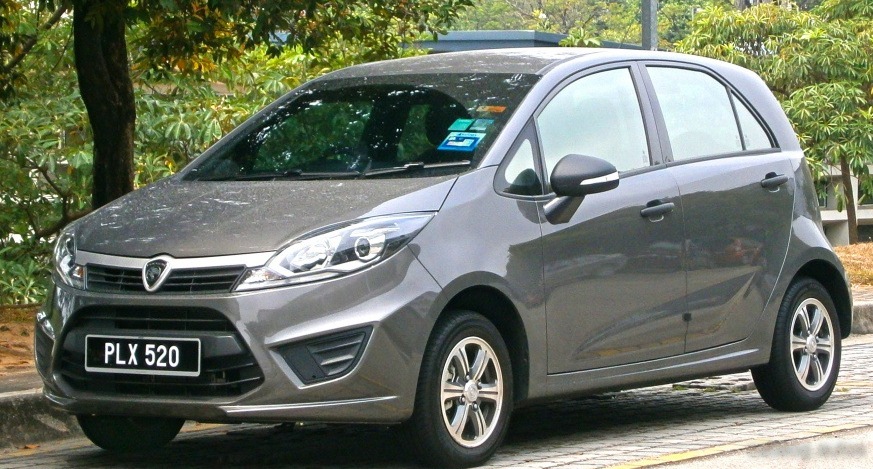
The Proton Iriz 1.6 (109 Hp) CVT represents a significant iteration of Proton’s foray into the competitive B-segment hatchback market. Produced between 2014 and 2017, this variant occupied a mid-range position within the first-generation Iriz lineup (introduced in 2014), offering a balance between performance and fuel efficiency. It was designed primarily for the Malaysian domestic market, where Proton historically held a strong presence, aiming to provide an affordable and practical transportation solution for families and urban commuters. The Iriz, as a whole, was intended to replace the aging Proton Savvy and compete with established rivals like the Perodua Myvi and other regional subcompacts.
Technical Specifications
| Brand | Proton |
| Model | Iriz |
| Type (Engine) | 1.6 (109 Hp) CVT |
| Start of production | 2014 |
| End of production | 2017 |
| Powertrain Architecture | Internal Combustion engine |
| Body type | Hatchback |
| Seats | 5 |
| Doors | 5 |
| Fuel Type | Petrol (Gasoline) |
| Acceleration 0 – 100 km/h | 11.1 sec |
| Acceleration 0 – 62 mph | 11.1 sec |
| Acceleration 0 – 60 mph | 10.5 sec |
| Maximum speed | 170 km/h (105.63 mph) |
| Weight-to-power ratio | 10.7 kg/Hp, 93.2 Hp/tonne |
| Weight-to-torque ratio | 7.8 kg/Nm, 128.2 Nm/tonne |
| Power | 109 Hp @ 5750 rpm |
| Power per litre | 68.3 Hp/l |
| Torque | 150 Nm @ 4000 rpm (110.63 lb.-ft. @ 4000 rpm) |
| Engine layout | Front, Transverse |
| Engine displacement | 1597 cm3 (97.45 cu. in.) |
| Number of cylinders | 4 |
| Engine configuration | Inline |
| Cylinder Bore | 76 mm (2.99 in.) |
| Piston Stroke | 88 mm (3.46 in.) |
| Compression ratio | 10:1 |
| Number of valves per cylinder | 4 |
| Fuel injection system | Multi-port manifold injection |
| Engine aspiration | Naturally aspirated engine |
| Valvetrain | DOHC-VVT |
| Engine oil capacity | 4.05 l (4.28 US qt | 3.56 UK qt) |
| Kerb Weight | 1170-1185 kg (2579.41 – 2612.48 lbs.) |
| Fuel tank capacity | 40 l (10.57 US gal | 8.8 UK gal) |
| Length | 3920 mm (154.33 in.) |
| Width | 1722 mm (67.8 in.) |
| Height | 1554 mm (61.18 in.) |
| Wheelbase | 2555 mm (100.59 in.) |
| Ride height (ground clearance) | 155 mm (6.1 in.) |
| Minimum turning circle | 10 m (32.81 ft.) |
| Drivetrain Architecture | The Internal combustion engine (ICE) drives the front wheels of the vehicle. |
| Drive wheel | Front wheel drive |
| Number of gears and type of gearbox | automatic transmission CVT |
| Front suspension | Independent, type McPherson with coil spring and anti-roll bar |
| Rear suspension | independent torsion suspension |
| Front brakes | Ventilated discs |
| Rear brakes | Drum |
| Assisting systems | ABS (Anti-lock braking system) |
| Steering type | Steering rack and pinion |
| Power steering | Electric Steering |
| Tires size | 185/55 R15 |
| Wheel rims size | 6.5J x 15 |
Powertrain & Engine Architecture
The heart of the Iriz 1.6 CVT is Proton’s CamPro 1.6-liter inline-four engine. This engine, designated as the E13, utilizes a multi-point fuel injection system and a double overhead camshaft (DOHC) valvetrain with variable valve timing (VVT). The VVT system is crucial for optimizing engine performance across the rev range, improving both fuel efficiency and power delivery. The engine produces 109 horsepower at 5750 rpm and 150 Nm (110.63 lb-ft) of torque at 4000 rpm. The engine’s design, while relatively simple, aimed for reliability and ease of maintenance. Paired with the engine is a Continuously Variable Transmission (CVT), a relatively new addition to Proton’s offerings at the time. This CVT was sourced from Punch Powertrain, a Belgian manufacturer, and featured a steel belt design. The CVT’s primary advantage was its ability to keep the engine operating within its optimal power band, contributing to smoother acceleration and improved fuel economy compared to a traditional automatic transmission.
Driving Characteristics
The Iriz 1.6 CVT offered a comfortable, if not particularly exhilarating, driving experience. The CVT, while smooth, lacked the direct feel of a traditional automatic or manual transmission. Acceleration from a standstill to 60 mph took approximately 10.5 seconds, and the car had a top speed of around 105.63 mph. Compared to the 1.3-liter variants of the Iriz, the 1.6 offered noticeably more power, making it more suitable for highway driving and overtaking maneuvers. However, it wasn’t as sporty as a manual transmission-equipped Iriz. The CVT’s programming prioritized fuel efficiency, sometimes resulting in a slight delay in response when demanding quick acceleration. The suspension, tuned for comfort, provided a reasonably smooth ride, but body roll was noticeable during cornering.
Equipment & Trim Levels
The Iriz 1.6 CVT typically came equipped with features such as air conditioning, power windows, power steering, and a basic audio system with USB connectivity. Safety features included dual airbags, ABS (Anti-lock Braking System), and ISOFIX child seat anchors. Higher trim levels offered additional features like alloy wheels, a more advanced audio system with Bluetooth connectivity, and a multi-function steering wheel. Interior upholstery was typically cloth, with a relatively simple dashboard layout. Optional extras included a reverse parking sensor and a security alarm.
Chassis & Braking
The Iriz utilized a McPherson strut suspension setup at the front and a torsion beam suspension at the rear. This configuration was chosen for its balance of cost-effectiveness and acceptable handling characteristics. The front brakes were ventilated discs, providing adequate stopping power, while the rear brakes were drums, a cost-saving measure common in this segment. The electric power steering offered light and easy steering, making it suitable for urban driving. The car’s relatively lightweight construction (1170-1185 kg) helped to offset the modest engine output.
Market Reception & Comparison
The Proton Iriz 1.6 CVT was generally well-received in the Malaysian market as a practical and affordable hatchback. Critics praised its spacious interior and comfortable ride. However, the CVT transmission received mixed reviews, with some finding it smooth and efficient, while others criticized its lack of responsiveness. Compared to the 1.3-liter variants, the 1.6 CVT offered a significant performance upgrade, but at a slightly higher price point. Fuel economy was comparable to other B-segment hatchbacks in the region, averaging around 6.5-7.5 liters per 100 kilometers (36-40 mpg) in real-world driving conditions. The Iriz 1.6 CVT competed directly with the Perodua Myvi, which was known for its reliability and fuel efficiency, and other regional competitors like the Toyota Yaris and Honda Jazz.
Legacy
The Proton Iriz 1.6 CVT, while not a groundbreaking vehicle, played an important role in Proton’s efforts to modernize its lineup and compete in the increasingly competitive B-segment market. The CamPro 1.6 engine proved to be relatively reliable, and the CVT transmission, despite its initial criticisms, became a common feature in Proton vehicles. In the used car market, the Iriz 1.6 CVT remains a popular choice for budget-conscious buyers seeking a practical and affordable hatchback. Maintenance costs are generally reasonable, and spare parts are readily available in Malaysia. However, potential buyers should be aware of the CVT’s potential for long-term wear and tear and ensure that it has been properly maintained.