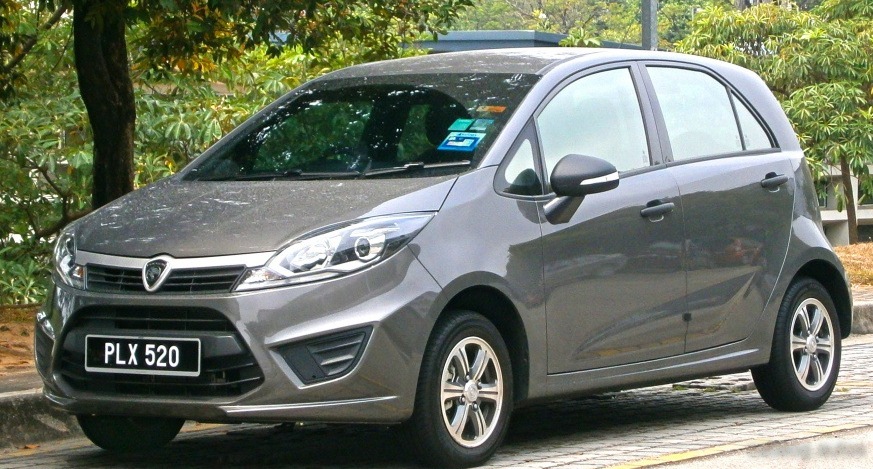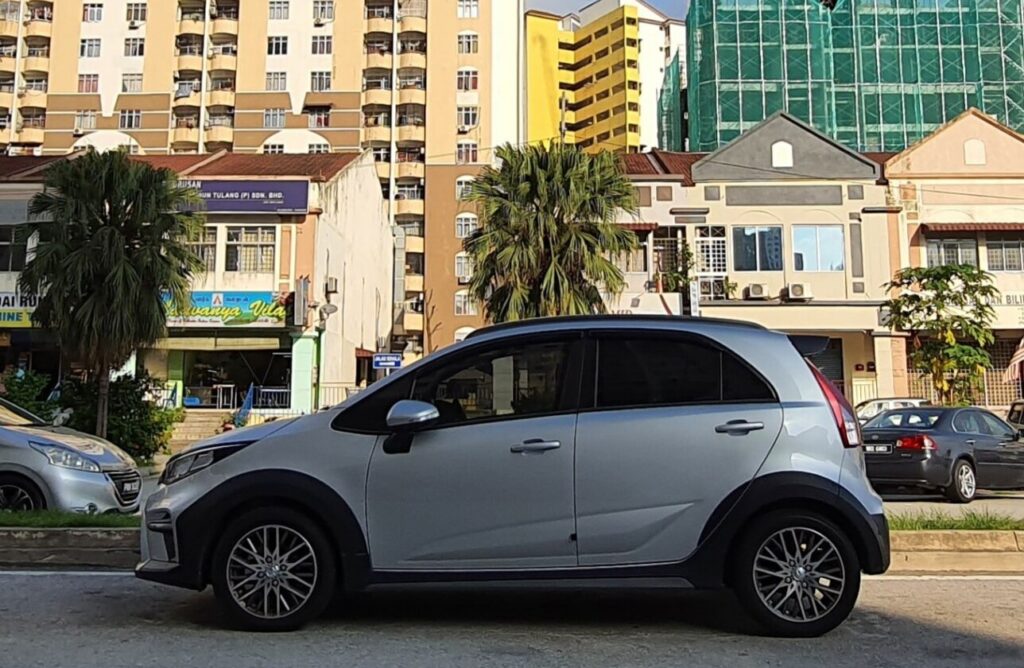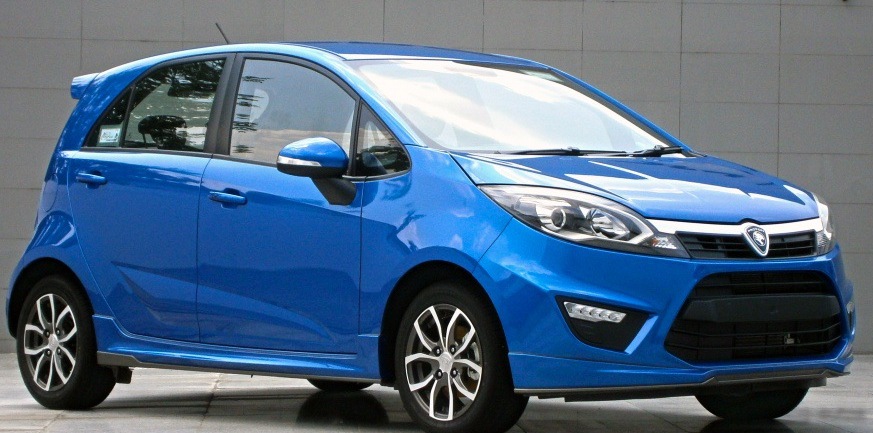
The Proton Iriz 1.3 (95 hp) is a subcompact hatchback produced by the Malaysian automaker Proton from 2017 to 2018 as part of the Iriz (facelift) generation. Positioned as the entry-level variant of the revised Iriz lineup, it aimed to provide affordable and fuel-efficient transportation for first-time buyers and city commuters. The 2017 facelift brought styling updates and minor mechanical revisions to the original Iriz, which was first launched in 2014. This particular 1.3-liter engine and five-speed manual transmission combination represented a core offering within the Iriz range, competing with other budget-focused hatchbacks in the Southeast Asian market.
Technical Specifications
| Brand | Proton |
| Model | Iriz |
| Generation | Iriz (facelift 2017) |
| Type (Engine) | 1.3 (95 Hp) |
| Start of production | 2017 |
| End of production | 2018 |
| Powertrain Architecture | Internal Combustion engine |
| Body type | Hatchback |
| Seats | 5 |
| Doors | 5 |
| Fuel Type | Petrol (Gasoline) |
| Weight-to-power ratio | 12 kg/Hp, 83.6 Hp/tonne |
| Weight-to-torque ratio | 9.5 kg/Nm, 105.6 Nm/tonne |
| Power | 95 Hp @ 5750 rpm |
| Power per litre | 71.3 Hp/l |
| Torque | 120 Nm @ 4000 rpm (88.51 lb.-ft. @ 4000 rpm) |
| Engine layout | Front, Transverse |
| Engine displacement | 1332 cm3 (81.28 cu. in.) |
| Number of cylinders | 4 |
| Engine configuration | Inline |
| Cylinder Bore | 76 mm (2.99 in.) |
| Piston Stroke | 73.4 mm (2.89 in.) |
| Compression ratio | 10:1 |
| Number of valves per cylinder | 4 |
| Fuel injection system | Multi-port manifold injection |
| Engine aspiration | Naturally aspirated engine |
| Valvetrain | DOHC-VVT |
| Kerb Weight | 1136 kg (2504.45 lbs.) |
| Trunk (boot) space – minimum | 215 l (7.59 cu. ft.) |
| Trunk (boot) space – maximum | 270 l (9.53 cu. ft.) |
| Fuel tank capacity | 40 l (10.57 US gal | 8.8 UK gal) |
| Length | 3920 mm (154.33 in.) |
| Width | 1722 mm (67.8 in.) |
| Height | 1554 mm (61.18 in.) |
| Wheelbase | 2555 mm (100.59 in.) |
| Ride height (ground clearance) | 155 mm (6.1 in.) |
| Minimum turning circle (turning diameter) | 10 m (32.81 ft.) |
| Drivetrain Architecture | The Internal combustion engine (ICE) drives the front wheels of the vehicle. |
| Drive wheel | Front wheel drive |
| Number of gears and type of gearbox | 5 gears, manual transmission |
| Front suspension | Independent, type McPherson with coil spring and anti-roll bar |
| Rear suspension | independent torsion suspension |
| Front brakes | Ventilated discs |
| Rear brakes | Drum |
| Assisting systems | ABS (Anti-lock braking system) |
| Steering type | Steering rack and pinion |
| Power steering | Electric Steering |
| Tires size | 175/65 R14 |
| Wheel rims size | 5.5J x 14 |
Powertrain & Engine Architecture
The Proton Iriz 1.3 utilized Proton’s CamPro 1.3-liter inline-four cylinder engine. This engine, designated as a naturally aspirated unit, featured a double overhead camshaft (DOHC) design with variable valve timing (VVT) on the intake camshaft. The multi-point fuel injection system delivered fuel to the cylinders, optimizing combustion for efficiency and power. The engine produced 95 horsepower at 5,750 rpm and 120 Nm (88.51 lb-ft) of torque at 4,000 rpm. The engine’s relatively modest output was paired with a five-speed manual transmission, which was the standard offering for this variant. The transmission was chosen for its simplicity and cost-effectiveness, contributing to the Iriz 1.3’s affordability.
Driving Characteristics
The Iriz 1.3 with the manual transmission offered a reasonably engaging driving experience, particularly within urban environments. While not a performance-oriented vehicle, the engine provided adequate power for everyday driving situations. Acceleration was modest, and overtaking required careful planning. The five-speed manual transmission allowed drivers to maintain optimal engine speed for efficiency or power, depending on the driving conditions. Compared to the higher-spec Iriz variants equipped with larger engines, the 1.3-liter model felt noticeably less powerful, especially when fully loaded with passengers and cargo. The gear ratios were tuned for fuel economy, resulting in a slightly less responsive feel at higher speeds.
Equipment & Trim Levels
The Iriz 1.3 typically came with a basic level of equipment, reflecting its position as the entry-level model. Standard features generally included power windows, central locking, and an air conditioning system. The interior upholstery was typically cloth, and the dashboard featured a simple, functional design. Optional extras, such as an upgraded audio system, alloy wheels, and rear parking sensors, were available at an additional cost. Safety features included dual airbags and ABS (Anti-lock Braking System). The overall interior ambiance was focused on practicality and durability rather than luxury.
Chassis & Braking
The Iriz 1.3 featured a McPherson strut front suspension and a torsion beam rear suspension. This setup provided a reasonable balance between ride comfort and handling. The front brakes were ventilated discs, offering adequate stopping power, while the rear brakes were drums, a cost-saving measure common in this segment. The electric power steering provided light and easy steering, making it convenient for maneuvering in tight spaces. The relatively lightweight construction of the Iriz 1.3 contributed to its agility and fuel efficiency.
Market Reception & Comparison
The Proton Iriz 1.3 was generally well-received as an affordable and practical hatchback. Critics praised its fuel efficiency and ease of driving, but noted its modest performance. Compared to other subcompact hatchbacks available in the Southeast Asian market, such as the Perodua Myvi, the Iriz 1.3 offered a competitive price point and a decent level of equipment. However, some reviewers pointed out that the interior quality and refinement were not on par with some of its rivals. Fuel economy figures typically ranged from 5.5 to 6.5 liters per 100 kilometers (approximately 43 to 36 mpg) in mixed driving conditions.
Legacy
The Proton Iriz 1.3, while a relatively short-lived variant, played a significant role in making hatchback ownership accessible to a wider range of buyers in Malaysia. The CamPro 1.3 engine, while not known for its high performance, proved to be reasonably reliable and durable. In the used car market, the Iriz 1.3 remains a popular choice for budget-conscious buyers seeking a practical and fuel-efficient city car. Maintenance costs are generally low, and spare parts are readily available. However, potential buyers should be aware of the engine’s modest power output and the basic level of equipment offered in this variant.