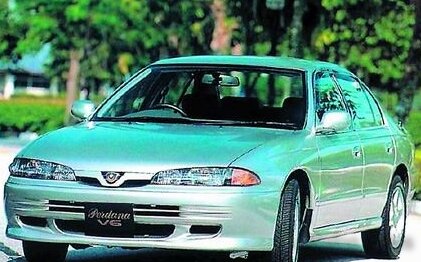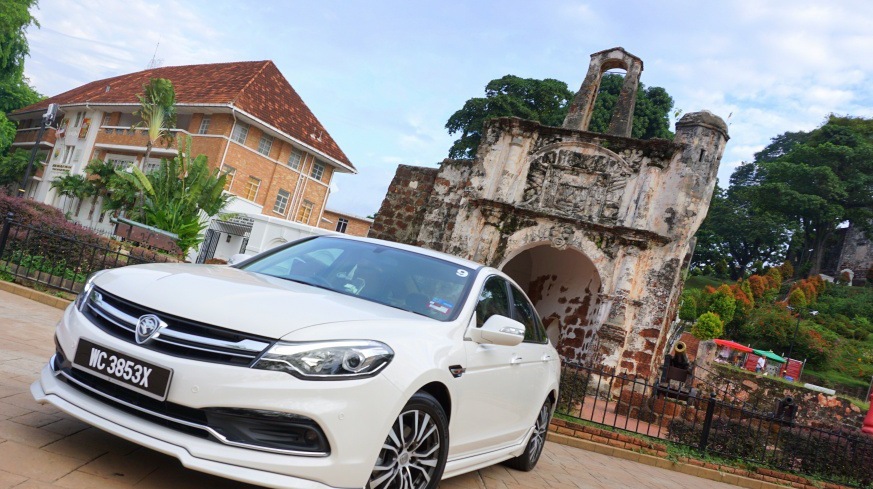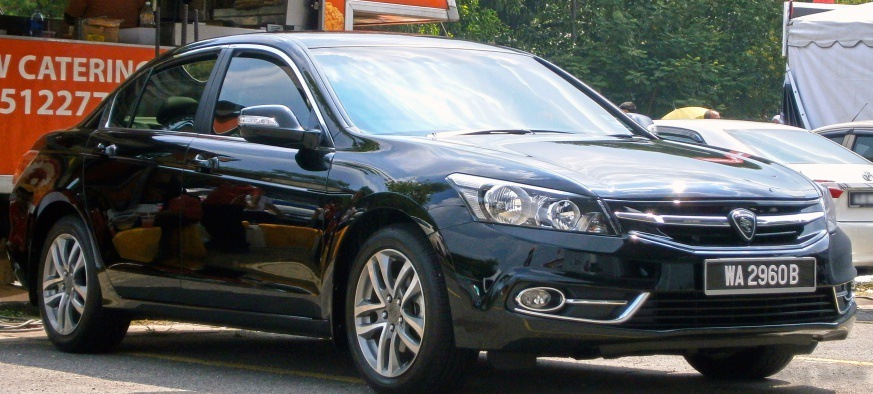
The Proton Perdana II 2.0, produced between 2013 and 2015, represents the second generation of Proton’s flagship sedan. Positioned as a premium offering within the Malaysian market, the Perdana II aimed to provide a locally-produced alternative to imported executive cars. This variant, equipped with a 2.0-liter inline-four engine producing 156 horsepower, served as the primary engine option for the model. It was built upon a heavily revised and updated platform derived from the previous Perdana, incorporating advancements in safety, comfort, and technology. The Perdana II was intended to re-establish Proton’s presence in the upper-midsize sedan segment, appealing to government officials, corporate clients, and discerning private buyers.
Technical Specifications
| Brand | Proton |
| Model | Perdana |
| Generation | Perdana II |
| Type (Engine) | 2.0 (156 Hp) |
| Start of production | 2013 |
| End of production | 2015 |
| Powertrain Architecture | Internal Combustion engine |
| Body type | Sedan |
| Seats | 5 |
| Doors | 4 |
| Fuel Type | Petrol (Gasoline) |
| Weight-to-power ratio | 9.8 kg/Hp, 101.6 Hp/tonne |
| Weight-to-torque ratio | 8.1 kg/Nm, 123.1 Nm/tonne |
| Power | 156 Hp @ 6300 rpm |
| Power per litre | 78.1 Hp/l |
| Torque | 189 Nm @ 4300 rpm, 139.4 lb.-ft. @ 4300 rpm |
| Engine layout | Front, Transverse |
| Engine displacement | 1997 cm3, 121.86 cu. in. |
| Number of cylinders | 4 |
| Engine configuration | Inline |
| Cylinder Bore | 81 mm, 3.19 in. |
| Piston Stroke | 96.9 mm, 3.81 in. |
| Compression ratio | 10.6:1 |
| Number of valves per cylinder | 4 |
| Fuel injection system | Multi-port manifold injection |
| Engine aspiration | Naturally aspirated engine |
| Kerb Weight | 1535 kg, 3384.1 lbs |
| Max. weight | 2100 kg, 4629.71 lbs |
| Max load | 565 kg, 1245.61 lbs |
| Trunk (boot) space – minimum | 565 l, 19.95 cu. ft |
| Fuel tank capacity | 70 l, 18.49 US gal | 15.4 UK gal |
| Length | 4999 mm, 196.81 in |
| Width | 1845 mm, 72.64 in |
| Height | 1475 mm, 58.07 in |
| Wheelbase | 2800 mm, 110.24 in |
| Front track | 1591 mm, 62.64 in |
| Rear (Back) track | 1592 mm, 62.68 in |
| Ride height (ground clearance) | 172 mm, 6.77 in |
| Drivetrain Architecture | The Internal combustion engine (ICE) drives the front wheels of the vehicle. |
| Drive wheel | Front wheel drive |
| Number of gears and type of gearbox | 6 gears, manual transmission |
| Front suspension | Double wishbone |
| Rear suspension | Independent multi-link spring suspension with stabilizer |
| Front brakes | Ventilated discs |
| Rear brakes | Disc |
| Assisting systems | ABS (Anti-lock braking system) |
| Steering type | Steering rack and pinion |
| Power steering | Hydraulic Steering |
| Tires size | 225/45 R17 |
| Wheel rims size | 17 |
Powertrain & Engine Architecture
The heart of the Perdana II 2.0 is a 2.0-liter inline-four cylinder engine. This engine, while based on Mitsubishi’s 4G63 design (a common choice for Proton at the time), received modifications to suit Proton’s requirements. It features a multi-port fuel injection system, providing a balance between fuel efficiency and performance. The engine produces 156 horsepower at 6300 rpm and 189 Nm (139.4 lb-ft) of torque at 4300 rpm. The engine’s 10.6:1 compression ratio contributes to its power output. The Perdana II 2.0 was exclusively offered with a 6-speed manual transmission, a deliberate choice to provide a more engaging driving experience compared to the automatic transmissions found in some competitor models. This transmission was designed to efficiently transfer power to the front wheels.
Driving Characteristics
The 6-speed manual transmission in the Perdana II 2.0 provides a direct connection between the driver and the engine. Acceleration is adequate for everyday driving, with the 156 hp engine providing sufficient power for highway merging and overtaking. The gear ratios are well-spaced, allowing the engine to remain within its optimal power band during most driving situations. Compared to a hypothetical automatic version, the manual transmission offers better control and responsiveness. While not a sports sedan, the Perdana II 2.0 delivers a reasonably engaging driving experience, particularly for those who appreciate the control of a manual gearbox. The front-wheel-drive configuration provides predictable handling, although it lacks the all-weather capability of an all-wheel-drive system.
Equipment & Trim Levels
The Perdana II 2.0 was generally well-equipped for its price point in the Malaysian market. Standard features included air conditioning, power windows, power door locks, and a basic audio system. Higher trim levels added features such as leather upholstery, a more advanced audio system with navigation, and automatic climate control. Safety features included ABS (Anti-lock Braking System) and dual airbags. The interior design was relatively conservative, focusing on comfort and practicality rather than cutting-edge styling. Optional extras included a sunroof, upgraded wheels, and a rear parking sensor system.
Chassis & Braking
The Perdana II utilizes a front-wheel-drive chassis with a double wishbone suspension setup at the front and an independent multi-link spring suspension with a stabilizer bar at the rear. This suspension configuration aims to provide a comfortable ride while maintaining reasonable handling characteristics. The braking system consists of ventilated discs at the front and solid discs at the rear, providing adequate stopping power for the vehicle’s weight. The hydraulic power steering system offers a good balance between assistance and feedback.
Market Reception & Comparison
The Proton Perdana II 2.0 was generally well-received in Malaysia, particularly by government agencies and corporate fleets. Critics praised its spacious interior, comfortable ride, and relatively affordable price compared to imported rivals. However, some reviewers noted that the engine, while adequate, lacked the refinement and power of some competitors. Fuel economy was considered average for its class. Compared to other Proton models, the Perdana II 2.0 represented a significant step up in terms of quality and refinement. It offered a more premium experience than the Saga or Persona, but at a higher price point.
Legacy
The Proton Perdana II 2.0, while not a massive sales success, played an important role in Proton’s efforts to re-establish itself as a credible manufacturer of executive sedans. The 2.0-liter engine and 6-speed manual transmission combination proved to be relatively reliable, with few widespread mechanical issues reported. Today, the Perdana II 2.0 is a sought-after classic among Proton enthusiasts, appreciated for its spaciousness, comfort, and relatively simple mechanical design. Parts availability can be a challenge, but the engine’s Mitsubishi origins mean that some components are interchangeable with other vehicles. The Perdana II remains a symbol of Proton’s ambition to produce a world-class sedan.