
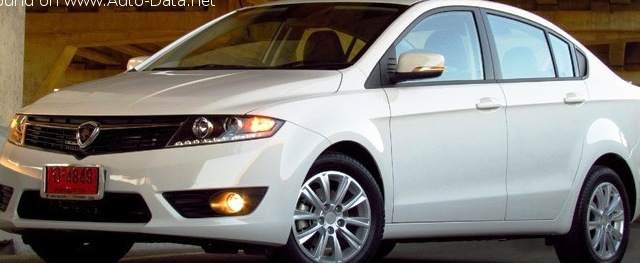
The Proton Preve 1.6, launched in 2012, represented a significant step forward for Proton, the Malaysian national car manufacturer. Positioned as a mainstream compact sedan, the Preve aimed to compete with established players in the Southeast Asian market and beyond. This specific 1.6-liter variant, producing 109 horsepower, served as the entry point to the Preve lineup, offering a balance of affordability and practicality. It was built upon Proton’s own P2 platform, a development of the previous Proton Persona and Exora chassis, and represented a move towards more modern design and engineering principles for the company. The Preve was intended to replace the aging Proton Waja and offer a more contemporary alternative to rivals like the Toyota Corolla Altis and Honda Civic.
Technical Specifications
| Brand | Proton |
| Model | Preve |
| Generation | Preve |
| Type (Engine) | 1.6 (109 Hp) |
| Start of production | 2012 |
| Powertrain Architecture | Internal Combustion engine |
| Body type | Sedan |
| Seats | 5 |
| Doors | 4 |
| Fuel consumption (combined) | 6.2 l/100 km (37.9 US mpg, 45.6 UK mpg, 16.1 km/l) |
| Fuel Type | Petrol (Gasoline) |
| Acceleration 0 – 100 km/h | 12 sec |
| Acceleration 0 – 62 mph | 12 sec |
| Acceleration 0 – 60 mph | 11.4 sec |
| Maximum speed | 180 km/h (111.85 mph) |
| Weight-to-power ratio | 12.2 kg/Hp, 82.3 Hp/tonne |
| Weight-to-torque ratio | 8.8 kg/Nm, 113.2 Nm/tonne |
| Power | 109 Hp @ 5750 rpm |
| Power per litre | 68.3 Hp/l |
| Torque | 150 Nm @ 4000 rpm (110.63 lb.-ft. @ 4000 rpm) |
| Engine layout | Front, Transverse |
| Engine displacement | 1597 cm3 (97.45 cu. in.) |
| Number of cylinders | 4 |
| Engine configuration | Inline |
| Cylinder Bore | 76 mm (2.99 in.) |
| Piston Stroke | 88 mm (3.46 in.) |
| Compression ratio | 10:1 |
| Number of valves per cylinder | 4 |
| Fuel injection system | Multi-port manifold injection |
| Engine aspiration | Naturally aspirated engine |
| Valvetrain | DOHC |
| Engine oil capacity | 4.05 l (4.28 US qt | 3.56 UK qt) |
| Kerb Weight | 1325 kg (2921.12 lbs.) |
| Max. weight | 1685 kg (3714.79 lbs.) |
| Max load | 360 kg (793.66 lbs.) |
| Trunk (boot) space – minimum | 508 l (17.94 cu. ft.) |
| Fuel tank capacity | 50 l (13.21 US gal | 11 UK gal) |
| Length | 4543 mm (178.86 in.) |
| Width | 1786 mm (70.31 in.) |
| Height | 1524 mm (60 in.) |
| Wheelbase | 2650 mm (104.33 in.) |
| Front track | 1542 mm (60.71 in.) |
| Rear (Back) track | 1542 mm (60.71 in.) |
| Ride height (ground clearance) | 155 mm (6.1 in.) |
| Minimum turning circle | 10.6 m (34.78 ft.) |
| Drivetrain Architecture | The Internal combustion engine (ICE) drives the front wheels of the vehicle. |
| Drive wheel | Front wheel drive |
| Number of gears and type of gearbox | 5 gears, manual transmission |
| Front suspension | Independent type McPherson |
| Rear suspension | Independent multi-link spring suspension with stabilizer |
| Front brakes | Ventilated discs |
| Rear brakes | Disc |
| Assisting systems | ABS (Anti-lock braking system) |
| Steering type | Steering rack and pinion |
| Power steering | Hydraulic Steering |
| Tires size | 205/55 R16 |
| Wheel rims size | 16 |
INTRODUCTION
The Proton Preve 1.6, introduced in 2012, was a key model in Proton’s attempt to modernize its lineup and appeal to a broader customer base. It represented a departure from the older designs of previous Proton models, adopting a more contemporary aesthetic and incorporating updated technology. The 1.6-liter engine variant was specifically targeted at buyers seeking an affordable and fuel-efficient sedan for daily commuting and family use. It occupied the lower end of the Preve range, with higher trims offering more powerful engines and additional features. The Preve was a significant model for Proton, as it was the first to be designed largely in-house after Proton’s partnership with Mitsubishi ended.
Powertrain & Engine Architecture
The heart of the Preve 1.6 is Proton’s CamPro IAFM (Intelligent Air Fuel Mixture) 1.6-liter inline-four engine. This engine, designated as the E13, is a naturally aspirated unit featuring multi-point fuel injection and a double overhead camshaft (DOHC) valvetrain. The engine produces 109 horsepower at 5750 rpm and 150 Nm (110.63 lb-ft) of torque at 4000 rpm. The IAFM system aims to optimize fuel efficiency and power delivery by adjusting the air-fuel mixture based on driving conditions. The engine utilizes a compression ratio of 10:1. The Preve 1.6 was exclusively offered with a five-speed manual transmission, designed to provide a balance between fuel economy and driver engagement. The transmission is a standard front-wheel-drive configuration, sending power to the front wheels.
Driving Characteristics
The Proton Preve 1.6, with its 109 horsepower and five-speed manual transmission, delivers adequate performance for everyday driving. Acceleration from 0 to 60 mph takes approximately 11.4 seconds, and it has a top speed of around 111.85 mph. While not particularly sporty, the engine provides sufficient power for highway cruising and city driving. The five-speed gearbox is relatively smooth, although shift quality can feel somewhat notchy compared to some competitors. The gear ratios are tuned for fuel efficiency, meaning the engine can feel strained when accelerating quickly or climbing hills. Compared to the higher-output 1.6-liter turbocharged version (available in other Preve trims), the 1.6 naturally aspirated model feels noticeably less responsive. However, the simpler engine design and lack of a turbocharger contribute to potentially lower maintenance costs and improved long-term reliability.
Equipment & Trim Levels
The base Preve 1.6 typically came equipped with a reasonable level of standard features. These included air conditioning, power windows, power steering, central locking, and an audio system with USB connectivity. Safety features such as ABS (Anti-lock Braking System) and dual airbags were also standard. Interior upholstery was typically cloth, and the dashboard featured a straightforward design with easy-to-use controls. Optional extras available for the Preve 1.6 included alloy wheels, a reverse parking sensor, and a more advanced audio system. Higher trim levels added features like leather seats, automatic climate control, and a touchscreen infotainment system.
Chassis & Braking
The Proton Preve 1.6 utilizes an independent McPherson strut suspension system at the front and an independent multi-link spring suspension with a stabilizer bar at the rear. This suspension setup provides a comfortable ride quality, absorbing bumps and imperfections in the road reasonably well. The front brakes are ventilated discs, while the rear brakes are solid discs. The hydraulic power steering provides a light and easy steering feel, making it maneuverable in urban environments. The Preve 1.6’s chassis is designed to provide a balance between handling and comfort, prioritizing ride quality over sporty handling characteristics. The relatively lightweight construction of the vehicle (1325 kg / 2921.12 lbs) helps to contribute to its fuel efficiency and manageable driving dynamics.
Market Reception & Comparison
The Proton Preve 1.6 received mixed reviews from automotive critics. While praised for its modern design and improved build quality compared to previous Proton models, it was often criticized for its relatively underpowered engine and somewhat basic interior. Fuel economy was generally considered to be good, with combined fuel consumption figures around 6.2 l/100 km (37.9 US mpg). Compared to other trims in the Preve lineup, the 1.6-liter variant offered the most affordable entry point but lacked the performance of the turbocharged models. Against competitors like the Toyota Corolla Altis and Honda Civic, the Preve 1.6 offered a competitive price point but often fell short in terms of refinement and overall driving experience.
Legacy
The Proton Preve, despite its relatively short production run, represented a turning point for Proton. It showcased the company’s ability to design and engineer a modern sedan in-house. The 1.6-liter engine, while not known for its exceptional performance, proved to be relatively reliable and durable. In the used car market, the Preve 1.6 remains an affordable option for buyers seeking a practical and economical sedan. Maintenance costs are generally reasonable, and spare parts are readily available in Malaysia and other Southeast Asian markets. However, potential buyers should be aware of potential issues with the engine’s timing belt and cooling system, and regular maintenance is crucial to ensure long-term reliability.
