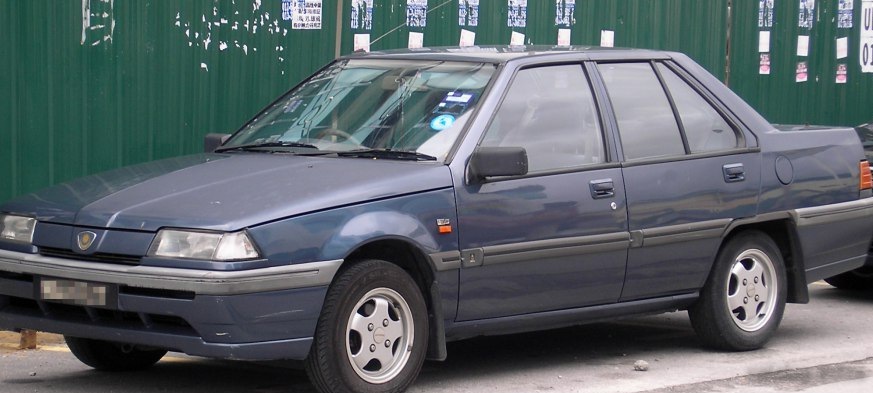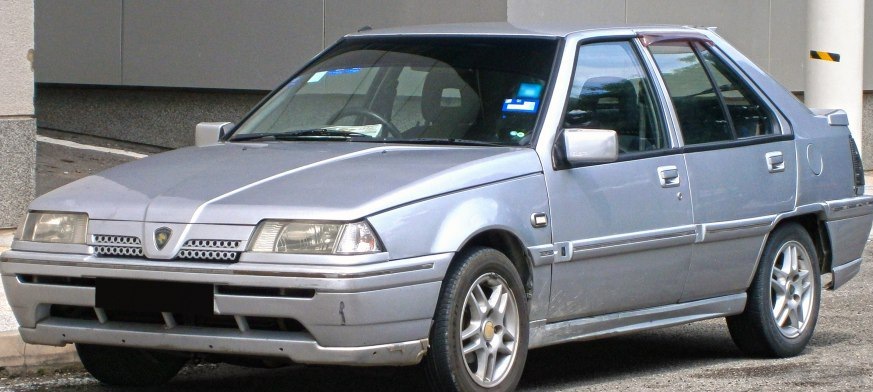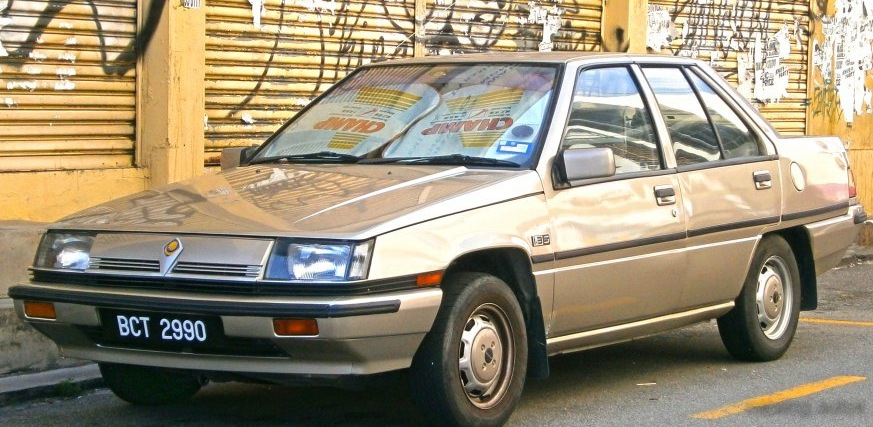
The Proton Saga I 1.5i (90 Hp) was a pivotal model for Malaysia’s national car project, Proton. Introduced in July 1985 and continuing in production through 1992, this variant represented a significant step in establishing Proton’s presence in the Southeast Asian automotive market. Built upon the foundation of the Mitsubishi Colt Lancer, the Saga I was designed to provide affordable and reliable transportation for the growing Malaysian middle class. The 1.5i trim, producing 90 horsepower, occupied a middle ground within the Saga I lineup, offering a balance between performance and economy. It was positioned above the base models and below any potential future performance-oriented variants.
Technical Specifications
| Brand | Proton |
| Model | Saga |
| Generation | Saga I |
| Type (Engine) | 1.5 i (90 Hp) |
| Start of production | July, 1985 |
| End of production | 1992 |
| Powertrain Architecture | Internal Combustion engine |
| Body type | Sedan |
| Seats | 4 |
| Doors | 4 |
| Fuel consumption (combined) | 7.3 l/100 km (32.2 US mpg, 38.7 UK mpg, 13.7 km/l) |
| Fuel Type | Petrol (Gasoline) |
| Maximum speed | 166 km/h (103.15 mph) |
| Weight-to-power ratio | 10.9 kg/Hp, 91.8 Hp/tonne |
| Weight-to-torque ratio | 7.8 kg/Nm, 128.6 Nm/tonne |
| Power | 90 Hp @ 6000 rpm |
| Power per litre | 61.3 Hp/l |
| Torque | 126 Nm @ 3000 rpm (92.93 lb.-ft. @ 3000 rpm) |
| Engine layout | Front, Transverse |
| Engine displacement | 1468 cm3 (89.58 cu. in.) |
| Number of cylinders | 4 |
| Engine configuration | Inline |
| Cylinder Bore | 75.5 mm (2.97 in.) |
| Piston Stroke | 82 mm (3.23 in.) |
| Compression ratio | 9.2:1 |
| Number of valves per cylinder | 2 |
| Fuel injection system | Multi-port manifold injection |
| Engine aspiration | Naturally aspirated engine |
| Kerb Weight | 980 kg (2160.53 lbs.) |
| Fuel tank capacity | 45 l (11.89 US gal | 9.9 UK gal) |
| Length | 4280 mm (168.5 in.) |
| Width | 1655 mm (65.16 in.) |
| Height | 1360 mm (53.54 in.) |
| Wheelbase | 2380 mm (93.7 in.) |
| Front track | 1390 mm (54.72 in.) |
| Rear track | 1340 mm (52.76 in.) |
| Drive wheel | Front wheel drive |
| Number of gears and type of gearbox | 5 gears, manual transmission |
| Front suspension | Double wishbone |
| Rear suspension | Coil spring |
| Front brakes | Disc |
| Rear brakes | Drum |
| Assisting systems | ABS (Anti-lock braking system), Hydraulic Steering |
| Tires size | 175/70 R13 |
| Wheel rims size | 13 |
Powertrain & Engine Architecture
The heart of the Saga I 1.5i was a 1.5-liter, inline-four cylinder engine derived from Mitsubishi’s 4G15 series. While sharing a fundamental architecture with its Mitsubishi counterpart, Proton made modifications to suit local conditions and manufacturing capabilities. The engine featured a single overhead camshaft (SOHC) valvetrain with two valves per cylinder. Fuel delivery was managed by a multi-port fuel injection system, a relatively modern feature for its time, contributing to improved fuel efficiency and smoother operation compared to carbureted engines. The engine produced 90 horsepower at 6000 rpm and 126 Nm (93 lb-ft) of torque at 3000 rpm. The engine’s relatively modest output was geared towards providing adequate performance for everyday driving rather than outright speed. The 5-speed manual transmission was the standard offering, providing a reasonable spread of gears for both city and highway driving.
Driving Characteristics
The Saga I 1.5i offered a comfortable, if not particularly sporty, driving experience. The 90 horsepower engine provided sufficient power for typical commuting and highway cruising, although acceleration was not its strong suit. The 5-speed manual transmission allowed drivers to keep the engine in its optimal power band, but the gear ratios were spaced to prioritize fuel economy over rapid acceleration. Compared to potential higher-output variants (which were never officially produced), the 1.5i felt less strained during prolonged highway driving. The suspension, featuring a double wishbone setup at the front and coil springs at the rear, provided a reasonably compliant ride, absorbing bumps and imperfections in the road surface effectively. However, the car’s relatively light weight and basic suspension design meant that it wasn’t particularly adept at handling sharp corners.
Equipment & Trim Levels
The Saga I 1.5i was generally equipped with basic, but functional, features. Standard equipment typically included cloth upholstery, a simple dashboard layout with analog gauges, and manual windows and door locks. Power steering was often included, making maneuvering in tight spaces easier. Air conditioning was frequently offered as an optional extra, a desirable feature in Malaysia’s hot and humid climate. The interior was designed with practicality in mind, offering adequate space for four adults. Trim levels were relatively limited, with most variations revolving around optional extras like air conditioning, upgraded audio systems, and different wheel covers.
Chassis & Braking
The Saga I utilized a front-wheel-drive layout with a relatively simple chassis design. The front suspension employed a double wishbone configuration, while the rear suspension utilized a coil spring setup. Braking duties were handled by disc brakes at the front and drum brakes at the rear. While adequate for the car’s weight and performance, the braking system lacked the sophistication of more modern setups. Anti-lock braking system (ABS) was not standard, and was rarely offered as an option. The car’s relatively light weight (around 980 kg or 2160 lbs) helped to mitigate the limitations of the braking system.
Market Reception & Comparison
The Proton Saga I 1.5i was generally well-received in the Malaysian market. It offered a compelling combination of affordability, reliability, and practicality. Critics praised the car’s comfortable ride and relatively fuel-efficient engine. However, some reviewers noted the car’s lack of refinement and its somewhat dated design. Compared to imported vehicles, the Saga I offered a significantly lower price point, making it accessible to a wider range of buyers. Within the Saga I lineup, the 1.5i variant struck a balance between performance and economy, appealing to buyers who wanted a bit more power than the base models but didn’t want to pay the premium for a potential higher-performance trim.
Legacy
The Proton Saga I 1.5i played a crucial role in establishing Proton as a viable automotive manufacturer and fostering national pride in Malaysia. The 1.5-liter engine proved to be relatively durable and reliable, and many examples remain on the road today. While the car is now considered a classic, its simple design and readily available parts make it relatively easy to maintain. In the used car market, the Saga I 1.5i is often sought after by enthusiasts and collectors who appreciate its historical significance and affordability. It represents a significant chapter in Malaysia’s automotive history and a testament to the country’s ambition to develop its own national car industry.