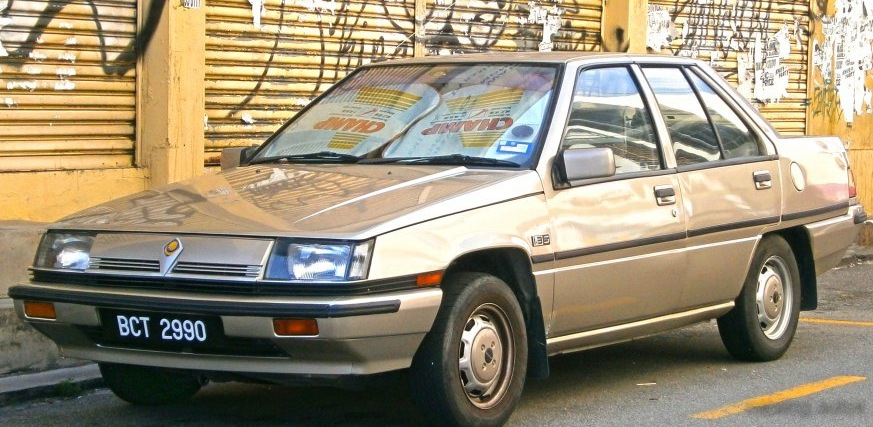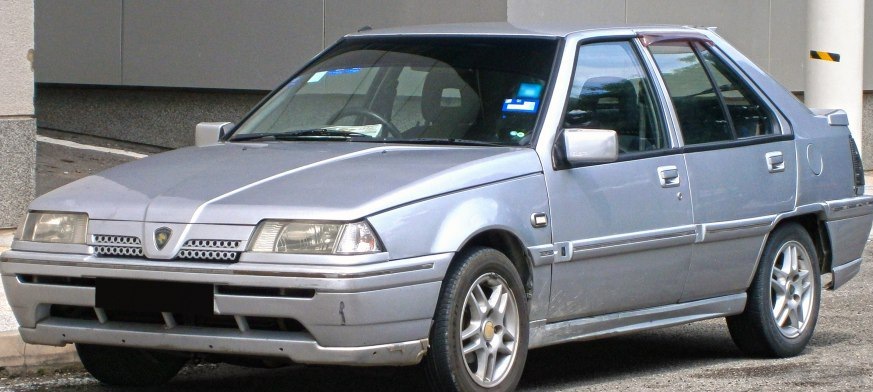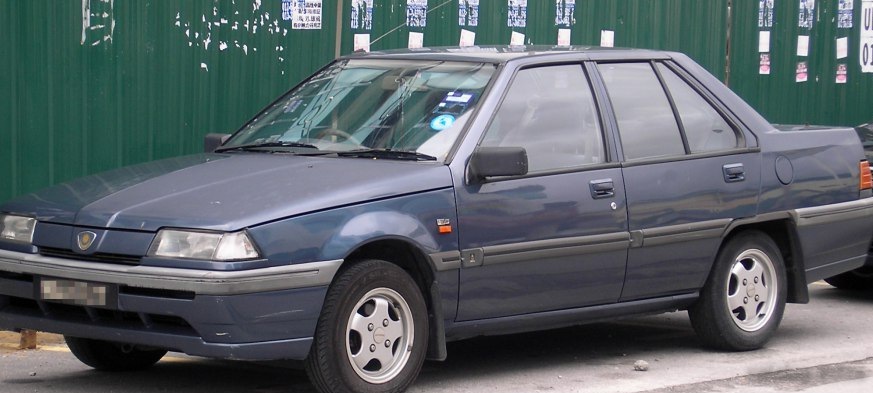
The Proton Saga Iswara 1.3i, produced from 1992 to 2003, represents a significant iteration of Proton’s original Saga model. Introduced as a facelift and upgrade, the Iswara aimed to address some of the criticisms leveled at the initial Saga while maintaining its position as an affordable and practical family sedan, primarily targeted at the Malaysian domestic market. It was built on the Saga’s existing platform, but featured revised styling and mechanical improvements. The 1.3i variant, producing 75 horsepower, served as a core model within the Iswara lineup, offering a balance between economy and usability. It was positioned as the entry-level offering, appealing to budget-conscious buyers.
Technical Specifications
| Brand | Proton |
| Model | Saga Iswara |
| Generation | Saga Iswara |
| Type (Engine) | 1.3 i (75 Hp) |
| Start of production | 1992 |
| End of production | 2003 |
| Powertrain Architecture | Internal Combustion engine |
| Body type | Sedan |
| Seats | 5 |
| Doors | 4 |
| Fuel consumption (urban) | 8.3 l/100 km (28.3 US mpg) |
| Fuel consumption (extra urban) | 6.3 l/100 km (37.3 US mpg) |
| Fuel consumption (combined) | 7.4 l/100 km (31.8 US mpg) |
| Fuel Type | Petrol (Gasoline) |
| Acceleration 0 – 100 km/h | 13.8 sec |
| Acceleration 0 – 62 mph | 13.8 sec |
| Acceleration 0 – 60 mph | 13.1 sec |
| Maximum speed | 166 km/h (103.15 mph) |
| Weight-to-power ratio | 12.7 kg/Hp |
| Weight-to-torque ratio | 8.8 kg/Nm |
| Power | 75 Hp @ 6000 rpm |
| Power per litre | 57.8 Hp/l |
| Torque | 108 Nm @ 3000 rpm (79.66 lb.-ft. @ 3000 rpm) |
| Engine layout | Front, Transverse |
| Engine displacement | 1298 cm3 (79.21 cu. in.) |
| Number of cylinders | 4 |
| Engine configuration | Inline |
| Cylinder Bore | 71 mm (2.8 in.) |
| Piston Stroke | 82 mm (3.23 in.) |
| Compression ratio | 9.5:1 |
| Number of valves per cylinder | 3 |
| Fuel injection system | Multi-port manifold injection |
| Engine aspiration | Naturally aspirated engine |
| Valvetrain | OHC |
| Kerb Weight | 950 kg (2094.39 lbs.) |
| Max. weight | 1400 kg (3086.47 lbs.) |
| Max load | 450 kg (992.08 lbs.) |
| Trunk (boot) space | 315 l (11.12 cu. ft.) |
| Fuel tank capacity | 45 l (11.89 US gal | 9.9 UK gal) |
| Length | 4280 mm (168.5 in.) |
| Width | 1655 mm (65.16 in.) |
| Height | 1360 mm (53.54 in.) |
| Wheelbase | 2380 mm (93.7 in.) |
| Front track | 1390 mm (54.72 in.) |
| Rear track | 1340 mm (52.76 in.) |
| Drivetrain Architecture | Front wheel drive |
| Number of gears | 5 gears, manual transmission |
| Front brakes | Disc |
| Rear brakes | Drum |
| Steering type | Steering rack and pinion |
| Power steering | Hydraulic Steering |
| Tires size | 155/80 R13 |
Introduction
The Proton Saga Iswara 1.3i represented a crucial step in Proton’s development as Malaysia’s national car manufacturer. Building upon the foundation laid by the original Saga, the Iswara aimed to refine the formula, offering improved reliability and a more contemporary aesthetic. The 1.3i engine was the mainstay of the range, providing a cost-effective and reasonably efficient powerplant for everyday driving. Production spanned from 1992 to 2003, making it a common sight on Malaysian roads for over a decade. The Iswara was designed to compete with other affordable sedans in the Southeast Asian market, offering a locally-produced alternative to imported models.
Powertrain & Engine Architecture
The heart of the Iswara 1.3i is the 1.3-liter inline-four cylinder engine, internally designated as the C13S. This engine is a naturally aspirated unit featuring a single overhead camshaft (SOHC) valvetrain with three valves per cylinder (two intake, one exhaust). It utilizes a multi-port fuel injection system, a significant upgrade over the carburetor found in earlier Saga models, contributing to improved fuel efficiency and smoother operation. The engine produces 75 horsepower at 6000 rpm and 108 Nm (79.66 lb-ft) of torque at 3000 rpm. The engine’s relatively simple design prioritized reliability and ease of maintenance. The Iswara 1.3i was exclusively offered with a five-speed manual transmission, designed to maximize fuel economy and provide adequate performance for typical urban and highway driving.
Driving Characteristics
The Iswara 1.3i’s driving experience is best described as practical and undemanding. The 75 horsepower engine, while not particularly powerful, provides sufficient power for everyday commuting and light loads. Acceleration is modest, taking approximately 13.8 seconds to reach 100 km/h (62 mph). The five-speed manual transmission allows drivers to keep the engine in its optimal power band, but the gear ratios are spaced to prioritize fuel economy over outright performance. Compared to higher-spec Iswara models equipped with larger engines, the 1.3i feels noticeably slower, particularly when fully loaded or climbing hills. However, its lighter weight and simpler mechanicals contribute to a more nimble and responsive feel in city driving. The steering is hydraulically assisted, providing reasonable ease of maneuverability, but lacks the precision found in more modern vehicles.
Equipment & Trim Levels
The Iswara 1.3i was typically equipped with basic but functional features. Standard equipment included cloth upholstery, a simple dashboard layout with analog gauges, and manual windows and door locks. Air conditioning was often an optional extra, as were power steering and a basic audio system. The interior trim was generally utilitarian, focusing on durability rather than luxury. Higher trim levels, though rare on the 1.3i, might have included features like upgraded seat fabrics, a more comprehensive instrument cluster, and a factory-fitted radio. The Iswara’s interior design reflected its target market – budget-conscious buyers seeking a reliable and affordable mode of transportation.
Chassis & Braking
The Iswara 1.3i utilizes a relatively simple chassis design, featuring a MacPherson strut front suspension and a semi-trailing arm rear suspension. The rear brakes are drums, while the front brakes are discs. This configuration was chosen to keep costs down and maintain a reasonable level of ride comfort. The suspension setup is tuned for comfort rather than sporty handling, resulting in a relatively soft and forgiving ride. The steering is a rack and pinion system with hydraulic assistance. Tire size is typically 155/80 R13. The braking performance is adequate for normal driving conditions, but lacks the stopping power of more modern vehicles.
Market Reception & Comparison
The Proton Saga Iswara 1.3i was generally well-received in the Malaysian market as an affordable and reliable family sedan. Critics praised its practicality, fuel efficiency, and relatively low maintenance costs. However, it was also criticized for its lack of refinement, modest performance, and somewhat dated design. Compared to other trims in the Iswara lineup, such as the 1.5-liter variants, the 1.3i offered a more economical option, but at the expense of performance. It competed directly with other budget-oriented sedans from Japanese manufacturers, such as the Toyota Corolla and Honda Civic, offering a locally-produced alternative.
Legacy
The Proton Saga Iswara 1.3i remains a common sight on Malaysian roads today, a testament to its durability and affordability. While no longer in production, it enjoys a strong following among enthusiasts and those seeking a classic Malaysian automobile. The 1.3i engine is known for its reliability and relatively simple maintenance requirements, making it a popular choice for first-time car owners and those on a tight budget. Parts availability remains good, and the Iswara’s straightforward design makes it relatively easy to repair and maintain. The Iswara 1.3i represents a significant chapter in Proton’s history, demonstrating the company’s commitment to providing affordable and practical transportation to the Malaysian public.