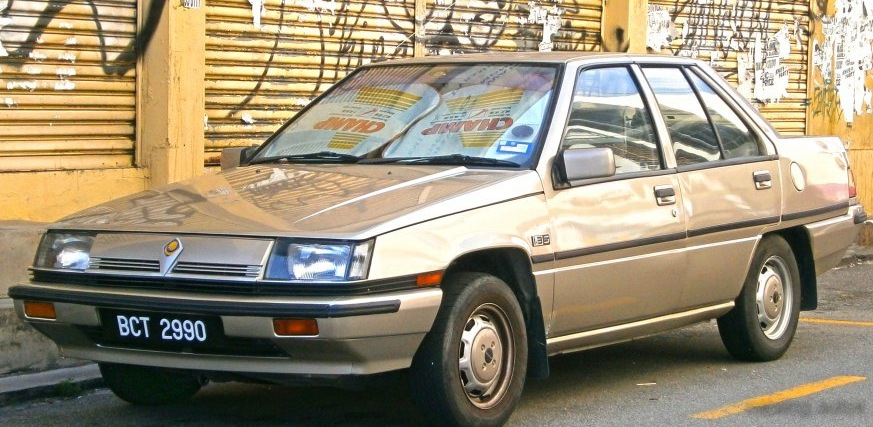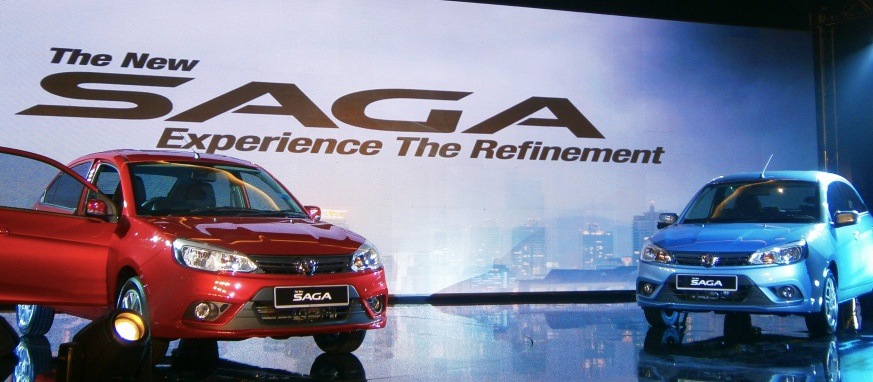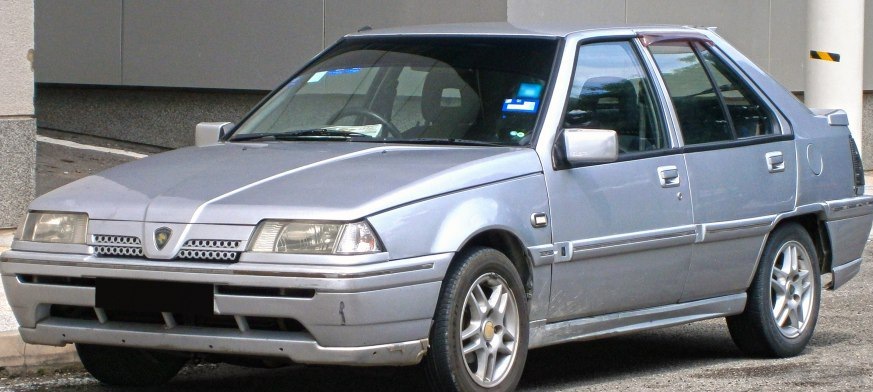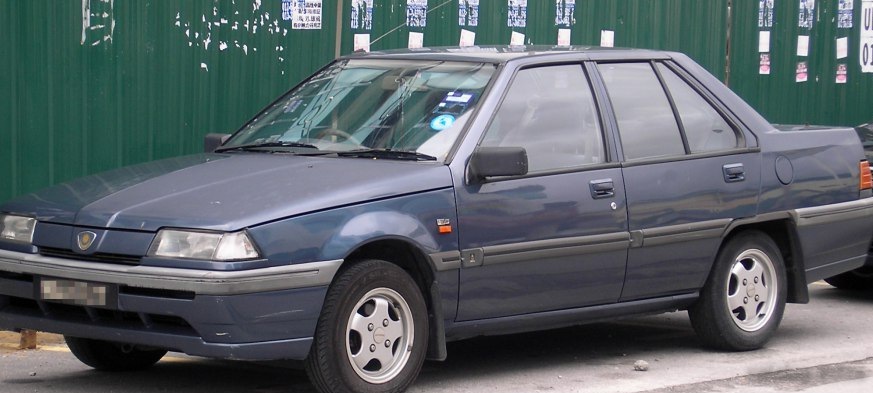
The Proton Saga Iswara 1.5i (90 hp) was a popular subcompact sedan produced by Proton, Malaysia’s national car manufacturer, from 1992 to 2003. Positioned as an affordable and practical family vehicle, the Iswara represented a significant evolution of the original Saga, offering improved refinement and features. It played a crucial role in Proton’s early market penetration, particularly within Southeast Asia, and was a key model in establishing the brand’s presence. This specific 1.5i variant, equipped with a five-speed manual transmission, served as a mainstay of the Iswara lineup, offering a balance between fuel economy and acceptable performance for everyday driving.
Technical Specifications
| Brand | Proton |
| Model | Saga Iswara |
| Generation | Saga Iswara |
| Type (Engine) | 1.5i (90 Hp) |
| Start of production | 1992 |
| End of production | 2003 |
| Powertrain Architecture | Internal Combustion engine |
| Body type | Sedan |
| Seats | 5 |
| Doors | 4 |
| Fuel consumption (urban) | 8.6 l/100 km (27.4 US mpg) |
| Fuel consumption (extra urban) | 6.2 l/100 km (37.9 US mpg) |
| Fuel consumption (combined) | 7.2 l/100 km (32.7 US mpg) |
| Fuel Type | Petrol (Gasoline) |
| Acceleration 0 – 100 km/h | 13 sec |
| Acceleration 0 – 62 mph | 13 sec |
| Acceleration 0 – 60 mph | 12.4 sec |
| Maximum speed | 166 km/h (103.15 mph) |
| Weight-to-power ratio | 11 kg/Hp |
| Weight-to-torque ratio | 7.9 kg/Nm |
| Power | 90 Hp @ 6000 rpm |
| Power per litre | 61.3 Hp/l |
| Torque | 126 Nm @ 3000 rpm (92.93 lb.-ft. @ 3000 rpm) |
| Engine layout | Front, Transverse |
| Engine displacement | 1468 cm3 (89.58 cu. in.) |
| Number of cylinders | 4 |
| Engine configuration | Inline |
| Cylinder Bore | 75.5 mm (2.97 in.) |
| Piston Stroke | 82 mm (3.23 in.) |
| Compression ratio | 9.2:1 |
| Number of valves per cylinder | 2 |
| Fuel injection system | Multi-port manifold injection |
| Engine aspiration | Naturally aspirated |
| Kerb Weight | 990 kg (2182.58 lbs.) |
| Max. weight | 1440 kg (3174.66 lbs.) |
| Max load | 450 kg (992.08 lbs.) |
| Trunk (boot) space | 315 l (11.12 cu. ft.) |
| Fuel tank capacity | 45 l (11.89 US gal) |
| Length | 4280 mm (168.5 in.) |
| Width | 1655 mm (65.16 in.) |
| Height | 1360 mm (53.54 in.) |
| Wheelbase | 2380 mm (93.7 in.) |
| Front track | 1390 mm (54.72 in.) |
| Rear track | 1340 mm (52.76 in.) |
| Drivetrain Architecture | Front wheel drive |
| Number of gears | 5 gears, manual transmission |
| Front brakes | Disc |
| Rear brakes | Drum |
| Steering type | Steering rack and pinion |
| Power steering | Hydraulic |
| Tires size | 175/70 R13 |
| Wheel rims size | 13 |
Powertrain & Engine Architecture
The Proton Saga Iswara 1.5i was powered by a 1.5-liter inline-four cylinder engine, internally designated as the 4G15. This engine was derived from the Mitsubishi 4G15, a design Proton licensed and adapted for its vehicles. The engine featured a single overhead camshaft (SOHC) valvetrain with two valves per cylinder. Fuel delivery was handled by a multi-point fuel injection system, providing improved efficiency and driveability compared to earlier carburetor-equipped models. The 4G15 engine produced 90 horsepower at 6000 rpm and 126 Nm (93 lb-ft) of torque at 3000 rpm. The five-speed manual transmission was the standard offering for this variant, providing a relatively direct connection between the engine and the front wheels. The transmission’s gear ratios were tuned for a balance of acceleration and fuel economy, prioritizing usability in urban environments.
Driving Characteristics
The Iswara 1.5i, with its 90 hp engine and manual transmission, offered a modest but adequate driving experience. Acceleration was not particularly brisk, taking approximately 13 seconds to reach 60 mph, but it was sufficient for typical commuting and highway driving. The manual transmission allowed for greater driver control and engagement compared to the optional automatic transmission available on other Iswara models. The gear ratios were spaced to provide reasonable acceleration in each gear, although the engine did feel somewhat strained at higher speeds. Handling was generally predictable, but the Iswara’s suspension was tuned for comfort rather than sporty handling. Compared to the later Saga models with more powerful engines, the 1.5i felt noticeably less responsive, particularly when fully loaded with passengers and cargo.
Equipment & Trim Levels
The Proton Saga Iswara 1.5i was generally equipped with basic but functional features. Standard equipment typically included cloth upholstery, a simple dashboard layout with analog gauges, and manual windows and door locks. Air conditioning was often included, but sometimes offered as an optional extra. Higher trim levels, if available, might have added features such as power windows, central locking, and a more sophisticated audio system. The interior was designed with practicality in mind, offering ample space for passengers and a reasonably sized trunk. The overall aesthetic was fairly basic, reflecting the car’s affordable price point.
Chassis & Braking
The Iswara utilized a relatively simple chassis design, featuring a MacPherson strut front suspension and a semi-independent multi-link rear suspension. The front brakes were disc brakes, providing adequate stopping power, while the rear brakes were drum brakes, a cost-saving measure common in vehicles of this class. The steering was a rack-and-pinion system with hydraulic power assistance, offering reasonable steering feel and maneuverability. Tire size was typically 175/70 R13. The suspension was tuned for comfort, absorbing bumps and irregularities in the road surface reasonably well, but it did result in some body roll during cornering.
Market Reception & Comparison
The Proton Saga Iswara 1.5i was well-received in the Malaysian market as an affordable and reliable family car. Critics generally praised its practicality, fuel economy, and ease of maintenance. However, it was also noted that the car’s performance was somewhat lacking compared to competitors, particularly those with larger engines. Compared to the automatic transmission versions of the Iswara, the 1.5i manual offered better fuel economy and a more engaging driving experience. It also provided a more affordable entry point into the Iswara range, making it accessible to a wider range of buyers. The Iswara competed with other subcompact sedans such as the Toyota Corolla and Honda Civic, but it typically offered a lower price point.
Legacy
The Proton Saga Iswara 1.5i remains a common sight on Malaysian roads today, a testament to its durability and reliability. The 4G15 engine, while not particularly powerful, proved to be a robust and long-lasting unit. Parts availability remains good, and maintenance costs are relatively low. In the used car market, the Iswara 1.5i is valued for its affordability and simplicity. While it may not offer the features or performance of more modern vehicles, it continues to provide reliable transportation for many drivers. The Iswara played a significant role in establishing Proton as a major player in the Malaysian automotive industry, and it remains a fondly remembered model for many Malaysians.