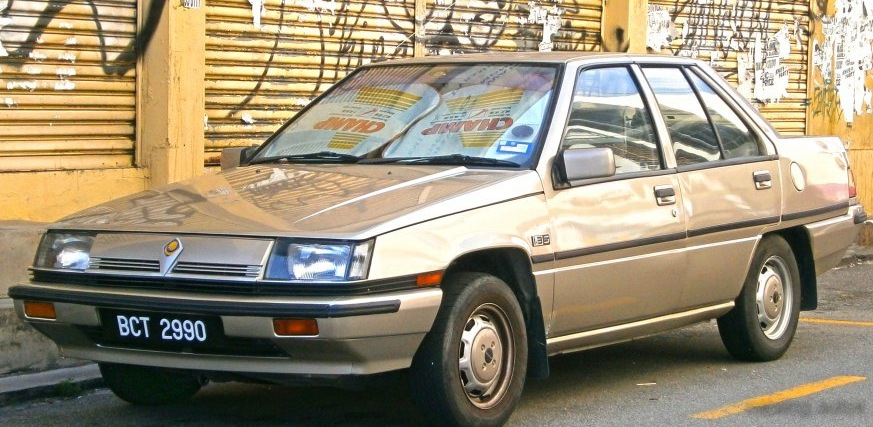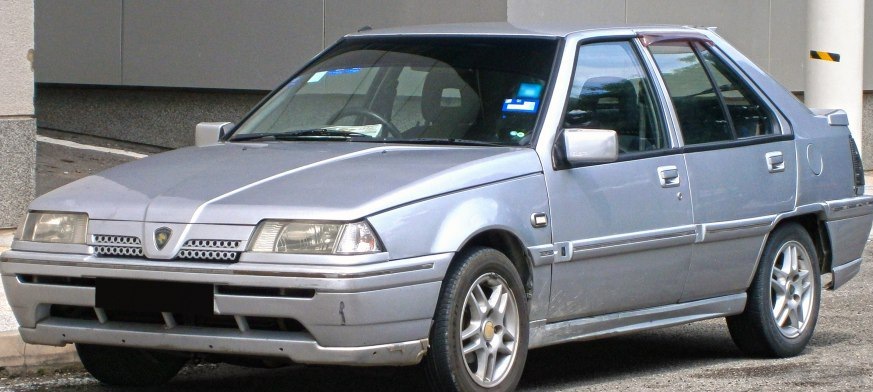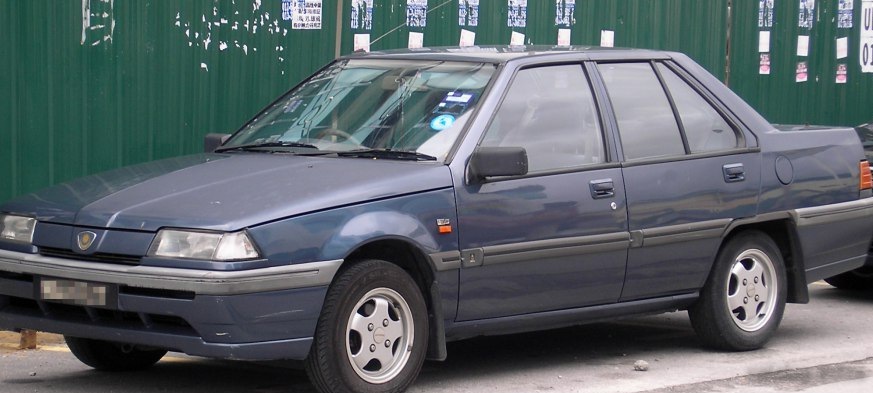
The Proton Saga Iswara 1.5i Automatic, produced from 1992 to 2003, represents a significant iteration of Proton’s initial foray into independent automotive manufacturing. Positioned as a practical and affordable family sedan, the Iswara was a mainstay in the Malaysian market and saw limited export sales, primarily within Southeast Asia. This particular variant, equipped with a 1.5-liter engine and a three-speed automatic transmission, served as a mid-range offering within the Iswara lineup, appealing to buyers prioritizing convenience over outright performance. It was built upon the foundation of the original Saga, benefiting from incremental improvements in refinement and reliability.
Technical Specifications
| Brand | Proton |
| Model | Saga Iswara |
| Generation | Saga Iswara |
| Type (Engine) | 1.5i (90 Hp) Automatic |
| Start of production | 1992 |
| End of production | 2003 |
| Powertrain Architecture | Internal Combustion engine |
| Body type | Sedan |
| Seats | 5 |
| Doors | 4 |
| Fuel consumption (urban) | 8.8 l/100 km (26.7 US mpg) |
| Fuel consumption (extra urban) | 5.7 l/100 km (41.3 US mpg) |
| Fuel consumption (combined) | 8.4 l/100 km (28 US mpg) |
| Fuel Type | Petrol (Gasoline) |
| Acceleration 0 – 100 km/h | 16.6 sec |
| Acceleration 0 – 62 mph | 16.6 sec |
| Acceleration 0 – 60 mph | 15.8 sec |
| Maximum speed | 143 km/h (88.86 mph) |
| Weight-to-power ratio | 11 kg/Hp |
| Weight-to-torque ratio | 7.9 kg/Nm |
| Power | 90 Hp @ 6000 rpm |
| Torque | 126 Nm @ 3000 rpm (92.93 lb.-ft. @ 3000 rpm) |
| Engine layout | Front, Transverse |
| Engine displacement | 1468 cm3 (89.58 cu. in.) |
| Number of cylinders | 4 |
| Engine configuration | Inline |
| Cylinder Bore | 75.5 mm (2.97 in.) |
| Piston Stroke | 82 mm (3.23 in.) |
| Compression ratio | 9.2:1 |
| Number of valves per cylinder | 2 |
| Fuel injection system | Multi-port manifold injection |
| Engine aspiration | Naturally aspirated |
| Kerb Weight | 990 kg (2182.58 lbs.) |
| Max. weight | 1440 kg (3174.66 lbs.) |
| Max load | 450 kg (992.08 lbs.) |
| Trunk (boot) space | 315 l (11.12 cu. ft.) |
| Fuel tank capacity | 45 l (11.89 US gal) |
| Length | 4280 mm (168.5 in.) |
| Width | 1655 mm (65.16 in.) |
| Height | 1360 mm (53.54 in.) |
| Wheelbase | 2380 mm (93.7 in.) |
| Front track | 1390 mm (54.72 in.) |
| Rear track | 1340 mm (52.76 in.) |
| Drivetrain Architecture | Front wheel drive |
| Number of gears | 3 |
| Gearbox type | Automatic transmission |
| Front brakes | Disc |
| Rear brakes | Drum |
| Steering type | Steering rack and pinion |
| Power steering | Hydraulic |
| Tires size | 175/70 HR13 |
| Wheel rims size | 13 |
Powertrain & Engine Architecture
The heart of the Iswara 1.5i Automatic is the 4G15 engine, a 1.5-liter inline-four cylinder gasoline engine. This engine, derived from Mitsubishi’s 4G series, features a single overhead camshaft (SOHC) valvetrain with two valves per cylinder. Fuel delivery is managed by a multi-point fuel injection system, a significant upgrade over the carburetor systems found in earlier Saga models. The engine produces 90 horsepower at 6000 rpm and 126 Nm (93 lb-ft) of torque at 3000 rpm. The three-speed automatic transmission, while providing ease of use, was a relatively basic unit, prioritizing durability and cost-effectiveness over sophisticated shift programming. It’s a conventional hydraulic automatic, lacking the electronic controls found in more modern transmissions.
Driving Characteristics
The Iswara 1.5i Automatic’s driving experience is best described as unhurried. The three-speed automatic transmission, while smooth in operation, contributes to leisurely acceleration. The 0-60 mph time of around 15.8 seconds reflects this. Compared to the five-speed manual version, the automatic suffers a noticeable performance deficit. The gear ratios are spaced to prioritize fuel economy and comfortable cruising rather than spirited driving. The engine feels strained when pushed hard, and overtaking maneuvers require careful planning. However, for everyday commuting and urban driving, the automatic provides a convenient and forgiving experience.
Equipment & Trim Levels
The Iswara 1.5i Automatic typically came equipped with basic amenities. Standard features included manual windows, manual door locks, and a simple analog instrument cluster. The interior upholstery was typically cloth, with a durable but unremarkable finish. Air conditioning was a common option, and higher-spec versions might include power steering (as equipped on this model) and a basic audio system. Optional extras included upgraded seat fabrics and a more comprehensive audio system. The Iswara was not positioned as a luxury vehicle, and its trim levels reflected this, focusing on providing essential features at an affordable price point.
Chassis & Braking
The Iswara utilizes a relatively simple chassis design. It features a MacPherson strut front suspension and a semi-trailing arm rear suspension. The braking system consists of disc brakes on the front wheels and drum brakes on the rear. Power steering was often included, providing a lighter steering feel, particularly at low speeds. The suspension setup is tuned for comfort, absorbing bumps and imperfections in the road reasonably well. However, it doesn’t offer particularly sharp handling characteristics. The rear drum brakes, while adequate for normal driving, lack the stopping power and fade resistance of disc brakes.
Market Reception & Comparison
The Proton Saga Iswara 1.5i Automatic was generally well-received in the Malaysian market as a practical and affordable family car. Critics praised its reliability and low running costs. However, the automatic transmission was often criticized for its sluggish performance compared to the manual version. Fuel economy was considered reasonable for its class, averaging around 28 US mpg in combined driving. Compared to other vehicles in its segment, such as the Toyota Corolla and Honda Civic, the Iswara offered a lower price point but lacked the refinement and performance of its Japanese rivals. The 1.5L automatic was a popular choice for families and drivers who prioritized convenience and affordability.
Legacy
The Proton Saga Iswara, and specifically the 1.5i Automatic variant, holds a nostalgic place in the hearts of many Malaysian car owners. The 4G15 engine, while not particularly powerful, proved to be remarkably durable and relatively easy to maintain. Today, well-maintained examples are still found on the roads, often serving as affordable transportation for students or as classic car projects. Parts availability remains relatively good, thanks to the Iswara’s widespread popularity. While not a performance icon, the Iswara 1.5i Automatic represents a crucial step in Proton’s development as an independent automaker and a testament to the enduring appeal of simple, reliable transportation.