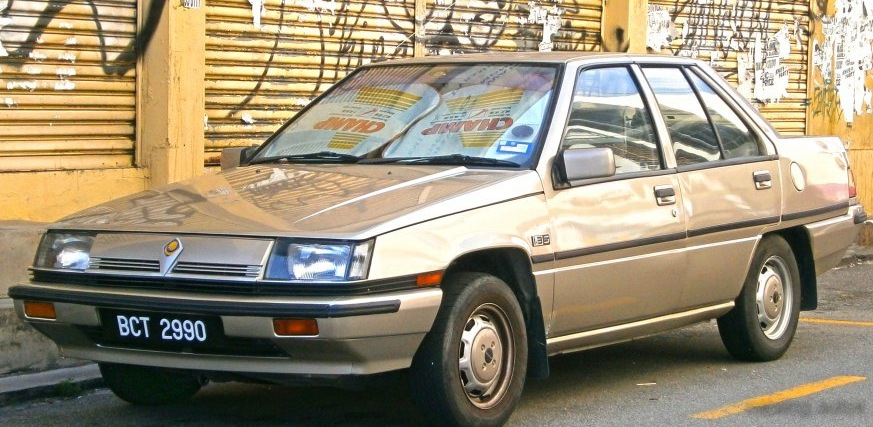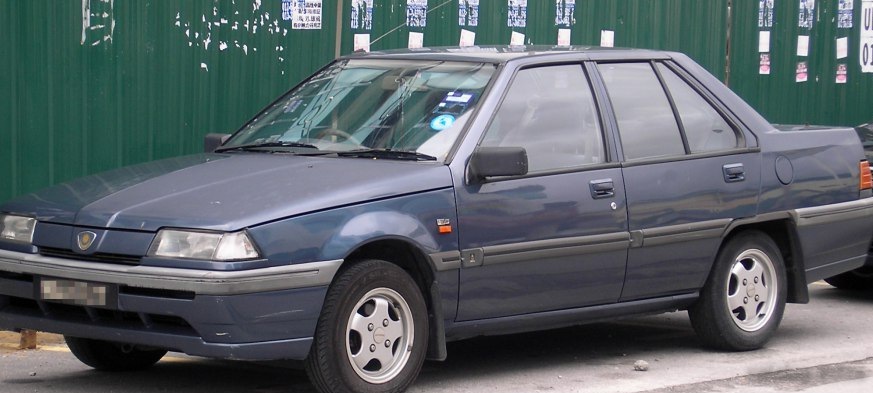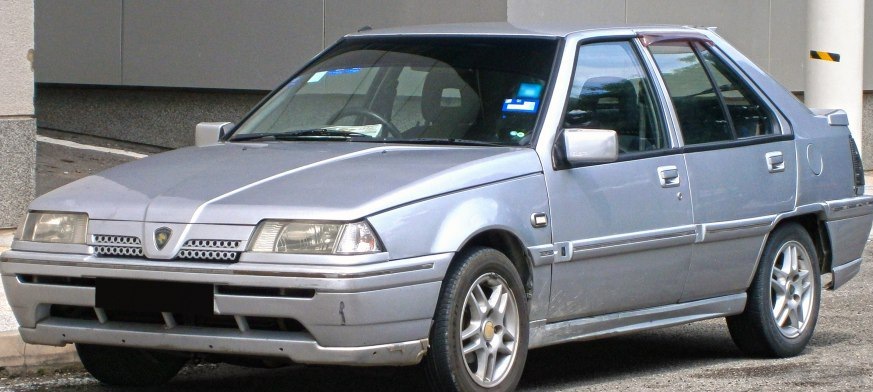
The Proton Saga Iswara Aeroback 1.5i Automatic, produced between 2001 and 2003, represents a significant iteration within the second generation of Proton’s Saga model line. Positioned as an affordable and practical family vehicle, the Iswara Aeroback – a hatchback variant – aimed to provide a budget-friendly option in the Malaysian automotive market. It was built upon the Saga platform (internally designated as the 1HX0/A3) and offered a step up in practicality compared to the traditional sedan body style. This particular 1.5i Automatic trim served as a mid-range offering, balancing affordability with the convenience of an automatic transmission.
Technical Specifications
| Brand | Proton |
| Model | Saga Iswara |
| Generation | Saga Iswara Aeroback |
| Type (Engine) | 1.5i (90 Hp) Automatic |
| Start of production | 2001 |
| End of production | 2003 |
| Powertrain Architecture | Internal Combustion engine |
| Body type | Hatchback |
| Seats | 5 |
| Doors | 5 |
| Fuel consumption (urban) | 8.8 l/100 km (26.7 US mpg) |
| Fuel consumption (extra urban) | 5.7 l/100 km (41.3 US mpg) |
| Fuel consumption (combined) | 8.4 l/100 km (28 US mpg) |
| Fuel Type | Petrol (Gasoline) |
| Acceleration 0 – 100 km/h | 16.6 sec |
| Acceleration 0 – 62 mph | 16.6 sec |
| Acceleration 0 – 60 mph | 15.8 sec |
| Maximum speed | 143 km/h (88.86 mph) |
| Weight-to-power ratio | 10.9 kg/Hp |
| Weight-to-torque ratio | 7.8 kg/Nm |
| Power | 90 Hp @ 6000 rpm |
| Torque | 126 Nm @ 3000 rpm (92.93 lb.-ft. @ 3000 rpm) |
| Engine layout | Front, Transverse |
| Engine displacement | 1468 cm3 (89.58 cu. in.) |
| Number of cylinders | 4 |
| Engine configuration | Inline |
| Cylinder Bore | 75.5 mm (2.97 in.) |
| Piston Stroke | 82 mm (3.23 in.) |
| Compression ratio | 9.2:1 |
| Number of valves per cylinder | 2 |
| Fuel injection system | Multi-port manifold injection |
| Engine aspiration | Naturally aspirated |
| Kerb Weight | 980 kg (2160.53 lbs.) |
| Max. weight | 1440 kg (3174.66 lbs.) |
| Max load | 460 kg (1014.13 lbs.) |
| Trunk (boot) space – minimum | 735 l (25.96 cu. ft.) |
| Fuel tank capacity | 45 l (11.89 US gal) |
| Length | 4110 mm (161.81 in.) |
| Width | 1655 mm (65.16 in.) |
| Height | 1360 mm (53.54 in.) |
| Wheelbase | 2380 mm (93.7 in.) |
| Front track | 1390 mm (54.72 in.) |
| Rear (Back) track | 1340 mm (52.76 in.) |
| Drivetrain Architecture | Front wheel drive |
| Number of gears and type of gearbox | 3 gears, automatic transmission |
| Front brakes | Disc |
| Rear brakes | Drum |
| Assisting systems | ABS (Anti-lock braking system) |
| Steering type | Steering rack and pinion |
| Power steering | Hydraulic |
| Tires size | 175/70 HR13 |
| Wheel rims size | 13 |
Powertrain & Engine Architecture
The Proton Saga Iswara Aeroback 1.5i Automatic was powered by Proton’s 4G15 engine, a 1.5-liter inline-four cylinder gasoline engine. This engine, often identified by its ABS or ADZ engine codes depending on minor revisions, was a relatively simple design featuring a single overhead camshaft (SOHC) and two valves per cylinder. The multi-port fuel injection system delivered fuel to the cylinders, contributing to reasonable fuel efficiency for its time. The engine produced 90 horsepower at 6000 rpm and 126 Nm (93 lb-ft) of torque at 3000 rpm. The automatic transmission was a three-speed unit, chosen for its ease of use and affordability. While not known for its performance, this transmission provided smooth, if somewhat leisurely, gear changes.
Driving Characteristics
The 1.5i Automatic Iswara Aeroback offered a comfortable, but not particularly sporty, driving experience. Acceleration was modest, taking approximately 16.6 seconds to reach 62 mph (100 km/h). The three-speed automatic transmission, while convenient, meant that the engine often felt strained during overtaking maneuvers or when climbing hills. Compared to the five-speed manual version of the same engine, the automatic suffered a noticeable performance deficit. The gear ratios were optimized for fuel economy rather than outright speed. The steering was light and easy, making it well-suited for urban driving, but lacked the precision found in more modern vehicles.
Equipment & Trim Levels
The Iswara Aeroback 1.5i Automatic typically came equipped with basic amenities. Standard features included power steering, air conditioning, and a basic audio system. Interior upholstery was typically cloth, and the dashboard featured a functional, if somewhat dated, design. Optional extras included upgraded audio systems, alloy wheels, and power windows. The Aeroback trim generally offered a slightly more comprehensive equipment list than the base Saga sedan models.
Chassis & Braking
The Iswara Aeroback utilized a relatively simple chassis design. The front suspension consisted of MacPherson struts, while the rear suspension employed a semi-independent torsion beam. Braking was handled by disc brakes on the front wheels and drum brakes on the rear. An Anti-lock Braking System (ABS) was included as standard, enhancing safety. The suspension setup prioritized ride comfort over handling precision, resulting in a somewhat soft and forgiving ride quality. Stabilizer bars were present, but relatively thin, contributing to noticeable body roll during cornering.
Market Reception & Comparison
The Proton Saga Iswara Aeroback 1.5i Automatic was generally well-received in the Malaysian market as an affordable and practical family car. Critics noted its spacious interior and generous trunk capacity, particularly for a hatchback. However, the engine’s performance and the automatic transmission’s limitations were often cited as drawbacks. Compared to other trims in the Saga lineup, such as the more powerful versions with manual transmissions, the 1.5i Automatic offered a trade-off between performance and convenience. Fuel economy was considered reasonable for its class, averaging around 28 US mpg in combined driving conditions.
Legacy
The Proton Saga Iswara Aeroback 1.5i Automatic, while not a performance icon, remains a fondly remembered vehicle in Malaysia. The 4G15 engine, in its various iterations, proved to be relatively reliable, and parts availability remains good even today. In the used car market, these vehicles are often sought after for their affordability and simplicity. While maintenance costs are generally low, potential buyers should be aware of the age-related issues common to older vehicles, such as wear and tear on suspension components and potential for oil leaks. The Iswara Aeroback represents a key chapter in Proton’s history, demonstrating the company’s commitment to providing affordable transportation to the Malaysian public.