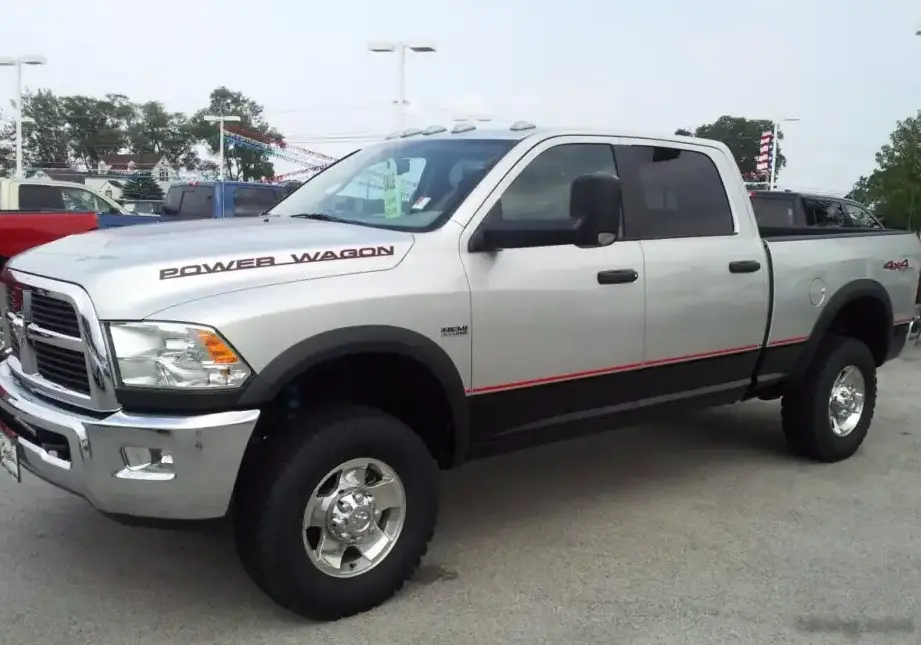
The RAM 1500 Regular Cab Long (DS), specifically the facelifted version introduced in 2013, represented a significant offering in the full-size pickup truck segment. Produced from 2014 through 2017, this variant distinguished itself with a 3.0-liter EcoDiesel V6 engine paired with an eight-speed automatic transmission and a four-wheel-drive system. This configuration aimed to deliver a balance of capability, fuel efficiency, and refinement, targeting buyers who needed a workhorse truck but also valued a more comfortable driving experience. The “DS” designation refers to the model’s generation and facelift status, placing it within the fourth generation of the RAM 1500 series.
Technical Specifications
| Brand | RAM |
| Model | 1500 |
| Generation | 1500 Regular Cab Long (DS, facelift 2013) |
| Type (Engine) | 3.0 EcoDiesel V6 (240 Hp) 4×4 Automatic |
| Start of production | 2014 |
| End of production | 2017 |
| Powertrain Architecture | Internal Combustion engine |
| Body type | Pick-up |
| Seats | 2-3 |
| Doors | 2 |
| Fuel Type | Diesel |
| Weight-to-power ratio | 10.1 kg/Hp, 99.2 Hp/tonne |
| Weight-to-torque ratio | 4.3 kg/Nm, 235.2 Nm/tonne |
| Power | 240 Hp @ 3600 rpm |
| Power per litre | 80.3 Hp/l |
| Torque | 569 Nm @ 2000 rpm, 419.67 lb.-ft. @ 2000 rpm |
| Maximum engine speed | 4800 rpm |
| Engine layout | Front, Longitudinal |
| Engine Model/Code | EXF |
| Engine displacement | 2988 cm3, 182.34 cu. in. |
| Number of cylinders | 6 |
| Engine configuration | V-engine |
| Cylinder Bore | 83 mm, 3.27 in. |
| Piston Stroke | 92 mm, 3.62 in. |
| Compression ratio | 16.5:1 |
| Number of valves per cylinder | 4 |
| Fuel injection system | Diesel Commonrail |
| Engine aspiration | Turbocharger, Intercooler |
| Valvetrain | DOHC |
| Engine oil capacity | 10 l, 10.57 US qt | 8.8 UK qt |
| Coolant | 11 l, 11.62 US qt | 9.68 UK qt |
| Kerb Weight | 2419 kg, 5332.98 lbs. |
| Max. weight | 2994 kg, 6600.64 lbs. |
| Max load | 575 kg, 1267.66 lbs. |
| Trunk (boot) space – maximum | 2115 l, 74.69 cu. ft. |
| Fuel tank capacity | 121 l, 31.96 US gal | 26.62 UK gal |
| Permitted trailer load with brakes (12%) | 3606 kg, 7949.87 lbs. |
| Length | 5867 mm, 230.98 in. |
| Width including mirrors | 2017 mm, 79.41 in. |
| Height | 1906 mm, 75.04 in. |
| Wheelbase | 3570 mm, 140.55 in. |
| Front track | 1732 mm, 68.19 in. |
| Rear (Back) track | 1715 mm, 67.52 in. |
| Drag coefficient (Cd) | 0.36 |
| Minimum turning circle (turning diameter) | 13.8 m, 45.28 ft. |
| Approach angle | 17.8° |
| Departure angle | 24.4° |
| Ramp-over (brakeover) angle | 20.5° |
| Drive wheel | All wheel drive (4×4) |
| Number of gears and type of gearbox | 8 gears, automatic transmission |
| Front suspension | Double wishbone |
| Rear suspension | Independent multi-link suspension |
| Front brakes | Ventilated discs |
| Rear brakes | Disc |
| Assisting systems | ABS (Anti-lock braking system), Power steering Electric Steering |
| Tires size | 265/70 R17 |
| Wheel rims size | 7.0J x 17 |
Introduction
The 2014-2017 RAM 1500 Regular Cab Long with the 3.0L EcoDiesel engine and 4×4 automatic transmission represented a compelling option for truck buyers seeking improved fuel economy without sacrificing capability. Positioned as a mid-range offering within the 1500 lineup, it slotted between the base V6 gasoline engine and the more powerful 5.7L HEMI V8. The “DS” designation indicates this was a facelifted version of the fourth-generation RAM 1500, benefiting from interior and exterior refinements introduced in 2013. This truck was primarily sold in the North American market, where full-size pickups are exceptionally popular, and where the demand for diesel engines capable of towing and hauling was growing.
Powertrain & Engine Architecture
The heart of this RAM 1500 variant is the EXF 3.0-liter EcoDiesel V6 engine. This engine, sourced from VM Motori (an Italian diesel engine manufacturer), utilizes a sophisticated common-rail direct injection system and a variable-geometry turbocharger with an intercooler. The engine code EXF is specific to this application within the RAM 1500. The 16.5:1 compression ratio contributes to the engine’s efficiency, while the DOHC valvetrain (Dual Overhead Camshaft) optimizes airflow for improved performance. The eight-speed automatic transmission, developed by Chrysler (and later ZF), was a key component in maximizing fuel economy and providing smooth shifting. This transmission featured a wide gear ratio spread, allowing the engine to operate in its most efficient range more often. The 4×4 system employed an electronically controlled transfer case, offering on-demand four-wheel drive for enhanced traction in various conditions.
Driving Characteristics
The 240 horsepower and 569 lb-ft of torque delivered by the EcoDiesel engine provided adequate, though not exhilarating, performance. Compared to the 5.7L HEMI V8, the EcoDiesel offered significantly less peak horsepower but a substantial increase in low-end torque. This made it well-suited for towing and hauling heavy loads. The eight-speed automatic transmission helped to mitigate the power deficit, keeping the engine in its optimal power band. Gear changes were generally smooth and responsive. However, the EcoDiesel wasn’t known for quick acceleration; its strength lay in its ability to maintain speed while carrying or towing substantial weight. The 4×4 system provided confident traction in off-road situations and inclement weather. The ride quality, typical of a full-size pickup, was firm but generally comfortable, especially when unladen.
Equipment & Trim Levels
The RAM 1500 Regular Cab Long (DS) with the EcoDiesel engine was typically offered in several trim levels, including ST, SLT, and Laramie. The base ST trim included standard features such as air conditioning, a basic audio system, and vinyl upholstery. The SLT trim added features like power windows and locks, keyless entry, and an upgraded audio system. The Laramie trim offered premium features such as leather upholstery, heated seats, and a more sophisticated infotainment system. Optional extras included a navigation system, a rearview camera, and various towing packages. The Regular Cab configuration offered seating for two to three passengers, depending on the configuration, and featured a long bed for maximum cargo capacity.
Chassis & Braking
The RAM 1500’s chassis featured a robust fully boxed frame construction, providing a solid foundation for the truck’s capabilities. The front suspension utilized a double wishbone design, while the rear suspension employed an independent multi-link setup. This suspension configuration aimed to balance ride comfort with handling stability. Braking duties were handled by ventilated discs at the front and solid discs at the rear. An Anti-lock Braking System (ABS) was standard equipment. The electric power steering system provided responsive steering feel with reduced driver effort. The truck’s relatively high curb weight (around 5,333 lbs) contributed to its stability, particularly when towing.
Market Reception & Comparison
The RAM 1500 EcoDiesel received generally positive reviews from automotive critics. The engine was praised for its fuel efficiency, particularly compared to gasoline-powered rivals. However, some critics noted the engine’s relatively modest horsepower output. Compared to the 5.7L HEMI V8, the EcoDiesel offered significantly better fuel economy (often exceeding 20 mpg on the highway) but less overall power. The EcoDiesel was also generally more expensive than the base V6 gasoline engine. In terms of reliability, the EcoDiesel engine experienced some early issues with diesel particulate filter (DPF) clogging and fuel injection pump failures, but these issues were largely addressed through software updates and revised components in later model years.
Legacy
The RAM 1500 EcoDiesel played a significant role in popularizing diesel engines in the full-size pickup truck segment. While early models experienced some reliability concerns, the powertrain proved to be durable and capable when properly maintained. Today, used RAM 1500 EcoDiesel models remain relatively popular, particularly among buyers who prioritize fuel efficiency and towing capacity. The 3.0L EcoDiesel engine continues to be offered in the RAM 1500, albeit with ongoing refinements and improvements. The combination of a diesel engine, an eight-speed automatic transmission, and a four-wheel-drive system established a benchmark for capability and efficiency in the full-size pickup truck market.