
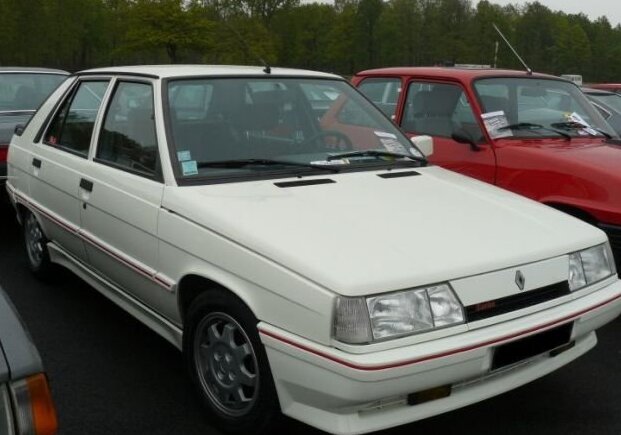
The Renault 11, produced between 1981 and 1986, represented a significant step forward for Renault in the small family car segment. Specifically, the 1.1-liter (B/C/S371) variant, delivering 48 horsepower, served as the entry point to the 11 lineup. Falling under the B/C37 chassis code, this model aimed to provide affordable and practical transportation, primarily targeting budget-conscious buyers in Europe. It was a key component of Renault’s strategy to offer a modern, efficient, and relatively spacious hatchback in a competitive market. The Renault 11 was a successor to the Renault 9 and 11, sharing many components but offering a more contemporary design and improved features.
Technical Specifications
| Brand | Renault |
| Model | 11 |
| Generation | 11 (B/C37) |
| Type (Engine) | 1.1 (B/C/S371) (48 Hp) |
| Start of production | 1981 |
| End of production | 1986 |
| Powertrain Architecture | Internal Combustion engine |
| Body type | Hatchback |
| Seats | 5 |
| Doors | 3-5 |
| Fuel Type | Petrol (Gasoline) |
| Power | 48 Hp |
| Engine Model/Code | C1E |
| Engine aspiration | Naturally aspirated engine |
| Engine oil capacity | 3.25 l (3.43 US qt | 2.86 UK qt) |
| Coolant capacity | 6.1 l (6.45 US qt | 5.37 UK qt) |
| Fuel tank capacity | 47 l (12.42 US gal | 10.34 UK gal) |
Powertrain & Engine Architecture
The heart of the Renault 11 1.1 was the C1E engine, a 1.147-liter inline-four cylinder petrol engine. This engine was a relatively simple design, featuring a single overhead camshaft (SOHC) operating two valves per cylinder. Fuel delivery was managed by a single, down-draft carburetor – a common setup for vehicles of this era and price point. The carburetor, while simple and reliable, wasn’t known for precise fuel metering, contributing to the engine’s modest power output and relatively high fuel consumption compared to later fuel-injected designs. The engine’s block was cast iron, providing durability, while the cylinder head was aluminum, helping to reduce weight. The 48 horsepower was achieved at 5,300 rpm, and peak torque of approximately 68 lb-ft (92 Nm) arrived at 3,000 rpm. The engine was typically paired with a four-speed manual transmission, though a three-speed automatic transmission was also available, albeit less common. The automatic transmission was a conventional hydraulic unit, offering smooth but not particularly quick shifts.
Driving Characteristics
The Renault 11 1.1, particularly in automatic guise, was not a performance-oriented vehicle. Acceleration was leisurely, taking approximately 16-18 seconds to reach 60 mph. The engine felt strained when pushed hard, and overtaking required careful planning. The four-speed automatic transmission, while providing convenience, further diminished performance due to its relatively wide gear ratios. The gear changes were noticeable, and the transmission didn’t offer a “kickdown” feature for rapid acceleration. However, the 1.1-liter engine was reasonably refined for its time, and the car offered a comfortable ride, especially on smoother roads. The steering was light and easy, making it well-suited for urban driving. Compared to the 1.4-liter and 1.7-liter versions of the Renault 11, the 1.1 felt significantly underpowered, but it offered a more economical driving experience.
Equipment & Trim Levels
The 1.1-liter Renault 11 typically represented the base trim level. Standard equipment was fairly basic, reflecting its position as an affordable family car. It generally included cloth upholstery, a simple dashboard with analog gauges, and basic exterior trim. Power steering was not standard, though it could be added as an option. Air conditioning was also an optional extra, and relatively rare on this base model. Interior space was reasonable for a car of its size, offering adequate headroom and legroom for five passengers. The rear seats could be folded down to increase cargo capacity, providing added versatility. Optional extras included a radio, upgraded interior trim, and tinted glass.
Chassis & Braking
The Renault 11 utilized a relatively conventional chassis design. It featured independent front suspension with MacPherson struts and a torsion beam rear suspension. This setup provided a comfortable ride, but handling was not particularly sharp. The steering was rack and pinion, offering reasonable precision. Braking was typically accomplished with disc brakes on the front wheels and drum brakes on the rear wheels. The braking system was adequate for normal driving conditions, but lacked the stopping power of more modern systems. Stabilizer bars were often omitted on the base 1.1-liter model, further contributing to its less sporty handling characteristics. The suspension was tuned for comfort rather than performance, prioritizing a smooth ride over precise handling.
Market Reception & Comparison
The Renault 11 1.1 was generally well-received as an affordable and practical family car. Critics praised its spacious interior, comfortable ride, and relatively low running costs. However, the engine’s lack of power was a common criticism, particularly when compared to competitors like the Peugeot 205 and the Citroën Visa. Fuel economy was reasonable for the time, averaging around 35-40 mpg. Reliability was generally good, although the carburetor required periodic adjustment and maintenance. Compared to the higher-spec Renault 11 models, the 1.1 offered a significantly lower price point, making it accessible to a wider range of buyers. The automatic transmission version, while convenient, suffered from lower fuel economy and reduced performance compared to the manual transmission variant.
Legacy
The Renault 11 1.1, while not a particularly exciting vehicle, played an important role in Renault’s history. It provided affordable transportation to a large number of European families during the 1980s. The C1E engine, while simple, proved to be relatively durable and reliable. Today, the Renault 11 1.1 is a relatively rare sight on the roads, but it has gained a following among classic car enthusiasts. Parts availability can be challenging, but the engine’s simplicity makes it relatively easy to repair. The automatic transmission versions are particularly sought after by collectors looking for a unique and nostalgic driving experience. The car represents a snapshot of automotive engineering from a bygone era, offering a glimpse into the design and technology of the early 1980s.
