
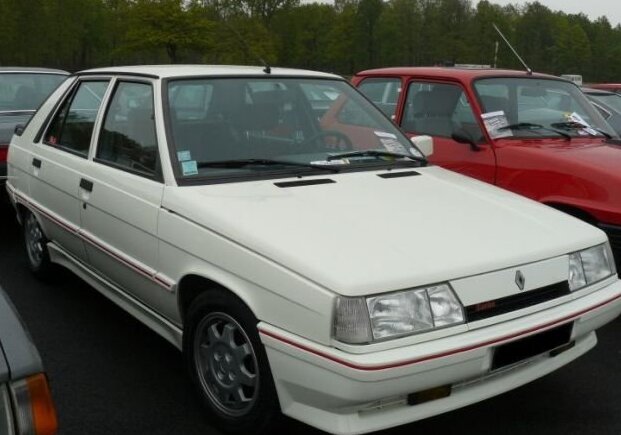
The Renault 11, produced between 1984 and 1988, represented a significant step forward for Renault in the small family car segment. Specifically, the 1.2-liter (B/C/S37S) variant, producing 55 horsepower, occupied the entry-level position within the 11 range. This model, built on the B/C37 platform, aimed to provide affordable and practical transportation, primarily targeting budget-conscious buyers in Europe. It was available in both 3-door and 5-door body styles, offering a degree of flexibility for families and individuals alike. The 1.2L engine was intended to balance fuel economy with acceptable performance for everyday driving.
Technical Specifications
| Brand | Renault |
| Model | 11 |
| Generation | 11 (B/C37) |
| Type (Engine) | 1.2 (B/C/S37S) (55 Hp) |
| Start of production | 1984 |
| End of production | 1988 |
| Powertrain Architecture | Internal Combustion engine |
| Body type | Hatchback |
| Seats | 5 |
| Doors | 3-5 |
| Fuel consumption (urban) | 8.3 l/100 km (28.3 US mpg, 34 UK mpg, 12 km/l) |
| Fuel consumption (extra urban) | 5.0 l/100 km (47 US mpg, 56.5 UK mpg, 20 km/l) |
| Fuel Type | Petrol (Gasoline) |
| Maximum speed | 162 km/h (100.66 mph) |
| Power | 55 Hp |
| Engine Model/Code | C1G |
| Engine aspiration | Naturally aspirated engine |
| Engine oil capacity | 3.5 l (3.7 US qt, 3.08 UK qt) |
| Coolant capacity | 5.8 l (6.13 US qt, 5.1 UK qt) |
| Fuel tank capacity | 47 l (12.42 US gal, 10.34 UK gal) |
Powertrain & Engine Architecture
The heart of the Renault 11 1.2 was the C1G engine, a 1147cc inline-four cylinder petrol engine. This engine was a relatively simple design, featuring a single overhead camshaft (SOHC) operating two valves per cylinder. Fuel delivery was managed by a single, down-draft carburetor – a common setup for vehicles of this era and price point. The carburetor system, while reliable, wasn’t as efficient or responsive as fuel injection systems found in more expensive cars. The engine’s modest 55 horsepower output was achieved at 6000 rpm, with peak torque of approximately 88 Nm (65 lb-ft) arriving at 3500 rpm. The engine was paired with a four-speed manual transmission as standard, though a three-speed automatic transmission was offered as an option. The automatic transmission, while providing convenience, noticeably impacted acceleration and fuel economy.
Driving Characteristics
The 1.2-liter Renault 11 was not designed for outright performance. Acceleration was leisurely, taking approximately 14-15 seconds to reach 60 mph. The automatic transmission further dulled performance, with noticeable delays in downshifting and a tendency to ‘hunt’ for gears on inclines. However, the engine proved to be reasonably tractable around town, offering sufficient power for everyday commuting and errands. The gear ratios in the manual transmission were spaced to prioritize fuel economy, while the automatic’s ratios were optimized for smooth, if unhurried, progress. Handling was adequate, with a relatively soft suspension setup prioritizing ride comfort over sporty handling. The steering was light and easy, making it maneuverable in urban environments.
Equipment & Trim Levels
The 1.2-liter Renault 11 typically represented the base trim level. Standard equipment included cloth upholstery, basic instrumentation (speedometer, fuel gauge, temperature gauge), and a simple two-speaker radio. Power steering and central locking were generally not standard on this model, but were available as optional extras. Interior plastics were durable but utilitarian, reflecting the car’s budget-oriented positioning. The 5-door version offered greater practicality for families, with easier access to the rear seats. Optional extras included a sunroof, upgraded stereo systems, and metallic paint finishes. The dashboard layout was functional, with all controls within easy reach of the driver.
Chassis & Braking
The Renault 11 utilized a relatively conventional chassis design, with MacPherson strut front suspension and a torsion beam rear axle. The torsion beam rear suspension was a cost-effective solution, providing adequate ride comfort but limiting handling precision. Braking was typically accomplished with disc brakes on the front wheels and drum brakes on the rear. The braking system was adequate for the car’s weight and performance, but lacked the stopping power of more modern systems. Stabilizer bars were not standard on the base 1.2-liter model, further contributing to the car’s soft handling characteristics.
Market Reception & Comparison
The Renault 11 1.2 was generally well-received as an affordable and practical family car. Critics praised its fuel economy and reliability, but noted its lack of performance and refinement. Compared to other small family cars of the era, such as the Peugeot 205 and the Ford Fiesta, the Renault 11 offered a more spacious interior and a more comfortable ride, but lacked their sporty handling characteristics. The 1.4 and 1.6-liter versions of the Renault 11 offered significantly more performance, but at a higher price point. The automatic transmission version of the 1.2L was often criticized for its sluggishness and reduced fuel economy compared to the manual.
Legacy
The Renault 11, particularly the 1.2-liter variant, has become a relatively common sight in the classic car market. The C1G engine is known for its robustness and relative simplicity, making it relatively easy to maintain and repair. However, age-related issues such as corrosion and wear and tear on rubber components are common. Spare parts availability is generally good, although some trim-specific parts can be difficult to find. Today, the Renault 11 1.2 is often seen as a nostalgic reminder of 1980s motoring, offering a simple and affordable entry point into classic car ownership. While not a performance icon, its practicality and reliability have ensured its continued presence on roads and in the hearts of many car enthusiasts.
