
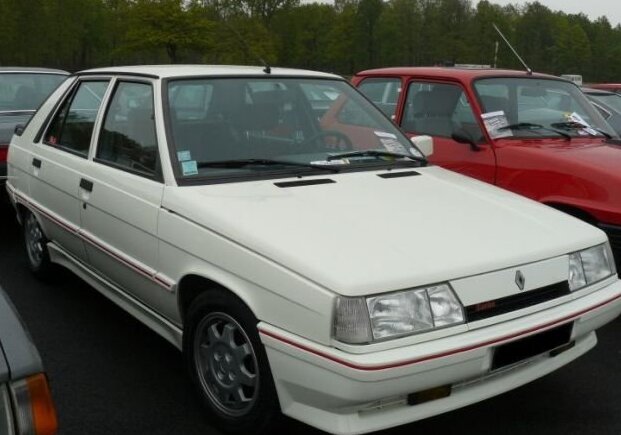
The Renault 11, produced between 1981 and 1993, represented a significant step forward for Renault in the small family car segment. The B/C37 series, launched in 1981, aimed to replace the aging Renault 9 and 11, offering a more modern design and improved practicality. Within this generation, the 1.4-liter (B/C/S373) variant, producing 72 horsepower, served as a core model, particularly during the early production years of 1981-1985. It was positioned as the entry-level engine option, offering affordability and reasonable fuel economy for the average European driver. This model played a crucial role in establishing the Renault 11 as a popular choice in its class.
Technical Specifications
| Brand | Renault |
| Model | 11 |
| Generation | 11 (B/C37) |
| Type (Engine) | 1.4 (B/C/S373) (72 Hp) |
| Start of Production | 1981 |
| End of Production | 1985 |
| Powertrain Architecture | Internal Combustion Engine |
| Body Type | Hatchback |
| Seats | 5 |
| Doors | 5 |
| Fuel Type | Petrol (Gasoline) |
| Power | 72 Hp |
| Engine Model/Code | C2J |
| Engine Aspiration | Naturally Aspirated |
| Engine Oil Capacity | 3.3 l (3.49 US qt | 2.9 UK qt) |
| Coolant Capacity | 5.8 l (6.13 US qt | 5.1 UK qt) |
| Fuel Tank Capacity | 47 l (12.42 US gal | 10.34 UK gal) |
Powertrain & Engine Architecture
The Renault 11 1.4 utilized the C2J engine, a 1397cc inline-four cylinder petrol engine. This engine was a relatively simple design, featuring a single overhead camshaft (SOHC) operating two valves per cylinder. Fuel delivery was managed by a single, two-barrel Solex carburetor, a common setup for vehicles of this era. The C2J engine wasn’t known for its high performance, but rather its reliability and ease of maintenance. The engine block was cast iron, contributing to its durability, while the cylinder head was aluminum. The compression ratio was typically around 8.5:1. The 72 horsepower output was achieved at approximately 6000 rpm, with peak torque of around 86 lb-ft (117 Nm) at 3500 rpm. The transmission paired with this engine was typically a four-speed manual, though a three-speed automatic transmission was also available, albeit less common. The automatic transmission was a Jatco unit, known for its smooth operation but also for its relatively slow shift times.
Driving Characteristics
The Renault 11 1.4 offered a comfortable, if not particularly exciting, driving experience. With 72 horsepower propelling a car weighing around 1,800 lbs (816 kg), acceleration was modest. Zero to sixty mph times were in the 13-14 second range. The engine felt relatively strained at higher speeds, and overtaking required careful planning. The four-speed manual transmission allowed for reasonable control over the engine’s power band, while the three-speed automatic, while convenient, further dulled performance. The suspension, consisting of MacPherson struts at the front and a torsion beam rear axle, provided a compliant ride, absorbing bumps and imperfections in the road well. Steering was light and easy, making it well-suited for city driving. Compared to the later 1.7-liter versions of the Renault 11, the 1.4 felt noticeably underpowered, but it offered a more economical option for drivers prioritizing fuel efficiency over outright performance.
Equipment & Trim Levels
The 1.4-liter Renault 11 typically came with a fairly basic level of equipment, reflecting its position as the entry-level model. Standard features included cloth upholstery, a basic instrument cluster, and manually operated windows and door locks. The interior was functional and durable, though not particularly luxurious. Optional extras included a sunroof, upgraded upholstery, and a radio. Trim levels varied slightly depending on the market, but generally, the 1.4 was offered in a single, relatively standardized specification. Later models saw the introduction of minor cosmetic upgrades, such as revised dashboard trim and wheel covers.
Chassis & Braking
The Renault 11 featured a monocoque chassis construction, providing a good balance of strength and weight. The front suspension utilized MacPherson struts with an anti-roll bar, while the rear suspension employed a torsion beam axle. Braking was typically accomplished with disc brakes at the front and drum brakes at the rear. The braking system was adequate for the car’s performance, but lacked the stopping power of more modern vehicles. Steering was rack and pinion, providing precise and responsive handling. The tires were typically 175/70R14, offering a good compromise between comfort and grip.
Market Reception & Comparison
The Renault 11 1.4 was generally well-received by critics as a practical and affordable family car. It was praised for its comfortable ride, decent fuel economy (around 35-40 mpg), and reliable engine. However, it was also criticized for its lack of power and somewhat dated interior. Compared to rivals such as the Ford Escort and Volkswagen Golf, the Renault 11 offered a more affordable price point, but lacked the same level of refinement and performance. The 1.7-liter Renault 11 offered a significant performance upgrade, but at a higher price. The 1.4 was particularly popular with drivers who prioritized economy and practicality over sporty driving dynamics.
Legacy
The Renault 11 1.4, while not the most powerful or technologically advanced version of the model, remains a fondly remembered car for many. The C2J engine proved to be remarkably durable, and many examples are still on the road today. Parts availability is generally good, making it a relatively easy car to maintain. In the used car market, the 1.4-liter Renault 11 is often seen as a good value proposition, offering a reliable and affordable means of transportation. Its simplicity and ease of maintenance make it a popular choice for classic car enthusiasts and those looking for a practical and economical vintage vehicle. The Renault 11, in all its variants, helped solidify Renault’s position as a major player in the European small car market, and the 1.4-liter version played a vital role in achieving that success.
