
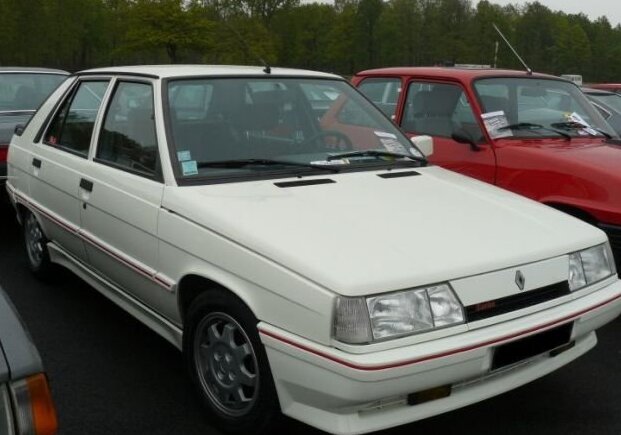
The Renault 11, produced between 1981 and 1988, represented a significant step forward for Renault in the small family car segment. Specifically, the 1.4-liter variant (designated B/C373, B/C37R) with 67 horsepower occupied an important position in the lineup, offering a balance between affordability and practicality. Falling within the B/C37 generation, the Renault 11 aimed to replace the aging Renault 9 and 11, offering a more modern design and improved features. This model was primarily aimed at the European market, where fuel efficiency and compact dimensions were highly valued. The 1.4L engine served as the entry-level powerplant for the range, appealing to buyers prioritizing economy over outright performance.
Technical Specifications
| Brand | Renault |
| Model | 11 |
| Generation | 11 (B/C37) |
| Type (Engine) | 1.4 (B/C/S373,B/C37R) (67 Hp) |
| Start of production | 1981 |
| End of production | 1988 |
| Powertrain Architecture | Internal Combustion engine |
| Body type | Hatchback |
| Seats | 5 |
| Doors | 3/5 |
| Fuel consumption (urban) | 7.5 l/100 km (31.4 US mpg, 37.7 UK mpg, 13.3 km/l) |
| Fuel consumption (extra urban) | 5.7 l/100 km (41.3 US mpg, 49.6 UK mpg, 17.5 km/l) |
| Fuel consumption (combined) | 6.3 l/100 km (37.3 US mpg, 44.8 UK mpg, 15.9 km/l) |
| Fuel Type | Petrol (Gasoline) |
| Maximum speed | 165 km/h (102.53 mph) |
| Power | 67 Hp |
| Power per litre | 47.9 Hp/l |
| Engine layout | Front, Transverse |
| Engine displacement | 1398 cm3 (85.31 cu. in.) |
| Number of cylinders | 4 |
| Engine configuration | Inline |
| Fuel injection system | Carburettor |
| Engine aspiration | Naturally aspirated engine |
| Fuel tank capacity | 62 l (16.38 US gal, 13.64 UK gal) |
| Drivetrain Architecture | The Internal combustion engine (ICE) drives the front wheels of the vehicle. |
| Drive wheel | Front wheel drive |
| Front brakes | Drum |
| Rear brakes | Drum |
| Steering type | Steering rack and pinion |
| Tires size | 165/60 R13 |
| Wheel rims size | 13 |
Powertrain & Engine Architecture
The heart of the Renault 11 1.4 was the 1398cc inline-four cylinder engine. This engine, often referred to by its various codes (B/C373, B/C37R), was a relatively simple design, utilizing a single overhead camshaft and typically equipped with a two-barrel carburetor. The carburetion system, while common for the era, contributed to the engine’s relatively modest power output of 67 horsepower. The engine’s architecture prioritized durability and ease of maintenance over high performance. The engine was transversely mounted, a configuration becoming increasingly common in front-wheel-drive vehicles to maximize interior space. The transmission paired with this engine was a four-speed manual or a three-speed automatic, the latter being less common but offering increased convenience for urban driving. The automatic transmission was a conventional hydraulic unit, known for its smooth but not particularly quick shifts.
Driving Characteristics
The Renault 11 1.4, particularly when equipped with the three-speed automatic transmission, offered a comfortable but unhurried driving experience. Acceleration was adequate for everyday driving, but overtaking maneuvers required careful planning. The automatic transmission’s gear ratios were geared towards fuel economy rather than performance. The 0-60 mph time was estimated to be around 14-16 seconds. Compared to the five-speed manual versions, the automatic suffered a noticeable performance deficit. The manual transmission allowed for better control and a more engaging driving experience, while the automatic prioritized ease of use. The steering was light and precise, making it easy to maneuver in city traffic. The suspension, while basic, provided a reasonably comfortable ride, absorbing most road imperfections without excessive body roll.
Equipment & Trim Levels
The 1.4-liter Renault 11 typically represented the base trim level. Standard equipment included cloth upholstery, a basic dashboard with analog gauges, and manual windows and door locks. The interior was functional and durable, prioritizing practicality over luxury. Optional extras included a sunroof, upgraded stereo system, and more comfortable seats. Higher trim levels, such as the Renault 11 TX, offered more luxurious features, including velour upholstery, central locking, and electric windows. The 1.4L model was often seen as a sensible choice for buyers who didn’t require the extra features of the more expensive trims.
Chassis & Braking
The Renault 11 utilized a relatively simple chassis design. The front suspension consisted of MacPherson struts, while the rear suspension employed a torsion beam axle. This setup provided a good balance between ride comfort and handling. Braking was handled by drum brakes on all four wheels, which were adequate for the car’s weight and performance. Power steering was not standard on the base 1.4 model, requiring more effort at low speeds. The 13-inch wheels were fitted with 165/60 R13 tires, providing reasonable grip in most conditions. Stabilizer bars were typically fitted to the front axle to reduce body roll during cornering.
Market Reception & Comparison
The Renault 11 1.4 was generally well-received by critics as a practical and affordable family car. Its fuel economy was a major selling point, particularly in Europe where gasoline prices were high. However, the engine’s modest power output and the automatic transmission’s sluggish performance were often criticized. Compared to other cars in its class, such as the Peugeot 205 and the Volkswagen Golf, the Renault 11 offered a more affordable price point but lacked the same level of refinement and performance. The manual transmission versions were generally preferred by enthusiasts for their improved driving experience. Reliability was generally good, although the carbureted engine required regular maintenance to ensure optimal performance.
Legacy
The Renault 11, and specifically the 1.4-liter variant, remains a relatively common sight on European roads today, testament to its durability and affordability. While not a particularly sought-after classic, well-maintained examples are gaining popularity among collectors and enthusiasts. The engine, while simple, is known for its robustness and relatively easy maintenance. However, finding parts can be challenging as the car is now quite old. The Renault 11 1.4 represents a significant chapter in Renault’s history, demonstrating the company’s commitment to providing practical and affordable transportation to the masses. Its legacy lies in its simplicity, reliability, and its role as a popular family car during the 1980s.
