
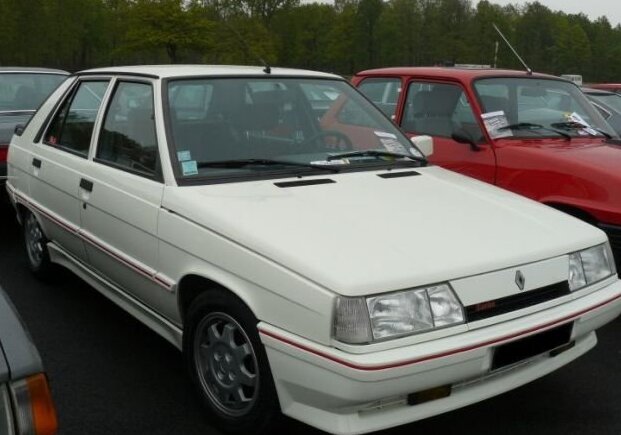
The Renault 11 1.4 Turbo, designated B/C375, was a performance-oriented variant of the popular Renault 11 hatchback produced between 1984 and 1986. Positioned as a more spirited alternative to the standard 1.1 and 1.4 liter models, the 1.4 Turbo aimed to attract drivers seeking a blend of practicality and accessible performance within the small family car segment. It was part of the B/C37 series, representing the first generation of the Renault 11, which itself was based on the shared platform with the Renault 9 and Peugeot 205.
Technical Specifications
| Brand | Renault |
| Model | 11 |
| Generation | 11 (B/C37) |
| Type (Engine) | 1.4 Turbo (B/C375) (105 Hp) |
| Start of Production | 1984 |
| End of Production | 1986 |
| Powertrain Architecture | Internal Combustion Engine |
| Body Type | Hatchback |
| Fuel Type | Petrol (Gasoline) |
| Power | 105 Hp |
| Engine Model/Code | C1J |
| Engine Aspiration | Turbocharger |
| Engine Oil Capacity | 3.25 l (3.43 US qt | 2.86 UK qt) |
| Coolant Capacity | 6 l (6.34 US qt | 5.28 UK qt) |
| Fuel Tank Capacity | 47 l (12.42 US gal | 10.34 UK gal) |
Powertrain & Engine Architecture
The heart of the Renault 11 1.4 Turbo was the C1J engine, a 1397cc inline-four cylinder unit. This engine was notable for its single overhead camshaft (SOHC) valvetrain and, crucially, a Garrett T2 turbocharger. The turbocharger significantly boosted power output compared to the naturally aspirated 1.4-liter engine offered in other Renault 11 models. Fuel delivery was managed by Bosch mechanical fuel injection, a system common for the era, providing a balance between performance and reliability. The C1J engine featured a relatively low compression ratio (typically around 8.8:1) to accommodate the increased cylinder pressures generated by the turbocharger. The engine’s design prioritized drivability and responsiveness over outright peak power, making it suitable for everyday use. The turbocharger was a key element, providing a noticeable increase in torque and acceleration. The engine was typically paired with a four-speed manual transmission, although a three-speed automatic transmission was also available, albeit less common.
Driving Characteristics
The Renault 11 1.4 Turbo offered a distinctly more engaging driving experience than its lower-powered siblings. With 105 horsepower on tap, it could achieve a 0-60 mph time in around 9.5 seconds, which was competitive for a small hatchback in the mid-1980s. The turbocharger provided a noticeable surge of power in the mid-range, making overtaking maneuvers easier and more confident. The four-speed manual transmission allowed drivers to effectively utilize the engine’s power band, while the optional automatic, though offering convenience, did diminish some of the performance. Gear ratios were relatively short, contributing to the car’s lively acceleration. Handling was generally considered good for a front-wheel-drive hatchback of the period, with a reasonably well-tuned suspension providing a comfortable ride without excessive body roll. However, the steering lacked the precision found in some of its rivals, such as the Peugeot 205.
Equipment & Trim Levels
The Renault 11 1.4 Turbo was typically positioned as a mid-range trim level within the Renault 11 lineup. Standard equipment included features such as a basic stereo, cloth upholstery, and a heated rear window. Higher trim levels, often denoted by “Turbo” badging, added features like alloy wheels, upgraded interior trim, and optional extras such as a sunroof. Interior appointments were functional and relatively simple, reflecting the car’s overall focus on affordability and practicality. Dashboard layouts were straightforward, with clearly marked gauges and controls. Optional extras included central locking, electric windows, and a more sophisticated stereo system. The interior space was comparable to other hatchbacks in its class, offering adequate room for passengers and luggage.
Chassis & Braking
The Renault 11 1.4 Turbo utilized a MacPherson strut front suspension and a torsion beam rear suspension. This setup provided a good balance between ride comfort and handling. The front suspension featured anti-roll bar to reduce body roll during cornering. Braking was typically accomplished with disc brakes on the front wheels and drum brakes on the rear wheels. The braking system was adequate for the car’s performance, but lacked the stopping power of some more modern vehicles. Steering was rack-and-pinion, providing reasonable precision, although it lacked the feedback desired by some enthusiasts. The chassis was relatively lightweight, contributing to the car’s nimble handling characteristics. Tire sizes were typically 175/70R14 or 185/65R14, depending on the trim level.
Market Reception & Comparison
The Renault 11 1.4 Turbo was generally well-received by automotive critics, who praised its performance and affordability. It was seen as a viable alternative to other small hatchbacks, such as the Volkswagen Golf, Peugeot 205, and Ford Escort. Compared to the standard Renault 11 models, the 1.4 Turbo offered a significant performance upgrade, making it more appealing to drivers who enjoyed a more spirited driving experience. However, the automatic transmission version was often criticized for diminishing the car’s performance potential. Fuel economy was reasonable for a turbocharged engine of the era, typically around 35-40 mpg. Reliability was generally good, although the turbocharger did require regular maintenance to ensure optimal performance. The 1.4 Turbo was often seen as a more desirable option than the 1.1 and 1.4 liter models, commanding a slightly higher price on the used car market.
Legacy
The Renault 11 1.4 Turbo holds a nostalgic place in the hearts of many automotive enthusiasts. It represents a period when turbocharging was becoming increasingly accessible to mainstream car buyers. While not a groundbreaking performance car, it offered a compelling combination of practicality, affordability, and enjoyable driving dynamics. Today, well-maintained examples of the Renault 11 1.4 Turbo are becoming increasingly collectible. The C1J engine, while relatively simple by modern standards, is known for its durability and relatively easy maintenance. However, finding parts can be challenging, as the car is now quite old. The Renault 11 1.4 Turbo remains a testament to Renault’s ability to produce affordable and engaging cars for the masses.
